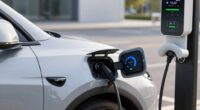
To choose between J1772, NACS, and other adapters, start by checking your vehicle’s charging port type and verify compatibility with the station types you frequent. Consider your charging speed needs—Level 1, Level 2, or faster fast-charging options—and select an adapter supporting those speeds. Also, evaluate safety features and station compatibility. Understanding these factors helps you pick the right adapter for a smooth, efficient charging experience; more details will help you make the best choice.
Key Takeaways
- Identify your vehicle’s charging port standard (J1772, NACS, etc.) to ensure compatibility with adapters.
- Consider the charging stations you frequently use and their supported standards to choose the right adapter.
- Match the adapter’s power support and charging speed capabilities with your vehicle’s onboard charger limits.
- Check if the adapter includes safety features and smart monitoring compatible with your charging environment.
- Prioritize adapters that support desired charging networks and standards for future flexibility and efficiency.
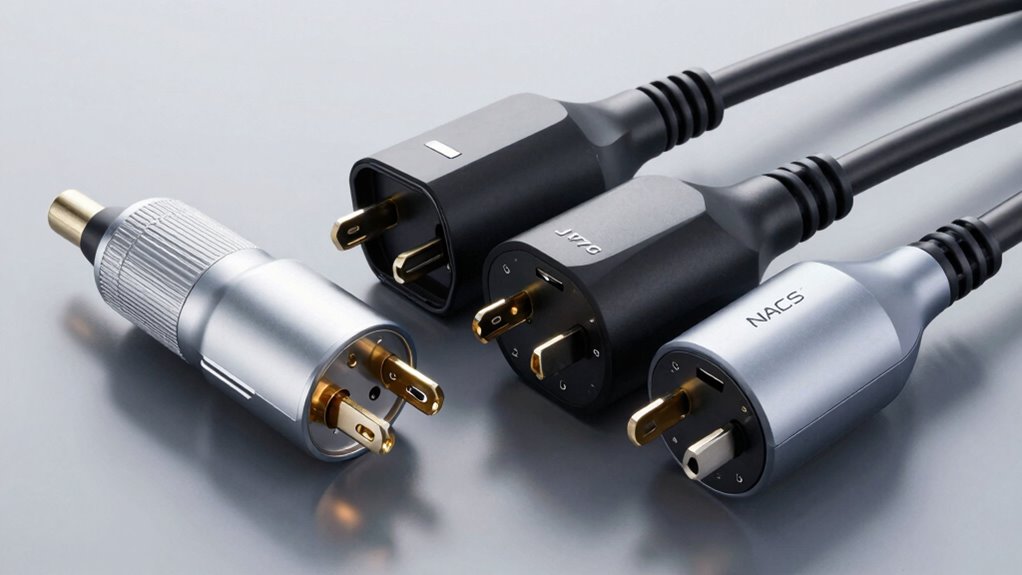
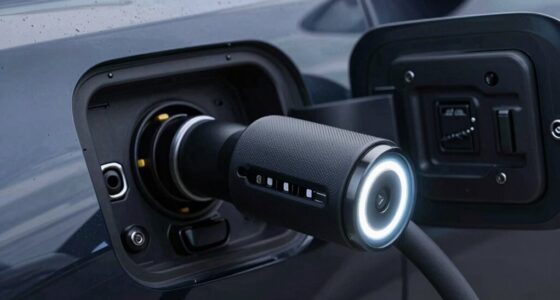
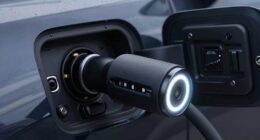
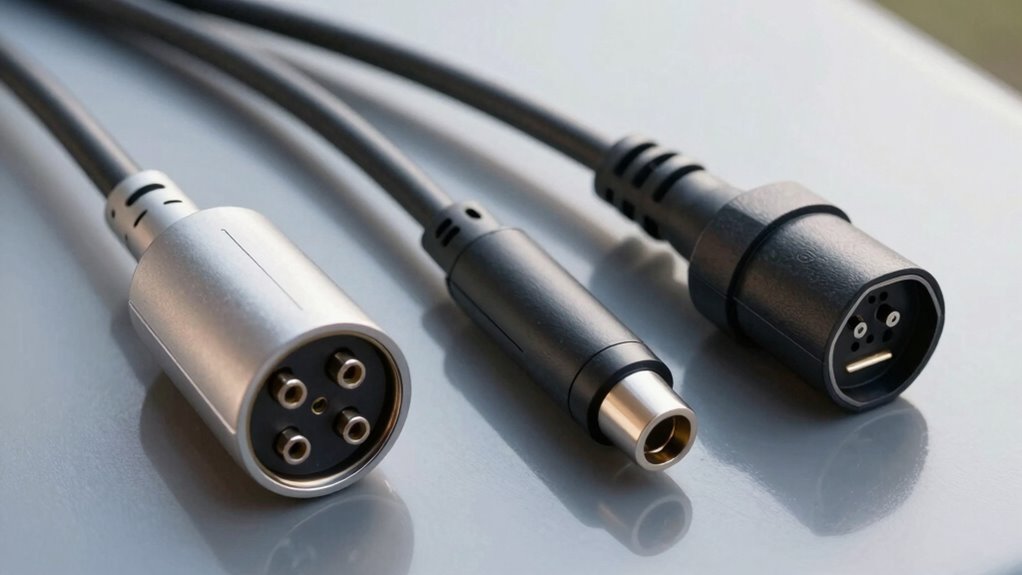
When selecting an EV charger adapter, understanding your vehicle’s charging needs and compatibility is vital. Your choice depends on how quickly you want to charge and whether the adapter will work seamlessly with your car’s charging port. The first thing to contemplate is compatibility considerations—different vehicles are designed to work with specific charging standards. For example, many North American electric vehicles come with J1772 ports, making the J1772 adapter a common choice for those drivers. On the other hand, newer models, especially those from Tesla, often use NACS (North American Charging Standard), which requires a different adapter to connect to public charging stations. Knowing which standard your vehicle supports helps you narrow down your options and avoid purchasing an incompatible adapter.
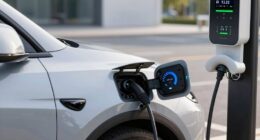
Charging speed is another important factor. Some adapters are designed to handle Level 1 charging, which is slower and suitable for overnight charging at home. Others support Level 2 charging, allowing for faster top-ups at charging stations. If you frequently need quick charges, look for an adapter compatible with Level 2 chargers that can deliver higher power levels. Keep in mind that your vehicle’s onboard charger also limits charging speed, so pairing it with the right adapter ensures you optimize the charging process without unnecessary delays.
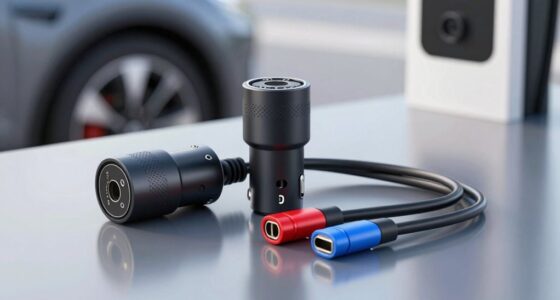
Compatibility considerations extend beyond just port standards. You should also verify if the adapter works with the charging stations you plan to use. For example, some adapters might not support certain fast-charging networks or might have limitations on power levels. It’s worth checking the specifications of the adapter to confirm it aligns with your typical charging environment. Additionally, some adapters come with features like built-in safety mechanisms or smart capabilities that help monitor charging status, which can be beneficial if you want a more reliable and efficient charging experience.

Lectron J1772 to Tesla Adapter 80 Amp (240V) – EV Charging Adapter Compatible with Tesla Model S/3/X/Y/Cybertruck and All Electric Vehicles in the NACS Alliance (Black)
VERSATILE CHARGING SOLUTION – Expand your charging options and access any J1772 chargers with the Lectron J1772 to…
As an affiliate, we earn on qualifying purchases.
As an affiliate, we earn on qualifying purchases.
Frequently Asked Questions
Are J1772 and NACS Compatible With All EV Models?
J1772 and NACS are not compatible with all EV models due to different charging standards. To guarantee charging station compatibility, check your vehicle’s charging port and the station’s connector type. When installing adapters, follow manufacturer instructions carefully, and consider professional installation tips. This helps you avoid damage and ensures your EV charges efficiently. Always verify adapter compatibility with your specific vehicle model before use.
Can I Use Multiple Adapters on a Single Vehicle?
You can use multiple adapters on a single vehicle, but it depends on your car’s compatibility and your charging infrastructure. For example, if you own an EV with a J1772 port, you might carry both J1772 and NACS adapters for different charging stations. Always check adapter compatibility with your vehicle and confirm your charging infrastructure supports multiple adapters, as using incompatible ones can lead to charging issues or damage.
Do Adapters Affect Charging Speed or Efficiency?
Adapters can impact charging speed and efficiency because they may not always provide ideal charging compatibility. Using the right adapter guarantees safe connection and maintains efficient power transfer, avoiding potential safety issues. Keep in mind that some adapters might slightly reduce charging speed due to design limitations, so always choose high-quality, certified adapters to maximize charging performance and ensure safety during every session.
Are There Any Legal Restrictions for Using Third-Party Adapters?
You might think third-party adapters are a legal free-for-all, but regulations are strict! Using non-compliant adapters can land you in serious trouble, risking fines or voiding your warranty. Always check regulatory compliance before plugging in—some adapters might seem harmless but violate safety standards. To keep your EV adventures smooth and worry-free, stick to approved adapters and consider warranty considerations to avoid unexpected costs down the road.
How Durable Are the Different Types of EV Charger Adapters?
You’ll find that the durability of EV charger adapters varies, with J1772 adapters generally lasting longer due to their robust construction, while some NACS adapters may experience more wear and tear with frequent use. Compatibility issues can accelerate wear and tear, especially if adapters aren’t designed for your specific vehicle or charging station. Regular inspections and proper handling can extend their lifespan, ensuring safe and reliable charging over time.
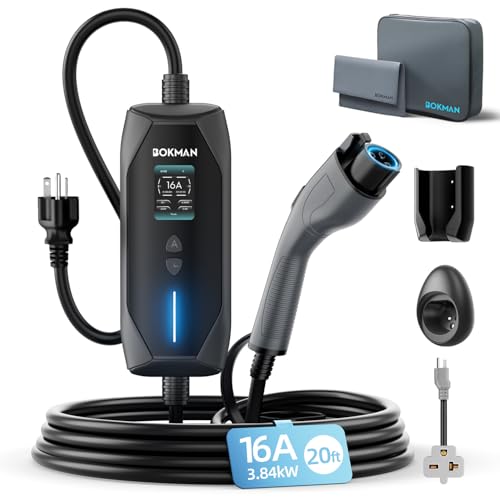
bokman Portable Level 2 & Level 1 EV Charger (240V, 16A), 20ft Cable and NEMA 6-20 Plug and NEMA 5-15 Adapter for Household Socket, Current Adjustable 6-16Amp (J1772 Connector)
Portability & Premium Design: This EV charger features a lightweight design with 20FT cable – about the length…
As an affiliate, we earn on qualifying purchases.
As an affiliate, we earn on qualifying purchases.
Conclusion
When choosing an EV charger adapter, consider your vehicle’s compatibility and your charging needs. J1772 and NACS are popular options, with the latter gaining ground as the industry shifts. Did you know that over 80% of new EVs in North America now support NACS? That means future-proofing might mean leaning toward NACS. By understanding your options now, you’ll guarantee seamless charging and avoid future headaches—making your EV experience smoother and more enjoyable.
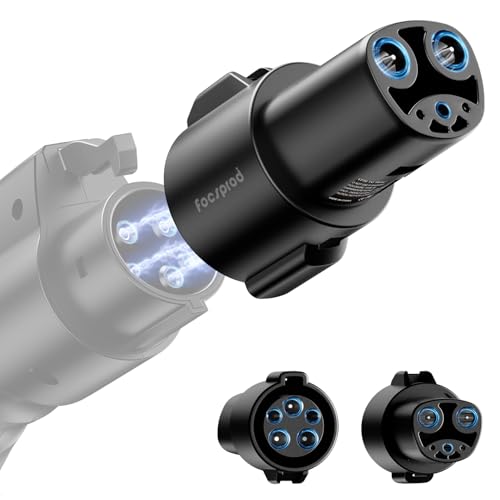
FOCSPROD J1772 to Tesla Charger Adapter, Max 80A 250V Fast Charging J1772 to NACS Adapter for Tesla Model 3/Y/X/S/Cybertruck Charging Adapter, Compatible with J1772 EV Charge to Tesla Adapter -UL 2252
COMPATIBILITY -FOCSPROD J1772 to Tesla charger adapter is compatible with Tesla Model 3, Y, X, S, Cybertruck (A…
As an affiliate, we earn on qualifying purchases.
As an affiliate, we earn on qualifying purchases.

SUSUTOO J1772 to Nema 5-15, EV Station Charging Adapter, EV Adapter Plug, J1772 to NEMA 5-15 Plug for Many Devices That Can Accept 100~240V
【Support】The plug just compatible with 240-volt charger. our charging adapter enables you to connect your electric vehicle to…
As an affiliate, we earn on qualifying purchases.
As an affiliate, we earn on qualifying purchases.