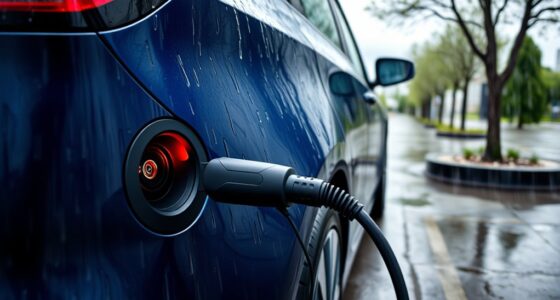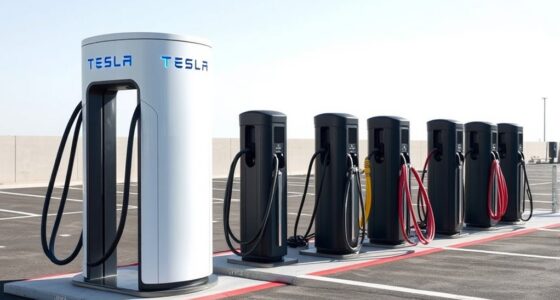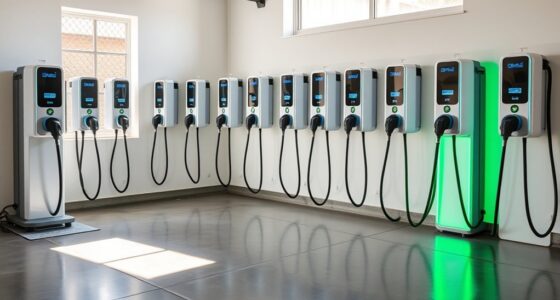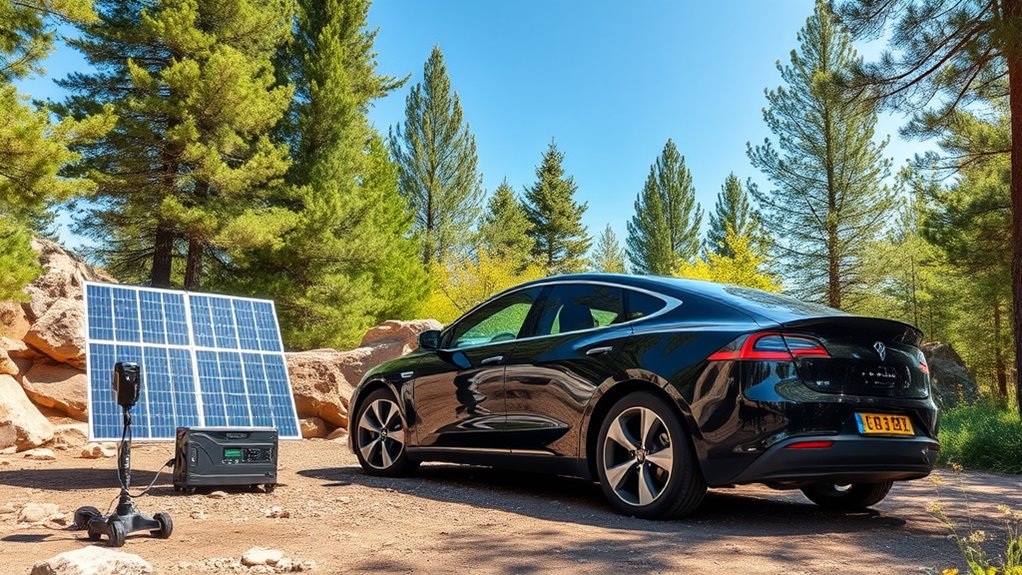

Yes, you can charge your electric car off-grid without relying on a power company by using solar panels paired with battery storage. Solar panels generate electricity during the day, and batteries store excess energy for overnight or cloudy days. This setup provides a renewable, independent power source for your EV, offering flexibility and sustainability. If you’re curious about how to design such a system and maximize its efficiency, you’ll find helpful details as you explore further.
Key Takeaways
- Yes, you can charge an electric car off-grid using solar panels and battery storage without utility power.
- Properly sized solar panels and high-capacity batteries are essential for reliable off-grid EV charging.
- A dedicated inverter converts solar DC power to AC suitable for EV charging stations.
- Regular system maintenance and monitoring optimize performance and ensure consistent energy supply.
- Off-grid charging offers sustainable, independent EV recharging in remote or utility-disconnected locations.
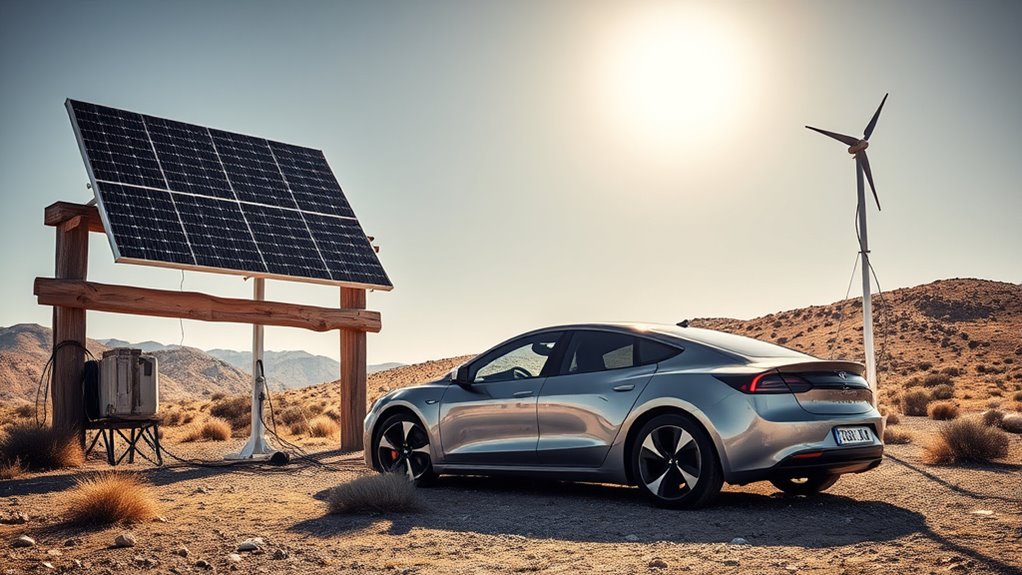
Off-grid electric vehicle (EV) charging is gaining popularity as more people seek sustainable and independent travel options. If you’re considering this route, you’ll want to understand how to generate your own power without relying on traditional utility companies. The key to off-grid EV charging lies in harnessing renewable energy sources, primarily solar panels, combined with effective battery storage. Solar panels are the foundation of your off-grid setup, capturing sunlight during the day to produce electricity. When you install enough panels, you can generate a substantial amount of energy, enough to charge your EV and power other essential devices. However, solar energy is intermittent—it’s not available at night or during cloudy days—making battery storage essential.
Battery storage acts as your energy reservoir, storing excess power generated by your panels during sunny hours. With a high-capacity battery bank, you can accumulate enough energy to charge your electric car overnight or during periods of low sunlight. This setup guarantees you’re not dependent on the grid and gives you the flexibility to travel and charge your EV wherever your solar system is installed. When choosing batteries, look for options with high energy density, longer lifespan, and efficient charge-discharge cycles. Properly sized battery storage allows you to maximize your solar investment and guarantees a steady power supply for your EV. Renewable energy sources are crucial for ensuring a truly off-grid system.
To set up an off-grid charging station, you’ll need a reliable solar inverter to convert the direct current (DC) generated by your solar panels into usable alternating current (AC) for your EV charger. The inverter also plays a vital role in managing power flow between your solar panels, batteries, and the vehicle. As you design your system, consider the energy requirements of your EV, including its typical charging needs and the capacity of your battery storage. This way, you’ll know how many solar panels to install and how large your battery bank should be.
Keep in mind that off-grid systems require regular maintenance, monitoring, and sometimes adjustments to optimize performance. Investing in good quality components and professional installation can help you avoid issues down the line. With the right combination of solar panels and battery storage, you can charge your electric vehicle sustainably and independently, no matter where your adventures take you. This approach not only reduces your carbon footprint but also grants you freedom from traditional utilities, making off-grid EV charging an appealing solution for eco-conscious travelers.
Frequently Asked Questions
What Are the Initial Costs of Off-Grid EV Charging Systems?
The initial costs of off-grid EV charging systems vary, but you’ll typically spend on solar panels, battery storage, and installation. Expect to pay between $10,000 and $30,000 depending on system size and capacity. Solar panels convert sunlight into energy, while battery storage allows you to store power for charging your vehicle anytime. Investing upfront guarantees you can charge your electric car independently, reducing long-term reliance on the electric grid.
How Reliable Is Off-Grid Charging During Long-Term Power Outages?
During long-term power outages, off-grid charging can be quite reliable, especially with solar systems boasting a 25-year lifespan. Your solar setup’s reliability hinges on weather conditions, but paired with high-quality batteries, you guarantee consistent power. Battery longevity remains strong with proper maintenance, providing a dependable energy source. So, with good planning, you can keep your EV charged even when the grid is down, making off-grid solutions a solid choice.
Can Off-Grid Systems Fully Charge All Electric Vehicle Models?
Off-grid systems can fully charge many electric vehicle models, but it depends on solar efficiency and battery storage capacity. You need a well-designed setup with high-efficiency solar panels and sufficient battery storage to meet your EV’s energy needs. Larger batteries and optimized solar panels help ensure your system can handle different EVs, especially during cloudy days or extended use. Proper planning guarantees reliable off-grid charging for your specific vehicle.
What Maintenance Is Required for Off-Grid EV Charging Setups?
Think of your off-grid system as a garden that needs regular tending. You’ll want to check and clean your batteries to maintain ideal battery lifespan, much like pruning plants. Keep an eye on system durability by inspecting connections and components for wear. Regularly monitor charge levels and perform software updates if applicable. This proactive care ensures your setup stays reliable and efficient, so your electric car always has a steady power source.
Are There Government Incentives for Off-Grid EV Charging Installations?
You can benefit from government incentives like grants and tax credits for off-grid EV charging installations. These programs aim to promote renewable energy use and sustainable transportation. Check with local, state, or federal agencies to find specific grants or tax incentives available in your area. Taking advantage of these incentives can considerably reduce your costs and make off-grid charging more affordable for you.
Conclusion
So, is off-grid EV charging truly possible without relying on a power company? With solar panels, wind turbines, and backup batteries, you can power your electric car independently. It takes some planning and investment, but the freedom from utility grids is worth it. Imagine never worrying about outages or rising electricity costs. Are you ready to take control of your charging needs and embrace true energy independence? The choice is yours—are you prepared to make it?