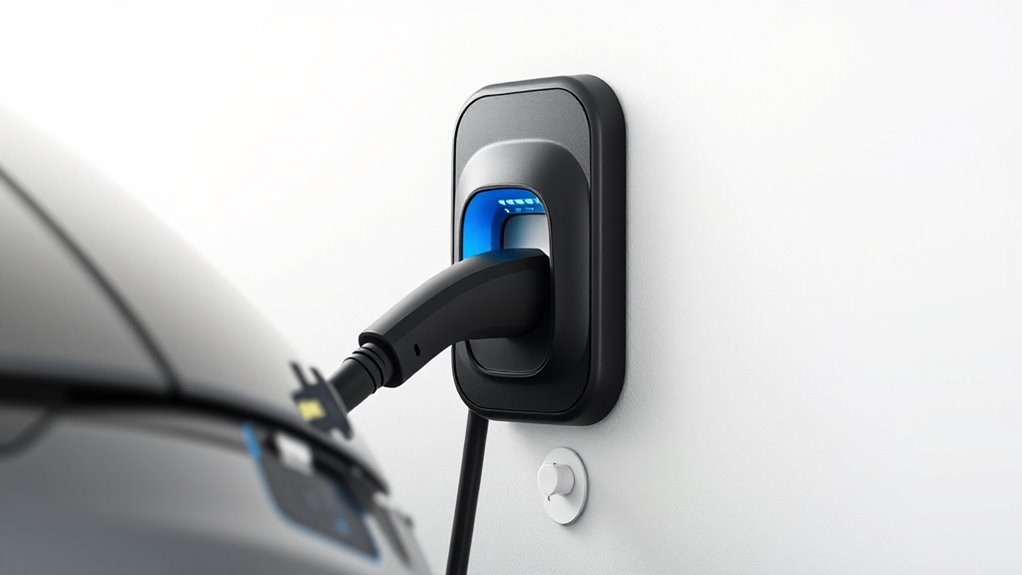

Before installing a home EV charger, you need to evaluate your electrical system’s capacity and consider any upgrades to handle the increased load safely. Choose a charger that matches your driving habits and future needs, and understand the installation process and costs involved. Check local regulations and permits to stay compliant. Planning for expansion now assures your setup remains flexible as your vehicle or technology evolves; there’s more to explore to get it just right.
Key Takeaways
- Assess your home’s electrical capacity and upgrade your panel if needed to safely support the charger.
- Choose a charger type (Level 1 or Level 2) based on your vehicle’s needs and home electrical system.
- Obtain necessary permits and consult licensed electricians to ensure code compliance and safety.
- Consider smart features and power management options for efficient, remote control, and future integration.
- Plan for scalability by leaving room for future upgrades and regularly reviewing your charging setup.
Assess Your Home’s Electrical System

Before installing a home EV charger, you need to evaluate your electrical system to guarantee it can handle the additional load. Start by checking your home’s power capacity to confirm it can support the charger without overloading circuits. Electrical safety is vital; an overloaded system can cause shorts, tripping breakers, or even fires. You might need to upgrade your electrical panel if your current capacity is insufficient. Consulting a licensed electrician helps you assess your system’s ability to handle the new demand safely. They’ll inspect your wiring, breakers, and overall electrical setup. Remember, a proper evaluation ensures safe operation and prevents future electrical hazards. Taking these steps now avoids costly repairs or safety issues down the line once your EV charger is installed. Additionally, understanding your electrical system’s capacity can help you plan for future upgrades or additional appliances. Evaluating your system’s load capacity is an essential step in ensuring your home’s electrical safety when installing a charger. Moreover, understanding the free floating nature of certain electrical components can aid in troubleshooting potential issues effectively. Being aware of the electrical system’s limitations can help prevent unexpected problems during and after installation. Recognizing the thermal behavior of your electrical components can further assist in maintaining system safety and efficiency.
Choose the Right Charger Type for Your Needs
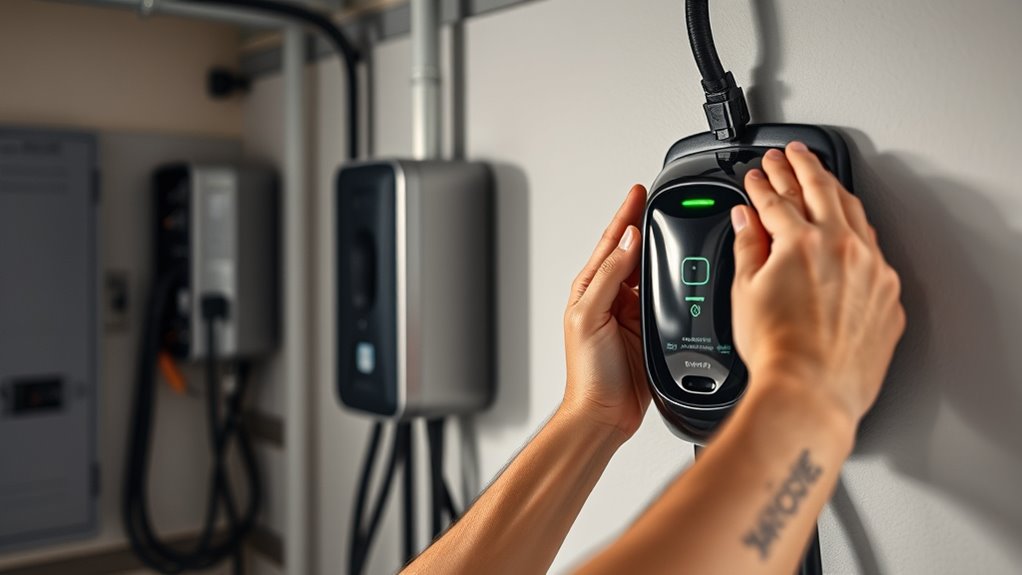
Choosing the right EV charger depends on your daily driving habits and your home’s electrical capacity. There are various charger options, from Level 1 chargers, which use standard outlets, to faster Level 2 chargers that require a dedicated circuit. Your choice should match your typical driving range and how quickly you want to recharge. Compatibility considerations are also essential; not all chargers work with every vehicle or electrical system. Check your EV’s charging port and your home’s wiring capabilities before selecting a charger. If you drive frequently or have a larger battery, a higher-capacity charger might be better. Conversely, if you only need occasional top-ups, a basic Level 1 charger could suffice. Selecting the right charger ensures efficient, safe, and cost-effective home charging. Additionally, understanding potential manipulation tactics used in the industry can help you make more informed decisions about your home charging setup. It’s also helpful to consider your home’s overall electrical capacity to ensure safe installation and optimal performance. Being aware of the European cloud solutions available can guide you toward more sustainable and secure energy choices in your home setup. Moreover, consulting with a licensed electrician can help you navigate electrical codes and ensure proper installation. Proper planning and knowledge of home electrical systems can further enhance your charging experience.
Understand the Installation Process and Costs

Understanding the installation process and costs is crucial to guarantee your home EV charger is set up safely and efficiently. The cost considerations include equipment, labor, and potential upgrades to your electrical system. Typically, installation timelines range from a few hours to a full day, depending on your home’s existing wiring and electrical capacity. Some setups might require a dedicated circuit or panel upgrade, which can add to the overall expense and time. It’s important to get a clear estimate upfront and discuss any possible additional costs with your installer. Planning ahead ensures you’re prepared for the investment and helps avoid surprises during installation. Additionally, understanding your home’s electrical capacity and any electrical system upgrades needed is essential for a successful installation. Assessing your home’s electrical capacity beforehand can help prevent unforeseen complications and delays. Knowing the typical installation timeline can also assist in scheduling and coordinating your project effectively. Being aware of cost factors related to the installation can help you budget accurately and avoid unexpected expenses. Moreover, reviewing local codes and regulations beforehand can ensure compliance and smooth approval processes.
Check for Local Regulations and Permits

Checking local regulations and permits is a critical step to guarantee your EV charger installation complies with all legal requirements. You need to review parking requirements, as some areas may restrict where you can install the charger or require designated parking spots. Additionally, utility company policies might dictate specific procedures or approvals before installation. Failing to obtain the necessary permits can lead to fines, delays, or even having to remove the charger later. Contact your city or county building department to understand permit requirements and ensure your plans align with local codes. It’s also wise to consult your utility provider to confirm any policies that could affect your installation or billing. Taking these steps early prevents complications and keeps your project on track. Security considerations are also worth reviewing, especially if your installation involves modifications to your electrical system that could impact home safety. Moreover, understanding regulatory compliance helps avoid future legal issues and ensures your setup meets all safety standards. Ensuring proper electrical codes are followed is essential for safe and legal installation. Additionally, reviewing inspection requirements can help ensure your setup passes necessary safety checks. It’s also advisable to engage with licensed professionals early in the process to ensure all installation standards are met and to facilitate smooth inspections.
Prepare for Future Expansion and Upgrades
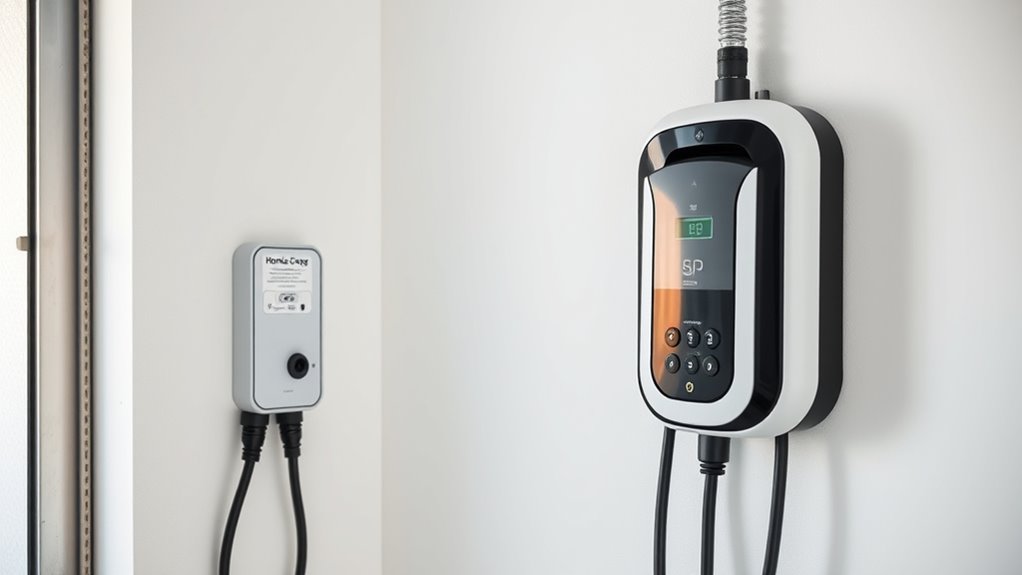
Once you’ve secured the necessary permits and ascertained your installation meets local regulations, it’s wise to plan for future expansion and upgrades. Consider your vehicle’s battery capacity and how it may grow over time. If you anticipate upgrading to a car with higher battery capacity, ensure your electrical system can handle increased power demands. Think about your current charging speed and whether you might want faster charging options later. Installing a versatile charger or leaving room for a higher-capacity circuit can save you from costly rewiring later. Additionally, future-proofing your system allows you to add extra outlets or chargers as your EV fleet expands. Planning ahead ensures your home can adapt smoothly to future needs without significant disruptions or expenses. Incorporating home charging infrastructure options now can make upgrades easier down the line. Being aware of electrical system capacity can help prevent unexpected limitations as your needs evolve. Also, selecting smart home integration features can provide greater control and monitoring over your charging setup as technology advances. Exploring power management solutions can further optimize your energy use and charging efficiency as your setup grows.
Frequently Asked Questions
How Long Does It Typically Take to Install a Home EV Charger?
Installing a home EV charging station usually takes about 4 to 8 hours, depending on your home’s electrical setup. The installation timeline involves evaluating your electrical system, wiring the charger, and guaranteeing safety standards are met. You can often schedule the installation in one day, but complex setups might require additional time. Be sure to work with a certified electrician to ensure everything is done correctly and safely.
Can I Install an EV Charger Myself or Do I Need a Professional?
You can attempt a DIY installation if you have electrical experience, but many states require licensing for such work. It’s essential to check your local licensing requirements before proceeding. While DIY might save money, improper installation can be dangerous or void warranties. Consider hiring a licensed professional to guarantee safety, code compliance, and proper setup, especially if you’re unfamiliar with electrical systems or local regulations.
What Are the Ongoing Maintenance Requirements for an EV Charging Station?
Oh, sure, maintaining your EV charger is a breeze—just check its durability and software updates regularly. You’ll want to make certain the charger stays in top shape, avoiding the catastrophic failure of an outdated software version. Usually, it involves a quick inspection, firmware updates, and keeping it clean. With a little effort, your charger will keep humming smoothly, ready to power your adventures without unexpected breakdowns.
Will Installing a Charger Affect My Home’s Electrical Insurance Policy?
Installing a home EV charger might impact your insurance policy coverage, so you’ll want to check with your provider about insurance implications. Some policies could see adjustments in premiums or coverage limits, especially if the charger increases risk or needs additional protection. It’s wise to inform your insurer beforehand to confirm your policy remains all-encompassing and to avoid surprises if a claim arises related to your EV charging station.
Are There Financial Incentives or Rebates Available for Installing a Home EV Charger?
You can often get financial incentives like tax credits and utility rebates when you install a home EV charger. These programs help reduce your upfront costs, making it more affordable to switch to electric. Check with your local utility and government agencies to find out what’s available in your area. Taking advantage of these incentives not only saves you money but also encourages eco-friendly choices for your home.
Conclusion
Installing a home EV charger might seem overwhelming, but it’s a game-changer for your daily routine. By understanding your electrical system, choosing the right charger, and staying compliant with regulations, you’ll transform your garage into a futuristic powerhouse. Think of it as upgrading from a bicycle to a rocket—your car will thank you! Once you’ve planned ahead, you’ll enjoy seamless charging and future-proofing your home, making your EV experience as smooth as a drive on an open highway.