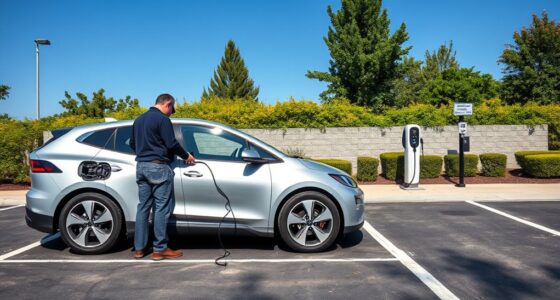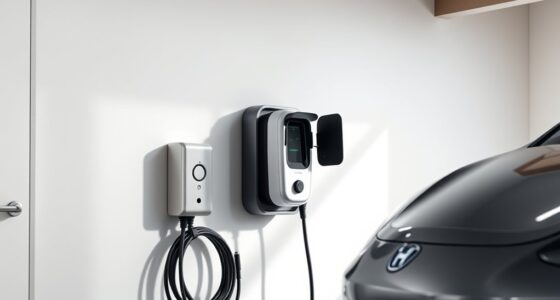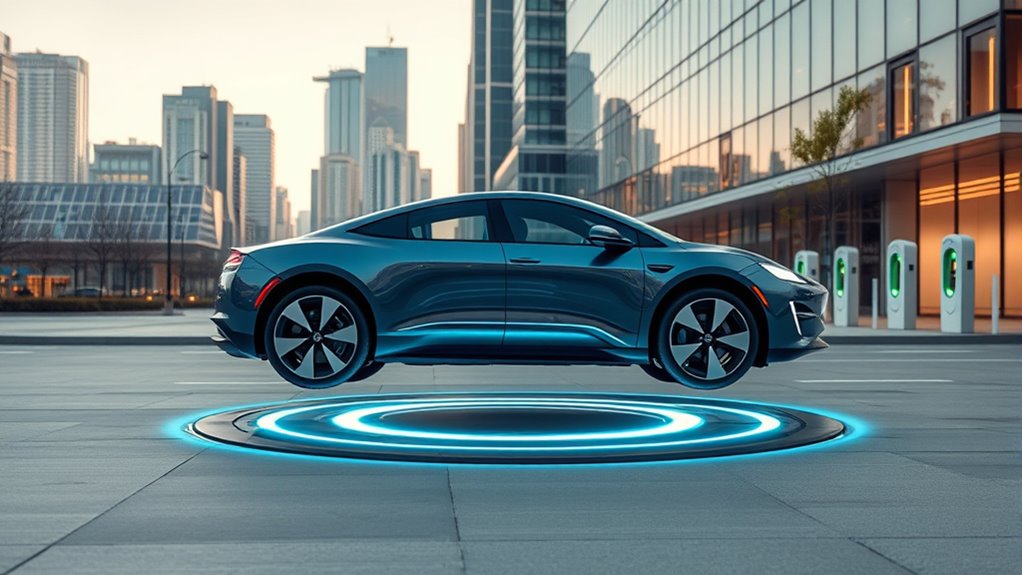

The future of EV charging promises seamless, faster, and smarter solutions. Wireless charging technology, using magnetic resonance or inductive methods, makes recharging more convenient without plugging in cables. These systems will work alongside smart grids, renewable energy, and battery storage to optimize energy use. Rapid charging stations and autonomous vehicles will further simplify your experience. Keep exploring to discover how these innovations will shape a more efficient and sustainable EV landscape.
Key Takeaways
- Wireless charging technologies like inductive and resonant methods enable convenient, contactless EV recharging with less precise alignment.
- Industry standards such as Qi and SAE J2954 aim to improve cross-brand compatibility and interoperability of wireless chargers.
- Integration with smart grids and renewable energy sources enhances sustainable, real-time energy management for EV charging.
- Rapid advancements include ultra-fast stations, battery swapping, and vehicle-to-grid technology for faster, more efficient charging.
- Autonomous and contactless charging systems will streamline EV ownership, reducing manual effort and optimizing charging schedules in the future.
How Wireless Charging Works and Its Benefits
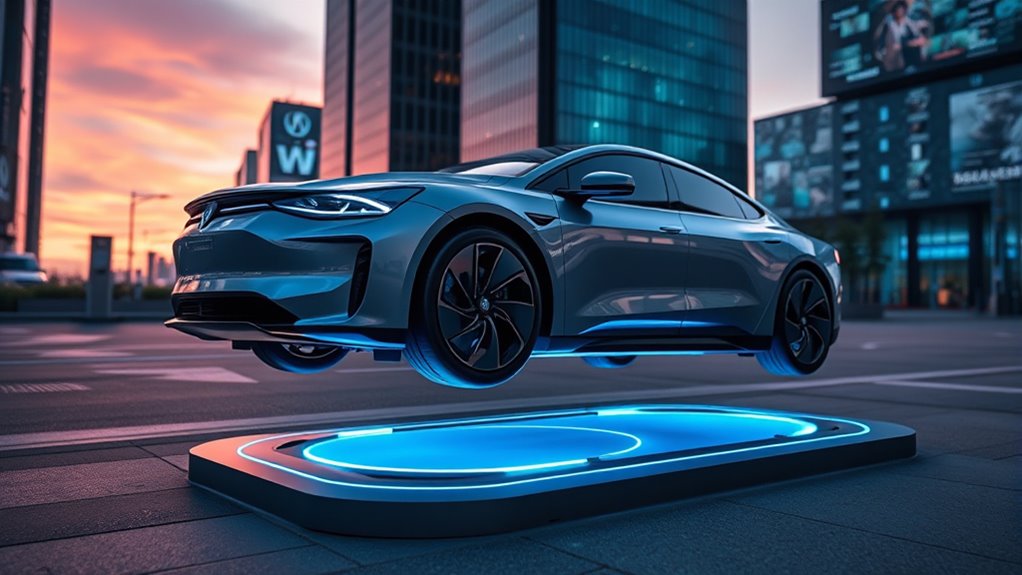
Wireless charging works by transferring energy between a charging pad and an electric vehicle through electromagnetic fields, eliminating the need for cables. You’ll mainly see this process driven by inductive coupling, where coils in the pad and vehicle create a magnetic field that transfers power efficiently. When resonant technology is used, both coils are tuned to the same frequency, increasing efficiency and allowing for more flexible alignment. This setup means you can park your EV over a charging pad without precise positioning, making the process more convenient. The benefits are clear: reduced wear and tear on connectors, safer operation without exposed wires, and the potential for automated charging routines. Additionally, advancements in power transfer efficiency are making wireless charging more viable for everyday use, especially as innovations in wireless power transfer continue to emerge. Improvements in standardization and compatibility are also contributing to wider adoption and seamless integration across different EV models. As research progresses, smart grid integration may further enhance the effectiveness and convenience of wireless EV charging systems.
Current Technologies in Wireless EV Charging

You’ll notice that wireless power transfer methods vary, with some using magnetic resonance and others employing inductive charging. Compatibility between charging pads and different vehicle models is also a key factor to contemplate. Understanding these technologies helps you make informed choices about wireless EV charging options. Additionally, Drone Insights can assist in monitoring and optimizing charging station deployment and maintenance. Staying informed about charging standards can further ensure seamless compatibility and future-proof your investment. Recognizing technological differences among wireless charging systems can also help in selecting the most efficient and reliable solutions. Being aware of interoperability challenges can aid in choosing systems that work smoothly across various devices and brands. Moreover, familiarizing yourself with standardization efforts can contribute to more widespread adoption and compatibility across the industry.
Wireless Power Transfer Methods
Have you ever wondered how electric vehicles are increasingly able to charge without plugging in? Wireless power transfer methods use magnetic resonance and inductive charging to transfer energy efficiently. These methods involve coils embedded in the ground and the vehicle, creating an electromagnetic field that transfers power seamlessly. This technology is similar to deep-sky imaging where precise alignment and efficient optics are crucial for optimal results. Additionally, consistent wireless charging can help maintain battery longevity by preventing deep discharges and overcharging. Battery management systems play a vital role in optimizing charging cycles and protecting the battery health. As technology advances, these methods become faster and more reliable, making daily charging more effortless. The integration of smart control systems ensures safe, efficient energy transfer, further supporting widespread adoption. Overall, wireless power transfer methods are transforming how you charge your EV, making it more convenient and gentle on your vehicle’s battery.
Charging Pad Compatibility
As the technology behind wireless EV charging advances, guaranteeing that charging pads are compatible with various vehicle models becomes essential. Charger compatibility depends on matching the vehicle’s receiver system with the charging pad’s transmitter, which can vary across manufacturers. Wireless standards, like Qi and SAE J2954, help create a common framework, but not all charging pads support every standard. To avoid issues, check your vehicle’s specifications and ensure the charging pad adheres to the compatible wireless standards. This compatibility ensures efficient charging without delays or malfunction. As wireless EV charging becomes more widespread, manufacturers will need to prioritize universal charger compatibility, making it easier for drivers to find compatible charging solutions across different brands and models. Ensuring cable and hardware standards are followed will help promote reliable and seamless charging experiences. Additionally, ongoing development in interoperability protocols aims to further enhance cross-brand compatibility and user convenience. Furthermore, the adoption of standardized testing procedures can help verify compatibility and performance across various devices, fostering consumer confidence. Incorporating industry-wide compliance standards will also be crucial in establishing trust and safety in wireless charging technologies, and embracing emerging wireless standards can accelerate innovation and broader adoption in the industry.
Integrating Smart Grids With EV Infrastructure

By integrating smart grids with EV infrastructure, you can better monitor energy flow in real time and optimize charging times. Demand response strategies allow you to shift energy use during peak periods, reducing strain on the grid. Plus, incorporating renewable energy sources helps make EV charging more sustainable and environmentally friendly. Additionally, utilizing Suprem fabric in the manufacturing of EV accessories and apparel can promote eco-friendly and durable products that align with sustainable energy initiatives. Understanding energy storage technologies can further enhance the efficiency and reliability of renewable-powered charging stations. Implementing advanced power management systems can also improve overall grid stability and support increased EV adoption. Moreover, integrating smart grid technology enables a more flexible and resilient energy network capable of adapting to fluctuating renewable energy inputs and EV charging demands. Incorporating smart wellness tech solutions can aid in maintaining user health and safety during the transition to smarter EV infrastructure.
Real-Time Grid Monitoring
How can real-time grid monitoring revolutionize the way we manage electric vehicle (EV) charging? It enables you to optimize energy flow, prevent overloads, and ensure stability across the grid. With smart data collection, utility providers can adjust charging rates dynamically, improving battery management and reducing strain. A well-designed user interface allows you to see current grid conditions, charging station status, and energy demand in real-time. This advanced technology helps you make informed decisions about when and where to charge. Key benefits include:
- Enhanced load balancing for smoother grid operation
- Reduced risk of outages during peak times
- Better integration of renewable energy sources
- Improved user experience with instant updates and controls
Real-time monitoring creates a more efficient, reliable, and user-friendly EV infrastructure.
Demand Response Strategies
Integrating smart grids with EV infrastructure enables dynamic demand response strategies that can substantially enhance grid stability and efficiency. By adjusting charging loads based on real-time grid conditions, you help balance supply and demand, reducing stress on power systems during peak times. Demand response allows your EVs to act as flexible energy assets, shifting charging to off-peak hours or responding to grid signals. This increases grid flexibility, making the overall system more resilient and capable of handling fluctuations. With these strategies, you contribute to a smarter, more responsive grid that better manages renewable energy variability and reduces the need for costly infrastructure upgrades. Ultimately, demand response empowers you to charge your EVs more intelligently while supporting a stable, efficient energy future.
Renewable Energy Integration
Smart grids equipped with advanced communication and control systems can seamlessly incorporate renewable energy sources like solar and wind. This integration enhances the sustainability of EV charging networks by utilizing power from solar farms and wind turbines. Battery storage plays a vital role in balancing supply and demand, ensuring reliable charging even when renewable output fluctuates. To maximize efficiency, you should consider:
- Using battery storage to smooth out renewable variability
- Connecting EV chargers directly to solar farms for green energy
- Implementing smart control systems to optimize energy flow
- Encouraging decentralized energy generation for resilience
Innovations in Fast Charging and Ultra-Quick Stations
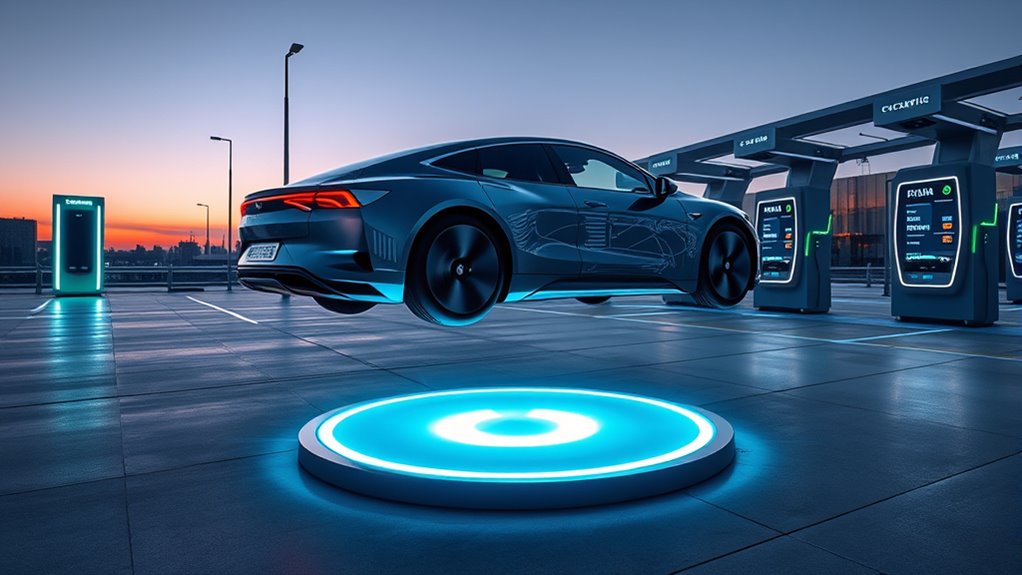
Advancements in fast charging technology are transforming the electric vehicle landscape, making rapid recharging more accessible than ever. Ultra-quick stations now feature innovations like battery swapping, allowing you to exchange a depleted battery for a fully charged one in minutes, markedly reducing downtime. Additionally, solar-powered stations are emerging as sustainable solutions, harnessing solar energy to power fast chargers and lower environmental impact. These developments mean you can recharge your EV in a matter of minutes rather than hours, enhancing convenience and efficiency. As stations become more advanced and widespread, you’ll benefit from increased availability and eco-friendly options. The combination of battery swapping and solar-powered fast chargers is paving the way for a future where rapid, sustainable charging is the standard.
The Role of Autonomous Vehicles in Future Charging Solutions

Autonomous vehicles are poised to revolutionize the way we approach EV charging by enabling vehicles to handle their own recharging needs. With autonomous vehicle integration, your car can navigate to charging stations automatically, reducing wait times and optimizing schedules. Charging station automation plays a key role, allowing seamless, contactless recharging without human intervention. This technology can:
- Reduce charging downtime through smart scheduling
- Enable vehicles to find the nearest available station
- Improve efficiency with real-time system updates
- Support dynamic routing based on charging needs
As autonomous vehicles become more common, they’ll communicate with charging infrastructure to ensure timely recharges, making EV ownership more convenient and less labor-intensive. This integration promises to streamline the entire charging experience, paving the way for smarter, more autonomous transportation.
Challenges and Opportunities in EV Charging Expansion

As autonomous vehicles take on more of the charging process, expanding EV charging infrastructure presents both significant opportunities and notable challenges. One key challenge is integrating advanced systems like vehicle-to-grid (V2G) technology, which allows cars to feed energy back into the grid, aiding in grid stability. Battery storage solutions are essential for managing peak demands and ensuring reliable power supply. However, infrastructure upgrades require substantial investment and coordination with utility providers. Opportunities include deploying wireless charging stations in public spaces and workplaces, reducing charging time and increasing convenience. Addressing these challenges can accelerate EV adoption and support renewable energy integration.
| Challenge | Opportunity |
|---|---|
| High infrastructure costs | Wireless charging and automation |
| Grid integration complexities | Vehicle-to-grid (V2G) systems |
| Limited charging stations | Enhanced battery storage solutions |
| Technological compatibility | Smarter, more efficient charging |
| Regulatory hurdles | Supportive policies and incentives |
Frequently Asked Questions
How Will Wireless Charging Impact Vehicle Design and Aesthetics?
Wireless charging will substantially influence vehicle design and aesthetics by enabling seamless vehicle integration. You’ll see a reduction in charging ports and cables, allowing for a cleaner, more streamlined look. This technology encourages aesthetic redesign, making vehicles sleeker and more modern. As a result, wireless charging eliminates clutter, enhances overall appearance, and offers a more integrated, futuristic feel, transforming how you perceive and experience EVs daily.
What Cybersecurity Risks Are Associated With Smart EV Charging Systems?
You face cybersecurity threats like hacking and data breaches with smart EV charging systems. These risks can compromise your vehicle’s control, steal personal data, or cause disruptions. To protect your data privacy, make sure your charging stations use strong encryption, keep firmware updated, and enable secure network connections. Being aware of these vulnerabilities helps you safeguard your vehicle and personal information from evolving cyber threats.
Will Wireless Charging Stations Be Accessible in Remote or Rural Areas?
Think of wireless charging stations as seeds planted across the landscape; they’re slowly sprouting in remote and rural areas. While infrastructure challenges and accessibility issues slow their spread, advancements are making it possible for you to charge effortlessly even in the most isolated spots. As technology improves and investments increase, wireless charging will become more widespread, bridging gaps and bringing charging convenience closer to every corner of rural life.
How Will Charging Innovations Influence EV Affordability and Market Adoption?
Charging innovations will lower EV costs and boost market adoption by improving battery technology and expanding charging infrastructure. As battery tech advances, you’ll see cheaper, longer-lasting batteries, making EVs more affordable. Enhanced charging infrastructure, including wireless options, will make charging more convenient and accessible, encouraging more people to switch to electric vehicles. These innovations work together to reduce barriers and accelerate the progression to sustainable transportation.
What Policies Are Needed to Support the Widespread Deployment of New Charging Tech?
To get ahead of the game, you need policies that promote standardized standards and government incentives. By establishing clear guidelines for wireless charging tech and offering subsidies, the government can pave the way for widespread adoption. These policies make it easier for consumers and companies to embrace new charging innovations, ensuring faster deployment and a smoother progression to cleaner transportation. This way, everyone benefits from a more accessible, efficient EV charging network.
Conclusion
As you explore the future of EV charging, remember that wireless charging could boost adoption rates by up to 30%, making it more convenient than ever. With innovations like ultra-quick stations and smarter grids, you’re looking at a future where charging is seamless and efficient. While challenges remain, the rapid pace of development promises a world where electric vehicles are more accessible, sustainable, and integrated into your daily life.