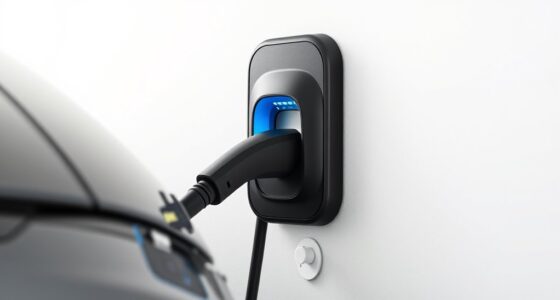

During a power outage, you can charge your EV using backup options like portable chargers, power banks, or solar panels, ensuring they are well-maintained and properly connected. Gas generators can also provide reliable emergency power when needed, while connecting to emergency power units or using adapters on standard outlets offers additional solutions. Proper safety precautions are essential to avoid hazards. Keep your equipment ready and in good shape for these situations—and there’s more to explore if you want to be fully prepared.
Key Takeaways
- Use portable EV chargers or power banks, ensuring cables and connections are maintained and inspected regularly.
- Utilize solar panels with energy storage to generate and store power for EV charging during outages.
- Employ gas generators, properly connected, as reliable backup power sources for charging your EV safely.
- Connect to emergency power supply units (EPSUs), verifying compatibility and following correct connection procedures.
- Keep home wiring and charging equipment well-maintained for safe, efficient charging during power interruptions.
Assessing Your Vehicle’s Battery and Range Capabilities
Before relying on your EV during a power outage, it’s essential to understand your vehicle’s battery health and range capabilities. Regular vehicle maintenance helps guarantee your battery remains in top condition, maximizing its efficiency when you need it most. Check your owner’s manual or onboard diagnostics to assess battery health, looking for signs of degradation or reduced capacity. Knowing your vehicle’s current range allows you to plan emergency use more effectively, avoiding surprises when power is out. Keep an eye on your battery’s state of charge and overall health, especially if your vehicle is older or has accumulated miles. Maintaining good vehicle maintenance habits ensures your EV performs reliably in critical moments, giving you confidence that your battery can support your needs during a power outage. Additionally, understanding the contrast ratio of your vehicle’s display can help you better interpret dashboard information during low-light conditions. Being aware of your vehicle’s battery capacity and how it can fluctuate over time is crucial for accurate planning. Regularly monitoring your battery performance can also help detect early signs of decline before a sudden reduction in range occurs. For electric vehicles, understanding the impact of energy efficiency can make a significant difference during emergencies, helping you maximize available power and prevent unexpected depletion.
Utilizing Portable EV Chargers and Power Banks
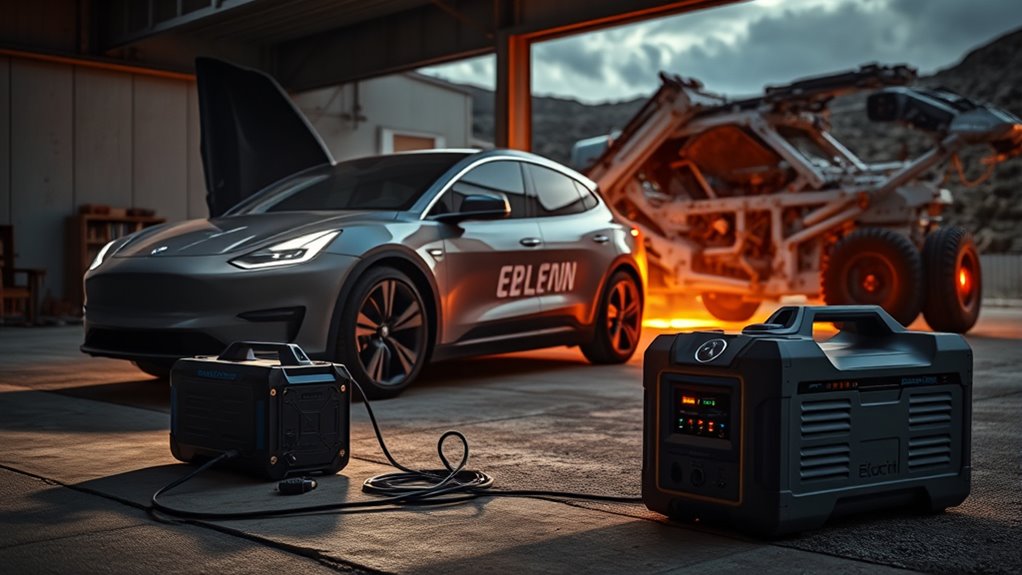
When a power outage strikes, portable EV chargers and power banks can be invaluable tools to keep your vehicle charged. They offer a convenient way to top off your battery when traditional power sources are unavailable. To maximize their effectiveness, make certain you follow proper EV charging etiquette, such as avoiding overuse and sharing resources responsibly. Keep your portable charger well-maintained by regularly checking cables, connections, and battery health to ensure reliability during emergencies. Visualize a compact charger fitting into your car trunk, a power bank with multiple cables ready for action, or yourself calmly plugging in your EV at a roadside stop. These tools provide peace of mind, helping you conserve energy and extend your vehicle’s range when power grids are down. Additionally, understanding the best inverter generators for backup power can help you select a reliable source to complement your portable charging solutions. Regularly testing your equipment ensures you’re prepared when it matters most, avoiding surprises when you need backup power. Incorporating modern charging technology can further enhance your ability to stay powered during outages, especially considering the tax implications of inheritance and gifts that might help fund such preparedness measures. Recognizing the importance of backup power options can make all the difference in maintaining mobility during unforeseen outages.
Harnessing Solar Power for Emergency Charging
Setting up solar panels is a reliable way to keep your EV charged during outages. You’ll also want to contemplate battery storage solutions to hold excess energy for later use. With the right system, you can guarantee your vehicle stays powered when the grid goes down. Proper installation and maintenance of solar and storage systems are essential to ensure safety and efficiency. Additionally, understanding battery technologies can help optimize your energy storage for emergency use. Incorporating system monitoring can further enhance safety and performance by providing real-time data on energy usage and system status. Being aware of energy management strategies can help you maximize the utility of your backup power system during emergencies.
Solar Panel Setup
Harnessing solar power for emergency EV charging requires a well-designed solar panel setup that can operate independently during outages. To guarantee reliable energy, pay attention to solar panel placement, selecting a spot with maximum sun exposure free from shading. Proper solar panel maintenance is essential for peak performance; regularly clean the panels and inspect for damage or debris. Consider mounting panels at the correct angle to capture sunlight efficiently throughout the year. You might install panels on your roof or a dedicated ground mount, depending on space and sunlight. Keep the setup simple yet effective, ensuring it can run without grid power. By focusing on strategic placement and consistent maintenance, you’ll assure your solar system provides dependable backup charging whenever needed. Additionally, incorporating energy storage solutions like batteries can store excess power for use during night or cloudy days, further enhancing reliability. Proper system sizing is also critical to match your EV’s charging demands and avoid underperformance, especially when factoring in solar irradiance variations throughout the year. Moreover, understanding the local climate helps optimize sun exposure and system performance.
Battery Storage Solutions
Battery storage solutions are essential for ensuring your solar power can reliably charge your EV during a power outage. By storing excess solar energy, you gain independence and peace of mind, especially when faced with unexpected outages. These systems support home automation, allowing you to control your energy use remotely and optimize your electric vehicle maintenance routines. Imagine never worrying about running out of charge, knowing your stored energy keeps you moving. To connect emotionally, consider how this security lets you focus on what truly matters. Here’s a glimpse of what battery storage offers:
| Benefits | Emotions Fueled |
|---|---|
| Reliable emergency charging | Peace of mind |
| Supports home automation | Convenience & control |
| Enhances EV maintenance | Confidence in readiness |
| Reduces reliance on grid | Independence & freedom |
| Saves money long-term | Empowerment & security |
Additionally, understanding energy storage capacity can help you choose the right system to meet your needs and maximize your Vegan lifestyle sustainability. Incorporating efficient energy management strategies further ensures you make the most of your stored energy and support your commitment to a sustainable lifestyle. Developing a deeper knowledge of battery lifespan can also assist in planning for long-term energy needs and system upgrades.
Employing Gas Generators for Backup Energy

When a power outage hits, gas generators can provide a reliable backup energy source for charging your electric vehicle. A good gas generator offers portable power, making it easy to set up anywhere you need it. You’ll need to connect your EV to the generator carefully, ensuring safe and proper wiring. Imagine the scene: a sturdy gas generator humming steadily in your driveway, ready to supply electricity when the grid fails. It’s perfect for quick, emergency charging without relying on the grid. You can envision yourself turning a key, hearing the engine start, and knowing your EV is still operational. With a gas generator, you gain independence and peace of mind during outages, especially when traditional power sources are unavailable.
Connecting to Emergency Power Supply Units (EPSUs)
Before connecting your EV to an EPSU, you need to verify compatibility to avoid damage. Follow proper connection procedures to prevent electrical hazards, and always prioritize safety precautions. Getting these steps right helps you charge safely during a power outage.
EPSU Compatibility Requirements
Connecting your electric vehicle (EV) to an Emergency Power Supply Unit (EPSU) requires ensuring compatibility between the two systems. Without proper epsu compatibility, your emergency power setup might fail or damage your vehicle. To verify compatibility, check that the EPSU provides the correct voltage, current, and connector type suitable for your EV. Visualize a power source with sturdy cables, a compact unit with clear labels, and the right adapters ready to connect seamlessly.
- A stable, clean power output matching your EV’s charging specifications
- Proper adapters that fit your vehicle’s charging port
- An EPSU capable of handling the power load without overheating
Proper Connection Procedures
Ensuring your EPSU and EV are compatible sets the stage for a safe and effective connection. Start by choosing a proper charging station placement, ideally close to your vehicle and accessible during a power outage. Before connecting, verify your vehicle connector type matches the EPSU’s output port—common types include Type 1 and Type 2 connectors. Always turn off the EPSU before attaching the connector to prevent sparks or electrical issues. Securely plug the connector into your EV’s charging port, ensuring a snug fit. Avoid forcing connections or connecting to damaged cables. Once connected, turn on the EPSU and monitor the initial charging process. Following these steps helps guarantee a safe, reliable charging experience during outages.
Safety Precautions Needed
To safely connect your EV to an Emergency Power Supply Unit (EPSU), it is vital to follow key safety precautions. First, ensure the EPSU is compatible with your vehicle and rated for your EV’s power needs. Before connecting, turn off all devices and disconnect from other power sources to prevent back-feeding. Keep fire safety in mind by inspecting cables for damage and avoiding exposed wires. Maintain clear emergency communication by having a fully charged phone nearby and informing others of your actions. Visualize these safety measures:
- Picture yourself checking the EPSU for any cracks or frayed cords.
- Imagine carefully plugging in the connectors, avoiding sparks.
- Envision alerting emergency contacts before starting the process.
Following these precautions minimizes risks and guarantees a safe, effective connection during power outages.
Using a Standard Wall Outlet With a Proper Adapter
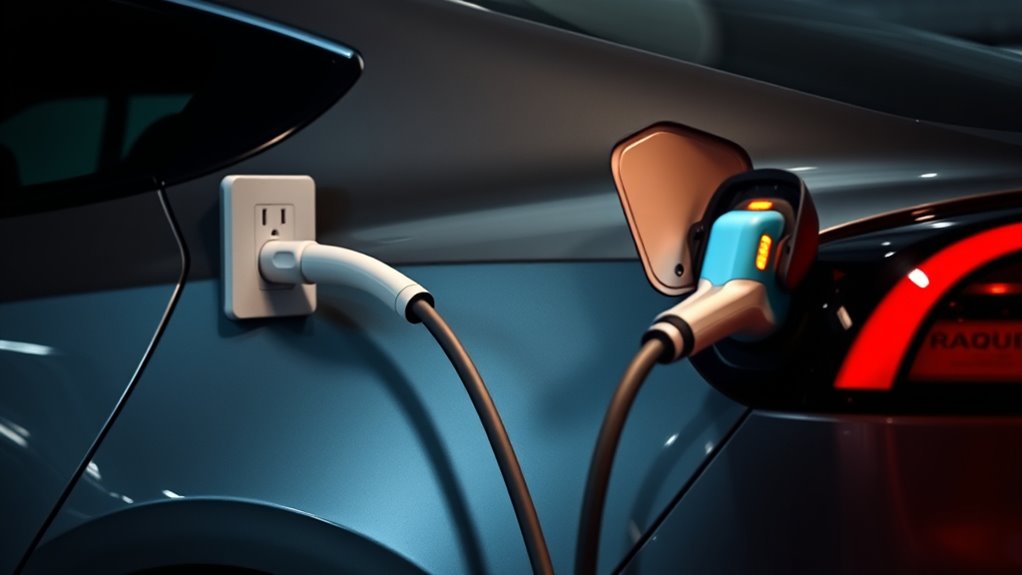
During a power outage, using a standard wall outlet to charge your electric vehicle can be a practical option if you have the right equipment. To do this safely, ensure your charging setup includes a proper adapter compatible with your outlet and vehicle. Regular charging station maintenance is vital, even during outages, to prevent issues and ensure a steady power supply. Keep your EV software updates current, as they often include improvements for charging efficiency and safety features. This setup may charge your EV slowly, but it provides a reliable backup when other options aren’t available. Always verify that your home wiring can handle the extra load, and follow safety guidelines to avoid electrical hazards. Proper preparation ensures your EV remains ready during unexpected power disruptions.
Leveraging Renewable Energy Sources During Outages

Have you considered how renewable energy sources can keep your EV charged during power outages? Installing solar panels can generate clean energy directly from sunlight, reducing reliance on the grid. With proper battery storage maintenance, you can store excess solar power for use when the power’s out. This setup guarantees your EV stays charged without interruption. Imagine a system where:
- Solar panel installation captures sunlight efficiently even on cloudy days
- Your batteries store energy safely, ready for use anytime
- You harness renewable power, decreasing your dependence on external sources
Planning for Off-Grid Charging With Alternative Power Sources

Planning for off-grid charging requires carefully selecting and integrating alternative power sources that can reliably supply energy to your EV when traditional grid access isn’t available. You need to take into account your EV charging infrastructure, ensuring it’s compatible with your chosen power sources, such as solar panels, generators, or battery storage. These options can help you maintain grid stability in emergency situations and reduce reliance on the main power grid. Proper planning involves evaluating your energy needs, available space, and the efficiency of each source. By having a well-designed off-grid system, you’ll ensure your EV stays charged during outages, avoiding disruptions and maximizing backup power reliability. Thoughtful integration of these sources makes off-grid charging a feasible, sustainable solution for emergencies.
Ensuring Safety When Charging During Power Disruptions
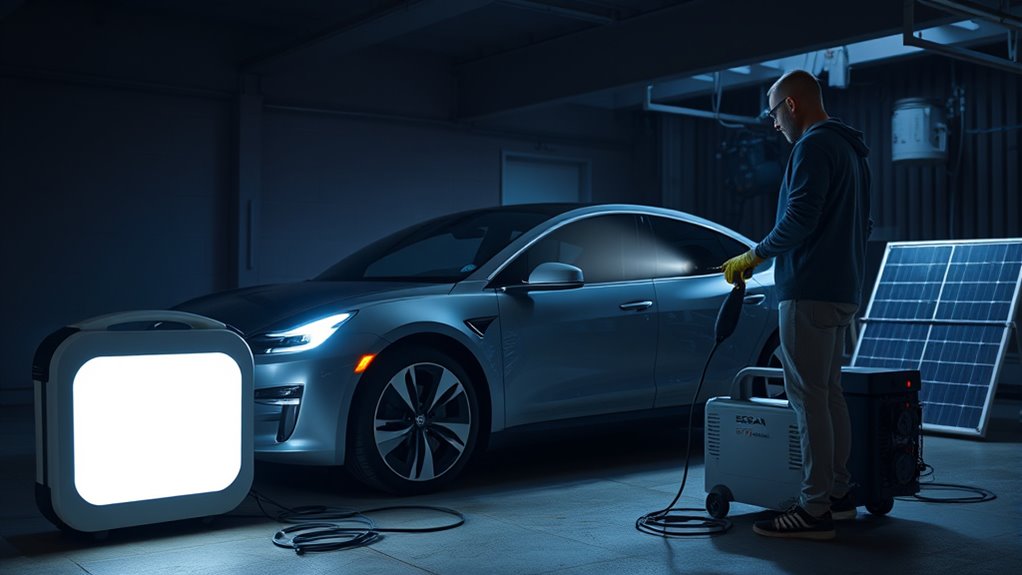
When charging your EV during a power outage, always use proper equipment designed for safe operation. Be careful not to overload circuits, which can cause hazards or damage. Taking these precautions helps keep you safe while maintaining your vehicle’s charge.
Use Proper Equipment
Using the right equipment is essential to stay safe while charging your EV during a power outage. You must confirm that your charging infrastructure is compatible with your vehicle to prevent damage or safety hazards. Always use a charger specifically designed for your EV model and check that it meets safety standards. Using improper equipment can lead to electrical shorts or fires, especially during unstable power conditions. Imagine a sturdy, weatherproof charging cable connected securely to a reliable power source, or a portable power station with the correct connectors ready to plug in.
- A certified Level 2 charger with safety features
- An inverter compatible with your vehicle’s charging port
- Properly rated extension cords designed for outdoor use
Avoid Overloading Circuits
Ensuring your charging setup doesn’t overload your circuits is vital for safety during a power outage. A circuit overload occurs when too many devices draw power simultaneously, risking damage to your electrical system or fire hazards. To prevent this, avoid plugging your EV charger into a circuit already in use or near capacity. Also, be mindful of power surges, which can occur during outages or restoration. These sudden spikes can damage your vehicle’s charging system if not protected. Use outlets designed for high loads and consider installing surge protectors to shield your equipment. Always check your home’s circuit capacity before charging and don’t push beyond safe limits. Staying alert to these risks helps prevent overloads and keeps both your vehicle and home safe during power disruptions.
Maintaining and Preparing Your Backup Charging Equipment
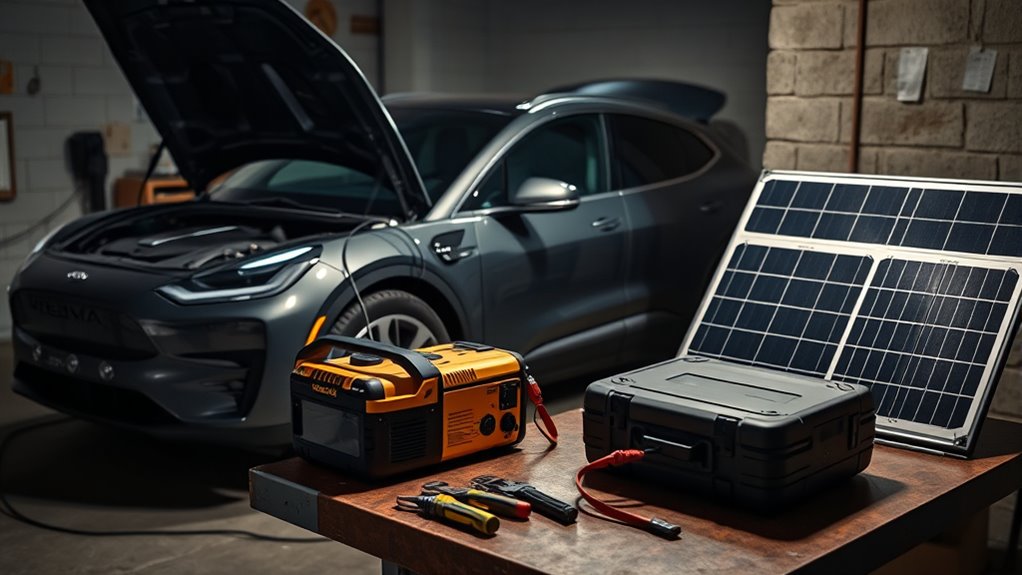
Regularly inspecting and maintaining your backup charging equipment is essential to guarantee it’s ready when you need it most. Proper charging station maintenance helps preserve battery longevity and ensures reliable performance during outages. To prepare, check for any signs of wear or corrosion, and verify that all connections are secure. Keep your backup charger clean and free of dust or debris. Test your equipment periodically to confirm it powers on correctly and charges your EV efficiently. Familiarize yourself with the manufacturer’s instructions for routine maintenance and troubleshooting. Visualize your backup setup: a well-kept charging station with sturdy cables, clear indicator lights, and fully charged batteries ready to activate when needed. Consistent upkeep guarantees your backup charging system functions smoothly when power is out.
Frequently Asked Questions
How Long Can I Expect My EV to Last on Backup Power Sources?
Your EV’s backup power sources can last for different emergency durations depending on your battery capacity and the power draw during use. Typically, a fully charged backup system might power your vehicle for 30 to 100 miles, giving you an emergency duration of a few hours to a day. To maximize your EV’s backup time, conserve energy by limiting non-essential functions and driving efficiently.
Are There Specific EV Models Better Suited for Emergency Charging?
Some EV models are better suited for emergency charging because of their battery compatibility and charging speed. Look for vehicles that support fast-charging stations and have versatile battery systems, like Tesla or Chevrolet Bolt. These models allow you to quickly recharge during outages, minimizing downtime. Choosing an EV with compatible batteries guarantees smoother backup power use, and faster charging features help you get back on the road swiftly when power is limited.
What Are the Costs Associated With Different Backup Charging Options?
Imagine your EV as a trusty steed ready for the storm. Backup charging options vary in costs; portable generators might cost a few hundred dollars, while installing a home backup system can reach thousands. You should consider installation expenses, which include labor and equipment. A cost comparison reveals that portable solutions are cheaper upfront but less reliable, whereas permanent setups cost more initially but offer peace of mind during outages.
Can I Safely Charge My EV in a Garage During a Power Outage?
Yes, you can safely charge your EV in your garage during a power outage if you prioritize garage safety and proper power outage preparation. Make certain your garage is well-ventilated, free of flammable materials, and that your charging equipment is in good condition. Use a surge protector, avoid extension cords, and follow the manufacturer’s instructions. Staying cautious helps prevent hazards and keeps your EV charging process safe during outages.
How Do Environmental Conditions Affect Backup Charging Effectiveness?
Coincidentally, environmental conditions can substantially impact your backup charging. High temperatures reduce solar efficiency, making solar panels less effective when it’s hot, while cold temperatures can lower battery performance and slow charging. Conversely, moderate, sunny, and cool conditions optimize both solar efficiency and battery health. So, when planning backup charging, consider the weather—ideal conditions guarantee your EV charges efficiently, especially during a power outage.
Conclusion
By evaluating your vehicle’s battery, utilizing portable chargers, harnessing solar and renewable energy, employing generators, and connecting to emergency power sources, you create a thorough backup plan. Each option offers reliability, each solution provides independence, and each step ensures safety. Prepare, plan, and stay proactive to keep your EV charged during outages. With the right knowledge and equipment, you’ll stay powered, stay safe, and stay confident no matter what the power outage brings.