At a Glance
| Criteria | Portable Foldable Solar Charger | Fixed Panel Solar Charger Station | Winner |
|---|---|---|---|
| Power Output | Up to 50W | Up to 150W or more | B |
| Portability | Lightweight, foldable, fits in a backpack | Heavy, fixed installation, often requires setup space | A |
| Durability | Moderate; weather-resistant but not rugged | High; rugged, weatherproof, meant for outdoor stations | B |
| Ease of Use | Very easy; unfolds and connects via USB or laptop port | Moderate; requires setup and connections, less portable | A |
| Price | Lower; generally under $150 | Higher; ranges from $300 to $700 | A |
| Charging Speed | Slow to moderate; depends on sunlight and device capacity | Fast; designed for high-capacity charging | B |
| Compatibility | Universal; compatible with most laptops via USB-C or adapters | Very compatible; supports multiple devices with dedicated ports | A |
| Versatility | Limited; mainly for laptops and small devices | High; suitable for multiple devices and backup power | B |

SOARAISE Solar Power Bank 48000mAh Wireless Portable Charger with 4 Cables
- High-Efficiency Solar Panels: Charges 5 times faster with 4 panels
- Large 48000mAh Capacity: Extended power for outdoor use
- Multi-Device Compatibility: Supports 7 devices simultaneously
As an affiliate, we earn on qualifying purchases.
SoaraiSe Solar Charger Power Bank – 48000mAh Wireless Portable Charger with Built-in Cables and Solar Panels

<p>The <strong>SoaraiSe Solar Charger Power Bank</strong> stands out for its massive 48000mAh capacity, making it ideal for extended outdoor use where charging multiple devices over days is necessary. Its four high-efficiency solar panels enable faster recharging outdoors, although the bulkier size and weight might be a concern for some users. Multiple ports, including wireless and wired options, provide flexibility for different devices. However, its large size means it’s best suited for those prioritizing power over portability, especially in camping or long trips.</p>
SoaraiSe Solar Charger Power Bank – 48000mAh Wireless Portable Charger with Built-in Cables and Solar Panels
- ✔ Capacity: 48000mAh
- ✔ Solar Panels: 4 high-efficiency panels
- ✔ Ports: 2 USB-A, 1 USB-C (input/output)

Takki Solar Generator 120W Peak Portable Power Station with 21W Solar Panel and 88.8Wh Battery
- ✔ Battery Capacity: 88.8Wh
- ✔ Peak Power: 120W
- ✔ Weight: 2.29 lbs
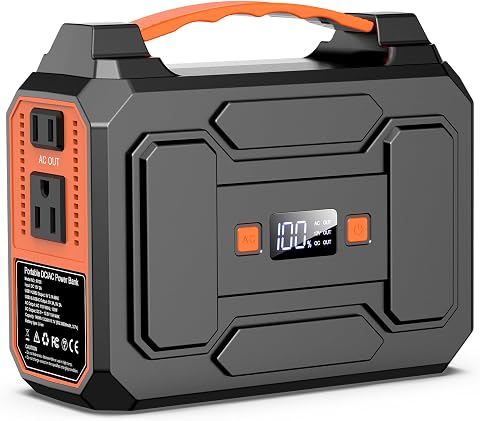
Apowking Portable Power Station 146Wh 200W Peak Solar Power Bank with AC Outlet
- ✔ Capacity: 146Wh / 39600mAh
- ✔ Peak Power: 200W
- ✔ Rated Power: 100W
Pros:
- High-capacity 48000mAh battery supports extended device use
- Fast solar charging with four high-efficiency panels
- Multiple charging options including wireless, USB-A, and USB-C
- Built-in cables for convenience
Cons:
- Bulkier and heavier than smaller counterparts
- Charging speed depends heavily on sunlight conditions
- May be overkill for casual or short-term outdoor use
Best for: Long outdoor stays, camping, or situations requiring sustained power for multiple devices
Not ideal for: Lightweight backpackers or those needing a compact charger for brief outings
Bottom line: Best suited for outdoor enthusiasts needing long-term, versatile power, despite its size and weight tradeoffs.
“Best suited for outdoor enthusiasts needing long-term, versatile power, despite its size and weight tradeoffs.”

Takki Solar Generator 120W Peak Portable Power Station with 21W Solar Panel 88.8Wh Battery Power Bank with 110V AC Outlet for Camping RV Tent Home Outages Emergency
- Lightweight and Compact: Weighs only 2.29 lbs, fits in backpack
- Fast Charging: Charges from 0% to 80% in 2 hours
- Includes Solar Panel: Foldable 21W high-efficiency solar panel
As an affiliate, we earn on qualifying purchases.
Takki Solar Generator 120W Peak Portable Power Station with 21W Solar Panel and 88.8Wh Battery
<p>The <strong>Takki Solar Generator</strong> offers a compact, lightweight solution with 88.8Wh of power, making it perfect for camping, emergencies, and short outdoor trips. Its foldable 21W solar panel allows eco-friendly recharging, though the overall capacity limits usage to smaller devices or shorter periods. It supports a range of ports, including AC outlets and USB, making it versatile for quick device recharging. However, it isn’t suitable for powering high-wattage laptops or appliances for long durations, and charging while in use is not recommended.</p>
Pros:
- Lightweight and portable at just over 2 pounds
- Multiple charging options including AC, USB, and DC
- Foldable solar panel for eco-friendly recharging
- Built-in LED flashlight with SOS mode
Cons:
- Limited to 80W device support, restricting high-power laptops
- Not designed for continuous heavy use or charging devices during operation
- Lower overall capacity means more frequent recharging needed
Best for: Lightweight camping, short trips, or emergency power backup
Not ideal for: Power users needing to run high-wattage devices or extended usage
Bottom line: An excellent choice for minimal, portable outdoor power, with the tradeoff of limited capacity and device support.
“An excellent choice for minimal, portable outdoor power, with the tradeoff of limited capacity and device support.”

Portable Power Station, 146Wh 100W Solar Powered Power Bank with AC Outlet
- High Capacity Portable Power: 146Wh/39600mAh for multiple devices
- Lightweight and Compact: Weighs only 3.3lb, fits in backpack
- Multiple Charging Outputs: 7 outlets including AC, USB, DC
As an affiliate, we earn on qualifying purchases.
Apowking Portable Power Station 146Wh 200W Peak Solar Power Bank with AC Outlet
<p>The <strong>Apowking Portable Power Station</strong> offers a solid 146Wh capacity with multiple output options, supporting a variety of devices including laptops, smartphones, and small appliances. Its lightweight design at 3.3 pounds makes it suitable for camping, emergencies, and outdoor activities where moderate power is needed. While it can be recharged via solar, AC, or car, the solar panel is not included, which adds to initial setup cost. Its 200W peak power makes it capable of handling most laptops, but high-wattage appliances or continuous heavy loads may still be a challenge.</p>
Pros:
- Portability with a 146Wh capacity
- Multiple output options including AC, USB, and DC
- Can be recharged via solar, AC, or car
- Built-in LED flashlight with multiple modes
Cons:
- Solar panel not included, requiring additional purchase
- Limited to 100W output for AC devices
- Battery capacity may be insufficient for high-power, long-duration needs
Best for: Balanced outdoor power for camping, emergencies, and moderate device use
Not ideal for: High-power appliances or extended long-term off-grid living
Bottom line: A versatile, balanced choice for outdoor power with moderate capacity, best when paired with a solar panel.
“A versatile, balanced choice for outdoor power with moderate capacity, best when paired with a solar panel.”
As an Amazon Associate we earn from qualifying purchases.
Key Differences
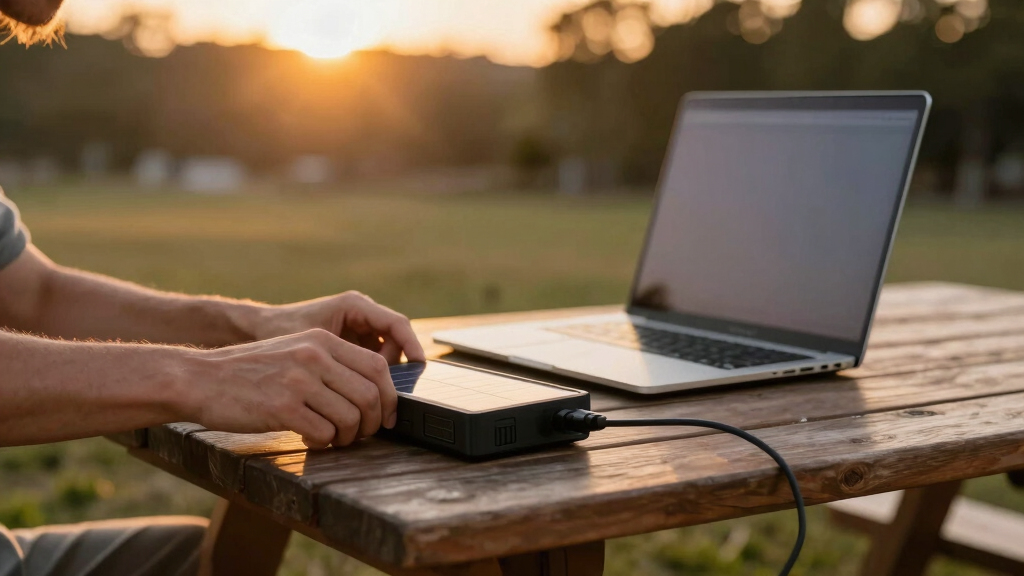
The core distinction between a portable foldable solar charger and a fixed panel station centers on mobility versus capacity. The foldable option excels in scenarios where portability is crucial, such as camping, hiking, or emergency travel, but it offers limited power output and slower charging speeds. In contrast, the fixed station provides higher wattage, faster charging, and greater durability, making it suitable for extended outdoor work, backup power at remote locations, or emergency preparedness where size and weight are less critical. This tradeoff influences the overall utility depending on whether users prioritize lightweight convenience or reliable, high-capacity power.Detailed Comparison
Power Output (Fixed Panel Solar Charger Station wins — major)
Option B outperforms Option A significantly, offering up to 150W or more compared to 50W, enabling faster, more reliable laptop charging and supporting multiple devices simultaneously. In practice, this means less waiting time and better performance for power-intensive laptops.Portability (Portable Foldable Solar Charger wins — major)
Option A is distinctly more portable, designed to fold and fit into backpacks, making it ideal for travel. Option B’s fixed setup is heavy and less transportable, suited for stationary outdoor use. For users on the move, portability is a decisive factor.Durability (Fixed Panel Solar Charger Station wins — moderate)
Option B is built for rugged outdoor conditions with weatherproof materials, whereas Option A offers moderate weather resistance but is more vulnerable. This matters for prolonged outdoor use in unpredictable weather.Ease of Use (Portable Foldable Solar Charger wins — moderate)
Option A is simpler to deploy—unfold, connect, and power up—while Option B requires setup and more complex connections, but once set up, it is straightforward to operate.Price (Portable Foldable Solar Charger wins — moderate)
Option A is generally more affordable, often under $150, while Option B’s cost ranges from $300 to $700, reflecting higher capacity and durability.Charging Speed (Fixed Panel Solar Charger Station wins — moderate)
Option B delivers faster charging due to higher wattage capacity, making it more suitable for quick power-ups. Option A’s slower charging may require longer sunlight exposure.Compatibility (Fixed Panel Solar Charger Station wins — minor)
Both options are compatible with most laptops through USB-C or adapters, but Option B often supports multiple devices simultaneously, adding versatility.Versatility (Fixed Panel Solar Charger Station wins — moderate)
Option B supports multiple devices and serves as a backup station, while Option A is mainly for laptops and small gadgets, limiting its versatility.Portable Foldable Solar Charger: Pros and Cons
Pros:
- Highly portable and lightweight, easy to carry during travel
- Lower cost makes it accessible for casual users
- Simple to use, quick deployment
Cons:
- Limited power output, slower charging
- Less durable under harsh weather conditions
- Not suitable for high-demand devices or multiple devices simultaneously
Fixed Panel Solar Charger Station: Pros and Cons
Pros:
- High power capacity enables fast, reliable charging
- Durable and weatherproof for outdoor use
- Supports multiple devices at once, versatile
Cons:
- Heavy and bulky, less portable
- Higher initial investment
- Requires setup time and space
Who Should Choose What
Choose Portable Foldable Solar Charger if:
- You need a lightweight, portable charger for camping, hiking, or emergency travel
- Your budget is limited, and you prioritize ease of use
- You primarily charge one laptop at a time and value convenience
Choose Fixed Panel Solar Charger Station if:
- You require high-capacity power for extended outdoor work or backup power
- You don’t mind carrying heavier equipment and setting up a station
- You need fast charging for multiple devices and durability in harsh weather