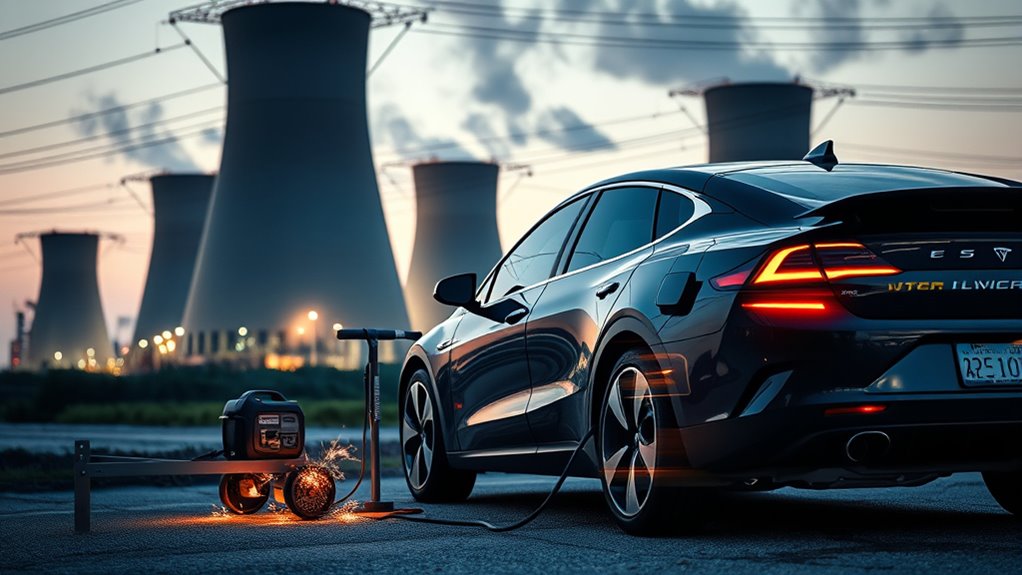

Yes, you can use a generator or power station to charge your EV, but it’s important to guarantee compatibility with your charger and that the power source provides clean, stable electricity. Proper safety precautions like ventilation and secure connections are essential, and backup power often means slower charging or limited wattage. To do it safely and effectively, learn what types suit your needs—more insights are ahead to help you make the best choice.
Key Takeaways
- Generators can charge EVs if they provide compatible voltage, wattage, and clean power, especially inverter generators.
- Safety precautions include proper ventilation, grounding, and using surge protectors to prevent damage and hazards.
- Backup power sources may lead to slower charging or voltage fluctuations, affecting efficiency and battery health.
- Renewable energy systems like solar panels and storage units can serve as cleaner, more sustainable backup charging options.
- Compatibility and proper equipment are essential for safe, efficient EV charging from generators or power stations.
Understanding the Basics of EV Charging and Power Sources
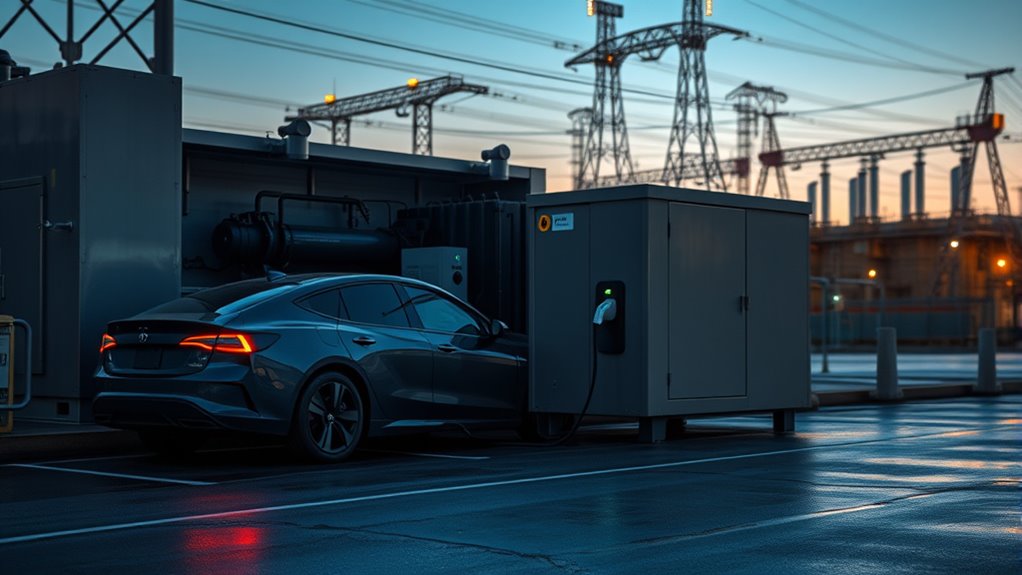
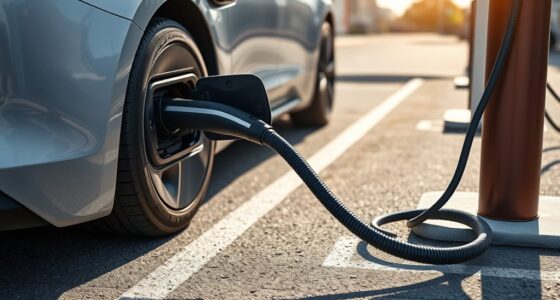
To effectively charge your electric vehicle (EV), it’s essential to understand the different types of power sources and how they work. Your main options include grid dependency and solar integration. Grid dependency means your EV draws power from the public electrical grid, which relies on centralized power plants. This is convenient but can be vulnerable during outages. Solar integration, on the other hand, allows you to generate your own electricity using solar panels, reducing reliance on the grid and increasing energy independence. Combining solar with energy storage can provide backup power when the sun isn’t shining. energy independence is a key benefit of integrating solar and storage solutions into your charging routine. Additionally, advancements in European cloud servers are enabling smarter energy management for sustainable charging solutions. These innovations also support smart grid technologies that optimize energy distribution and reduce waste. Knowing these sources helps you choose the right charging setup. Whether you depend on the grid or incorporate solar, understanding the basics ensures efficient and reliable EV charging.
Compatibility Considerations Between Generators and EV Chargers
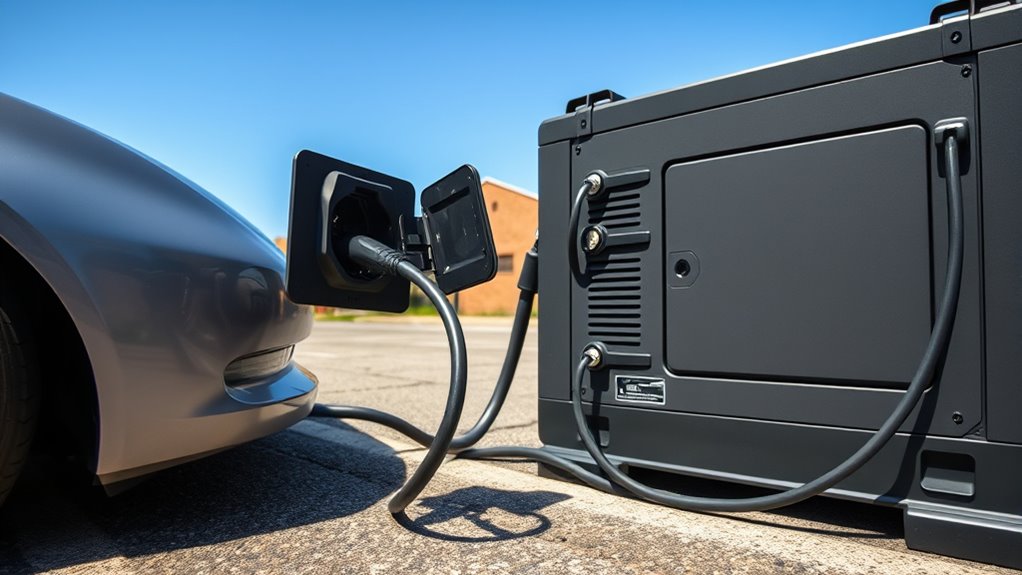
When pairing generators with EV chargers, ensuring compatibility is essential to avoid damaging your equipment or facing charging issues. Different charger compatibility requirements mean you need to match your generator type to your charger’s specifications. For example, inverter generators typically provide cleaner power suitable for sensitive electronics, while conventional generators may produce fluctuating power that can harm chargers. Check your EV charger’s voltage, wattage, and outlet type to match it with a compatible generator. Some generators have built-in outlets designed for EV chargers, but others may require adapters or additional equipment. Always verify the generator’s power output capacity and make certain it meets or exceeds your charger’s demands to prevent underpowering or overloads. Proper compatibility guarantees safe, efficient backup charging. Additionally, understanding the contrast ratio of your power source can influence the quality and stability of the charging process. Confirming that your generator provides clean power output helps ensure the longevity and safety of your EV charger and vehicle. Ensuring power quality is maintained prevents potential damage to sensitive EV components. Moreover, selecting a generator with stable voltage output can help improve the overall reliability of your charging setup. Also, considering the noise level of your generator can be beneficial if you plan to charge in noise-sensitive environments.
Safety Precautions When Using Generators or Power Stations for Charging
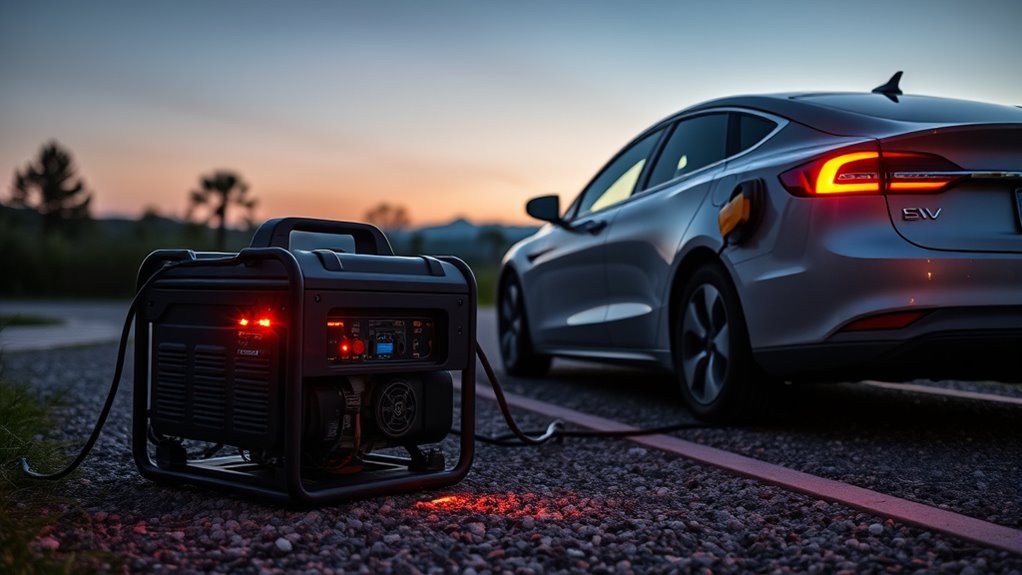
Using generators or power stations for EV charging requires careful attention to safety to prevent accidents or equipment damage. Always operate in a well-ventilated area to reduce fire hazards, as generators emit fumes that can be dangerous indoors. Keep cords and connections dry and away from water to prevent electrical shock risks. Ensure your equipment is properly grounded, and avoid overloading the power station, which can cause overheating or electrical faults. Use surge protectors if available to safeguard your EV and charger. Never bypass safety features or modify the equipment. Regularly inspect cables for damage and disconnect power when not in use. Following these precautions helps minimize fire hazards and electrical shock risks, ensuring a safer charging experience with backup power options.
Efficiency and Charging Speed With Backup Power Options
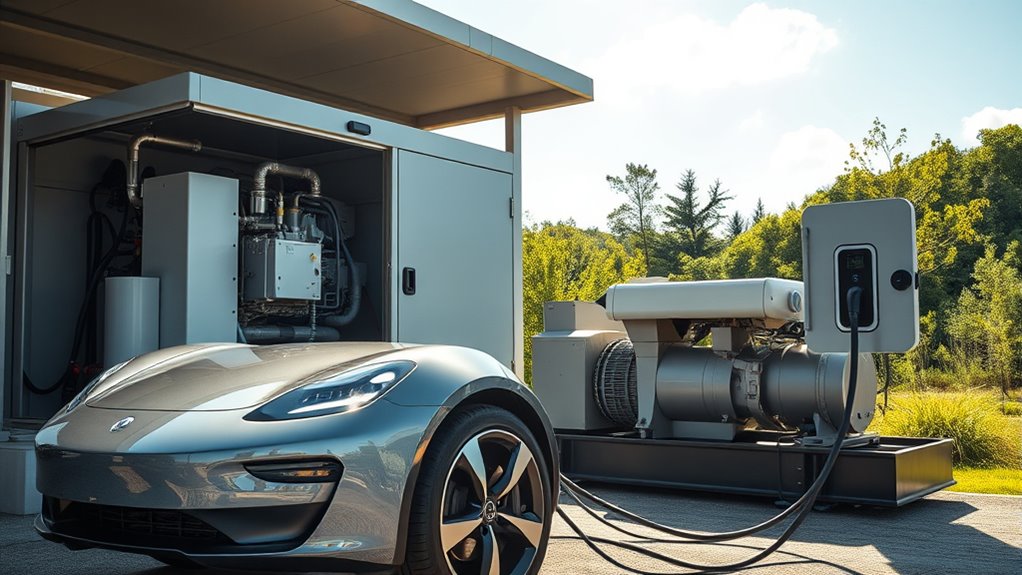
Backup power options can vary in how quickly they charge your EV, often limited by power output. You might notice longer charging times or inconsistent speeds depending on the equipment used. Additionally, fuel efficiency plays a role, as some backup systems consume more resources to deliver quicker charges. Incorporating AI-driven optimization can enhance charging efficiency by adjusting output based on real-time system performance. Understanding power output limitations helps in selecting the right backup system for your charging needs. Being aware of energy consumption patterns can further improve overall efficiency and reduce operational costs, especially when considering the thermal behavior of different backup solutions. Recognizing system efficiency also guides better integration with existing energy systems to maximize performance and minimize waste.
Power Output Limitations
Power output restrictions markedly affect how quickly and efficiently your EV can charge when using backup power options. These constraints often stem from the generator or power station’s capacity to deliver consistent power, impacting voltage stability. Limited power output can cause slower charging speeds and reduce overall efficiency. To understand these effects, consider:
- The maximum wattage your backup source can supply, restricting charge rate.
- How fluctuations in voltage stability can lead to inconsistent charging.
- The risk of overheating or damaging your EV’s charging system if limits are exceeded.
- The importance of matching your EV’s charging requirements with the backup source’s capabilities for optimal performance.
- Power output limitations, which are essential to understanding how your backup power setup may influence your EV charging process. Additionally, understanding the capacity constraints helps prevent overloading the system and ensures safe operation during backup charging sessions. Being aware of these power management strategies can further optimize your charging experience and prevent potential issues.
Charging Duration Variability
When relying on backup power sources, your EV’s charging duration can vary considerably depending on the stability and capacity of the supply. If the power source has inconsistent voltage stability, your charging speed may slow down or fluctuate, extending the time needed to fully charge your battery. Larger battery capacity means longer charging times, especially if the backup source delivers limited or unstable power. Variations in voltage stability can also affect charging efficiency, causing uneven current flow that prolongs charging or risks damaging your battery. Backup power options may not provide a consistent, high-voltage output, leading to unpredictable charging durations. To optimize charging times, ensure your backup source can maintain steady voltage levels and sufficient capacity to meet your EV’s charging requirements. Incorporating smart technology can help monitor and adapt to power fluctuations, improving overall charging reliability. Additionally, understanding power quality and its impact on charging can help prevent potential damage and ensure safety during backup charging. Being aware of power fluctuations and their effects can further help you manage expectations and protect your vehicle’s battery health during backup charging scenarios. Regularly checking your power source for stability can also prevent unexpected interruptions and optimize your charging process. Considering voltage regulation devices can further enhance the consistency of your backup power supply.
Fuel Efficiency Considerations
Using backup power sources can impact your EV’s fuel efficiency and charging speed, often depending on the stability of the supply. When relying on generators or stations, your vehicle’s fuel consumption may increase due to less efficient energy transfer. To maximize cost efficiency, consider these factors:
- Variability in power output can cause inconsistent charging rates, affecting overall fuel use.
- Frequent use of backup sources may lead to higher operational costs, reducing cost efficiency.
- Inefficient power conversion can extend charging times, increasing energy consumption.
- Maintaining stable supply conditions helps ensure ideal fuel consumption and minimizes waste.
- The quality of power quality directly influences the efficiency and safety of your EV charging process, especially when using alternative energy sources.
- Being aware of backup power limitations allows for better planning and resource management during charging sessions.
Understanding these elements allows you to better manage your EV’s energy use and maintain cost-effective charging, even with backup power options.
Types of Generators and Power Stations Suitable for EV Charging
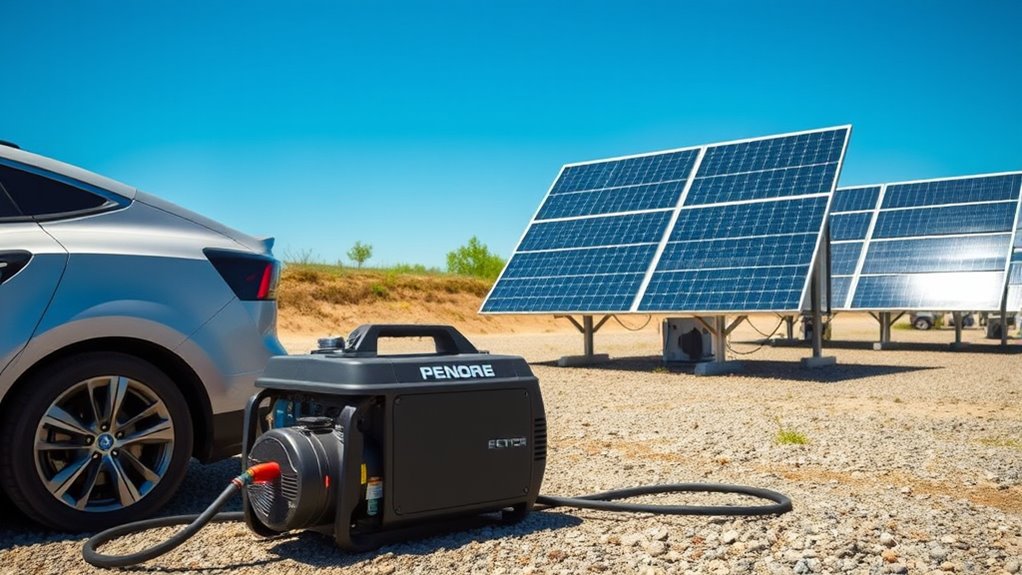
Choosing the right generator or power station is essential for reliable EV charging, especially during outages or in remote areas. Portable solar panels and wind turbines are excellent options because they harness renewable energy and reduce fuel dependency. Solar panels can be integrated into larger power stations or used with portable units to provide clean, quiet power during emergencies. Wind turbines, though less common, can supplement solar sources when wind conditions are favorable, ensuring a continuous power supply. For dependable charging, look for units with sufficient wattage output and compatibility with your EV’s charging requirements. Battery-based power stations are also a smart choice, offering stored energy that can be used when solar or wind sources aren’t available. This combination guarantees you’re prepared in various situations.
Practical Tips for Using Backup Power Solutions During Emergencies

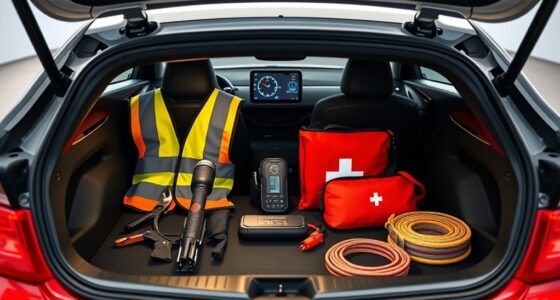
When using backup power solutions during emergencies, make sure you transfer power safely to avoid damage or injury. Choose equipment that’s compatible with your EV and backup system to guarantee reliable charging. Paying attention to these details helps keep you safe and your EV ready to go when you need it most.
Safe Power Transfer
Ensuring safe power transfer during emergencies is essential to protect both yourself and your electric vehicle’s (EV) electrical system. First, verify that your backup power source is compatible with your EV’s charging system, especially considering solar compatibility if you’re using solar-powered generators. Second, always disconnect from the grid before connecting your EV to avoid backfeeding risks. Third, guarantee proper grid synchronization to prevent voltage fluctuations that could damage your vehicle or equipment. Fourth, use a transfer switch or an approved inverter to manage power flow safely. These steps help prevent electrical faults, safeguard your EV’s battery, and ensure reliable charging during outages. Prioritize safety protocols to make backup charging effective and secure in emergency situations.
Compatible Equipment Selection
Selecting the right equipment is essential for safe and effective backup EV charging during emergencies. First, verify your power station or generator is compatible with solar inputs if you plan to use solar panels, which can provide reliable, renewable energy. Check solar compatibility to match your panels with your power source’s specifications. Additionally, confirm inverter requirements; your inverter must handle the power load of your EV charger and support pure sine wave output for sensitive electronics. Choose equipment that matches your EV’s charging needs and is rated for the wattage required. Proper equipment selection minimizes risks and maximizes efficiency. Always review manufacturer guidelines and consult with experts if you’re uncertain, ensuring your backup setup is safe, reliable, and ready when needed.
Frequently Asked Questions
Can Portable Generators Fully Charge an EV Overnight?
Yes, a portable generator can fully charge your EV overnight if it provides enough wattage and has charging compatibility. You need portable power with sufficient output to match your vehicle’s charging requirements. Confirm your generator is compatible with your EV’s charging port and that you use the right cables. Keep in mind, larger batteries may require multiple hours, so check your generator’s capacity and plan accordingly for an overnight charge.
Do All EV Chargers Work With Generator Power Outputs?
Not all EV chargers work with generator power outputs because of generator compatibility and power output standards. You need to check if your generator supplies stable, clean energy that matches your charger’s requirements. Some chargers require specific power levels or waveform types, like pure sine wave, to operate safely. Always verify your generator’s compatibility with your EV charger’s power output standards before connecting to guarantee safe, efficient charging.
How Do Temperature Variations Affect Generator Charging Efficiency?
Temperature variations can impact your generator’s charging efficiency by affecting fuel efficiency and temperature stability. When it’s too hot or cold, your generator might struggle to operate effectively, leading to inconsistent power output. Cold temperatures can cause fuel to become less vaporized, reducing efficiency, while heat can strain engine components. To maintain steady charging, keep your generator in a temperature-stable environment and monitor fuel efficiency during extreme weather conditions.
Are There Specific Regulations for Using Generators to Charge EVS?
You might think charging your EV with a generator is a wild, free-for-all adventure, but no—there are strict regulations you must follow! To guarantee safety standards and regulatory compliance, check local laws and manufacturer guidelines. Many regions require specific permits, and generators must meet certain safety standards to prevent hazards. Ignoring these rules can lead to fines or dangerous situations, so always prioritize proper licensing and adherence to safety protocols.
What Maintenance Is Needed to Keep Backup Power Sources Ready?
To keep your backup power sources ready, you need regular generator maintenance like checking oil levels, inspecting filters, and testing the system. Guarantee the battery is charged and connections are secure. Performing routine maintenance boosts backup power readiness, so your generator or power station is always prepared when you need it. Schedule professional inspections annually and run your backup system periodically to verify its performance and reliability.
Conclusion
In a pinch, a generator or power station can be your lifeline for charging your EV, but it’s not as simple as plugging in and going. Think of it like a bridge — not every connector fits, and safety is your best friend. By understanding compatibility and safety tips, you can keep your EV moving even when the power’s out. Remember, with the right backup, you’re never truly stranded in the dark.