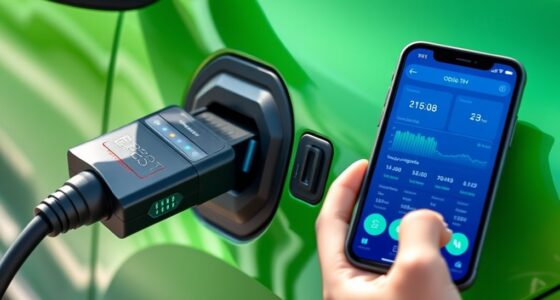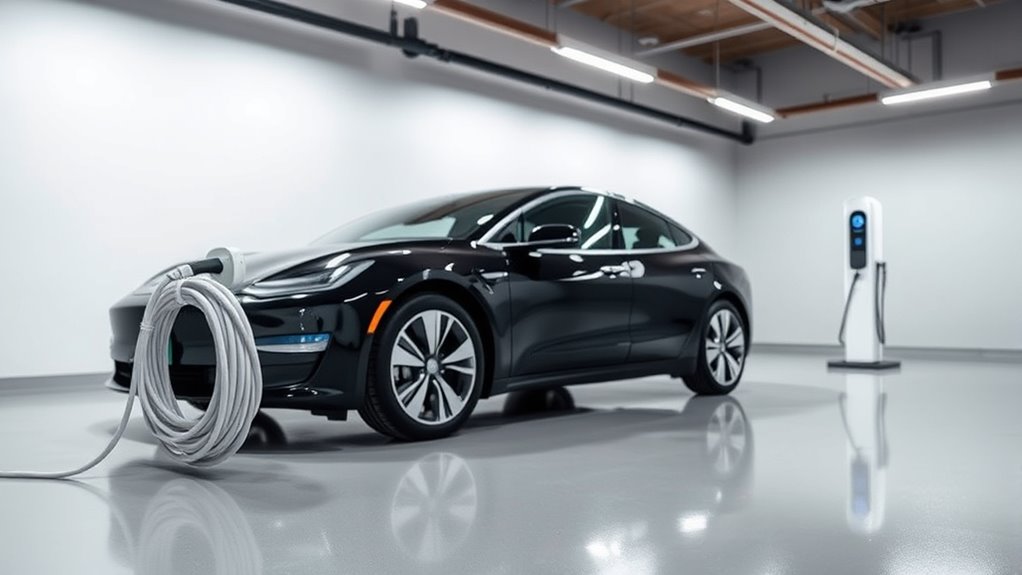

Keeping your Level 1 charger as a backup even after upgrading guarantees you stay powered during outages or unexpected device failures. It’s a safe, reliable, and affordable means to prevent being left without charge. Your original charger meets safety standards and minimizes risks like overheating or damage. Plus, it’s easy to store and continues to have value long after upgrades. Stay tuned to discover more reasons why maintaining your backup charger is a smart move.
Key Takeaways
- Keeps a safe, reliable power source as a backup in case your new charger fails or is incompatible.
- Ensures device safety by using tested, original chargers that meet safety standards.
- Provides energy efficiency and prolongs battery life through steady, controlled charging.
- Offers an inexpensive, compact backup option for emergencies, travel, or storage.
- Maintains peace of mind and readiness without the need for immediate replacement or upgrades.

Having a backup charging plan is crucial to make certain your devices stay powered during unexpected outages or busy days. Even if you’ve recently upgraded to a faster or more advanced charger, keeping your Level 1 charger handy isn’t just a safety net—it’s a smart move. A Level 1 charger, typically slower but reliable, can come in handy when your primary charger isn’t available or fails unexpectedly. It’s easy to overlook the importance of this backup, but having it ready ensures you won’t be left scrambling for power when you need it most.
Always keep your Level 1 charger as a reliable backup for unexpected power needs.
One key reason to keep your Level 1 charger is charger safety. Sometimes, newer chargers can be incompatible with certain devices or may not meet all safety standards, especially if they’re third-party or off-brand models. Your original Level 1 charger has been tested for safety and is less likely to cause issues like overheating or short circuits. Having it on hand acts as a safeguard, helping you avoid potential damage to your device or even personal injury caused by faulty charging equipment. Plus, it’s a simple way to maintain peace of mind, knowing you’re using a trusted and proven charger if your main one runs into issues.
Energy efficiency is another critical factor when considering a backup charger. While newer chargers often tout better energy efficiency, they might not always be compatible with all devices or situations. Your Level 1 charger, although slower, consumes a predictable amount of energy and can help conserve power during emergency situations. If you’re in a pinch, using an older but compatible charger might actually save you energy and prolong your device’s battery life. Furthermore, having a backup charger reduces the need for rapid, repeated charging attempts, which can lead to unnecessary energy consumption and wear on your devices.
Additionally, Vetted quality standards for chargers ensure safe and reliable performance, making your original Level 1 charger a dependable backup option. Keeping your Level 1 charger also offers practical benefits. It’s usually inexpensive, compact, and easy to store, meaning you can keep it in your emergency kit, glove compartment, or bedside drawer without taking up much space. This way, you always have a reliable option ready when needed. Even after upgrading to a newer, faster charger, your original remains valuable as a backup—especially in situations where safety and energy efficiency are priorities. It’s a simple precaution that can save you time, money, and stress down the line.

16A Portable Level 1&2 EV Charger-ETL Certified,110V-240V Car Charger with 25FT Charging Cable, NEMA 6-20 Plug & NEMA 5-15 Adapter EV Charging Station, Backup EV Chargers for All SAE EVSE J1772 Cars
✅【Fast and Efficient Charging】 The eTimxon level 2 EV charger is equipped with NEMA 6-20 Plug, supports 240V,…
As an affiliate, we earn on qualifying purchases.
As an affiliate, we earn on qualifying purchases.
Frequently Asked Questions
Can I Use My Level 1 Charger for Fast Charging?
You can’t use your Level 1 charger for fast charging because charger compatibility and charging speed are limited. Level 1 chargers are designed for slow, standard charging, which means they won’t support the higher power levels needed for fast charging. To get faster charging, you’ll need a Level 2 or faster charger compatible with your vehicle. Keep your Level 1 charger as a reliable backup, but upgrade if fast charging is essential.
How Often Should I Maintain or Inspect My Backup Charger?
Did you know that regular inspections can extend your charger’s lifespan by up to 20%? You should inspect your backup charger at least every six months to guarantee ideal Charger longevity. During each check, look for frayed cords, loose connections, or signs of wear. An appropriate inspection schedule helps prevent unexpected failures, keeping your Level 1 charger reliable when you need it most.
Will Using a Backup Charger Affect My Vehicle’s Warranty?
Using a backup charger typically won’t affect your vehicle’s warranty if it meets manufacturer policies. However, if you use an incompatible or non-certified charger, warranty implications could arise. Always check your vehicle’s warranty terms and manufacturer policies before using a secondary charger. Sticking with approved equipment guarantees your warranty remains intact and your vehicle stays protected while providing reliable backup power when needed.
Is It Safe to Leave My Backup Charger Plugged In?
Yes, it’s safe to leave your backup charger plugged in if you guarantee charger safety and plug stability. Modern chargers are designed with safety features that prevent overcharging or overheating. Just make sure the connection stays secure and the charger isn’t damaged. This way, you can have peace of mind knowing your vehicle’s ready to go without risking safety issues or damage to your charger or vehicle.
Can a Backup Charger Handle Different EV Models?
A backup charger can handle different EV models if it has good charger compatibility and model flexibility. Many Level 1 chargers are universal and work with various vehicles, but you should always check the plug type and charging specifications. This way, you can confidently use your backup charger across multiple EVs, ensuring you stay charged regardless of the model you’re driving. Always verify compatibility before use.

TrubliFit Power Supply Charger Replacement for The Original Peloton Bike 12V 4.17A – UL Listed AC Adapter Compatible with OG Peloton Bike – Power Cord (Does NOT fit The Peloton Bike+)
REPLACEMENT POWER SUPPLY – Our 12V 4.17A power supply is a perfect fit for the Original Peloton Bike,…
As an affiliate, we earn on qualifying purchases.
As an affiliate, we earn on qualifying purchases.
Conclusion
Keep your Level 1 charger close, even after upgrading. Think of it as a safety net woven into your daily routine—a comforting symbol of preparedness. Just as a lighthouse guides ships through storms, your backup charger ensures you’re never left stranded. Embrace this simple tool as a reminder that sometimes, the smallest safeguards shine the brightest in moments of need. Stay connected, stay resilient—your peace of mind relies on it.

Boostrcharge 3-Pack Single-Use Emergency Phone Charger | Dead Phone? Just Plug in — No Cables Needed | Lightning | Pre-Charged | TSA-Approved
⚡ INSTANT EMERGENCY POWER — Pre-charged and ready to use right out of the box. No cables, no…
As an affiliate, we earn on qualifying purchases.
As an affiliate, we earn on qualifying purchases.

Anker SOLIX C1000 Gen 2 Portable Power Station, 2,000W (Peak 3,000W) Solar Generator, Full Charge in 49 Min, 1,024Wh LiFePO4 Battery for Home Backup, Power Outages, and Camping (Optional Solar Panel)
49 Min UltraFast Recharging: With upgraded HyperFlash tech, fully recharge at 1,600W—for outage prepping, camping trips, or tailgating…
As an affiliate, we earn on qualifying purchases.
As an affiliate, we earn on qualifying purchases.