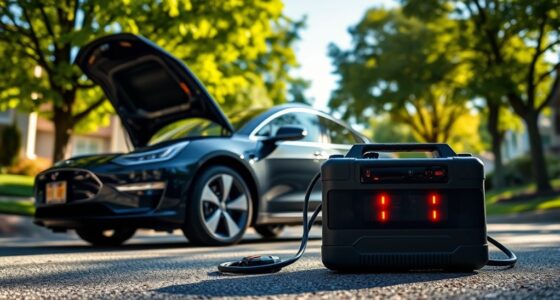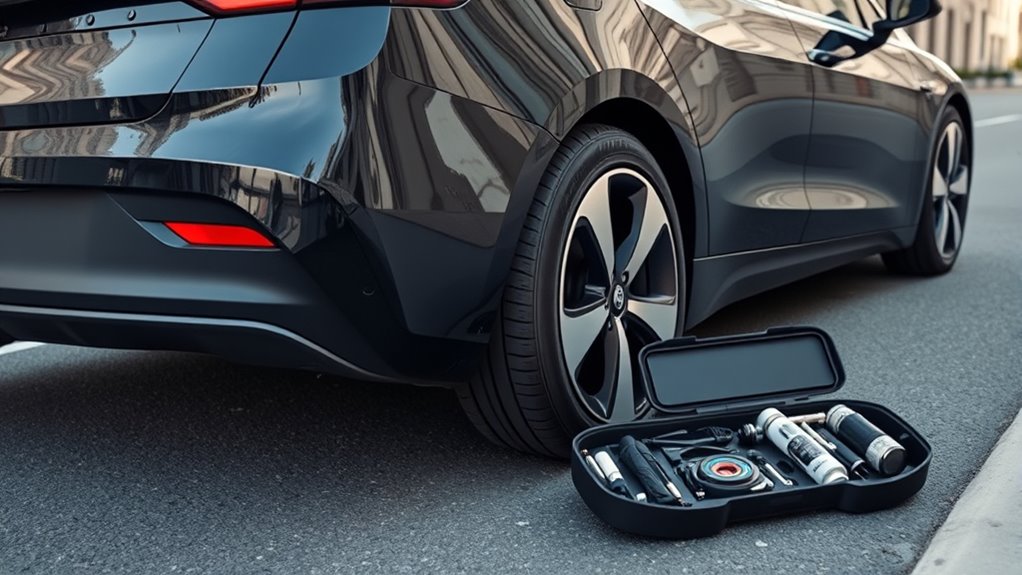

If you get a flat tire on your EV and don’t have a spare, stay calm and first check your tire pressure with your TPMS or a portable air compressor. If your EV has run-flat tires, you may be able to continue driving short distances. For other cases, use an emergency repair kit or contact roadside assistance. Knowing these options can help you handle tire issues more confidently — more tips to keep you safe are ahead.
Key Takeaways
- Use an emergency repair kit or tire sealant to temporarily fix small punctures and restore pressure.
- If the tire is severely damaged, contact roadside assistance for professional help.
- Avoid driving on a flat tire; find a safe, flat area to stop and assess the damage.
- Consider using run-flat tires if your EV is equipped, allowing limited driving after a puncture.
- Regularly monitor tire pressure with your EV’s TPMS to detect issues early and prevent flats.
Understanding Your EV’s Tire Options and Limitations
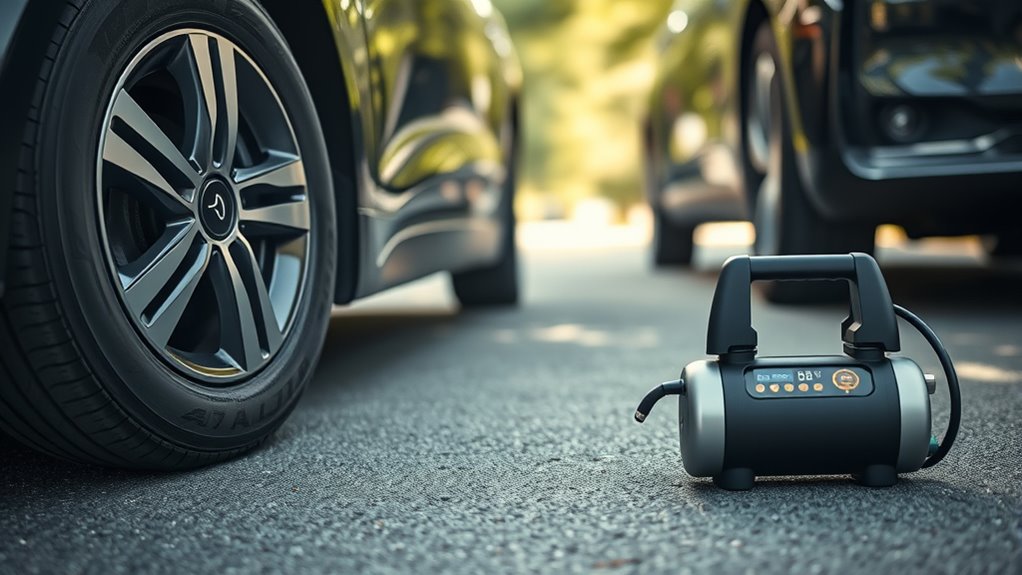
Unlike traditional vehicles, many electric vehicles (EVs) come with unique tire options and limitations that you should understand before hitting the road. EV tires are designed to optimize tire pressure management, which is vital for efficiency and range. Maintaining proper tire pressure ensures your tires operate at peak tire durability, reducing the risk of uneven wear and potential damage. Some EVs use low-rolling-resistance tires that improve energy efficiency but may have different durability characteristics compared to conventional tires. It’s important to follow manufacturer recommendations for tire pressure and choose tires compatible with your EV’s specifications. Being aware of these tire options helps you maximize safety, performance, and longevity, especially when handling tire issues on the go. Innovative European cloud servers play a role in supporting sustainable and secure vehicle communications and data management systems that can enhance EV tire monitoring technologies. Additionally, understanding tire durability and how different tire types respond to various conditions can help you make informed decisions during emergencies, especially as some EVs are equipped with advanced tire monitoring systems that rely on cloud-based data for real-time alerts. Knowing about electric vehicle tire specifications can further aid in choosing the most suitable tires for your model, ensuring safety and efficiency. Recognizing the importance of proper tire maintenance can also extend the lifespan of your tires and prevent unexpected failures.
Recognizing the Signs of a Flat Tire in Your EV
Recognizing the signs of a flat tire in your EV is essential for maintaining safety and preventing further damage. One key indicator is a noticeable change in tire pressure; if your tire pressure drops suddenly or consistently reads low, it’s a strong sign. Additionally, watch for flat tire symptoms like a vibrating steering wheel or unusual pulling to one side while driving. Lastly, listen for any unusual noises, such as thumping sounds or tire hiss, which can indicate a puncture or loss of air. Pay close attention to these signs, especially if your EV’s dashboard alerts you to low tire pressure. Recognizing free floating conditions that cause tire issues can help you avoid further damage and ensure you can handle the situation safely. Being aware of tire maintenance practices can also help prevent unexpected flats. Regularly inspecting your tires for wear patterns and damage can further reduce the risk of sudden flats and improve overall safety. Additionally, understanding tire pressure management techniques can be crucial in maintaining optimal tire health and safety.
Using Run-Flat Tires to Your Advantage
Run-flat tires can be be a valuable asset when you’re dealing with a flat in your EV because they allow you to continue driving for a limited distance without immediate repair or replacement. Their main advantages include maintaining mobility and reducing downtime. Plus, they help you avoid the hassle of changing a tire on the roadside. Although run-flat tires tend to have slightly reduced tire longevity, their convenience often outweighs this drawback. To visualize their benefits, consider this comparison:
| Feature | Standard Tire | Run-Flat Tire |
|---|---|---|
| Drive After Puncture | Not possible | Yes, for limited miles |
| Tire Longevity | Longer | Slightly reduced |
| Repairability | Usually repairable | Generally replace only |
| Convenience | Requires roadside help | Immediate mobility |
| Cost | Lower | Higher |
Using run-flat advantages, you stay mobile longer and avoid unexpected delays. Additionally, understanding the tire technology behind run-flat designs can help you make more informed choices for your EV. Recognizing the engineering principles that enable run-flat tires to support the vehicle even when deflated can further enhance your confidence in their use. Being aware of common maintenance practices can help extend the lifespan of your run-flat tires and ensure safety on the road. Moreover, familiarizing yourself with proper inflation techniques can improve the overall performance and durability of your tires. Incorporating the latest automotive innovations can further optimize your vehicle’s safety features and performance.
How Emergency Repair Kits Can Help in a Pinch
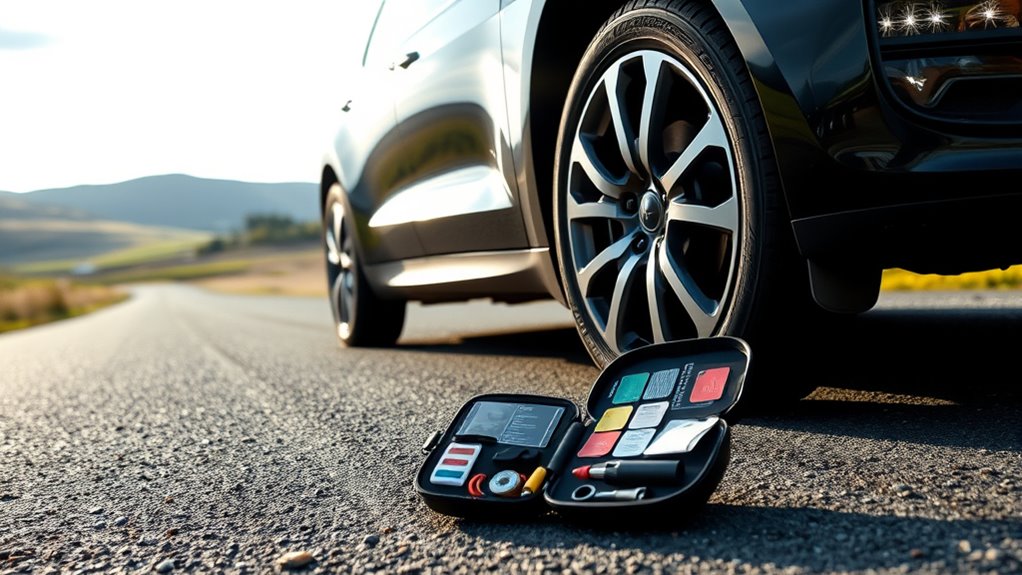
When a flat tire strikes unexpectedly, emergency repair kits can be a lifesaver by helping you get back on the road quickly. These kits are compact and easy to store, making them ideal if your vehicle lacks a spare tire or tire storage space. Here are three ways they help:
Emergency repair kits quickly get you back on the road when a flat tire happens unexpectedly.
- Sealant for Temporary Fixes: Many kits include sealant that can temporarily patch small punctures, allowing you to continue driving safely until a proper repair.
- Air Compressor: An included portable air compressor restores proper tire pressure, preventing further damage and ensuring safe driving.
- Convenient and Lightweight: Emergency repair kits are small enough to store in your EV’s glove compartment or trunk, saving space that would otherwise be taken up by a spare tire.
- Essential for Emergency Repairs: These kits are especially useful because they provide a quick solution when tire maintenance resources like a spare tire are unavailable. Additionally, understanding vehicle safety features can help you manage such situations more effectively. They are designed for quick repairs to minimize downtime and inconvenience. Having a properly equipped vehicle with an emergency repair kit can significantly reduce stress during unexpected tire issues. They’re essential for quick, on-the-spot repairs when you’re caught off guard. Incorporating safety protocols can further improve your response during roadside emergencies.
Step-by-Step Guide to Changing an EV Flat Tire
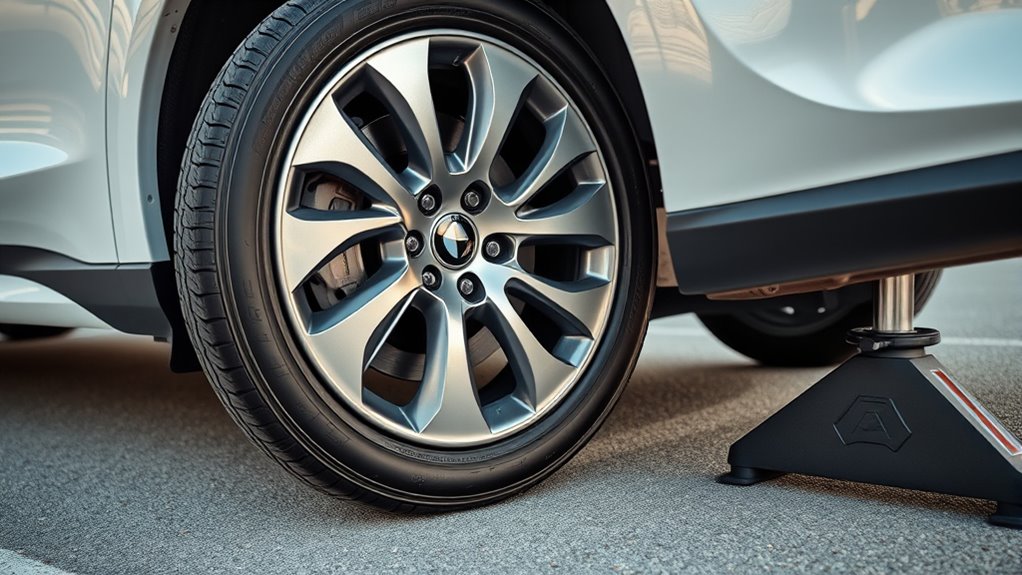
Getting your EV’s flat tire changed might seem intimidating, but with the right steps, you can handle it efficiently and safely. First, park on a flat, stable surface and activate the parking brake. Use your jack to lift the vehicle, then remove the lug nuts with a wrench. Carefully take off the flat tire and replace it with a spare or temporary tire. Tighten the lug nuts in a crisscross pattern, ensuring proper torque. Check tire pressure if using a spare, as underinflated tires can affect wheel alignment. Properly connect your tools and follow manufacturer guidelines for safety and efficiency. It’s also important to be aware of your vehicle’s backup power options, especially during emergencies or outages. Additionally, understanding tire repair techniques can be useful if you’re stuck without a spare. Recognizing the importance of preventive maintenance can help you avoid future tire issues altogether. Here’s a quick overview:
| Step | Action |
|---|---|
| 1 | Loosen lug nuts |
| 2 | Lift vehicle and remove tire |
| 3 | Install new tire and tighten |
Always recheck lug nuts after driving a short distance.
When to Call Roadside Assistance for Tire Issues
Even if you’ve successfully changed your EV’s flat tire, there are situations where calling roadside assistance is the safest and most practical option. If you notice issues like uneven tire inflation or suspect a problem with tire rotation, professional help is best. Consider calling roadside assistance if:
- You’re unsure about the safety of continuing after a tire inspection.
- The flat tire is caused by sidewall damage or a blowout.
- You experience persistent or uneven tire inflation, which could indicate an underlying issue needing expert diagnosis.
Additionally, if you’re unfamiliar with proper tire rotation procedures, or if your tire pressure remains unstable despite inflation efforts, seek professional help. It’s better to be safe than risk further damage or an accident.
Preventative Measures to Avoid Flat Tires in EVs
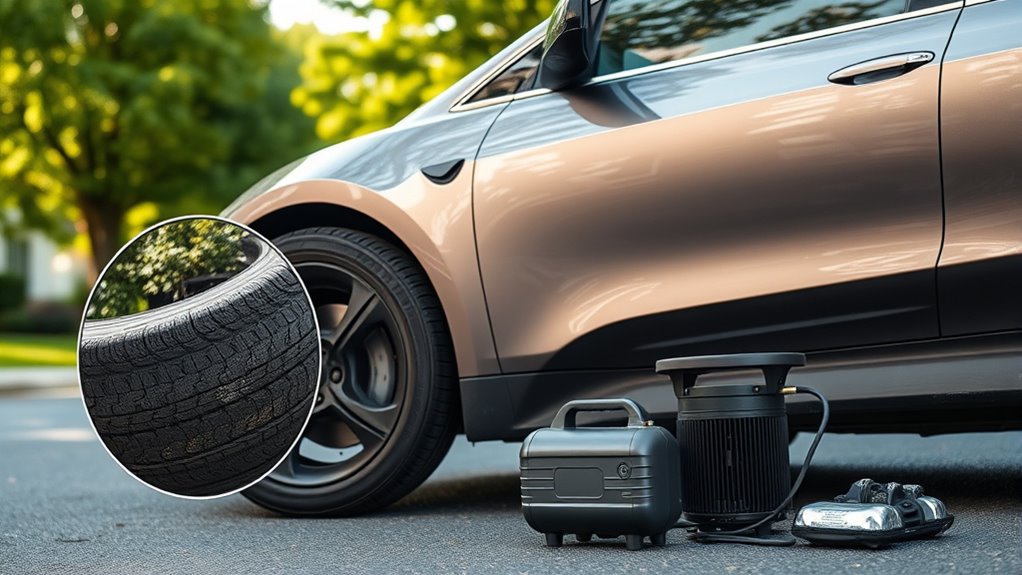
Regularly inspecting your tires and maintaining proper inflation levels are key steps in preventing flat tires in your EV. Tire maintenance involves checking for cuts, punctures, or embedded debris that could cause flats, while ensuring your tires are inflated to the recommended pressure helps prevent blowouts and uneven wear. Additionally, road hazard avoidance is essential—stay alert for potholes, debris, and sharp objects that can damage your tires. Consider avoiding rough or construction-heavy routes when possible. Rotating your tires regularly maintains even wear, further reducing the risk of flats. Proper tire maintenance and mindful driving habits are your best defense against unexpected tire issues, keeping you safer and minimizing the likelihood of roadside emergencies.
The Role of Tire Pressure Monitoring Systems (TPMS)

Tire Pressure Monitoring Systems (TPMS) play a crucial role in maintaining your EV’s safety and performance by providing real-time alerts about tire pressure levels. When your TPMS detects low pressure, it helps you act promptly, potentially preventing a flat or dangerous driving situation. To keep it functioning correctly, you should regularly perform tire pressure calibration and TPMS sensor maintenance. Proper calibration ensures accurate readings, while sensor maintenance prevents malfunctions that could give false alerts. Remember, a well-maintained TPMS allows you to address tire issues early, especially since EVs often run at lower tire pressures for efficiency. By staying vigilant with these systems, you improve safety and extend your tire’s lifespan. Ultimately, TPMS helps you keep your EV safe and on the road longer.
Exploring Mobile Tire Repair Services for EVs

As electric vehicle owners seek convenient solutions for tire issues, mobile tire repair services have become an increasingly popular option. These services come directly to your location, saving you time and stress. When your tire needs inflation or patching, mobile technicians can quickly assess and address the problem, often using eco-friendly practices like tire recycling to dispose of damaged tires responsibly. They’re also equipped to handle tire recycling, ensuring that old or worn-out tires are disposed of properly. If your EV’s tire is repairable, they’ll fix it on the spot; if not, they can help you find sustainable replacement options. Mobile services provide a hassle-free way to manage tire issues without the need for towing or visiting a shop, keeping you safely on the road.
Tips for Safe Driving When Managing Tire Problems
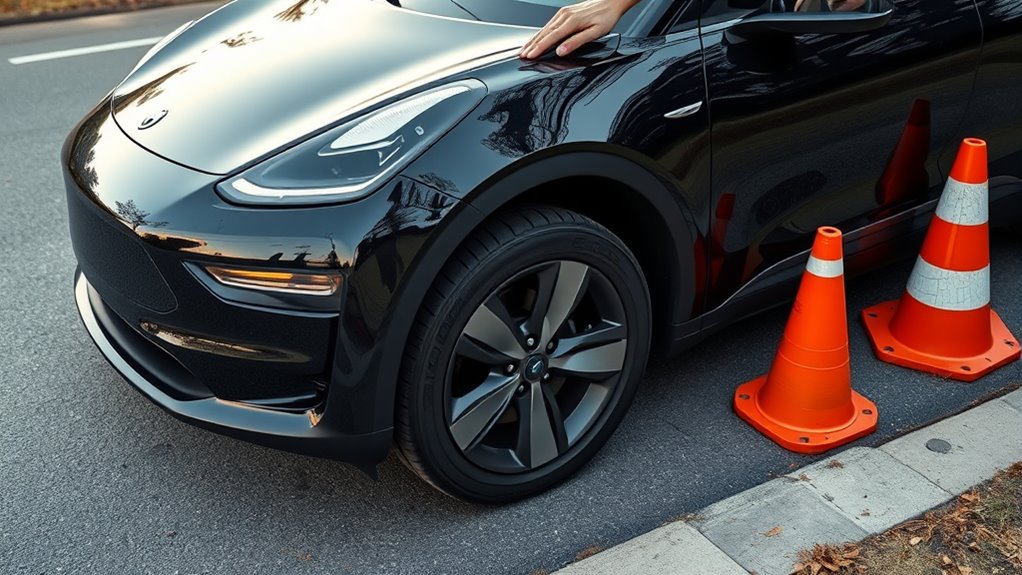
When you notice tire trouble, keep a firm grip on the wheel to stay in control and avoid sudden movements. Turn on your emergency signals to alert other drivers and create a safe distance. Staying calm and alert helps you navigate the situation safely until help arrives.
Maintain Control Safely
If you notice your vehicle beginning to handle differently or feel vibrations, it’s essential to stay calm and keep a firm grip on the wheel. Safe control is key when managing tire issues. First, reduce your speed gradually to maintain stability. Second, steer smoothly to avoid sudden movements that could worsen handling problems. Third, if possible, steer toward a safe area away from traffic. Regular tire rotation and wheel alignment help prevent uneven wear, reducing the risk of handling issues. When you encounter a problem, avoid abrupt maneuvers and focus on maintaining a straight, controlled path. Staying calm and deliberate minimizes risks, ensuring you reach a safe spot or service station without further incident.
Use Emergency Signals
Using emergency signals is crucial for alerting other drivers when you’re experiencing tire issues. Turn on your hazard lights immediately to make your vehicle more visible, especially if you’re pulled over on the side of the road or shoulder. This alerts approaching drivers to slow down and exercise caution around your EV. Keep your hazard lights on until you’ve safely addressed the issue or moved to a secure location. If you’re driving slowly due to a flat tire, use your emergency signals to warn others of your reduced speed. Remember, clear communication with your hazard lights helps prevent accidents and keeps you safe while managing tire problems. Always prioritize safety and stay alert to your surroundings when handling tire issues on the road.
Frequently Asked Questions
Can I Drive My EV Without a Spare Tire Safely?
You can drive your EV without a spare tire safely if you follow proper tire maintenance and emergency preparedness steps. Use a tire repair kit or contact roadside assistance if you experience a flat. Drive cautiously and avoid high speeds or rough roads. Always keep emergency tools handy, and consider installing run-flat tires for added safety. Being prepared guarantees you handle tire issues effectively and safely without a spare.
Are There Specific Tire Brands Recommended for EVS?
You should absolutely choose tire brands known for their extraordinary durability and unmatched reliability for your EV. Think of Michelin or Continental—they’re legendary for lasting longer and handling the unique demands of electric vehicles. These brands don’t just meet standards; they set new ones, ensuring your tire’s endurance and safety. Don’t settle for anything less—your EV deserves the best, especially when it comes to tire durability and brand reliability.
How Does a Flat Tire Affect My Ev’s Battery Range?
A flat tire can decrease your EV’s battery efficiency and reduce your range because of increased rolling resistance and lower tire pressure. When your tire isn’t properly inflated, your vehicle requires more energy to move, draining the battery faster. To minimize range loss, maintain correct tire pressure regularly, especially if you notice a flat or underinflated tire, and get it repaired or replaced promptly to guarantee maximum battery performance.
What Are the Costs Associated With Professional Tire Repairs?
The cost analysis for professional tire repairs varies depending on the extent of the damage. Repair expenses typically include labor, materials, and any necessary parts. You might spend between $50 and $150 for minor repairs like patching or plugging. More severe issues, such as sidewall damage or a complete replacement, can cost $200 or more. Always get a detailed estimate to understand the total repair expenses before proceeding.
Can I Use a Regular Tire Repair Kit on an EV?
A regular tire repair kit isn’t a miracle worker, but it can work on your EV if it’s compatible. You need to check EV tire compatibility because some kits aren’t designed for the specific size and pressure of EV tires. Use a kit recommended for your vehicle, follow the instructions carefully, and remember, it’s a temporary fix—don’t forget to get your tire inspected and replaced professionally soon!
Conclusion
Just like Icarus aimed high, your journey with your EV can soar smoothly by knowing your tire options and handling issues confidently. Embrace the tools and tips available—whether it’s run-flat tires, repair kits, or professional services—to keep your ride safe and reliable. Remember, with the right knowledge, you can navigate tire troubles as skillfully as a seasoned sailor steering through stormy seas, ensuring your adventure continues unimpeded.