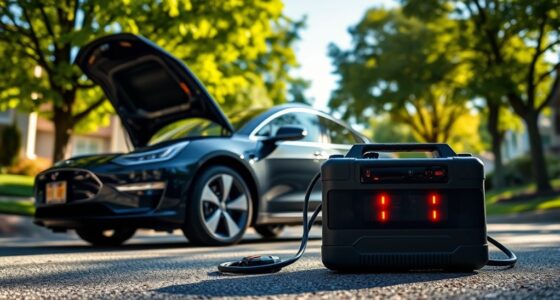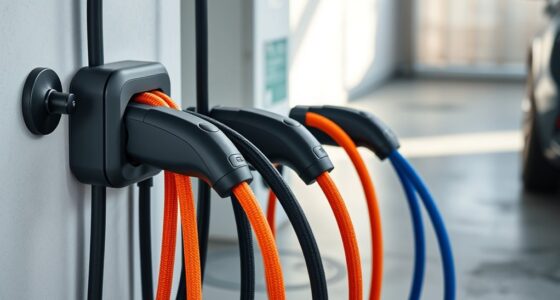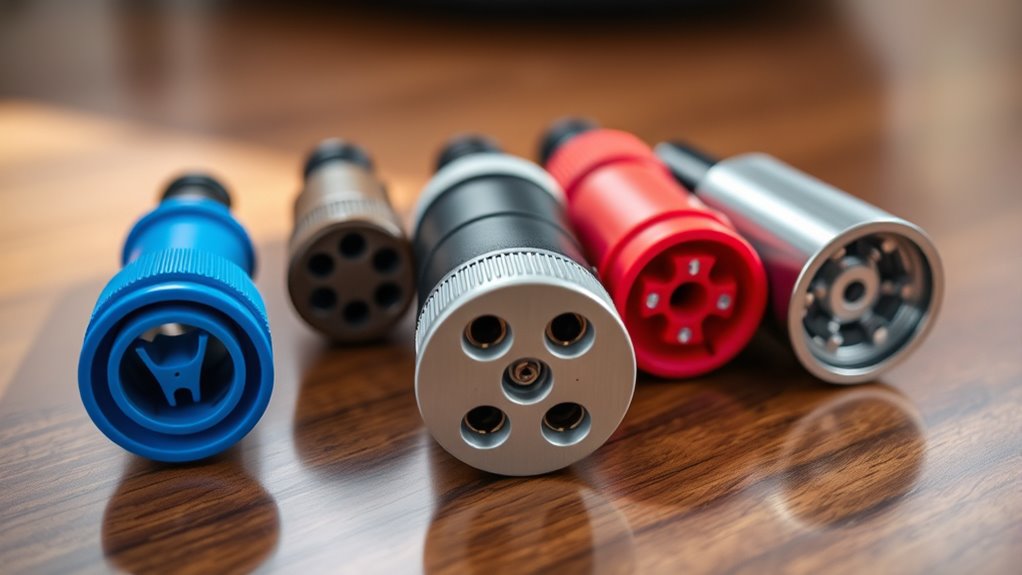

Choosing the right EV charging adapters depends on your vehicle’s connector type, your driving habits, and where you charge. You’ll likely need a Level 1 or Level 2 adapter for home use and possibly a fast charger adapter for quick charging on the go. Public stations may require specific connectors or multi-standard adapters. Knowing which adapters fit your car and how to maintain them guarantees safe, efficient charging—keep exploring to find out more.
Key Takeaways
- Identify your vehicle’s connector standard (CHAdeMO, CCS, Tesla) to choose compatible adapters.
- Determine your charging needs: home, travel, or fast charging, to select the appropriate adapter type.
- Carry universal or multi-standard adapters for varied public charging stations and international travel.
- Regularly inspect and maintain adapters to ensure safety, durability, and optimal performance.
- Use manufacturer recommendations and vehicle manuals to verify adapter compatibility and avoid damage.
Understanding the Types of EV Charging Connectors

Have you ever wondered what types of connectors your electric vehicle (EV) might use? Understanding charging standards and connector compatibility is vital. Different EVs follow specific standards, like CHAdeMO, CCS, or Tesla’s proprietary connector. These standards define how your vehicle connects to charging stations and guarantee safe, efficient charging. Connector compatibility varies by vehicle make and model, so it’s imperative to know which connectors your EV supports. Some chargers feature multiple connectors, making them versatile for different vehicles. Keep in mind that not all charging stations are compatible with every connector type. Knowing which charging standards your EV adheres to helps you find compatible stations and avoid frustration. Familiarizing yourself with connectors and standards ensures smooth, hassle-free charging experiences. Additionally, manufacturer-specific connectors can vary widely, so consulting your vehicle’s manual can provide clarity on which adapters you might need. Understanding these charging standards is essential for seamless EV ownership, and being aware of connector compatibility can save you time and potential inconvenience. Being aware of the different charging types can also help you plan your charging strategy effectively.
Level 1 vs. Level 2 Charging Adapters
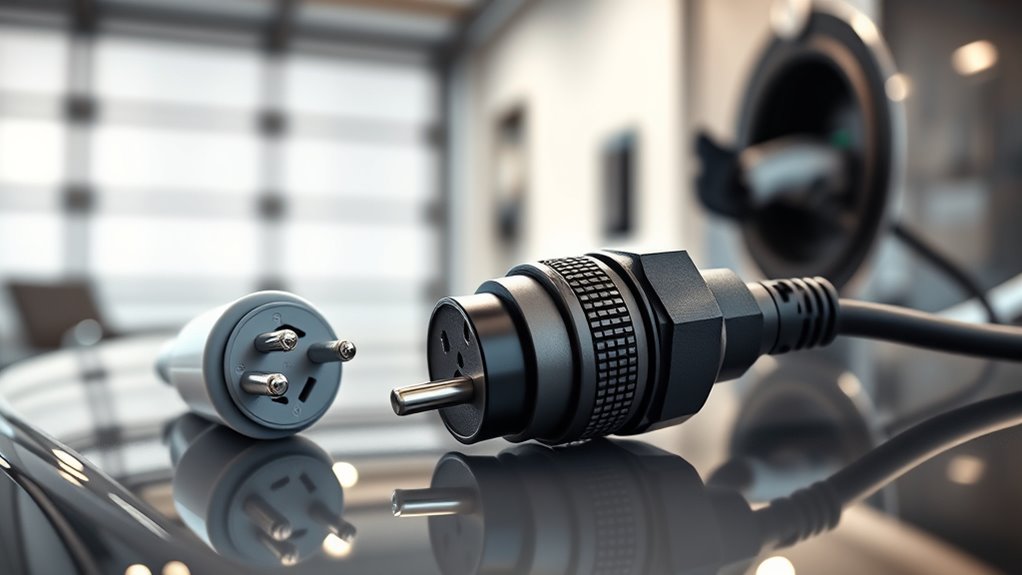
Curious about the differences between Level 1 and Level 2 charging adapters? Level 1 uses a standard household outlet, offering slow charging suitable for overnight use. Level 2 requires a dedicated charger, providing faster charging times. When choosing, consider charging cable compatibility and adapter portability, especially if you frequently travel or need to charge in different locations. Additionally, understanding the technology differences can help you select the most efficient option for your lifestyle. Here’s a quick comparison:
| Feature | Level 1 | Level 2 |
|---|---|---|
| Power Output | 120V, up to 16A | 240V, up to 80A |
| Charging Speed | Slow, 4-5 miles per hour | Faster, 25+ miles per hour |
| Portability | Highly portable, plugs into standard outlets | Less portable, needs dedicated setup |
Knowing the electric power range of your EV can help determine which charging adapter best suits your daily needs. It’s also important to assess how compatibility with your vehicle influences your choice, ensuring optimal performance and safety. When selecting a charger, also consider future expansion options to accommodate potential upgrades or additional vehicles, which can enhance convenience and investment value. Opt for the one that matches your daily driving habits and charging needs.
Fast Charging Adapters and Their Compatibility
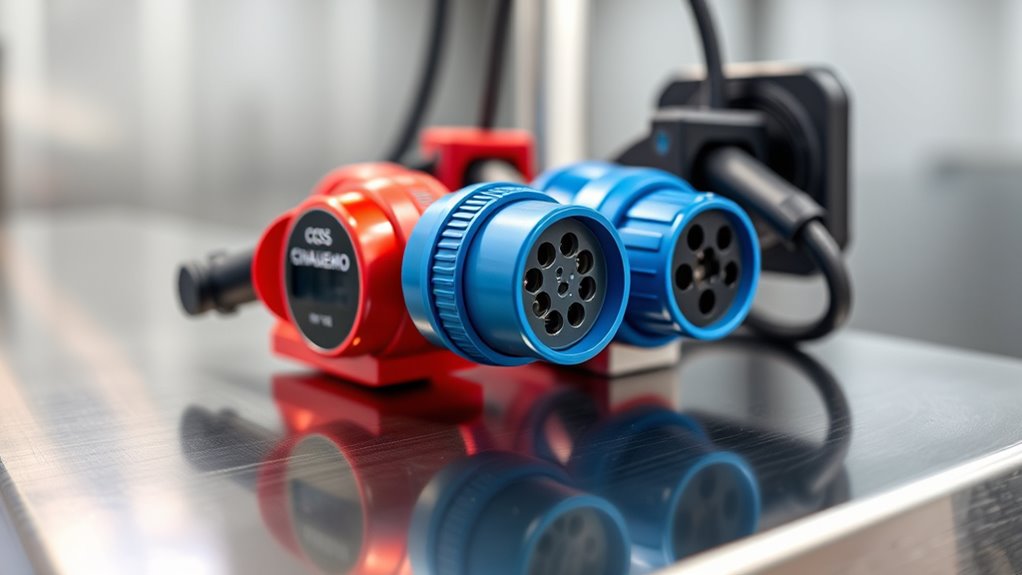
Fast charging adapters deliver considerably quicker charging times compared to Level 1 and Level 2 options, making them ideal for those who need to top up their EVs in a shorter period. These adapters are designed to support fast charging networks like CHAdeMO, CCS, or Tesla Superchargers. However, adapter compatibility is vital; not all EVs can utilize every fast charging standard. Before purchasing, check your vehicle’s specifications to guarantee it supports the desired fast charging standards. Using the wrong adapter can result in slower charging or potential damage. Keep in mind that some vehicles may require specific adapters or onboard chargers to work with fast charging stations effectively. Confirming compatibility ensures optimal charging performance and helps prevent charging delays or damage, ultimately saving time while maximizing your EV’s charging efficiency.
Commonly Needed Household and Travel Adapters
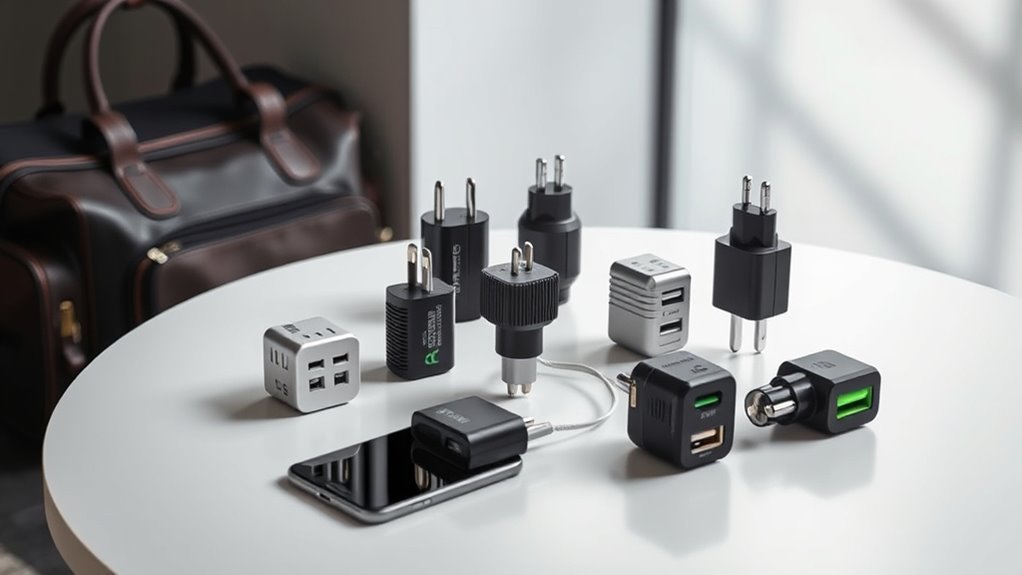
When planning to charge your EV away from home or on the road, having the right household and travel adapters is essential. You’ll want adapters that guarantee charging cable durability, so connections stay secure and resist wear over time. Lightweight adapters are easier to carry and manage, especially during long trips, without sacrificing reliability. Consider the weight considerations carefully, as bulky adapters can be cumbersome, while overly lightweight options might lack robustness. Having a few versatile adapters suited for different household outlets and travel scenarios helps prevent inconvenience. Make sure your adapters are compatible with your charging cables and can handle the power demands of your vehicle. Properly selected adapters enhance your charging experience, offering convenience and peace of mind wherever your journey takes you. Additionally, understanding the importance of compatibility ensures your adapters work safely with your specific EV model and charging system. Selecting adapters with robust construction can also extend their lifespan and improve overall safety during use. Furthermore, choosing adapters made from high-quality materials can help prevent malfunctions and ensure reliable performance over time. Being aware of the thermal behavior of adapters can help prevent overheating and potential safety hazards during high-current charging. Also, considering adaptation to different voltages is crucial for safe and efficient charging in various regions.
Adapters for Public Charging Stations
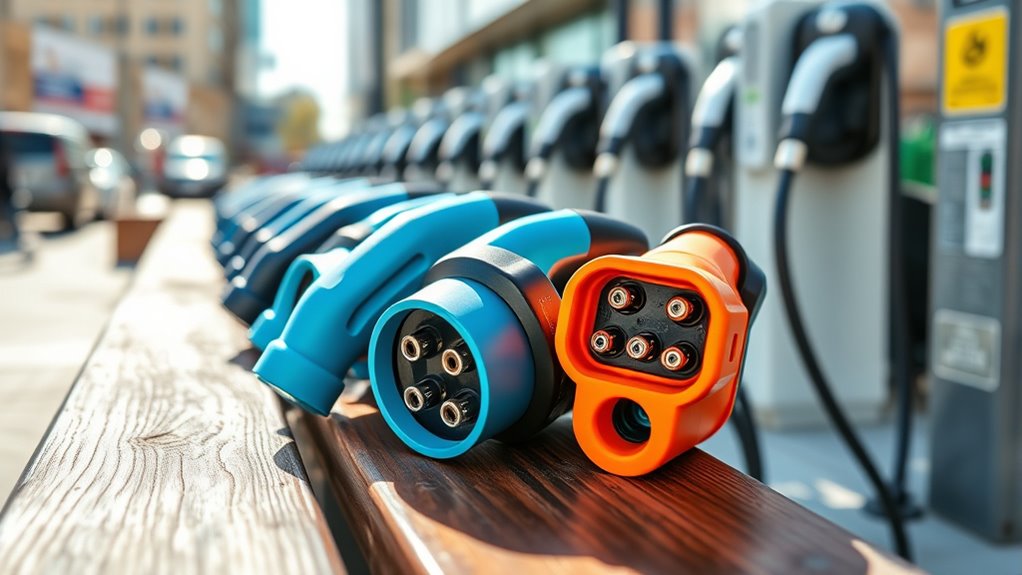
Finding public charging stations often requires using specific adapters to guarantee compatibility and a secure connection. The charging infrastructure varies widely, with different stations supporting various connector types and voltages. To navigate this, you’ll need adapters that align with the station’s standards and your vehicle’s port. Many stations follow standard adapter standards like CHAdeMO, CCS, and Tesla’s proprietary connector. Having the right adapter ensures quick, hassle-free charging without the need for multiple cords. Keep in mind that some stations may only support certain standards, so verifying the station’s compatibility beforehand is vital. Investing in a versatile adapter or a set of adapters tailored to common standards can save you time and frustration when accessing public charging infrastructure. Additionally, understanding the charging standards and how they relate to your vehicle can help you select the most suitable adapters for diverse situations. Being aware of adapter compatibility can also prevent potential issues during charging sessions.
When to Use a Universal or Multi-Standard Adapter
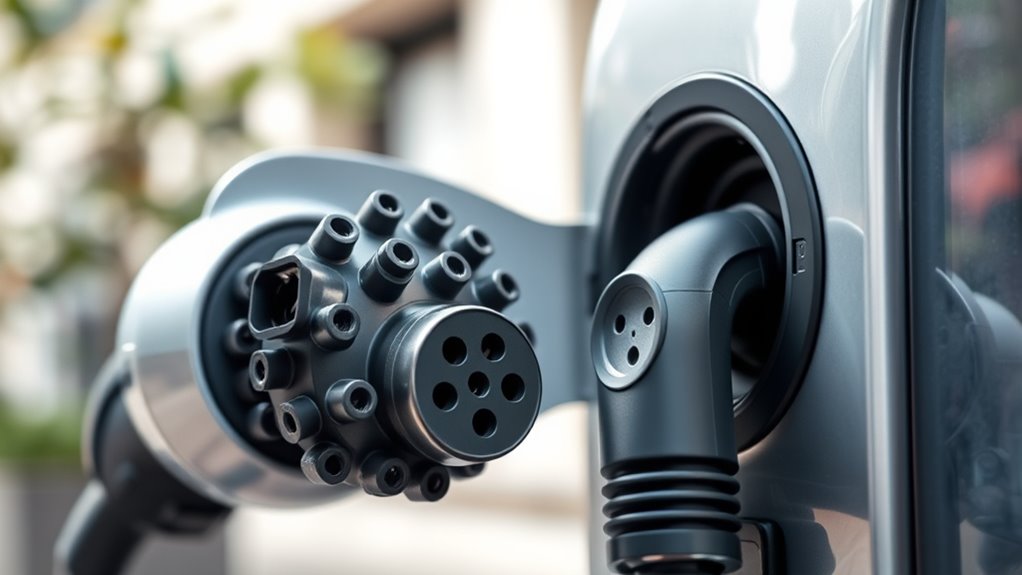
Using a universal or multi-standard adapter becomes particularly useful when you encounter unfamiliar or multiple charging stations on your journey. These adapters provide multi standard compatibility, ensuring you can connect to various charging networks without hassle. They are ideal when traveling through regions with different standards or when visiting unfamiliar stations. To determine if you need one, consider the table below:
| Situation | Best Adapter Choice |
|---|---|
| Multiple standards encountered | Multi-standard compatibility adapter |
| Rarely travel abroad | Standard adapters suffice |
| Frequent international travel | Universal adapters recommended |
| Unfamiliar charging stations | Use a universal adapter |
| Limited charger options | Opt for a multi-standard adapter |
This approach guarantees you stay charged, regardless of station standards. Being aware of adapter compatibility can help you avoid unnecessary inconvenience and ensure seamless charging experiences. Additionally, understanding charger compatibility can assist in selecting the most reliable adapters for your needs. Moreover, keeping up with latest charging standards can improve your overall charging efficiency and reliability. Staying informed about regional charging differences can further help you prepare for different areas you visit.
Tips for Selecting the Right Adapter for Your Vehicle
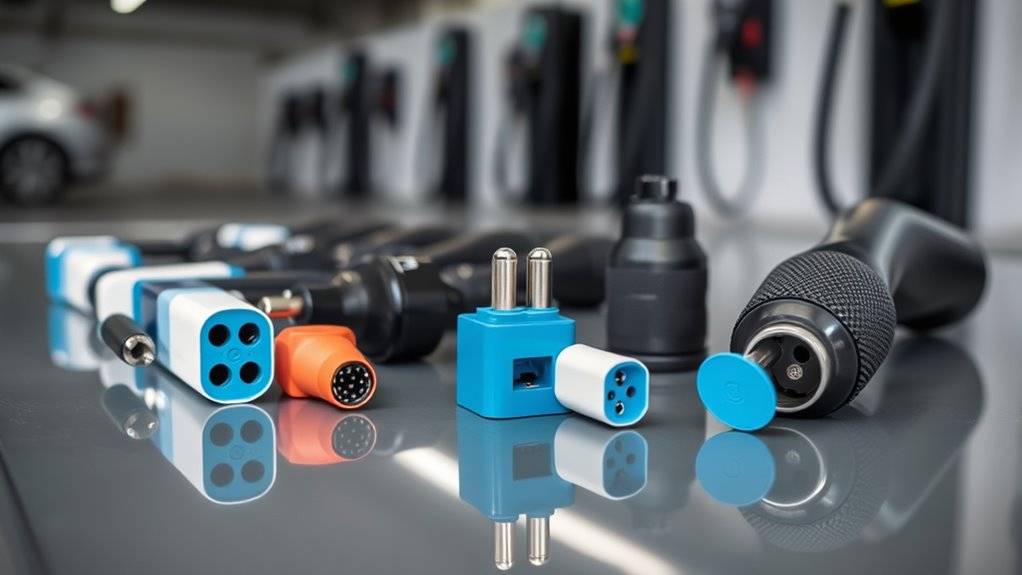
Choosing the right adapter starts with ensuring it’s compatible with your vehicle’s make and model. You also need to match the charging speed your vehicle supports and confirm the port and connector types. Paying attention to these points helps you find an adapter that charges safely and efficiently.
Compatibility With Vehicle
To guarantee your EV charging adapter works seamlessly with your vehicle, it’s important to verify compatibility before making a purchase. Check your vehicle’s connector type and ensure the adapter supports it. Some adapters are designed for specific models or brands, so confirm compatibility with your car’s specifications. Additionally, consider your battery health; using incompatible adapters can cause unnecessary wear or charging issues. Keep in mind that your charging infrastructure may influence which adapter functions best—some chargers are compatible only with certain standards. Always review your vehicle’s manual and consult manufacturer recommendations to avoid damaging your battery or compromising performance. Being diligent about compatibility ensures safe, efficient charging and preserves your vehicle’s longevity.
Charging Speed Compatibility
Ensuring your charging adapter matches your vehicle’s charging speed capabilities can substantially impact your charging experience. Check your EV’s battery capacity to determine how quickly it can handle higher power levels. If your car supports fast charging, select an adapter compatible with rapid chargers to reduce charging times at available stations. Conversely, if your vehicle maxes out at Level 1 or 2 charging, a basic adapter will suffice. Consider charging station locations—if most are fast chargers, investing in a compatible adapter is worthwhile. Using an incompatible adapter could lead to slower charging or even damage your battery. Matching your adapter to your vehicle’s charging speed ensures efficient, safe charging, and maximizes your available charging station options.
Port and Connector Types
Selecting the right adapter for your vehicle starts with understanding the port and connector types it uses. Your vehicle’s charging port determines which adapters will work, so checking compatibility is vital. Different EVs feature varying connector types, impacting which charging stations and adapters you can use. To guarantee proper connector compatibility, consider these key points:
- Confirm your vehicle’s charging port type before purchasing an adapter.
- Match the connector type to the charging station’s plug for seamless charging.
- Be aware of regional differences, as port standards vary globally.
Maintaining and Storing Your Charging Adapters
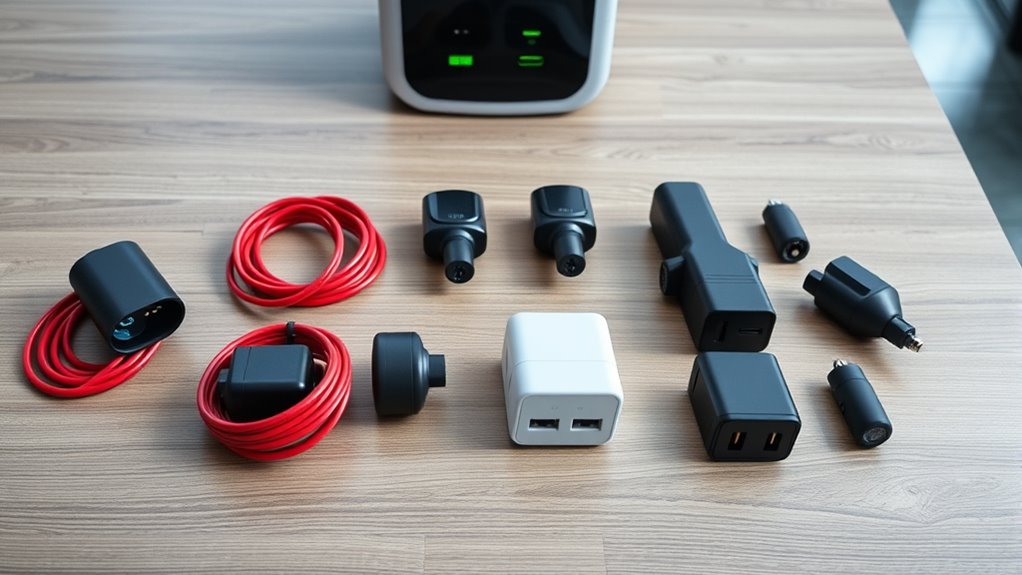
To keep your charging adapters in top shape, it’s crucial to follow proper storage techniques and perform regular maintenance checks. Handle and transport them carefully to avoid damage and ensure safety. Taking these steps helps extend the lifespan of your adapters and keeps your charging sessions smooth.
Proper Storage Techniques
Proper storage of your EV charging adapters is essential to keep them in good working condition and extend their lifespan. Good storage organization prevents damage and makes it easier to find the right adapter when needed. To protect your adapters, avoid exposing them to extreme temperatures or moisture, which can degrade the materials. Instead, store them in a cool, dry place, preferably in a dedicated container or bag. Ensure cables are neatly coiled to prevent stress on the connectors. Consider using protective covers or sleeves to shield against dust and scratches. Additionally, keep adapters away from heavy objects that could crush or bend cables. Proper storage techniques not only preserve the physical integrity of your adapters but also ensure they remain reliable and ready for use whenever you need them.
Regular Maintenance Checks
Regular maintenance checks are vital to guarantee your EV charging adapters remain reliable and safe to use. Regularly inspect your adapters for signs of wear, damage, or corrosion, which can affect their performance and safety. Keep connectors clean and dry to preserve their battery health and ensure ideal charging efficiency. Staying informed about charging station updates is essential because compatibility issues can arise if adapters aren’t up to date. Test your adapters periodically to confirm they’re functioning correctly and delivering consistent power. Proper storage also plays a role in maintenance; store adapters in a cool, dry place away from direct sunlight. By performing these checks, you prevent potential failures and extend the lifespan of your charging equipment, ensuring safe and efficient charging every time.
Handling and Transport Tips
Handling and transporting your charging adapters carefully is essential to prevent damage and make sure they function properly when needed. Proper storage ensures your adapters stay in good condition and are ready for use at any charging station. Always store your adapters in a clean, dry place, away from extreme temperatures or moisture. Practice good charging station etiquette by leaving no clutter and disconnecting adapters properly. To prevent adapter theft, keep them in a secure location when not in use and avoid leaving them unattended in public areas.
- Use a dedicated bag or case to protect your adapters during transport
- Label your adapters to avoid confusion and theft
- Regularly inspect for damage and clean connectors for top performance
Frequently Asked Questions
Can I Use Any Adapter With My Specific EV Model?
You can’t use any adapter with your EV model because charger compatibility and adapter standards vary. Always check your vehicle’s specifications to make sure the adapter matches the charging port and meets the correct standards. Using incompatible adapters can be unsafe or damage your vehicle. Stick to approved, compatible adapters recommended by your EV manufacturer to ensure safe and efficient charging every time.
Are There Safety Concerns When Using Third-Party Charging Adapters?
Sure, you can gamble with third-party adapters, but don’t be surprised if adapter safety becomes a thrilling rollercoaster. While some offer decent quality, others pose serious third-party risks, like short circuits or damage to your EV. Always check reviews, certifications, and compatibility. Remember, cutting corners might save money now but could lead to costly repairs later—so, prioritize safety over saving a few bucks.
How Do I Know if an Adapter Is Compatible With My Charging Station?
You can determine if an adapter is compatible with your charging station by checking its compatibility with your station’s specifications. Review the charger’s voltage, connector type, and power ratings, then compare them with the adapter’s specifications. Look for manufacturer guidance or compatibility charts. If the adapter matches your charging station’s requirements, it should work safely and efficiently, ensuring proper charging without damage or delays.
What Is the Cost Difference Between Basic and Advanced Adapters?
The cost comparison between basic and advanced adapters shows that basic adapters typically cost between $20 and $50, making them affordable for most users. Advanced adapters, with features like faster charging or compatibility with multiple outlets, can range from $100 to $300 or more. Adapter pricing varies based on brand and capabilities, so consider your charging needs carefully to find the best value and avoid overspending on features you might not require.
Do I Need Different Adapters for Different Travel Destinations?
Yes, you do need different adapters for different travel destinations to guarantee travel flexibility. Adapter compatibility varies depending on the country’s charging standards and socket types. Carrying the right adapters allows you to connect your EV charger safely and efficiently wherever you go. Before traveling, research your destination’s charging infrastructure and pack the appropriate adapters to avoid inconvenience and maximize your travel flexibility.
Conclusion
Choosing the right EV charging adapter is like finding the key to unseal seamless charging adventures. With the right knowledge, you’ll navigate the connector landscape effortlessly, turning potential charging frustrations into smooth journeys. Remember, the perfect adapter isn’t just a tool—it’s your ticket to keeping your electric vehicle powered up and ready to go, no matter where the road takes you. Stay informed, stay charged, and let your EV’s potential shine brighter than ever.