
TL;DR

Get backup power and energy gear delivered free — and shop member deals
- Fast, free delivery on millions of items
- Access to Prime Big Deal Days deals on October 6–7
- Prime Video, Amazon Music and more included
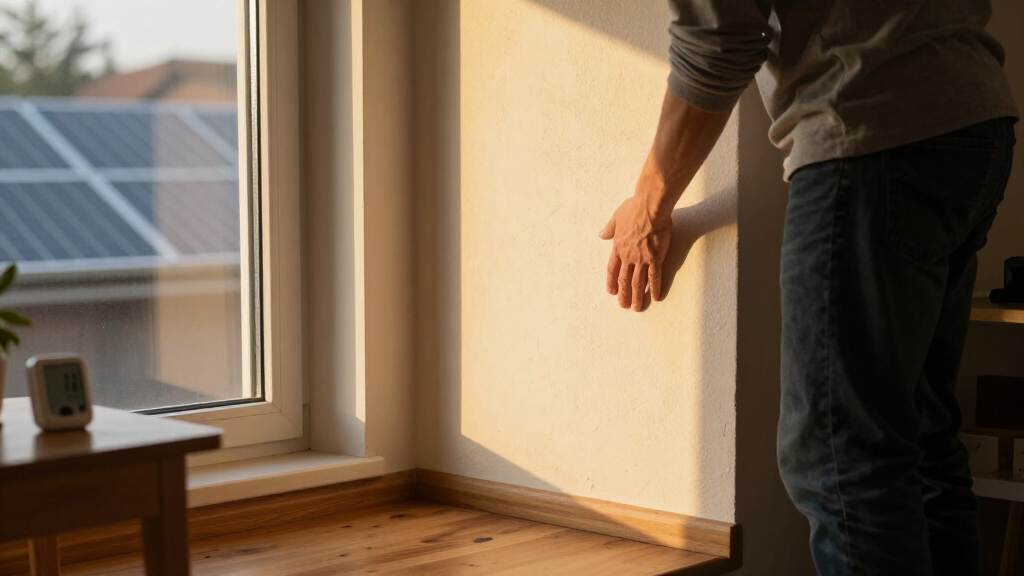
A Green Building Advisor discussion says sunlight that passes through a window is absorbed by interior surfaces and converted to heat. Participants disagree about whether blinds or curtains change how much of that heat remains in the room; the exchange does not provide measurements or a definitive answer.
A discussion published on Green Building Advisor on October 4, 2026, considers whether indirect sunlight entering a home through windows can warm it. One participant says sunlight becomes heat when absorbed by interior surfaces, while another questions whether heat absorbed by blinds or curtains is more likely to escape back through the window.
The exchange begins with a response from a participant identified as DCcontrarian, who argues that blinds inside the glass do not change the effect of sunlight once it has entered the room. In that account, light is converted to heat when it is absorbed by an object, whether that object is a window covering, a wall or a floor. The participant says the resulting heat goes into the room.
Malcolm Taylor raises a qualification: a covering close to the window may release some absorbed heat toward the glass, potentially allowing it to leave the room. The short discussion does not resolve that point or provide a calculation of how much heat might be retained or lost.
The question uses “indirect solar light” without defining whether it means diffuse daylight, sunlight reflected from another surface, or direct sunlight that does not fall on a person. The exchange also does not specify the window type, covering material, room conditions or outdoor temperature. Those details matter when evaluating the effect in a particular house.
Why Window Coverings May Matter
For homeowners, the exchange highlights a practical distinction between light entering a room and heat staying in the room. Sunlight absorbed indoors can add heat, but the discussion suggests that the location and properties of the absorbing surface may affect what happens afterward. A covering can absorb radiation near the window, while a floor or wall farther inside may hold and release heat differently.
That distinction can affect decisions about opening blinds on a sunny day or using window coverings to manage heat. But the discussion is not a test of particular products and does not establish a general rule that interior blinds have no effect. Nor does it quantify any change in room temperature. Readers should treat the comments as an exchange of views, not as a measured comparison of window treatments.
solar window film for heat reduction
As an affiliate, we earn on qualifying purchases.
As an affiliate, we earn on qualifying purchases.
The Question Behind the Exchange
The item appeared in Green Building Advisor’s community question-and-answer section, where readers discuss home design and building science. The supplied source records two replies posted on the evening of October 4, 2026. It does not include a formal report, experiment or cited research study on solar heat entering homes.
The first reply makes a claim about light passing through glass and being absorbed indoors. Taylor’s follow-up focuses on what happens after a covering absorbs that energy, asking whether some heat travels back toward the window. Neither reply provides supporting measurements, and the source material does not show a later response resolving the disagreement.
“Isn’t the difference between curtains or blinds absorbing the heat, and other surfaces further into the room, that half the heat the window covering absorb will be emitted back out towards the window?”
— Malcolm Taylor, Green Building Advisor participant
As an affiliate, we earn on qualifying purchases.
What the Discussion Does Not Establish
The comments do not settle how much heat remains indoors after sunlight is absorbed by an interior covering, or how that compares with heat absorbed by walls and floors. Taylor poses a question about heat moving back toward the window; the source provides no measurement or follow-up confirming that a particular share escapes.
It is also unclear what conditions the participants have in mind. The effect can depend on the kind of sunlight, glazing, covering, surface, and room, but the source does not describe or test any specific combination. It offers no temperature readings, energy figures or comparison baseline, so no numerical warming effect can be reported from this exchange.
As an affiliate, we earn on qualifying purchases.
Further Evidence Needed on Heat Gain
The source material contains no announced experiment, expert conclusion or follow-up answer. A clearer resolution would require comparing indoor temperature or heat flow under defined conditions, including the same window, sunlight and room with different covering positions. Until such evidence is provided, the discussion supports only a limited takeaway: sunlight entering through glass can be absorbed indoors, while the effect of a particular covering on retained heat remains unresolved here.
As an affiliate, we earn on qualifying purchases.
Key Questions
Can indirect sunlight warm a house?
The Green Building Advisor reply says light passing through glass is absorbed by interior objects and converted to heat. The exchange does not quantify the resulting temperature change, so it cannot say how much warming occurs in a given house.
Do interior blinds stop sunlight from warming a room?
One participant argues that interior blinds do not change the effect once light has passed through the glass. The discussion offers no measurements to establish that as a general rule or compare different blinds.
Could curtains or blinds send heat back out through the window?
Malcolm Taylor raises that possibility, asking whether heat absorbed by a covering near the window may be emitted back toward the glass. The exchange does not confirm how much heat, if any, would leave the room that way.
Does the discussion give a temperature or energy estimate?
No. It provides no temperature readings, energy figures, test conditions or comparison baseline. Its comments are qualitative rather than a measured assessment.
Source: rss
Halloween Picks
halloween
As an affiliate, we earn on qualifying purchases.