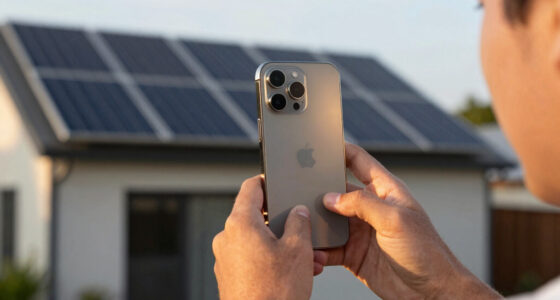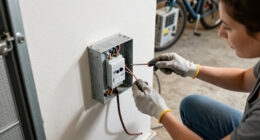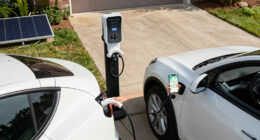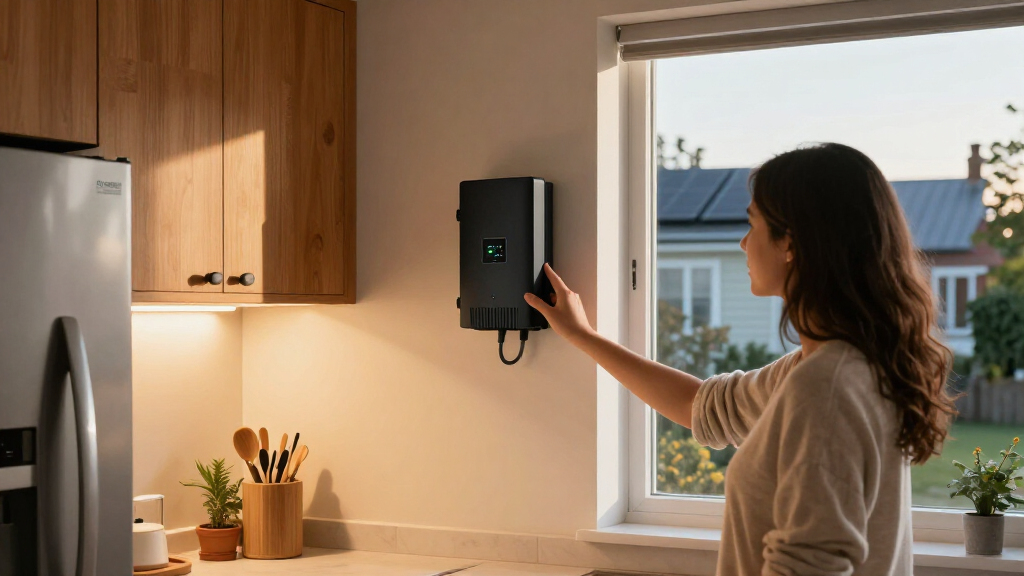

When comparing solar backup power, the key decision is whether you need a movable source for essentials or a system designed to support household circuits during an outage. A portable solar power station combines a battery, inverter, and charging inputs in a unit you can move and deploy without permanent installation. A home battery backup system is typically installed near the electrical panel and may work with rooftop solar, the grid, or both.

Get backup power and energy gear delivered free with Prime
- Fast, free delivery on millions of items
- Prime Video, Amazon Music and more included
- Member-only deals all year

Jackery HomePower 3600 Plus Portable Power Station, 3584Wh, 3600W
- ✔ Capacity: 3,584Wh
- ✔ AC output: 3,600W
- ✔ Parallel output: 7,200W

Jackery Solar Generator 1000 v2 with 200W Solar Panel, 1024Wh LiFePO4 Battery
- ✔ Battery capacity: 1,024Wh
- ✔ Battery type: LiFePO4 (LFP)
- ✔ AC output: 1,500W
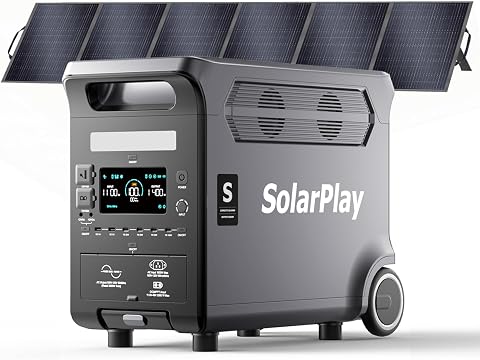
SolarPlay Q3600 Portable Power Station with 400W Solar Panel, 3840Wh LiFePO4 Battery, 3600W Output
- ✔ Battery capacity: 3,840Wh
- ✔ Battery chemistry: LiFePO4
- ✔ Continuous output: 3,600W
The portable option usually wins on upfront cost, flexibility, and ease of starting small. The installed battery usually wins on capacity, integration, and convenience during longer outages, especially when the system is sized to run selected household circuits. Choose portable if your priority is phones, lights, communications, and occasional small appliances. Choose a home battery if you need more sustained household backup and are prepared to pay for equipment, electrical work, and a site-specific design.
At a Glance
| Criteria | Portable solar power station | Home battery backup system | Winner |
|---|---|---|---|
| Upfront cost and installation | Lower entry cost; typically plug-and-play, with optional panels and accessories. | Higher installed cost; commonly needs electrical and possibly permitting work. | A |
| Usable power and capacity | Generally suited to selected devices and appliances; output and stored energy vary widely by model. | Can be sized for selected circuits or broader household loads; capacity depends on the system design. | B |
| Solar recharging | Panels can recharge the unit, subject to sunlight, panel input limits, and available space. | Can pair with rooftop solar and may recharge from it during an outage if the system supports islanding. | B |
| Outage convenience | Connect devices directly; powering home circuits may require compatible transfer equipment. | Can automatically supply connected circuits when configured for backup. | B |
| Portability and flexibility | Can move between rooms, vehicles, or off-grid locations. | Fixed in place and intended to serve the property. | A |
| Long outage performance | Useful for essential loads, but daily energy use can exceed available storage and solar input. | Can provide more stored energy and solar integration, though cloudy weather and high loads still limit runtime. | B |
| Expansion and integration | Some models accept extra batteries, but expansion and household integration depend on the product. | Often supports modular storage, solar, and energy management, subject to brand and installation compatibility. | B |
Jackery HomePower 3600 Plus Portable Power Station, 3584Wh, 3600W
When backup means keeping more than a few essentials powered, the HomePower 3600 Plus offers the strongest balance of stored energy and output in this lineup. Its 3,584Wh capacity and 3,600W AC output give buyers a larger starting point than the 1,024Wh Solar Generator 1000 v2, while the option to expand capacity provides a route to longer coverage. Jackery lists up to 21kWh per unit or 43kWh across multiple units, so this model has a clearer growth path than the other two picks.It also stands apart in charging flexibility: the listed options include AC, solar, gas generator and hybrid AC plus DC. The advertised two-hour hybrid recharge depends on that combined input being available; it is not a general solar-only estimate. The listing does not specify an included solar panel, unlike the SolarPlay Q3600 and 1000 v2 bundles, so buyers planning to recharge from sunlight should account for the panel and input setup separately.At 77.2 pounds, this is a substantial unit, though wheels and a telescopic handle make movement more manageable than carrying it. Its 6,000-cycle LFP battery claim and stated 10-year lifespan are strong longevity indicators, but they do not remove the need to consider storage conditions and manufacturer terms. The unit is listed for 120V; 240V operation requires parallel units. That makes it the most capable foundation here for a larger backup plan, but a poor fit for anyone expecting one compact box to power every household circuit.
Pros:
- 3,584Wh capacity and 3,600W AC output provide the largest listed single-unit backup platform here.
- Expandable capacity and parallel operation allow a larger system to be assembled over time.
- AC, solar, gas-generator and hybrid charging offer flexibility when sunlight is limited.
- Wheels and telescopic handle help move the 77.2-pound station.
Cons:
- At 77.2 pounds, it is much less convenient to carry than the 1000 v2.
- 240V operation requires units in parallel, and a solar panel is not listed among included components.
Best for: Households seeking a high-capacity portable backup with expansion options and multiple charging methods.
Not ideal for: Buyers who need a lightweight unit, an included solar panel, or 240V operation from one station.
Bottom line: We rank the HomePower 3600 Plus first for buyers who prioritize capacity and future expansion, provided they plan around its weight and separate solar setup.
“We rank the HomePower 3600 Plus first for buyers who prioritize capacity and future expansion, provided they plan around its weight and separate solar setup.”
Jackery Solar Generator 1000 v2 with 200W Solar Panel, 1024Wh LiFePO4 Battery
The Solar Generator 1000 v2 is the most approachable choice when backup priorities are a short list of essentials rather than a large household load. Its 1,024Wh battery and 1,500W AC output are substantially smaller than the HomePower 3600 Plus, but that smaller scale comes with a 23.4-pound station and an included 200W solar panel. For buyers who value a system they can move and deploy without committing to a very heavy unit, that tradeoff is central to its appeal.Its 10ms UPS switchover is the quickest transfer figure in this comparison, making it the standout option for supported equipment that benefits from a rapid backup transition. Buyers should still check whether their specific devices and setup are compatible; a transfer-time figure alone does not guarantee uninterrupted operation for every load. The LFP battery is rated to retain over 70% capacity after 4,000 cycles, and the app provides emergency, quiet overnight and energy-efficiency charging modes.The rapid-charge headline needs context: reaching a full charge in 50 minutes requires emergency charging to be enabled in the app. That can be useful when grid power is available and time is short, but it is not a solar charging estimate. Compared with the Q3600, this Jackery is far easier to transport, but it has less than a third of the stated capacity and a smaller panel. We see it as a portable essential-load system, not the choice for extended backup of several high-demand appliances. The power station and panel also ship separately, which can affect delivery timing.
Pros:
- Includes a 200W solar panel with a 1,024Wh LFP power station.
- 10ms UPS transfer time is the fastest specified in this group.
- At 23.4 pounds, it is far easier to move than either 3,600W-class station.
- App charging modes include emergency, quiet overnight and energy efficiency.
Cons:
- Its 1,024Wh capacity is much lower than the two larger stations for extended backup.
- The 50-minute full charge requires emergency mode in the app.
- The power station and solar panel ship separately.
Best for: People who want a comparatively light station with a matched solar panel for essential devices, travel or shorter outages.
Not ideal for: Households seeking multi-day high-load backup or buyers who want the largest panel and battery included in one shipment.
Bottom line: We recommend the 1000 v2 when portability and a quick UPS transfer matter more than the long runtimes offered by the larger systems.
“We recommend the 1000 v2 when portability and a quick UPS transfer matter more than the long runtimes offered by the larger systems.”
SolarPlay Q3600 Portable Power Station with 400W Solar Panel, 3840Wh LiFePO4 Battery, 3600W Output
The SolarPlay Q3600 makes its case through the bundle: a 3,840Wh LFP station arrives with a 400W solar panel, the largest included panel in this comparison. Its 3,600W continuous output matches the HomePower 3600 Plus on paper, while a listed 5,500W surge capacity gives it more specified surge headroom. For buyers assembling a solar-first portable backup package, having a panel included is a practical difference from the HomePower, whose listed contents do not include one.Its connections also suit a range of setups. Alongside four AC outlets, the Q3600 lists a NEMA TT-30 connection, four USB-C ports, two USB-A ports and several DC outputs. That makes it more accommodating for RV-oriented and mixed-device use than the two-AC-outlet 1000 v2. A UPS mode is specified with transfer time of 20ms or less, slower than Jackery’s 10ms figure but still a useful feature for compatible equipment. We should not read either timing as a guarantee for every device.The compromises are substantial. At 93.7 pounds, it is the heaviest option here, so wheels and a telescopic handle help with rolling but do not make it a light carry. Its 3,500-plus cycle claim is below the HomePower’s 6,000-cycle figure, and its 18-month warranty is shorter than both Jackery warranties. The advertised 1.5-hour recharge depends on AC power combined with 2,000W of solar input, not on the included 400W panel alone. Compared with the HomePower, the Q3600 offers more listed ports and an included panel, while the Jackery has the stronger stated cycle life, longer warranty and expansion figures.
Pros:
- 3,840Wh capacity and 3,600W continuous output provide substantial portable backup.
- Includes a 400W solar panel, the largest panel specified in these bundles.
- Four AC outlets plus TT-30, USB-C and DC connections support varied equipment.
- Wheels, a telescopic handle and UPS mode add practical utility.
Cons:
- At 93.7 pounds, it is the heaviest system in this comparison.
- The 18-month warranty is shorter than the five-year coverage listed for both Jackery models.
- The 1.5-hour charging claim assumes AC plus 2,000W solar input.
Best for: RV users and backup buyers who value an included 400W panel, high output and multiple AC, USB and DC connections.
Not ideal for: Anyone who needs a station that is easy to carry, prioritizes a longer warranty, or expects the included panel alone to deliver the fastest listed recharge.
Bottom line: We place the Q3600 third overall but first for an included larger panel and broad connection selection, if its weight and warranty fit your plans.
“We place the Q3600 third overall but first for an included larger panel and broad connection selection, if its weight and warranty fit your plans.”
As an Amazon Associate we earn from qualifying purchases.
Key Differences
The central tradeoff is scale versus commitment. A portable station lets a household start with a smaller budget and choose which devices to power. That works well when outages are brief or the goal is to keep communication, lighting, and a few essentials running. Its limits show up when several high-draw appliances run together or when daily energy consumption outpaces the battery and available sunlight.
A home battery shifts more of the work to the electrical system. It can power designated circuits without repeatedly moving cords and, when designed for it, recharge from rooftop solar while the grid is down. That convenience and capacity come with a substantially higher project cost, fixed placement, and compatibility questions. A larger battery is not automatically a whole-home solution: inverter output, backed-up circuits, solar configuration, and household demand determine what actually works.
Neither option guarantees days of power in every condition. Battery capacity measures stored energy, while inverter output limits how much power can run at once; solar production varies with weather, season, roof conditions, and system design. Compare the loads you need to run, their startup demands, and the hours of use before choosing. For many households, a portable unit is the sensible first step; a home battery makes more sense when recurring outages or household needs justify a permanent, engineered system.
Detailed Comparison
Upfront cost and installation (Portable solar power station wins — major)
Portable station wins; the gap is major. A portable unit can often be put to use without electrical work, while a home battery adds installation and system-design costs to the equipment price. Panels, expansion batteries, and transfer equipment can raise the portable setup’s total too, but a basic setup still lets buyers begin with less commitment. The installed system is worth the premium when the household needs its circuit integration and capacity.
Usable power and capacity (Home battery backup system wins — major)
Home battery wins; the gap is major for larger loads. Installed systems can be sized to support selected circuits or a substantial share of household demand. Portable models span a wide range, but many are best matched to individual devices and modest appliance use. Check both stored energy and continuous output: a large capacity figure does not mean the inverter can start or run every appliance.
Solar recharging (Home battery backup system wins — moderate)
Home battery usually wins; the gap is moderate. Portable stations can accept solar panels without a roof installation, which makes them flexible for sunny outdoor use. A home battery can draw from a rooftop array during an outage when the solar inverter and backup configuration support operation without the grid. That arrangement can replenish more energy over the day, but it depends on compatible equipment and actual sunlight.
Outage convenience (Home battery backup system wins — major)
Home battery wins; the gap is major for frequent outages. A properly configured system can switch to its backed-up circuits automatically or with a designed changeover. A portable unit generally means connecting devices or using separately installed transfer equipment. For an occasional short outage, that setup may be acceptable; during repeated outages, automatic circuit backup reduces effort and cord clutter.
Portability and flexibility (Portable solar power station wins — major)
Portable station wins; the gap is major. It can travel from the home to a campsite, vehicle, or another location, and can be positioned where power is needed. A home battery stays installed and serves the property. This is a clear advantage for renters, frequent travelers, or anyone who wants backup beyond one building, provided the unit’s weight and capacity suit the intended use.
Long outage performance (Home battery backup system wins — moderate)
Home battery wins; the gap is moderate and depends on design. More storage and rooftop solar integration can sustain a larger set of essential loads across a longer outage. A portable station can also recharge from panels, but its available energy may be constrained by panel input, weather, and space to deploy them. Either system can run short if the loads exceed its daily energy budget; conserving power matters.
Expansion and integration (Home battery backup system wins — moderate)
Home battery usually wins; the gap is moderate. Many installed systems are designed to coordinate storage, solar, backup circuits, and energy management, with expansion options that depend on the product. Some portable stations also accept additional batteries, but household integration is less uniform. Buyers should check compatibility and expansion limits before purchasing either system, especially if they expect needs to grow.
Portable solar power station: Pros and Cons
Pros:
- Lower-cost way to begin backup planning
- Portable for use at home or away
- No permanent installation for basic device charging
- Can recharge from compatible solar panels
Cons:
- Often limited to selected devices and modest loads
- Manual setup can add friction during outages
- Solar input and storage may be inadequate for sustained household demand
- Home circuit connection may require additional equipment
Home battery backup system: Pros and Cons
Pros:
- Can support designated household circuits at higher power levels
- Can provide automatic backup when configured with suitable equipment
- Can integrate with rooftop solar for outage recharging
- Designed for fixed household use and potential system expansion
Cons:
- Higher upfront project cost
- Requires site assessment and electrical installation
- Fixed in place and not useful as portable power
- Performance depends on system sizing, compatibility, and sunlight
Who Should Choose What
Choose Portable solar power station if:
- You want an affordable way to keep phones, lights, routers, or a few modest loads running.
- You rent, move often, or want one unit for home and outdoor use.
- You can tolerate connecting devices manually during occasional outages.
- You want to learn your backup needs before investing in a permanent system.
Choose Home battery backup system if:
- Outages are frequent or disruptive and you want selected circuits backed up with less manual setup.
- You already have rooftop solar or are planning a compatible solar and storage system.
- Your essential loads require more capacity or output than a portable unit can provide.
- You own the property and value household integration enough to justify installation costs.
Skip both if: Your outage risk is low and the purchase cost would strain your budget; a basic battery bank or small uninterruptible power supply for communications may cover your actual needs.
Value for Money
The portable station is usually the better value for buyers who need a limited set of loads covered, want mobility, or are not ready for electrical work. Its value depends on choosing capacity and output for real devices rather than paying for features or storage that will sit unused. Include panel cost, any expansion battery, and any equipment needed to connect household circuits when comparing the full setup.
Pay more for a home battery when automatic backup, higher output, and solar integration solve a recurring problem. The premium buys a fixed system built around the property’s electrical needs, not simply more stored energy. Ask installers to specify which circuits stay powered, expected runtime at realistic loads, how the system recharges during an outage, and what future expansion costs. If those answers do not address a concrete household need, the extra spend may not pay off.
Final Verdict
For most households seeking basic solar backup, start with a portable power station sized for communications, lighting, and a short list of essential devices. It offers the strongest value when outages are occasional and portability matters. Choose a home battery when outages regularly affect daily life, when you need selected household circuits powered with minimal intervention, or when a compatible rooftop solar system can recharge storage during grid failures.
The deciding factor is the load you need to support, not the word “solar” on the product. List essential devices, their running and startup power, and expected hours of use; then compare that demand with usable capacity, inverter output, and realistic solar input. If a portable unit meets that plan, the installed system’s premium is hard to justify. If it falls short and the property needs dependable circuit-level backup, a professionally sized home battery is the better fit.
Frequently Asked Questions
Can a portable solar power station run a refrigerator?
Some can, but the answer depends on the refrigerator’s startup demand, running power, and the station’s inverter output and stored energy. Check the appliance label or measured consumption and compare it with the station specifications. Runtime also depends on how often the compressor cycles and whether solar panels can recharge the unit.
Will rooftop solar keep working during a grid outage?
Not always. Many grid-tied solar inverters shut down during an outage unless the system has equipment designed to operate safely while disconnected from the grid. A compatible battery and backup configuration can provide that function; confirm the arrangement with the installer.
Is a home battery the same as whole-home backup?
No. The backed-up circuits, battery capacity, inverter output, and electrical design determine what remains powered. Some installations cover selected essentials, while systems designed for larger loads may cover more. Ask for a circuit list and runtime estimates based on your household’s expected use.
Which option lasts longer in a blackout?
Neither has a fixed runtime. A home battery often starts with more capacity and can pair with rooftop solar, while a portable station can also recharge from panels. Runtime depends on stored energy, loads, weather, panel placement, and how much electricity the household conserves.