Before calling an electrician for an EV charger quote, assess your home’s electrical capacity by checking your main panel for amperage and potential upgrades. Decide on the charger type that suits your driving needs and budget—Level 1 or Level 2—and choose a convenient location near your parking spot. Clear the installation area and gather any relevant electrical info to share. Efficient planning saves time and money, and if you continue, you’ll learn detailed steps to prepare effectively.

Get backup power and energy gear delivered free — and shop member deals
- Fast, free delivery on millions of items
- Access to Prime Big Deal Days deals on October 6–7
- Prime Video, Amazon Music and more included
Key Takeaways
- Research different EV charger types (Level 1 vs. Level 2) to determine your preferred charging speed and budget.
- Check your electrical panel’s capacity and take photos if possible to assess if upgrades are needed.
- Identify a suitable, accessible location near your parking spot with minimal obstructions.
- Gather questions about costs, process, and maintenance to discuss with the electrician.
- Review utility company policies for rebates, incentives, or required permits before installation.
If you’re considering installing an EV charger at home, taking a few preparatory steps before calling an electrician can save you time and money. One of the first things to do is research the different EV charger types available. There are Level 1 chargers, which use standard household outlets and are suitable for overnight charging but have slower charging speeds. Then, there are Level 2 chargers that require a dedicated 240-volt outlet and offer faster charging times. Understanding which type fits your driving habits and budget helps you communicate your needs clearly to the electrician.
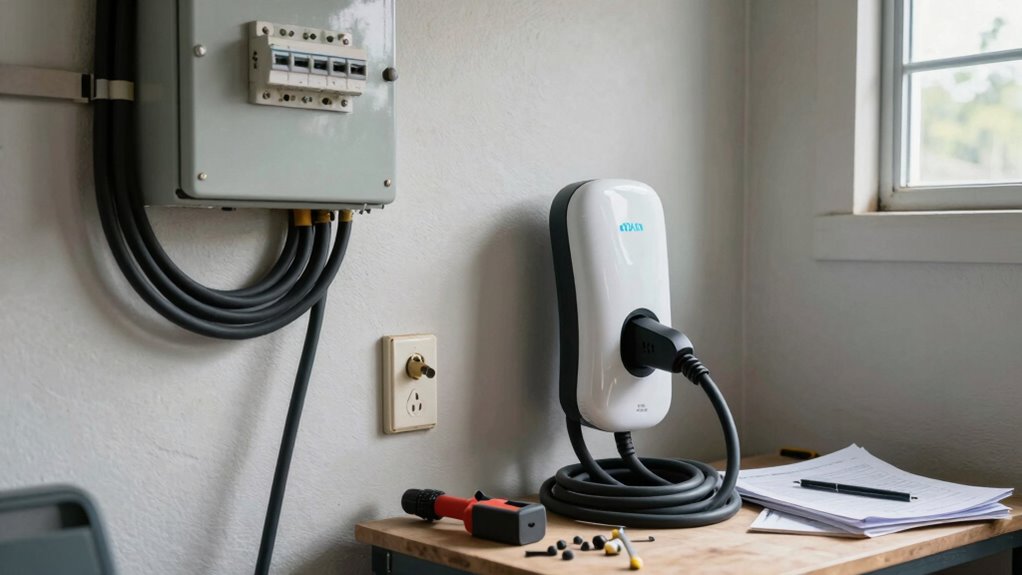
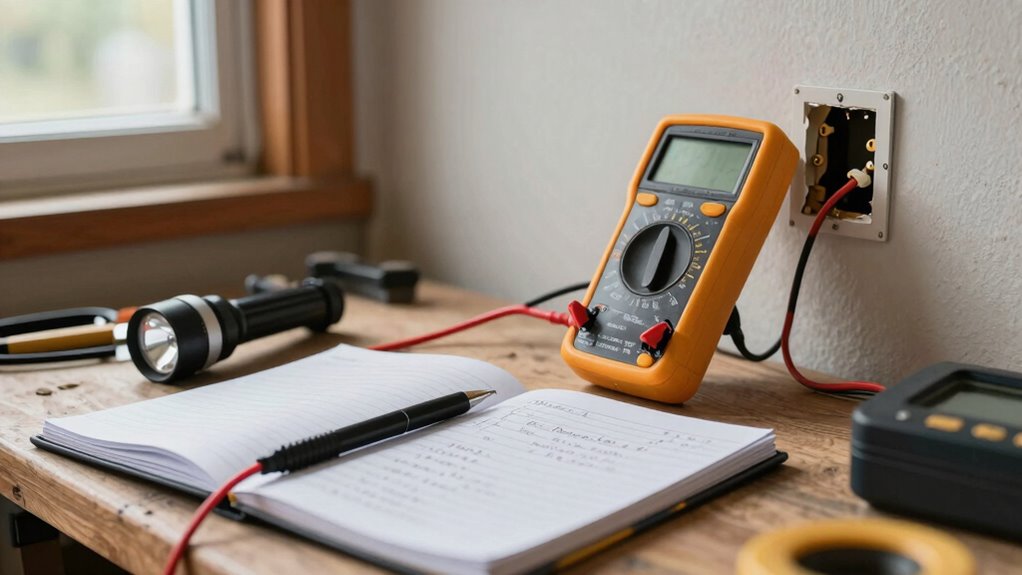
Next, it’s crucial to evaluate your electrical panel. Your electrical panel is the hub of your home’s electrical system, and its capacity determines whether you can support a new EV charger. Check the amperage of your main breaker; most Level 2 chargers need a 40-50 amp circuit, so if your panel is near capacity, you might need an upgrade. This step helps you prepare for potential costs associated with panel upgrades, which can considerably influence your overall budget. You can often find this information on the inside of your panel door or by consulting your electrical panel’s documentation. If you’re unsure, taking a picture and sharing it with your electrician can streamline the assessment process. Being aware of your home’s electrical system capacity is essential for a smooth installation. Additionally, understanding the electrical system’s capabilities can help you determine whether your current setup can handle future upgrades or additional loads.
Check your electrical panel’s amperage to ensure it can support a new EV charger and avoid costly upgrades.
Another important step is to locate the best spot for your charger. Ideally, it should be close to where you park your vehicle and have easy access to your electrical system. Clearing the area and noting any obstructions will make installation smoother. Also, take the time to review your utility company’s policies regarding EV charging installations—some offer rebates or incentives for installing chargers, which can offset costs. Having this information ready shows your electrician that you’re proactive and can help expedite the process.
Finally, prepare a list of questions or concerns you may have about the installation process, costs, or maintenance. By doing this, you guarantee that you’re fully informed and can make educated decisions. Additionally, understanding the color accuracy of your home’s electrical system can help ensure a safe and efficient installation. Having a clear understanding of your options regarding EV charger types and the capacity of your electrical panel will make discussions with your electrician more efficient. Once you’ve taken these steps, you’ll be in a strong position to get accurate quotes and ensure the installation process goes smoothly. Preparing ahead saves you time, minimizes surprises, and helps you make the best choice for your home’s electrical system and your EV charging needs.
As an affiliate, we earn on qualifying purchases.
Frequently Asked Questions
How Long Does It Typically Take to Get an EV Charger Quote?
Getting an EV charger quote usually takes a few days, depending on your charging speed needs and the installation process complexity. When you call an electrician, they’ll evaluate your current setup, assess wiring, and discuss your desired charging speed. Expect them to schedule a visit, which can take a day or two. After that, the quote is typically ready within a few days, allowing you to plan your EV charging setup efficiently.
Are There Specific Permits Required Before Installing an EV Charger?
Yes, you’ll need to check building codes and obtain electrical permits before installing an EV charger. Local regulations vary, but generally, you must guarantee your installation complies with safety standards. Contact your city or county building department to find out what’s required. Securing the necessary permits helps prevent future issues and ensures your installation is legal and safe. An electrician can often assist with permit applications and compliance.
What Are Common Costs Associated With EV Charger Installation?
You might find it surprising, but the common costs for EV charger installation typically include a cost comparison of different charger types and installation fees. Expect to pay between $300 and $1,500, depending on whether your home needs a new circuit or upgrades. Additional costs could involve permits or upgrades to your electrical panel. Getting a detailed quote helps you understand your total investment and avoid surprises later.
Can I Install an EV Charger Myself to Save Money?
You can attempt a DIY EV charger install, but be aware of the DIY risks, such as electrical shocks or code violations. While doing it yourself might seem like a cost comparison win, professional installation guarantees safety, proper setup, and compliance. Consider if the potential savings outweigh the risks. If you’re inexperienced with electrical work, it’s safer and more cost-effective long-term to hire a licensed electrician.
What Brands or Models of EV Chargers Are Recommended?
You should consider trusted brands like ChargePoint, Tesla, and JuiceBox for your charging station. While some worry about costs, investing in a reliable brand guarantees safety and longevity. Conduct a brand comparison to find features like compatibility with your vehicle and smart technology. Opt for well-reviewed models, and you’ll enjoy efficient, safe charging that saves you time and money in the long run.
home electrical panel capacity tester
As an affiliate, we earn on qualifying purchases.
As an affiliate, we earn on qualifying purchases.
Conclusion
Preparing proactively paves the way for a seamless service. By gathering details, understanding your needs, and doing a bit of homework, you’ll save time and trouble when calling an electrician. Remember, a little preparation goes a long way in ensuring your EV charger installation is smooth and swift. So, stay savvy, stay sorted, and set the stage for a successful setup—serving your electric vehicle needs with confidence and clarity.
As an affiliate, we earn on qualifying purchases.
As an affiliate, we earn on qualifying purchases.
Fall Picks
fall essentials
As an affiliate, we earn on qualifying purchases.