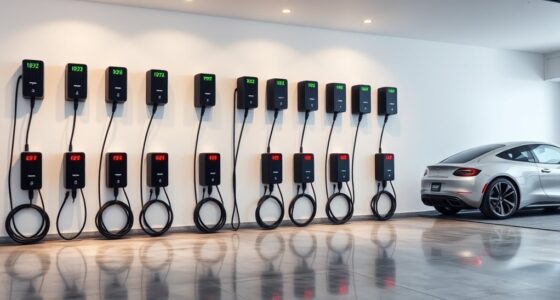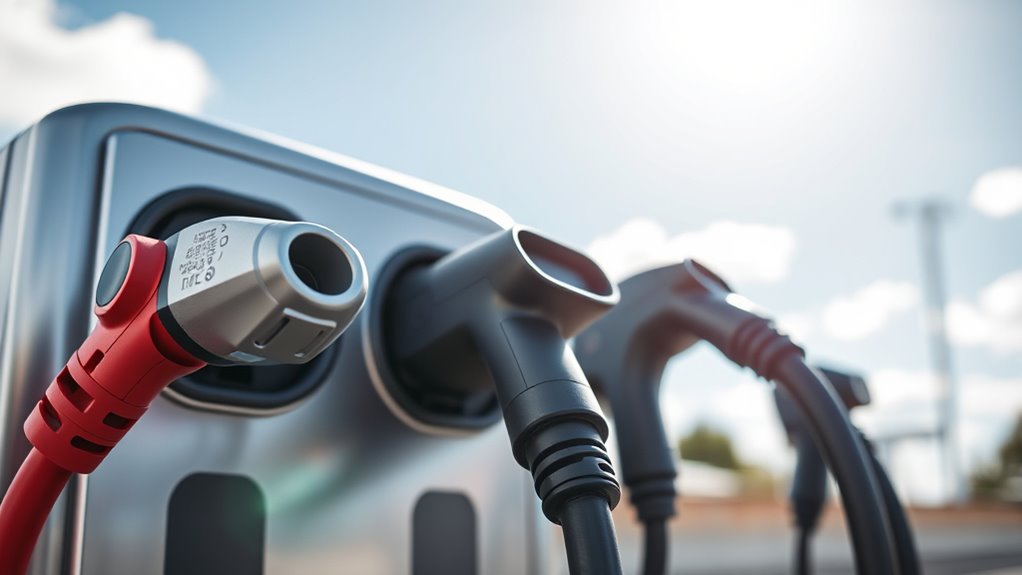

Understanding EV charging connectors like Type 1, Type 2, CCS, and CHAdeMO is key to ensuring compatibility and efficient charging. Each connector varies in charging speed and regional availability, so choosing the right one depends on your vehicle and where you plan to charge. Fast chargers, for example, often use CCS or CHAdeMO, while home chargers may rely on Type 1 or Type 2. Keep exploring to discover more about these options and how they fit your needs.
Key Takeaways
- Understand the different EV connector types like Type 1, Type 2, CCS, and CHAdeMO, including their regional usage and compatibility.
- Learn about charging speeds and safety features associated with each connector type for efficient and secure charging.
- Recognize regional infrastructure variations that influence connector availability and vehicle compatibility.
- Match your vehicle’s port with the appropriate connector type for home, fast, or rapid charging needs.
- Stay informed on industry trends toward standardization and future developments to ensure long-term compatibility.

GUWIEYG EV Charger Connector Type 1 to Type 2 Adapter Electric Vehicle Charging Adapter SAE j1772 to IEC62196 EV Charger Adapter
- Compatibility: Supports up to 32A charging
- Portability: Compact and durable for travel
- Fast Charging: Delivers up to 32A for quick charge
As an affiliate, we earn on qualifying purchases.
As an affiliate, we earn on qualifying purchases.
Overview of EV Charging Connector Types

Understanding the different types of EV charging connectors is essential for efficient and compatible charging. The connector evolution has been driven by rapid advancements in technology and varying regional standards, leading to multiple connector types. Standardization challenges have made it difficult to create a universal system, causing fragmentation in the industry. For example, early connectors like the Type 1 were mainly used in North America and Japan, while Europe adopted Type 2. Meanwhile, fast-charging standards like CHAdeMO and CCS emerged to handle higher power levels. This diversity can be confusing for users, requiring awareness of which connector works with your vehicle and charging station. Recognizing these differences helps you navigate the charging landscape more effectively and ensures smoother, more reliable charging experiences. Additionally, European cloud innovation supports the development of integrated and secure charging solutions, promoting sustainability and user convenience. As electric vehicle adoption continues to grow, establishing standardized charging protocols remains a key goal for industry stakeholders.
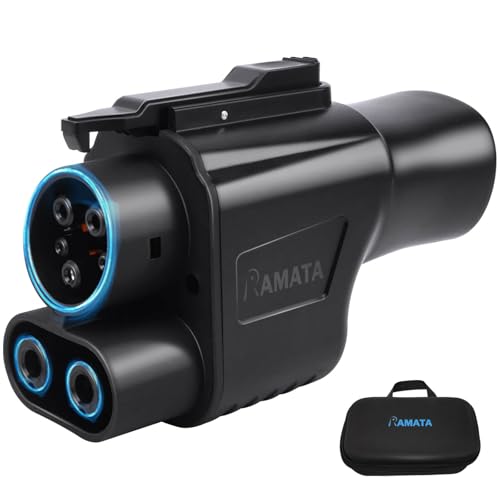
RAMATA fit for Tesla Supercharger to Charge Ford F150 Lightning, Cadillac Lyriq Hyundai ioniq, Mach-E, GM, Rivian, Mercedes NACS to CCS Adapter 500A DC Fast Charging More CCS1 Electric Vehicle
- Compatibility: Fits Tesla Supercharger and various EVs
- Charging Speed: Supports up to 500A/1000V DC
- Fast Charging: Charges 150 miles in 15 minutes
As an affiliate, we earn on qualifying purchases.
As an affiliate, we earn on qualifying purchases.
Key Features and Compatibility of Major Connectors
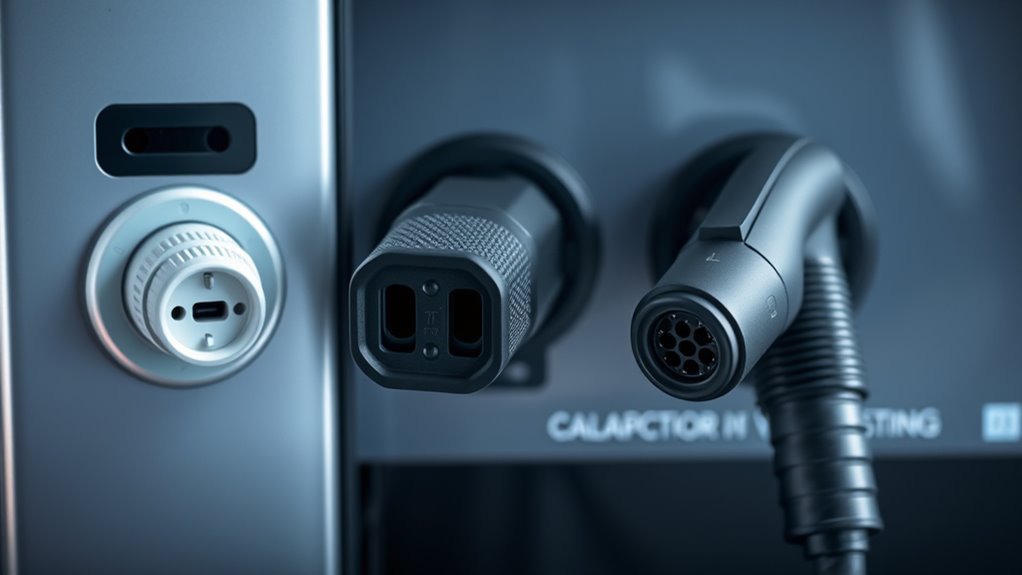
The key features and compatibility of major EV charging connectors determine how smoothly your vehicle charges and whether it fits with available charging stations. Connector safety is crucial, ensuring secure connections that prevent damage or hazards during charging. Different connectors, like Type 1, CCS, or CHAdeMO, offer varying charging speeds, with some supporting rapid charging to minimize downtime. Compatibility depends on your vehicle’s make and model, so understanding these features helps you choose the right connector. Faster charging speeds can considerably reduce charging time, but only if your vehicle and station support the same standard. Ensuring connector safety and matching charging speeds are essential factors for a seamless and secure charging experience, making it easier to plan trips and manage your EV’s needs effectively. Understanding connector standards helps you navigate the complexities of EV charging infrastructure more confidently.

Azirkel CCS1 to CHADEMO EV Charger Adapter-DC 1000V 250A
- Adapter Type: CCS1 to CHADEMO EV Charger
- Voltage and Current: 1000V, 250A
- Heat Dissipation: Efficient heat management
As an affiliate, we earn on qualifying purchases.
As an affiliate, we earn on qualifying purchases.
Charging Infrastructure and Regional Variations

How widespread and reliable your EV charging options are often depend on regional infrastructure, which varies considerably around the world. Charger accessibility depends heavily on local investments and the density of charging stations. In some regions, like North America and Europe, you’ll find extensive networks supporting various regional standards, making it easier to find compatible chargers. Conversely, in areas with less developed infrastructure, charger availability can be limited, and regional standards may differ, creating compatibility issues. These variations influence your ability to charge conveniently and quickly. Understanding regional standards and infrastructure development helps you plan longer trips and find reliable charging options. Recognizing these differences ensures you’re prepared for the charging landscape wherever you travel. Additionally, awareness of regional standards can help prevent compatibility issues and improve your overall charging experience, especially when considering upcoming standard updates that aim to unify charging protocols.

EVIQO Level 2 EV Charger, 40 Amp 240V, J1772 for Non-Tesla EVs, 25ft Cable, WiFi (2.4GHz) Smart App, Weatherproof Indoor/Outdoor (IP66, NEMA 4), UL & ETL Certified, NEMA 14-50 Plug-in, 9.6kW
- Plug-in Installation: No electrician needed, requires NEMA 14-50 outlet
- High Power Output: 40A, 240V, 9.6kW charging capacity
- Universal Compatibility: Works with all North American EVs and PHEVs
As an affiliate, we earn on qualifying purchases.
As an affiliate, we earn on qualifying purchases.
Choosing the Right Connector for Your Vehicle and Needs
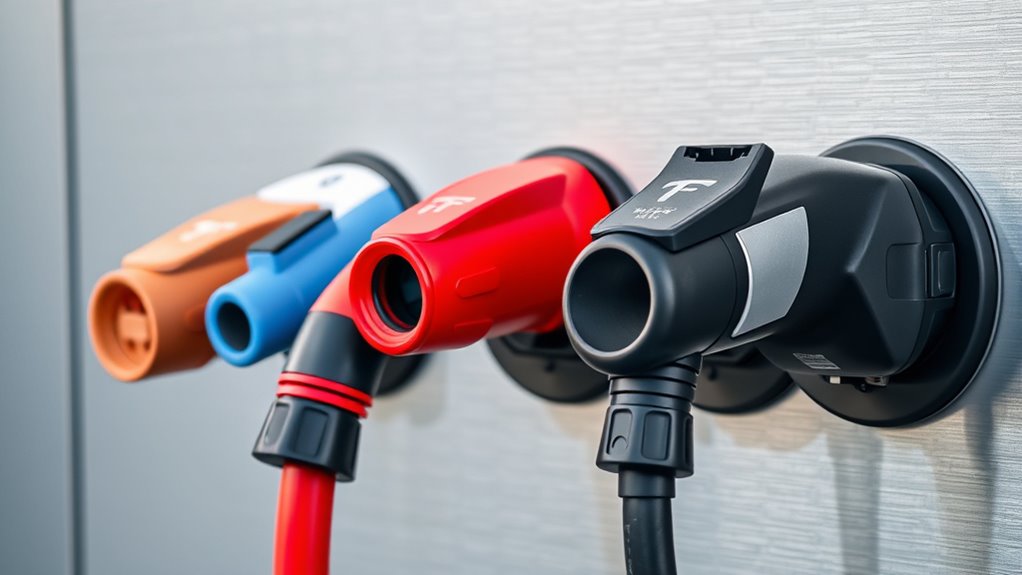
Choosing the right connector for your vehicle depends on your driving habits, charging needs, and regional availability. First, consider connector compatibility with your car’s charging port to guarantee seamless use. If you frequently charge at fast chargers, look for connectors like CCS or CHAdeMO, which support high-speed charging. For home charging, a simple Type 1 or Type 2 connector might suffice, offering user convenience and ease of use. Think about how often you’ll charge and where—this influences the best options for your lifestyle. Keep in mind that regional differences affect connector availability, so selecting a compatible, user-friendly connector ensures hassle-free charging. Additionally, understanding the different charging standards can help you select the most versatile and future-proof option for your EV. Being aware of regional compatibility can prevent frustrations and ensure your EV remains ready to go wherever you drive. Finally, considering the technology evolution in charging connectors can help you make an informed decision that supports your vehicle’s long-term use. Ultimately, choosing the right connector enhances your driving experience by making charging straightforward and reliable.
Frequently Asked Questions
Can I Use Different Charging Connectors With an Adapter?
Yes, you can use different charging connectors with an adapter, but you need to check connector compatibility first. Not all adapters are universally compatible, and some have limitations that might prevent fast charging or full power transfer. Always verify the adapter’s specifications and make sure it’s designed for your specific connectors. Remember, adapter limitations can impact charging speed and safety, so use them wisely and prefer certified options.
How Do Charging Speeds Vary Between Connector Types?
Charging speeds can differ substantially between connector types, with some providing rapid charging in 30 minutes or less, while others take much longer. You’ll notice that connector compatibility and charging speed factors like power output and vehicle acceptance influence overall speed. For example, CCS and CHAdeMO often support fast charging, but the actual speed depends on your vehicle and the station’s power level. Always check your vehicle’s specifications for peak charging performance.
Are Charging Connectors Interchangeable Across Regions?
Regional compatibility varies because connector standardization isn’t universal. You might find that a charging connector used in Europe isn’t compatible with your vehicle in North America, and vice versa. To avoid issues, check your vehicle’s compatibility with regional connector standards before traveling or charging. Some chargers and adapters exist, but ensuring proper compatibility saves time and prevents damage. Always verify regional differences and connector standards for seamless EV charging experiences.
What Maintenance Is Required for EV Charging Connectors?
Like a vintage watch, your EV charging connector needs regular care to stay durable. You should inspect it for dirt, debris, or damage periodically. Clean the connector with a soft brush or cloth, avoiding harsh chemicals to preserve connector durability. Make certain the contacts are dry before plugging in. Routine cleaning and gentle inspections keep your connector functioning smoothly, preventing potential issues and extending its lifespan—much like maintaining a cherished antique.
How Do Connector Standards EVolve With New EV Models?
Connector standards evolve with new EV models to guarantee better connector compatibility and faster charging. As automakers develop innovative features, standard updates are introduced to support increased power levels and improved safety. You’ll notice newer models often adopt updated connectors, but universal adapters help maintain compatibility across different standards. Staying informed about these standard updates helps you select the right charging stations and avoid connectivity issues with your EV.
Conclusion
Now you know the different EV charging connectors, now you understand the features, and now you can choose the right connector. With the right knowledge, you can charge confidently, charge efficiently, and charge anywhere. Whether it’s Type 1, CCS, Chademo, or others, you’re equipped to make informed decisions, to find the right fit, and to keep your EV ready to go. Empower yourself with this knowledge, and enjoy the freedom of seamless charging everywhere you travel.