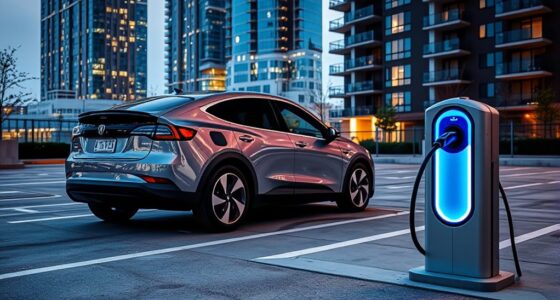
As the used EV market grows, prices are dropping mainly because of battery health decline and increased supply. Batteries naturally lose capacity over time, making older EVs less desirable and cheaper. Plus, more used EVs entering the market creates competition, pushing prices down. Advances in battery repair and recycling also help lower costs for replacements, making older models more affordable. Stay tuned to learn how these trends might benefit your next EV purchase.
Key Takeaways
- Battery degradation lowers used EV resale values by reducing range and performance, making older models cheaper.
- Increased supply from new model releases creates a surplus, driving prices down for used EVs, especially those with aging batteries.
- Advances in battery recycling and replacement parts reduce maintenance costs, making used EVs more affordable despite battery wear.
- Technological improvements and declining battery costs lessen the impact of degradation on used EV prices over time.
- Market trends show decreasing residual values for older EVs, resulting in more budget-friendly options for consumers.
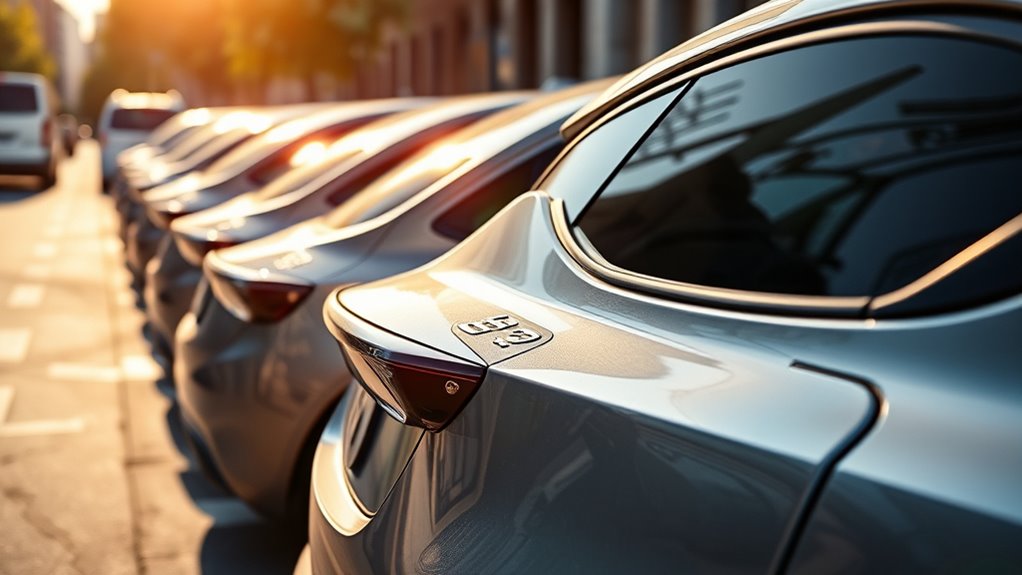
Have electric vehicle (EV) prices truly become more affordable in recent years? It’s a question many shoppers are asking, especially as the market shifts and more used options become available. One key factor influencing these price trends is battery degradation. Over time, EV batteries naturally lose some capacity, which can reduce driving range and overall performance. As a result, used EVs with higher mileage or older batteries tend to sell for less. This decline in battery health makes buyers hesitant to pay premium prices for older models, pushing prices downward. Automakers and buyers are now more aware of this issue, which has led to increased attention on battery longevity and resale value. When you look at the used EV market, you’ll notice that vehicles with degraded batteries are often priced considerably lower, making electric cars more accessible to a broader audience.
Another key element impacting EV prices is market supply. As more automakers ramp up production and introduce new models, the supply of used EVs increases. This surplus creates a more competitive environment, which naturally drives prices down. When supply outpaces demand, dealers and sellers are forced to lower prices to move inventory. Furthermore, the availability of replacement parts and improved battery recycling techniques has made maintaining and refurbishing used EVs more cost-effective. This, in turn, reassures buyers that they can get a decent vehicle without overpaying, especially if they’re willing to consider models with some battery degradation. The growing market supply also means that older models with less capacity or slightly reduced performance are no longer niche or rare—they’re more common and, thus, cheaper. Additionally, advancements in battery technology are gradually mitigating some concerns about degradation, further stabilizing used EV prices.
The convergence of these factors—battery degradation and market supply—has greatly contributed to the decreasing prices of used EVs. As batteries continue to improve and new models flood the market, the residual value of older EVs will likely keep declining, making them even more affordable. For you, this means more opportunities to purchase an EV at a lower price point, especially if you’re comfortable with some battery health considerations. Understanding that battery degradation isn’t necessarily a deal-breaker, especially given the declining costs of battery replacements and upgrades, can help you make smarter buying decisions. Ultimately, the combination of technological advancements, increased market supply, and the natural aging of batteries has made EVs more accessible and affordable than ever before.

Patravious 2026 NEW Tools 8PCS Battery Service Kit, CR-V Battery Maintenance Kit, Battery Tools,Battery Terminal Cleaner, Car Battery Cleaner Kit, Tools Suitable for Car Repair and Battery Maintenance
NEW 2026 8PCS Tools Battery Service Kit:Our Car Battery Cleaner Kit Includes Battery Terminal Cleaning Brush X1,Puller X1,Battery…
As an affiliate, we earn on qualifying purchases.
As an affiliate, we earn on qualifying purchases.
Frequently Asked Questions
How Do Battery Warranties Influence Used EV Prices?
Battery warranties substantially influence used EV prices because they assure buyers of battery longevity and reliability. When a vehicle has a strong warranty covering battery lifespan, you’re more confident in its value, which keeps prices higher. Conversely, limited or expired warranty coverage may lower prices, as you might worry about potential battery repairs or replacements. Overall, better warranty coverage boosts buyer trust, maintaining or increasing used EV market value.
What Role Do Government Incentives Play in Used EV Pricing?
Government incentives totally reshape the used EV market, making prices drop like a rollercoaster. When policies and incentive programs boost new EV sales, they flood the market with affordable options, causing used EV prices to plummet. You’ll see this especially when governments push for greener transportation, encouraging more people to sell or trade in their older models. So, government policies and incentive programs are the secret weapons driving used EV prices down!
Are Certain EV Models More Prone to Value Depreciation?
Yes, some EV models are more prone to value depreciation. You’ll find that vehicles known for strong model reliability and reputable brands tend to hold their value better. For example, popular brands with a solid reputation for durability and consistent performance usually see less depreciation. Conversely, less reliable models or those from lesser-known brands often lose value faster, making them less attractive if you’re looking to maintain resale value.
How Does Charging Infrastructure Impact Used EV Demand?
Charging infrastructure greatly impacts used EV demand because more charging stations reduce range anxiety, making EVs more practical for daily use. When you see an accessible network of charging stations, you’re more likely to contemplate buying a used EV, knowing you’ll find convenient places to recharge. This increased confidence helps drive demand, especially as people feel less worried about running out of battery and needing to find a charger quickly.
What Technological Advancements Are Expected to Affect Future EV Prices?
You’ll likely see lower EV prices as advancements in battery chemistry improve energy density and longevity, making vehicles more affordable and appealing. Additionally, innovations that reduce manufacturing costs will streamline production, ultimately benefiting consumers. These technological breakthroughs promise to make EV ownership more accessible, transforming your driving experience into something more sustainable and cost-effective while reducing the emotional burden of high initial investments.

Performance Tool W1674 Side Terminal Battery Wrench – Professional Grade Tool for Tightening and Loosening Battery Connections
REVERSIBLE RATCHET ACTION: The Performance Tool W1674 Side Terminal Battery Wrench features a reversible ratchet action for easy…
As an affiliate, we earn on qualifying purchases.
As an affiliate, we earn on qualifying purchases.
Conclusion
So, as you watch used EV prices fluctuate, one thing’s clear: battery health is the secret to uncovering their true value. Will newer tech make older models less desirable or open new opportunities for savvy buyers? The coming months hold answers, but one thing’s certain—you’ll want to stay tuned. Because in the world of EVs, today’s discounts could become tomorrow’s must-have features. Keep your eyes open; the market’s about to surprise you.
affordable used EV with good battery health
As an affiliate, we earn on qualifying purchases.
As an affiliate, we earn on qualifying purchases.

2026 New Grasside Level 1&2 EV Charger, 8-16Amp Adjustable Current & Timer, 25FT EV Charging Cord, Portable electric car charger, NEMA 5-15 & 6-20P, J1772 Charging Cable/Station for All J1772 EV/PHEVs
Universal J1772 Compatibility: Designed with a standard J1772 connector, this J1772 charger works with most J1772 electric vehicles…
As an affiliate, we earn on qualifying purchases.
As an affiliate, we earn on qualifying purchases.