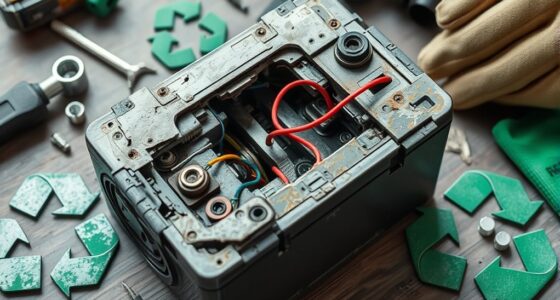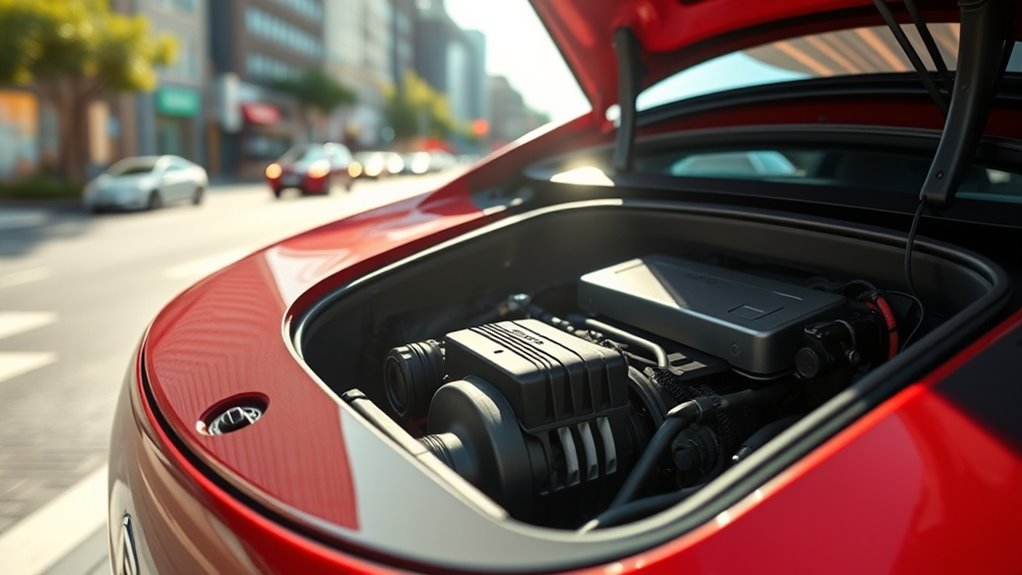

Electric vehicles need less maintenance because their motors have fewer moving parts and require no oil changes, filters, or spark plug replacements. They use simple, single-speed transmissions that eliminate complex gear systems, and regenerative braking reduces brake wear and repair costs. Plus, their cooling systems are easier to manage, and batteries last longer with minimal upkeep. If you want to discover more about how EVs stay reliable with less fuss, there’s plenty to explore ahead.
Key Takeaways
- Electric motors have fewer moving parts, reducing wear and the need for parts replacement.
- Regenerative braking minimizes brake component wear, lowering replacement frequency.
- Simplified transmissions eliminate complex gear systems that require maintenance or repair.
- Electric vehicles lack oil, filters, and exhaust systems, decreasing routine part replacements.
- Advanced battery chemistries and thermal management extend lifespan, avoiding frequent battery replacements.

Zebra Instruments, VZREP ECM Variable Speed Motor Repair Kit
Auto & Truck Maintenance
As an affiliate, we earn on qualifying purchases.
As an affiliate, we earn on qualifying purchases.
The Electric Motor: A Durable Heart of the Vehicle

Because electric motors have fewer moving parts than traditional internal combustion engines, they are inherently more durable and reliable. This simplicity means you won’t need to perform frequent motor maintenance, which is common with combustion engines. Electric motor durability is high, as there are no complex systems like timing belts or spark plugs to worry about. You won’t have to replace oil, filters, or other components that wear out over time. Instead, the motor’s design minimizes potential failure points, allowing your vehicle to run smoothly for years. Additionally, component wear is significantly reduced due to the streamlined nature of electric motors. The maintenance requirements for electric motors are generally lower, further reducing the overall cost of ownership. This reduced need for maintenance not only saves you money but also gives you peace of mind knowing your vehicle is less prone to unexpected breakdowns. Furthermore, the simplified design of electric motors decreases the likelihood of costly repairs over the vehicle’s lifespan. Overall, the electric motor’s durability makes it a key reason why EVs are easier to maintain. The fewer moving parts involved, the less there is to potentially go wrong over time. Moreover, advancements in electric motor technology continue to enhance their longevity and reliability.

Brake Disc Compatible With NIO ET7 All-Weather Function EV Regenerative Braking Heat Dissipation
Model Compatibility: Fits NIO ET7 vehicles equipped with all-weather function brake disc systems supporting regenerative braking.
As an affiliate, we earn on qualifying purchases.
As an affiliate, we earn on qualifying purchases.
Batteries With Long Lifespans and Low Maintenance Needs

Modern EV batteries use durable chemistry that lasts longer and resists wear. You’ll find they require minimal routine checks, saving you time and effort. This results in fewer visits to the shop and more reliable performance over the vehicle’s life. Additionally, advancements in battery technology have contributed to increased longevity and reduced maintenance needs. The design of these batteries often incorporates fewer moving parts, further decreasing the likelihood of mechanical issues. Furthermore, the reliable power systems in EV batteries help maintain consistent performance with minimal intervention. These innovations are supported by smart monitoring systems, which continuously assess battery health and performance to optimize longevity. An understanding of essential oil properties can also help in maintaining overall vehicle care indirectly, such as using natural remedies for minor ailments.
Durable Battery Chemistry
Advancements in battery chemistry are making electric vehicles more reliable and easier to maintain. Modern chemistries reduce battery degradation over time, extending lifespan and decreasing replacement frequency. Improved thermal management keeps batteries operating within ideal temperatures, preventing overheating and further slowing degradation. These innovations mean your EV’s battery stays healthier longer, requiring less maintenance. Key features include:
- Higher stability chemistries that resist degradation
- Enhanced thermal management systems for consistent performance
- Increased cycle life, delaying capacity loss
- Reduced need for complex maintenance or early replacements
Long-term durability is becoming a standard feature, ensuring your EV remains dependable for years to come.
Minimal Routine Checks
Thanks to improved battery chemistry, your electric vehicle now requires minimal routine checks. You only need to perform simple routine inspections, such as checking the battery’s overall condition and ensuring there are no physical damages. Unlike traditional vehicles, fluid checks are virtually unnecessary because EVs don’t have oil or coolant systems that need regular topping up. Instead, focus on inspecting the charging ports and cables periodically to ensure proper connections. These routine checks help catch minor issues early, but overall, your EV’s long-lasting batteries reduce the frequency of maintenance tasks. This simplified maintenance routine saves you time and effort, making EV ownership more convenient. With fewer fluid checks and routine inspections required, you can enjoy more driving and less servicing. Additionally, the advanced battery chemistry used in modern EVs contributes significantly to their low maintenance needs. Properly maintaining the battery management system can further extend the lifespan of your EV’s battery and optimize performance over time. Regularly monitoring the battery health can help prevent unexpected failures and ensure optimal operation. Keeping an eye on air quality around the vehicle can also help maintain the overall health of sensitive electronic components. Staying informed about battery technology advancements can also help you make smarter decisions about your vehicle’s care.

Thermal Management of Battery Systems in EV and Smart Grid Application
As an affiliate, we earn on qualifying purchases.
As an affiliate, we earn on qualifying purchases.
The Absence of Oil Changes and Related Components

Because electric vehicles (EVs) don’t have an internal combustion engine, they don’t require oil changes or the replacement of related components like oil filters and spark plugs. Without engine oil, your vehicle avoids the routine maintenance associated with traditional cars. This means fewer trips to the service center and lower maintenance costs. Without oil filters, you eliminate the need for filter replacements that keep engine oil clean. You also avoid issues caused by oil degradation over time, such as sludge buildup. Overall, the absence of oil changes simplifies maintenance and reduces the number of parts that can wear out or fail. Additionally, the quiet operation of EVs contributes to a more peaceful driving experience. This shift results in a more reliable, low-maintenance driving experience. It’s a key reason why EVs are becoming more convenient and cost-effective over their lifespan.

Automotive Wiring and Electrical Systems (Workbench Series)
Automotive Wiring & Electrical Systems
As an affiliate, we earn on qualifying purchases.
As an affiliate, we earn on qualifying purchases.
Simplified Transmission Systems in Electric Vehicles
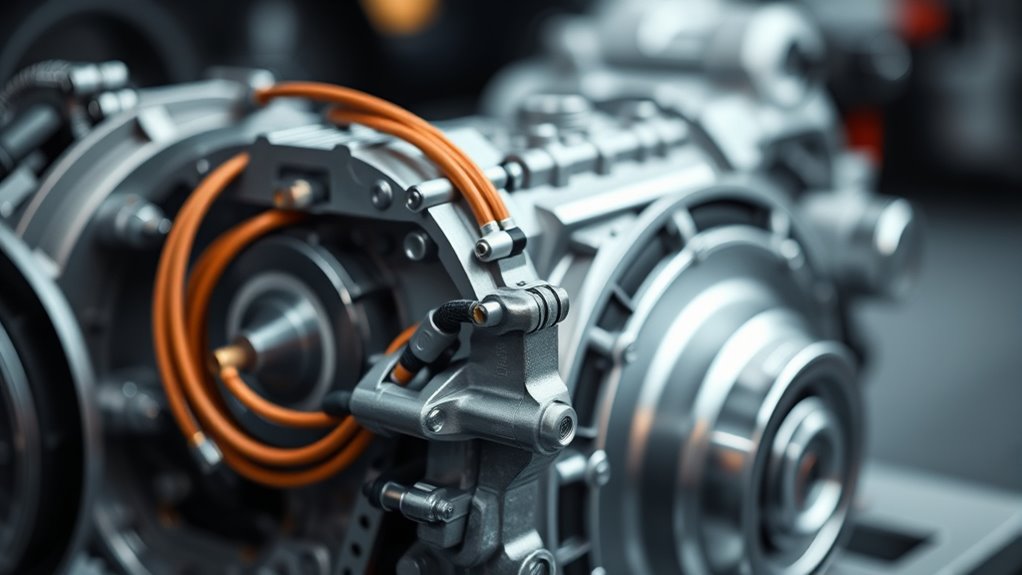
Electric vehicles have simplified their transmission systems compared to traditional cars, making maintenance easier and more reliable. Unlike conventional vehicles, EVs often use single-speed transmissions that eliminate the need for complex gear ratios and torque converters. This streamlined setup reduces moving parts, decreasing the likelihood of repairs and failures. Instead of multiple gears, EVs rely on the electric motor’s torque, which provides smooth acceleration without shifting. Here’s a quick comparison:
| Feature | Traditional Car | Electric Vehicle | Benefit |
|---|---|---|---|
| Gear Ratios | Multiple gear ratios for efficiency | Fixed gear ratio, simplified design | Less maintenance, fewer parts |
| Torque Converter | Used to multiply torque during shifts | Not needed in EVs | Fewer components, less wear |
| Transmission Type | Multi-speed manual or automatic | Single-speed automatic | Reduced complexity, durability |
Additionally, the absence of complex transmission components means fewer opportunities for mechanical failure, which is part of why EVs tend to have lower maintenance costs overall. This reduction in moving parts also contributes to increased vehicle longevity and decreased need for routine repairs. Moreover, the simplified transmission system makes electric vehicles well-suited for lease agreements, as fewer repairs can lead to fewer costs during the lease term.
Brake Systems Designed for Efficiency and Longevity

Regenerative braking helps you recover energy and reduces wear on your brake components. Since EVs use fewer parts for braking, they require less maintenance over time. This simplified design not only boosts efficiency but also extends the lifespan of your brake system. Proper care and maintenance of these systems can further enhance their durability and performance. Additionally, the fewer moving parts involved mean fewer potential points of failure, contributing to the overall reliability of electric vehicle brake systems.
Regenerative Braking Benefits
One of the key advantages of regenerative braking in EVs is that it transforms braking energy into stored power, which helps reduce wear on traditional brake components. This energy recovery process captures kinetic energy during deceleration, converting it into electrical energy that recharges the battery. As a result, your brake system experiences less friction and heat, extending its lifespan. Regenerative braking not only improves efficiency but also decreases maintenance needs for brake pads and rotors. You’ll notice smoother deceleration and fewer repairs over time. This system seamlessly integrates with your vehicle’s overall efficiency, making your EV more reliable and cost-effective. By harnessing energy recovery, regenerative braking optimizes performance while minimizing component replacement and upkeep.
- Extends brake component lifespan
- Reduces heat and friction damage
- Improves overall fuel efficiency
- Enhances vehicle reliability
Fewer Brake Components
Because EVs are designed with fewer brake components, they rely on advanced systems that prioritize durability and efficiency. Regenerative braking plays a key role by converting kinetic energy into electrical energy, reducing wear on traditional brake parts. This system lessens the need for frequent brake maintenance, as it handles much of the braking workload automatically. With fewer brake pads, rotors, and calipers to replace, you’ll spend less time and money on repairs. The reliance on regenerative braking extends the lifespan of the remaining brake components, making the entire system more reliable over time. As a result, your EV requires less routine maintenance, saving you effort and expenses while ensuring consistent braking performance.
The Reduced Role of Cooling Systems and Other Ancillary Parts

Unlike traditional internal combustion engine vehicles, electric vehicles (EVs) rely on markedly fewer cooling systems and ancillary parts. Since EVs don’t generate as much heat, their cooling system is simpler and requires less maintenance. You won’t need to replace or repair components like radiators, thermostats, or fans as often. Additionally, other ancillary parts such as belts, oil filters, and exhaust systems are largely unnecessary. This reduction means fewer parts to break down or wear out over time. As a result, your EV’s maintenance needs are substantially lowered. You’ll benefit from fewer inspections, fewer repairs, and less downtime. Overall, the streamlined cooling system and minimized ancillary parts contribute to the lower maintenance demands of electric vehicles.
- Simplified cooling system
- Fewer belts and hoses
- No oil filters or exhaust components
- Reduced cooling system repairs
Frequently Asked Questions
How Often Do Electric Vehicle Batteries Need Replacing?
Electric vehicle batteries typically don’t need replacing until after 8 to 15 years, depending on usage and battery quality. Battery degradation gradually occurs over time, reducing range but not usually requiring immediate replacement. Most EV manufacturers offer warranties covering battery replacement for several years. The replacement frequency is generally low, and with proper care, your battery can last well beyond the warranty period before needing a replacement.
Are Electric Motors Immune to Wear and Tear?
Electric motors are highly durable and resistant to wear and tear, making them less prone to frequent issues. Their wear-resistant components, like sealed bearings and brushless designs, ensure longevity and consistent performance. You benefit from fewer repairs because electric motor durability means they don’t suffer from common engine problems. With proper maintenance, your electric motor remains efficient for many years, providing a reliable, low-maintenance driving experience.
Do EVS Require Any Engine Oil or Transmission Fluid?
Like a car that runs smoothly without needing constant tune-ups, your EV doesn’t require engine oil or traditional transmission fluid. Electric motor maintenance is minimal, and most EVs don’t need transmission fluid changes at all. Instead, you’ll benefit from fewer fluids to monitor and replace, making maintenance simpler. However, some models may still have specific transmission fluid requirements, so always check your vehicle’s owner’s manual for guidance.
How Long Do Electric Vehicle Brake Systems Last?
Electric vehicle brake systems typically last between 70,000 to 100,000 miles, thanks to brake pad longevity and regenerative braking reducing wear. Brake fluid lifespan varies, usually needing replacement every 2 to 3 years to maintain performance. You’ll find that your EV’s brakes require less frequent maintenance overall, but regular inspections ensure best safety and longevity of the brake system.
What Cooling Systems Do EVS Still Need?
EVs still need cooling systems, including liquid cooling for batteries and motors. You should keep up with cooling system maintenance by checking coolant levels regularly and following recommended coolant replacement schedules to prevent overheating. Proper coolant replacement ensures peak performance and longevity of the cooling system. Staying on top of these maintenance tasks helps your EV run smoothly and efficiently, avoiding costly repairs down the line.
Conclusion
With fewer moving parts and simpler systems, your EV’s maintenance needs are like a well-oiled machine running smoothly on a quiet, enduring symphony. Imagine cruising down the road with a vehicle that’s more like a steady heartbeat than a ticking time bomb. Less fuss, less worry—your electric car is built to last, quietly humming along like a loyal companion. Embrace the simplicity and let your EV take you on endless journeys without the constant drumroll of repairs.