Electric vehicles rely on coolant systems to keep their batteries and electronics from overheating, which is essential for safety and performance. Just like traditional cars, EVs do need coolant changes to prevent issues like leaks, corrosion, and inefficient cooling. Regular maintenance helps extend battery life and ensure reliable operation. If you want to know the signs that your EV might need a coolant boost or change, there’s more to find out ahead.
Key Takeaways
- EV cooling systems typically use liquid coolant that requires periodic checks and replacements to maintain efficiency.
- Regular coolant changes help prevent corrosion, leaks, and system degradation over the vehicle’s lifespan.
- Many manufacturers recommend coolant replacement every 3 to 5 years, depending on the vehicle model.
- Neglecting coolant changes can lead to overheating, reduced battery performance, and potential safety risks.
- Proper maintenance of coolant levels and timely replacements are essential for optimal EV thermal management.

Orion Motor Tech Coolant Vacuum Refill Kit, 13pc Radiator Cooling System Tool Set with Conical Adapter 4 Round Adapters for Leak Detection Cooling Refill, Vacuum Coolant Fill Kit with Hose, Black
Cut Down Refill Time: Orion Motor Tech's 13 pc. coolant vacuum refill kit fills your system in just…
As an affiliate, we earn on qualifying purchases.
As an affiliate, we earn on qualifying purchases.
Understanding the Cooling System in Electric Vehicles

Understanding the cooling system in electric vehicles is essential because it directly impacts the vehicle’s performance and longevity. A well-maintained cooling system helps regulate battery temperature, which is crucial for maximizing your battery’s lifespan. When the battery stays within ideal temperature ranges, it prevents overheating that can cause degradation over time. This battery thermal management is vital for maintaining overall vehicle efficiency and safety. Proper cooling also plays a role in preventing overheating during rapid charging, which is critical for safety and battery health. It also improves charging efficiency, allowing you to charge your EV faster and more safely. Without proper cooling, batteries can overheat during rapid charging or intense driving, reducing overall battery health and risking costly repairs. The use of Free Floating cooling systems in many EVs helps distribute temperature evenly across the battery pack, enhancing performance and durability. Additionally, understanding the thermal conductivity of different cooling fluids can help optimize the cooling process for better heat transfer. An efficient cooling system can also help prevent thermal runaway, a dangerous situation that can lead to battery fires or failures. By understanding how the cooling system works, you can ensure your EV stays in peak condition, maintaining its range and reliability over the years. Proper cooling is key to getting the most out of your electric vehicle.

Automotive Wiring and Electrical Systems (Workbench Series)
Automotive Wiring & Electrical Systems
As an affiliate, we earn on qualifying purchases.
As an affiliate, we earn on qualifying purchases.
Components of an EV Cooling System

The components of an EV cooling system work together to regulate the temperature of the battery and other critical parts. Central to this is the battery thermal management system, which maintains ideal temperature levels to ensure safety and efficiency. You’ll find that coolant pumps circulate fluid through channels in the battery pack, absorbing heat. The radiator design plays a key role in dissipating this heat, often featuring specialized fins to maximize airflow. You might also see thermostats or temperature sensors that monitor and control coolant flow, ensuring consistent cooling. Together, these components create a closed-loop system that keeps your electric vehicle’s core components within safe operating temperatures, preventing overheating and maintaining peak performance. Additionally, some systems incorporate smart automation to optimize cooling based on real-time driving conditions and energy usage. Proper maintenance of coolant levels and quality is essential to keep the entire system functioning effectively over time.

Shophubio Engine Coolant Temperature Sensor 12641073 for Buick, Bolt EV EUV Colorado Malibu, CT6, Terrain 2015-2022
[ROBUST MATERIALS] Constructed from metal and plastic, this coolant temperature sensor is built to withstand harsh conditions, durability…
As an affiliate, we earn on qualifying purchases.
As an affiliate, we earn on qualifying purchases.
How EV Cooling Systems Differ From Traditional Car Cooling

Unlike traditional internal combustion engine cooling systems, EV cooling focuses primarily on managing temperature-sensitive components like the battery, electric motor, and power electronics. Since batteries are vital for battery life and overall vehicle performance, maintaining ideal temperatures helps extend battery longevity and guarantees safety. Additionally, EV cooling systems are designed to support faster charging speeds, preventing overheating during rapid charge cycles. They often use liquid cooling to keep temperatures steady and protect sensitive electronics. In contrast, traditional cars mainly cool engines to prevent overheating and maintain performance. EV cooling systems are more targeted, efficient, and adaptable, emphasizing battery health and quick charging capabilities, which are key to maximizing range and vehicle reliability. Effective cooling is critical to ensuring these components operate within optimal temperature ranges, and maintain their longevity. Properly designed cooling systems also help reduce thermal stress, which can cause deterioration over time. Advanced cooling technologies further enhance thermal management, ensuring reliability under diverse driving conditions. Moreover, ongoing innovations in thermal management systems aim to improve efficiency and safety in electric vehicle operation. Innovative cooling solutions are continually developed to address the evolving needs of EVs and optimize their performance.

American Volt Electric Fan Push-in Radiator Fin Brass Probe Thermostat Temperature Switch Sensor Kit (1-Pack, 160'F On – 145'F Off)
Automotive electric fan push-in radiator fin probe thermostat switch.
As an affiliate, we earn on qualifying purchases.
As an affiliate, we earn on qualifying purchases.
The Role of Coolant in EVs

Coolant plays an essential role in keeping your EV’s components operating safely and efficiently. It’s necessary for battery thermal management, preventing overheating that can reduce performance or cause damage. Proper coolant circulation helps maintain a stable battery temperature, ensuring longevity and ideal charge cycles. Additionally, coolant supports cabin climate control by transferring heat away from the vehicle’s heating and cooling systems, enhancing passenger comfort. Without effective coolant, your EV’s battery could overheat, leading to reduced range or potential failure, while your climate control system might struggle to maintain a comfortable interior. In short, coolant is fundamental for managing heat within your EV, protecting sensitive components, and ensuring smooth, reliable operation. Proper coolant use directly impacts safety, efficiency, and overall vehicle lifespan. Maintaining the correct coolant levels and quality is essential for optimal thermal regulation, which is vital for the longevity of electric vehicle components. Regular checks and timely coolant changes help prevent system failures and ensure that heat transfer functions properly throughout the vehicle’s lifespan. Regular maintenance of coolant systems is crucial for preventing overheating and maintaining peak vehicle performance.
Do EVs Require Regular Coolant Maintenance?

Maintaining your EV’s coolant system is key to ensuring it continues to operate smoothly and safely. Regular coolant maintenance helps preserve battery longevity by preventing overheating, which can degrade battery cells over time. When the cooling system functions properly, your vehicle maintains ideal operating temperatures, directly improving charging efficiency. You don’t need to perform complex coolant changes frequently, but checking coolant levels and replacing it as recommended by the manufacturer is essential. Neglecting this maintenance can lead to overheating, reduced battery performance, and increased wear on cooling components. Staying on top of coolant upkeep ensures your EV remains reliable, efficient, and safe for everyday use. Proper cooling system upkeep is crucial for optimizing overall vehicle reliability and safety. Additionally, understanding the maintenance schedule provided by your vehicle manufacturer can help you stay ahead of potential issues. Regular inspections and understanding coolant quality can further enhance your vehicle’s performance and lifespan, especially since coolant degradation over time can affect cooling efficiency.
Signs That Your EV’s Cooling System Needs Attention
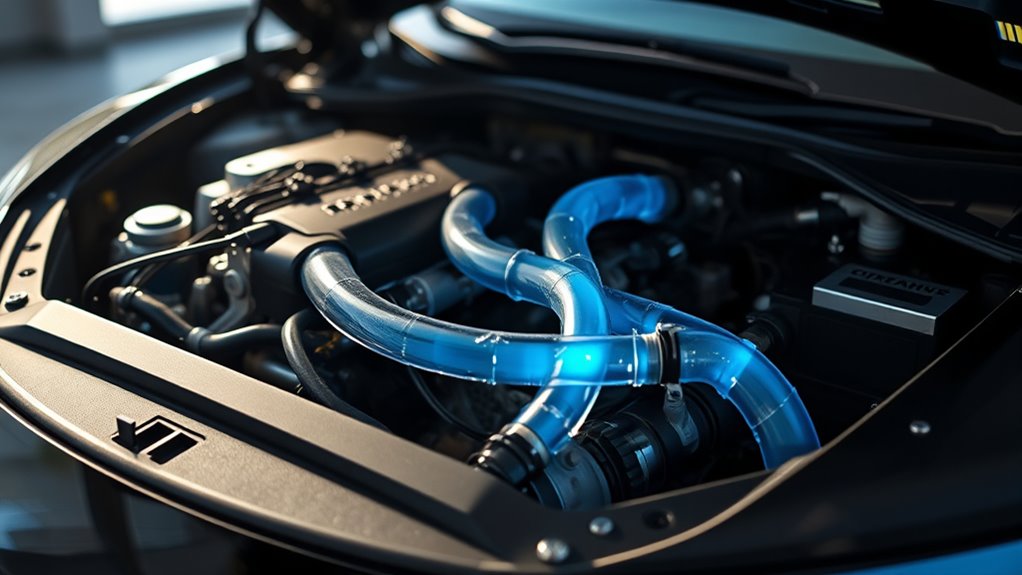
Your EV’s cooling system will usually keep things running smoothly, but certain signs indicate it might need attention. If you notice your battery degrading faster than usual or a decrease in charging efficiency, it could signal cooling issues. Here are key signs to watch for:
- Unusual overheating during operation, which can accelerate battery degradation. Proper coolant levels and system functioning are essential to prevent this problem.
- Longer charging times or inconsistent charging performance.
- Warning lights on your dashboard related to temperature or cooling system faults.
- Proper maintenance of your cooling system helps prevent these problems and extend your vehicle’s lifespan. Regular checks of coolant levels and system integrity can catch issues early before they lead to costly repairs.
These signs suggest your cooling system isn’t maintaining ideal temperatures, risking battery health and performance. Addressing these issues promptly can prevent costly repairs and ensure your EV continues running efficiently. Regular checks and awareness of these indicators help keep your vehicle in top shape.
Maintenance Tips for EV Cooling Systems
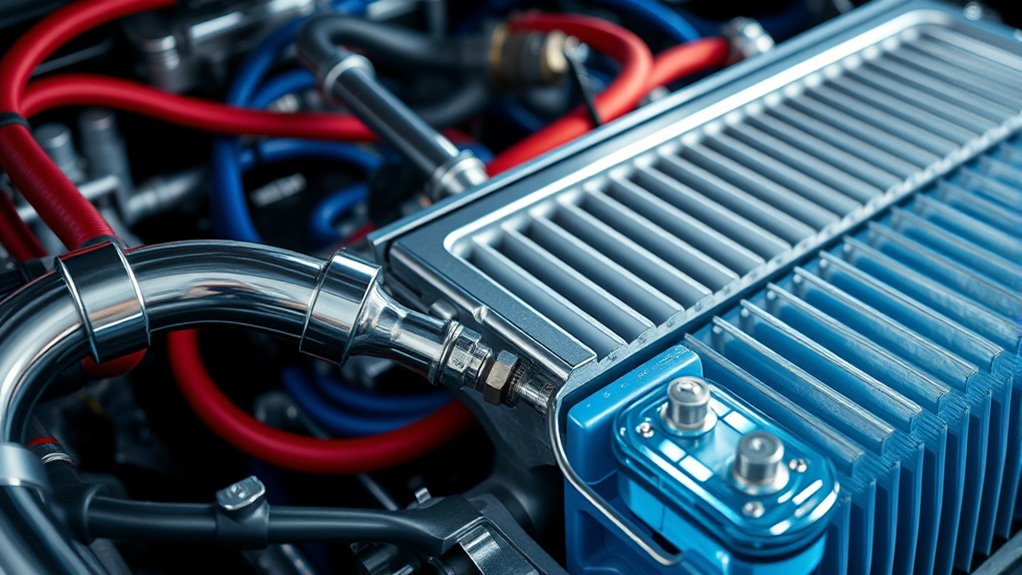
Regular maintenance of your EV’s cooling system helps prevent issues before they arise. Check coolant levels regularly and top off with the recommended fluid to maintain ideal temperature regulation, which directly supports battery longevity. Keep an eye on for leaks or corrosion that could impair cooling efficiency. Make sure the cooling fan and radiator are clean and free of debris to ensure proper airflow. Additionally, use a well-maintained charging infrastructure that supports your vehicle’s cooling needs, especially during fast charging, which can generate extra heat. Regular inspections by a qualified technician can identify potential problems early, saving you money and extending your vehicle’s lifespan. Proper cooling system care not only safeguards your battery but also ensures your EV remains reliable and efficient over time.
Common Myths About Coolant Changes in Electric Cars

Many people believe electric cars never overheat, so coolant changes are unnecessary. Some think coolant maintenance isn’t needed at all, thinking the system is maintenance-free. However, these myths can lead to overlooked issues that might affect your vehicle’s performance and longevity.
Electric Cars Don’t Overheat
Contrary to some misconceptions, electric cars are designed to prevent overheating during normal operation. Their advanced thermal management systems ensure that the battery maintains ideal temperature, supporting battery longevity and safety. You might think overheating is a concern, but modern EVs effectively regulate heat through sophisticated cooling techniques. Here are three key points:
- The thermal management system actively monitors battery temperature, preventing excessive heat buildup.
- Electric motors generate less heat than internal combustion engines, reducing overheating risks.
- Proper design minimizes the need for frequent coolant changes, as overheating is rarely an issue during regular use.
These features work together to keep your electric car running smoothly without overheating concerns, ensuring reliable performance and extended battery life.
Coolant Maintenance Unnecessary
Since modern EVs are equipped with advanced thermal management systems that keep batteries at ideal temperatures, some believe coolant changes aren’t necessary. However, neglecting coolant maintenance can impact battery longevity and thermal efficiency over time. While these systems are designed to be low-maintenance, coolant degradation can occur, reducing heat transfer effectiveness. Regular checks help guarantee peak performance.
| Coolant Condition | Effect on Battery Longevity |
|---|---|
| Fresh, clean coolant | Maintains thermal efficiency |
| Old, contaminated coolant | Risks overheating, reduces lifespan |
| Proper maintenance | Extends battery life and performance |
No Coolant Changes Needed
A common myth about electric vehicle coolant systems is that they never need changing. In reality, many EVs are designed for minimal maintenance because their battery insulation and thermal regulation systems are highly efficient. However, this doesn’t mean coolant changes are unnecessary forever. Over time, coolant can degrade, affecting the system’s ability to regulate temperature properly. Proper thermal regulation protects your battery and ensures ideal performance. Here are three key points to think about:
- Coolant can break down, reducing its effectiveness in maintaining consistent battery insulation.
- Regular checks help identify when coolant needs replenishing, preventing overheating.
- Even if change intervals are longer, periodic maintenance extends system life and safety.
Ignoring coolant care can compromise thermal regulation, impacting your vehicle’s longevity.
Future Trends in EV Cooling Technologies

As electric vehicle (EV) technology advances, so do the cooling systems designed to keep batteries and electronics within ideal temperatures. Future trends focus on enhancing battery management and thermal regulation through innovative cooling solutions. You can expect the development of more efficient liquid cooling systems that reduce weight and improve heat transfer. Solid-state cooling technologies may emerge, offering quieter, maintenance-free options. Researchers are exploring phase change materials to absorb heat effectively, ensuring safer operation. Additionally, smart cooling systems integrated with vehicle sensors will dynamically adjust cooling based on real-time data, optimizing performance and longevity. These advancements aim to boost range, safety, and durability, making EVs more reliable and cost-effective for you in the long run.
Frequently Asked Questions
Can Coolant Leaks in EVS Cause Safety Hazards?
A coolant leak in your EV can definitely cause safety hazards. If the coolant escapes, it can lead to overheating of the battery or motor, increasing the risk of fire or damage. You might notice puddles or a drop in coolant levels, which should be addressed promptly. Ignoring a coolant leak can compromise your vehicle’s safety, so it is crucial to have it inspected and repaired quickly to prevent potential hazards.
How Often Should I Have My Ev’s Cooling System Inspected?
You should have your EV’s cooling system inspected at least once a year or every 12,000 to 15,000 miles. During this cooling system inspection, your mechanic will check for leaks, corrosion, and proper coolant levels. If needed, they’ll perform a coolant replacement to keep your system running smoothly. Regular inspections help prevent overheating and guarantee your electric car stays efficient and safe on the road.
Are There Eco-Friendly Coolant Options for EVS?
Yes, there are eco-friendly coolants for EVs, promoting sustainable cooling. You can choose biodegradable or water-based coolants that reduce environmental impact. These eco-friendly coolants help minimize harmful chemicals and improve overall sustainability. When selecting a coolant, check for products labeled environmentally safe. Switching to eco-friendly options supports greener driving and keeps your EV’s cooling system efficient without compromising performance or the planet.
What Happens if I Neglect EV Coolant Maintenance?
If you neglect EV coolant maintenance, you risk overheating your vehicle’s battery and motor, which can cause damage. Coolant lifespan decreases without proper care, leading to potential breakdowns. Skipping maintenance increases your costs due to more frequent repairs or replacements. Regular coolant checks help prevent costly issues, extend system efficiency, and keep your EV running smoothly. Don’t ignore coolant upkeep—it’s essential for long-term performance and avoiding expensive repairs.
Do All EV Models Use the Same Cooling System Design?
You’re asking if all EV models use the same cooling system design. The truth is, they don’t—each manufacturer tweaks their cooling system based on battery temperature management needs. Some use liquid cooling with radiators, while others rely on air cooling or hybrid setups. So, don’t assume your EV’s cooling system is identical to another’s; it’s tailored to optimize performance and battery longevity.
Conclusion
So, while EVs do need coolant, most don’t require frequent changes—just periodic checks. Did you know that over 60% of EV owners report fewer maintenance issues overall? Staying on top of your cooling system keeps your car running smoothly and extends its lifespan. Remember, a well-maintained cooling system isn’t just about avoiding breakdowns; it’s about enjoying a reliable, eco-friendly ride for years to come.