
TL;DR
A solar-powered backup generator is usually a portable power station—a battery with an inverter and charging inputs—paired with solar panels. Choose one by checking both stored energy in watt-hours and output in watts, then estimate your actual appliance use and account for variable sunlight, conversion losses, and installation needs.
A refrigerator can keep humming during an outage while the rest of the block goes quiet—but only if your backup system has enough stored energy and the right output. That’s the promise of solar-powered backup generators: power without the rumble or exhaust of a fuel generator, with sunlight available to recharge the battery.

Get backup power and energy gear delivered free with Prime
- Fast, free delivery on millions of items
- Prime Video, Amazon Music and more included
- Member-only deals all year
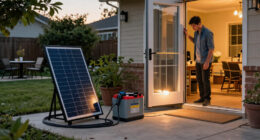
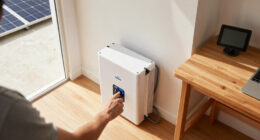
The name can be confusing. A solar-powered backup generator is usually a portable power station, meaning a battery with an inverter and charging inputs, paired with one or more solar panels. The battery supplies power after sunset; the panels replenish it when conditions allow. Many units can also charge from a wall outlet or vehicle, which gives you options when clouds roll in.
You’ll see how to match a unit to your essential appliances, estimate runtime, and judge solar charging realistically. You’ll also learn when a portable station is enough, when home wiring needs a licensed professional, and which costs and safety details belong in your decision. A little planning now can mean a lit room and a cold fridge later.
Capacity in Wh estimates how long a battery can supply energy; inverter output in W determines which appliances it can run at once.
Use a refrigerator’s average daily energy use for runtime estimates because its compressor cycles on and off.
Panel wattage is a favorable-condition rating, and real solar charging depends on shade, orientation, weather, and the station’s input limit.
Portable outlets can power selected devices; household circuit connections need compatible equipment and licensed installation.
Compare total system cost, including panels, cables, expansion batteries, transfer equipment, and installation.
What a Solar Backup Generator Actually Does
A solar-powered backup generator stores electricity in a battery and delivers it through outlets; solar panels generate the electricity that recharges it. Most units include a battery, an inverter that converts stored DC power to household AC, and inputs for charging from panels or other sources. They produce no exhaust during operation, unlike a fuel generator.
Think of the panel as a tap and the battery as a water tank: sunlight fills the tank when it’s available, and your appliances draw from it whenever they need power. That matters on a cloudy evening or at 2 a.m., when panels provide little or no energy. If the battery runs low, a wall outlet or vehicle input may offer another route to recharge, depending on the model.
For example, you might charge a station during a sunny afternoon, then use it to run a router, phone chargers, and a CPAP machine overnight. That setup is quiet and convenient, especially if you don’t want to store fuel. But several gray days can slow or stop solar replenishment, so a solar setup still depends on stored energy and the weather.
Models now often offer faster charging, app monitoring, or modular expansion batteries. Those additions can help, yet they don’t change the basic calculation: the battery stores energy, the inverter delivers power, and the panels refill the battery at a variable rate. Next, separate the two numbers that tell you what your system can actually do.
Products Worth Considering

NOCO Boost X GBX75 2500A 12V Lithium Jump Starter

DEWALT 20V MAX Cordless Drill and Impact Driver Combo Kit (DCK240C2)

NOCO Boost GB150 3000A UltraSafe Jump Starter, 12V Lithium Battery Booster
As an affiliate, we earn on qualifying purchases.
Check These Two Numbers Before You Buy
A solar-powered backup generator needs enough battery capacity to run appliances for the time you need and enough inverter output to power them at once. Capacity appears in watt-hours (Wh); output appears in watts (W). They answer different questions, so a large number in one category doesn’t guarantee strength in the other.
Imagine a 1,000 Wh battery connected to a 100 W load: the simple estimate is ten hours. Real runtime will be shorter because the inverter uses some energy, the unit may reserve part of the battery, and appliances don’t always draw a steady amount. If you need a refrigerator overnight, check its actual energy use over a full day where possible; its compressor cycles on and off, so its average use differs from its running wattage.
Output tells you what can run simultaneously. A kettle might draw around 1,500 W while heating, so a station rated for 1,000 W continuous output cannot run it, even if the battery has plenty of capacity. Motors may also need a short surge of extra power when they start. Check both the continuous rating and the surge rating against your appliance labels or manuals.
Make a short list before comparing products: device, running watts, starting watts if relevant, and hours of use. A family that prioritizes a fridge, router, and a few lights will size its system differently from someone hoping to run an air conditioner. With those needs written down, you can judge solar charging without mistaking a sunny-day rating for a guarantee.
Estimate Runtime and Solar Charging Without Guesswork
A solar-powered backup generator runs for roughly its usable battery capacity divided by the load’s average power draw, but that estimate is only a starting point. For instance, 800 Wh divided by a steady 80 W load suggests ten hours before losses and battery reserves. A refrigerator’s cycling compressor makes its average draw different from its momentary running draw, so real measurements or manufacturer energy-use figures give a better estimate.
Solar charging has its own limits. A 200 W panel is rated under favorable test conditions; shade, clouds, panel angle, temperature, cables, and the station’s maximum solar input all affect what reaches the battery. A panel propped flat on a porch roof may deliver less than one tilted toward clear midday sun. Two panels won’t necessarily charge twice as fast if the unit cannot accept their combined input.
For a practical example, say you use 500 Wh overnight for a fridge and communications, then have a partly cloudy day. Your panels may replace only part of that energy, leaving the battery lower for the next night. A unit that also accepts wall charging can recover before a forecast storm; a station with no alternate source may need you to reduce loads or add suitable panel capacity.
Use the manufacturer’s charging limits and realistic local conditions when planning. Leave room for inverter losses and keep the battery within its stated temperature range. Solar charging is quiet, but variable; the next decision is whether the portable unit can serve your home safely.
Choose a Battery and Setup That Fit Your Home
A solar-powered backup generator can power selected household devices directly through its outlets, while powering household circuits requires compatible equipment and an approved installation. Larger modular systems may support essential circuits, but capacity, inverter output, wiring, and the specific home setup determine what is practical. A portable unit is not automatically a whole-home backup system.
Battery chemistry shapes the tradeoffs. Many newer stations use lithium iron phosphate (LFP), valued for thermal stability and long cycle life; other lithium-ion designs may be lighter or smaller depending on the model. Compare how each maker defines its cycle-life rating, what capacity remains covered by the warranty, and how much energy the unit makes usable. A headline cycle count alone won’t tell you how the product will perform in your home.
If you want to power hardwired circuits, ask a licensed electrician about a compatible transfer switch or another approved setup. Never plug a station into a wall outlet to feed power back into household wiring; that can create a dangerous backfeed. In practice, a renter who wants to keep a modem and lamp running may simply use the station’s outlets, while a homeowner seeking refrigerator and furnace-circuit backup needs professional planning.
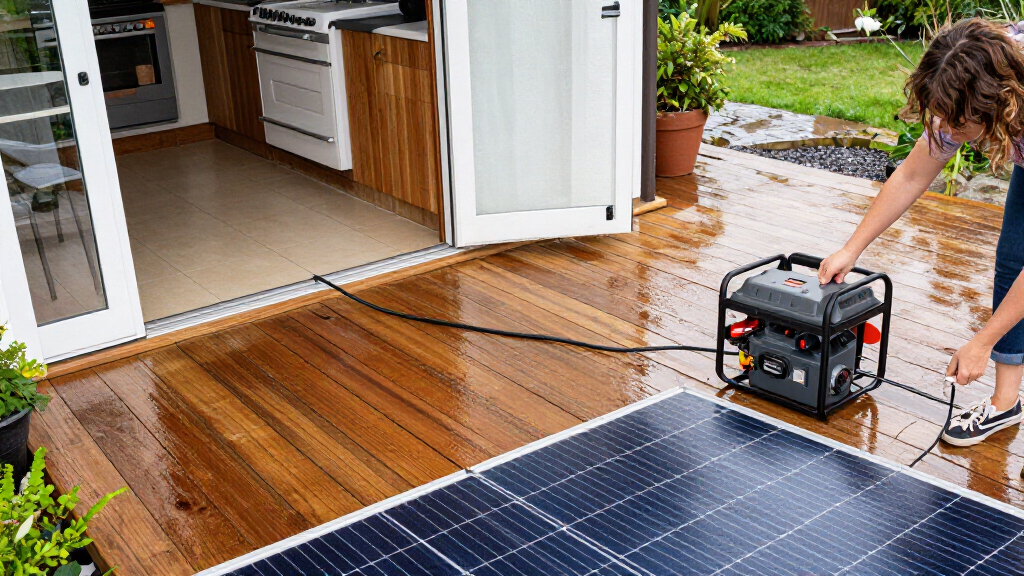
Keep the equipment dry and within the maker’s temperature and ventilation limits. Panels need clear, suitable exposure, but the station itself may not be weatherproof; don’t leave it where rain, flooding, or a hot enclosed space can reach it. The system around the battery also affects cost, which is easy to underestimate.
Budget for the Whole System, Not Just the Battery
The price of a solar-powered backup generator includes more than the power station: panels, cables, expansion batteries, and transfer equipment can add substantially to the bill. If home circuits need a transfer switch or other approved connection, include professional installation in your planning. Comparing only the base unit’s sticker price can make two very different systems look alike.
Compare cost per usable watt-hour alongside inverter output, warranty, and the way you expect to use the system. A compact station may suit camping and phone charging, while a larger system may be more practical for a fridge and several essential devices during an outage. The cheapest option can fall short if it cannot start your appliance or store enough energy for the hours you need.
Consider a household that buys a modest station for occasional outages, then discovers it cannot run a high-draw electric heater. The battery might be large enough to seem reassuring, but the inverter can still be undersized, and a heater can drain a battery quickly even when the inverter supports it. In that case, warm blankets and a smaller, steady load may be more realistic than trying to heat a room from stored electricity.
Compare the total system against the value of quiet operation, no exhaust while running, fuel independence, and possible use for camping or everyday backup. A fuel generator may suit a prolonged outage with high power needs; a battery system may suit shorter outages, indoor device power, and homes with good solar exposure. The best fit depends on your loads, sunlight, and outage pattern.
Use This Checklist to Size Your Backup
To size a solar-powered backup generator, list your essential devices, check their running and starting power, estimate how long you’ll use each one, and compare that demand with battery capacity and inverter ratings. This simple process prevents a common mismatch: buying plenty of stored energy but too little output, or enough output but too little runtime.
- Name your essential loads. Start with the fridge, communications, medical equipment, lights, or other devices you truly need. A household keeping a CPAP and router running has a different priority list from one trying to power a sump pump.
- Check watts and starting surges. Read labels or manuals, then check whether motors need a higher short burst to start. Compare those values with continuous and surge output ratings.
- Estimate energy use over time. Multiply watts by hours for steady loads; use actual or maker-provided daily energy figures for cycling appliances. Add your estimates to get a rough Wh target.
- Allow for losses and weather. Plan for less delivered energy than the battery’s advertised capacity and for solar production to vary. Check panel input limits and consider an alternate charging source if outages can last through cloudy days.
- Plan the connection. Use the unit’s outlets for compatible plug-in devices. Have a licensed electrician install and check any approved connection to household circuits.
For example, if your written list shows a router, two lamps, and a fridge, you can compare actual energy needs with a product’s usable capacity instead of guessing from the size of its case. Then decide whether solar panels can realistically refill what you use each day. A clear list makes your final choice far easier to explain and check.
Frequently Asked Questions
Can a solar-powered backup generator run a whole house?
Some larger systems can support selected household circuits with compatible equipment, but a portable station does not automatically power an entire home. Capacity, inverter output, wiring, and the appliances you choose all matter. A licensed electrician should plan and install any household circuit connection.
How long can one run a refrigerator?
Runtime depends on the fridge’s actual energy use, the station’s usable battery capacity, and conversion losses. A refrigerator cycles, so its average daily use differs from its running watts. Check its energy information or measure use where practical, then compare the daily demand with the station’s usable Wh.
How many solar panels do I need?
It depends on battery size, how much energy you use, panel output, local sunlight, and the station’s solar input limit. A panel’s rated wattage assumes favorable conditions, so shade, clouds, and orientation can reduce charging. Check the manufacturer’s input limits and plan around realistic daylight rather than peak ratings alone.
Can I run an air conditioner, microwave, or electric heater?
Check each appliance’s running watts against the station’s continuous output and any starting surge against its surge rating. Even when the inverter can support an appliance, high energy use can empty the battery quickly. An electric heater, for example, may consume a large share of a modest battery in a short time.
Can I use the station while it is charging?
Many power stations support pass-through use, but operating limits and behavior vary by model. Check the manufacturer’s instructions before relying on pass-through for a critical device. For an outage plan, confirm how the station behaves if its charging source drops out or its battery reaches a reserve limit.
Is it safe to use a battery power station indoors?
Battery stations produce no exhaust during operation, unlike fuel generators, but you still need to follow the product’s placement, charging, temperature, and ventilation instructions. Keep the station dry and away from flooding or heat beyond its rated limits. Never feed power into a home circuit through a wall outlet.
Conclusion
Start with the devices you need to keep running, then size the battery for their energy use and the inverter for their power and starting surges. Treat solar as a variable recharge source, and include panels, cables, and any professional electrical work in the full cost.
A well-matched system can turn a dark, silent outage into a night with a cold fridge and a glowing lamp. Let your actual loads—not the biggest number on the box—guide the choice.