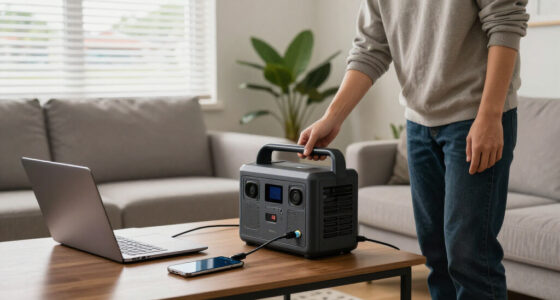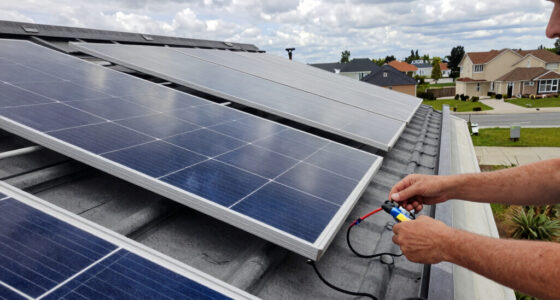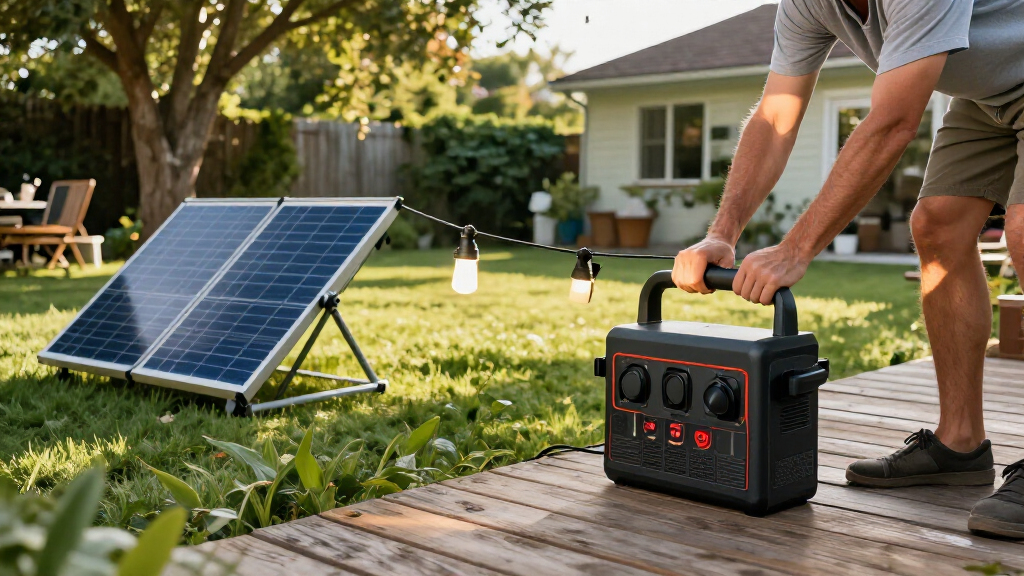
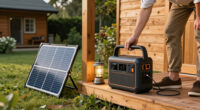
For most buyers, I’d start with the Jackery HomePower 3600 Plus, which pairs high capacity with two included 200W solar panels for longer backup needs. The EF ECOFLOW DELTA 3 Classic is a more manageable 1024Wh option with 1800W output, while the Jackery Explorer 300 suits lighter trips where low carry weight matters more than extended runtime. Choosing among portable solar power stations means balancing capacity, appliance output, solar charging, and portability—and an included panel does not always mean fast recharging. Read on for the full comparison, including where each model fits and what you give up when choosing a smaller or more self-contained setup.

Get backup power and energy gear delivered free with Prime
- Fast, free delivery on millions of items
- Prime Video, Amazon Music and more included
- Member-only deals all year
Complete the kit


Key Takeaways
- The Jackery HomePower 3600 Plus leads for extended backup in this lineup because its 3600-class capacity is paired with two 200W panels, though its larger format is a poor match for lightweight camping.
- About 1kWh is the lineup’s most useful middle ground: the EF ECOFLOW DELTA 3 Classic, BROWEY S1600, and Jackery 1000 V2 options suit different mixes of output, integrated solar convenience, and bundled-panel setup.
- Capacity and inverter output solve different problems. A larger battery can run devices longer, but the output rating determines whether a demanding appliance can start and operate.
- Small stations are for electronics and short trips, not broad household backup. The MARBERO M82, Jackery Explorer 300, BLUETTI Elite 30 V2, and ZeroKor 300W picks trade runtime for easier transport.
- Solar kits vary in completeness and usefulness. Included panels reduce setup guesswork, but panel wattage, sunlight, and charging limits matter more than the word “solar” in a product name.
| Jackery HomePower 3600 Plus Portable Power Station with Two 200W Solar Panels |  | Best for High-Capacity Home Backup | Battery capacity: 3,584Wh | AC output: 3,600W | Battery type: LFP | VIEW LATEST PRICE | See Our Full Breakdown |
| BROWEY S1600 Portable Power Station with Built-In Solar Panel, 1600W (3200W Peak), 1024Wh |  | Best for Built-In Solar Convenience | Capacity: 1,024Wh | Output: 1,600W continuous; 3,200W peak | Battery chemistry: LiFePO4 | VIEW LATEST PRICE | See Our Full Breakdown |
| Anker SOLIX S2000 Portable Power Station, 2,010Wh, 1,500W |  | Best for Capacity Without Extreme Weight | Battery capacity: 2,010Wh | Battery type: LiFePO4 | Continuous and peak output: 1,500W continuous; 3,000W peak | VIEW LATEST PRICE | See Our Full Breakdown |
| Jackery Explorer 300 Portable Power Station, 292Wh |  | Best Compact Solar-Ready Pick | Capacity: 292Wh | Battery chemistry: LiFePO4 | AC outlets: 2 | VIEW LATEST PRICE | See Our Full Breakdown |
| MARBERO M82 Portable Power Station, 88Wh, 120W Surge |  | Best for Lightweight Emergency Essentials | Capacity: 88Wh | Battery capacity: 24,000mAh | Output and surge: 80W output; 120W surge | VIEW LATEST PRICE | See Our Full Breakdown |
| BLUETTI Elite 30 V2 Portable Power Station, 288Wh, 600W |  | Best Compact Power with UPS Backup | Capacity: 288Wh | Continuous output: 600W | Power Lifting Mode: Up to 1500W | VIEW LATEST PRICE | See Our Full Breakdown |
| ZeroKor 300W Portable Power Station with 60W Solar Panel | 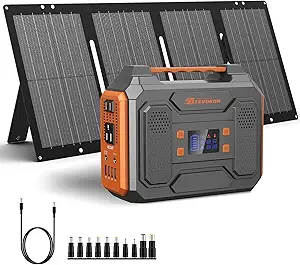 | Best Entry-Level Solar Kit | Power station output: 300W | Solar panel: 60W monocrystalline | Panel conversion efficiency: 20.5% | VIEW LATEST PRICE | See Our Full Breakdown |
| Portable Power Station, 500W, 519.48Wh |  | Best for Multi-Device Charging | Capacity: 519.48Wh | AC output: 2 pure sine wave outlets, 110V, up to 500W | USB-A outputs: 3 QC3.0 ports, up to 18W each | VIEW LATEST PRICE | See Our Full Breakdown |
| Jackery Explorer 300 Portable Power Station with 40W Solar Panel |  | Best Compact LiFePO4 Solar Bundle | Capacity: 292Wh | Peak output: 600W | Battery chemistry: LiFePO4 | VIEW LATEST PRICE | See Our Full Breakdown |
| UDPOWER S1200 1190Wh Solar Generator Kit with 120W Solar Panel |  | Best for Extended Off-Grid Power | Battery capacity: 1190Wh | Battery type: LiFePO4 | Peak output: 1800W | VIEW LATEST PRICE | See Our Full Breakdown |
| Jackery Solar Generator 1000 v2 with 200W Solar Panel |  | Best Solar-Ready All-Rounder | Battery capacity: 1,070Wh | AC output: 1,500W | Surge power: 3,000W | VIEW LATEST PRICE | See Our Full Breakdown |
| LIBRIDS 640Wh Portable Power Station with 600W Output |  | Best for Indoor Backup | Battery capacity: 640Wh | Battery type: LiFePO₄ | Running output: 600W | VIEW LATEST PRICE | See Our Full Breakdown |
| EF ECOFLOW DELTA 3 Classic Portable Power Station, 1024Wh, 1800W |  | Best for High-Draw Loads | Capacity: 1,024Wh | AC output: 1,800W | Surge output: 3,600W | VIEW LATEST PRICE | See Our Full Breakdown |
| Jackery Explorer 1000 V2 Portable Power Station 1070Wh 1500W |  | Best Portable Station Without a Panel Bundle | Battery capacity: 1,070Wh | Continuous output: 1,500W | Surge output: 3,000W | VIEW LATEST PRICE | See Our Full Breakdown |
| ZeroKor 300W Portable Power Station with Solar Panel |  | Best Compact Solar Starter Kit | Battery capacity: 280Wh | Maximum output: 300W | Starting wattage: 550W | VIEW LATEST PRICE | See Our Full Breakdown |
| portable solar power station | Battery capacity | Weight |
|---|---|---|
| Jackery HomePower 3600 Plus Po | 3,584Wh | 77.2 lb |
| BROWEY S1600 Portable Power St | — | — |
| Anker SOLIX S2000 Portable Pow | 2,010Wh | 35.7 lb |
| Jackery Explorer 300 Portable | — | 7.1 lb |
| MARBERO M82 Portable Power Sta | 24,000mAh | 3.2 lb |
| BLUETTI Elite 30 V2 Portable P | — | 9.5 pounds |
| ZeroKor 300W Portable Power St | — | — |
| Portable Power Station | — | 18 pounds |
| Jackery Explorer 300 Portable | — | — |
| UDPOWER S1200 1190Wh Solar Gen | 1190Wh | — |
| Jackery Solar Generator 1000 v | 1,070Wh | 23.8 lbs |
| LIBRIDS 640Wh Portable Power S | 640Wh | — |
| EF ECOFLOW DELTA 3 Classic Por | — | — |
| Jackery Explorer 1000 V2 Porta | 1,070Wh | 23.8 lbs |
| ZeroKor 300W Portable Power St | 280Wh | — |
More Details on Our Top Picks
Jackery HomePower 3600 Plus Portable Power Station with Two 200W Solar Panels
The Jackery HomePower 3600 Plus is the strongest fit here when a portable station needs to cover more than phones and camping gear. Its 3,584Wh battery and 3,600W output can support a broader range of home and RV loads than the Anker SOLIX S2000, while expansion options give buyers room to build a larger backup setup. The included two 200W solar panels make solar charging part of the package, and hybrid AC+DC charging is listed at two hours. That scale comes with a real portability tradeoff: at 77.2 lb, the wheels and telescopic handle help with rolling, not lifting into a vehicle. The panels may also arrive separately. I’d choose it for backup capacity, not frequent carry-in trips.
Pros:- 3,600W output and 3,584Wh capacity cover larger loads than the Anker SOLIX S2000
- Includes two 200W solar panels for a ready-to-use solar charging setup
- Supports expansion up to 21kWh per unit or 43kWh with multiple units
- Wheels and a telescopic handle make rolling the heavy station easier
Cons:- At 77.2 lb, it is difficult to lift into a car or carry over uneven ground
- The power station and solar panels may ship in separate packages
- The large capacity and footprint are more than casual device charging requires
Best for: Homeowners or RV users who want substantial backup capacity, included solar panels, and expansion options for longer outages
Not ideal for: Campers who need a power station they can lift easily or buyers with limited storage space; the unit weighs 77.2 lb before accounting for the panels
- Battery capacity:3,584Wh
- AC output:3,600W
- Battery type:LFP
- Solar panels included:2 × 200W
- Expandable capacity:Up to 21kWh per unit or 43kWh with multiple units
- Hybrid AC+DC recharge time:2 hours
- Weight:77.2 lb
- Ports and outlets:9 ports; 4 outlets
Our verdict“Choose the HomePower 3600 Plus if home or RV backup capacity matters more than low weight and compact storage.”
BROWEY S1600 Portable Power Station with Built-In Solar Panel, 1600W (3200W Peak), 1024Wh
The BROWEY S1600 puts a solar panel directly on the station, which is convenient for buyers who want a self-contained option rather than packing a separate panel. Its 1,024Wh LiFePO4 battery and 1,600W output give it more appliance headroom than the Jackery Explorer 300, while the eight AC, DC, and USB-C ports suit a mixed set of devices. The catch is the built-in panel’s modest 40W solar charging rate: it can add charge when conditions allow, but it is not a fast way to refill a depleted battery. The advertised three-hour recharge to 80% also requires AC and 100W USB-C charging at the same time. I’d favor this for convenience and port variety, not for rapid solar replenishment.
Pros:- Built-in solar panel and MPPT controller avoid needing to set up a separate panel for basic solar input
- 1,600W pure sine wave output provides more appliance headroom than the Jackery Explorer 300
- Eight AC, DC, and USB-C ports support several device types
- LiFePO4 battery is rated for 3,000+ cycles to 80% capacity
Cons:- Built-in solar charging is rated at only 40W
- The three-hour recharge claim requires simultaneous AC-adapter and 100W USB-C charging
- A built-in panel offers less flexibility than a separate, larger solar array
Best for: Campers and emergency-preparedness buyers who value an integrated solar panel, several output types, and enough capacity for small appliances
Not ideal for: Buyers who expect solar alone to recharge a 1,024Wh battery quickly or want a simple single-input recharge routine
- Capacity:1,024Wh
- Output:1,600W continuous; 3,200W peak
- Battery chemistry:LiFePO4
- Battery life:3,000+ cycles to 80% capacity
- Ports:8 AC, DC, and USB-C ports
- USB-C PD output:100W
- Built-in solar charging:40W
- AC and USB-C recharge:80% in 3 hours with simultaneous charging
Our verdict“Pick the BROWEY S1600 if integrated solar and varied ports matter more than fast solar charging.”
Anker SOLIX S2000 Portable Power Station, 2,010Wh, 1,500W
The Anker SOLIX S2000 is a middle ground between compact stations and the much larger Jackery HomePower 3600 Plus. Its 2,010Wh capacity is substantial for camping or outage essentials, yet the listed weight is 35.7 lb—less than half the HomePower’s 77.2 lb. Continuous output is lower at 1,500W, so it gives up headroom for demanding appliances in exchange for a more manageable carry. Up to 400W solar input and multiple recharge methods make it more adaptable to off-grid charging than the BROWEY S1600’s 40W built-in panel. The under-10ms UPS switchover adds value for equipment that benefits from rapid backup switching. One notable omission is a 12V DC port, and refrigerator runtime will depend on the appliance and conditions.
Pros:- 2,010Wh capacity in a 35.7 lb unit, lighter than the Jackery HomePower 3600 Plus
- Accepts up to 400W solar input for more charging potential than the BROWEY S1600’s built-in panel
- Eight outlets and several charging methods support flexible use
- UPS switchover is listed at less than 10 ms
Cons:- No 12V DC port
- 1,500W continuous output is lower than the Jackery HomePower 3600 Plus
- Solar panels are not listed as included, and refrigerator runtime varies by conditions
Best for: Campers and households seeking a high-capacity station that is easier to move than a large home-backup unit and can accept a separate solar array
Not ideal for: Buyers who need a 12V DC port, higher continuous output than 1,500W, or an included solar panel
- Battery capacity:2,010Wh
- Battery type:LiFePO4
- Continuous and peak output:1,500W continuous; 3,000W peak
- Solar input:Up to 400W
- Outlets:8
- UPS switchover:Less than 10 ms
- Weight:35.7 lb
- 12V DC port:None
Our verdict“Choose the SOLIX S2000 when you want substantial stored power in a more manageable package and can work around the missing 12V port.”
Jackery Explorer 300 Portable Power Station, 292Wh
For short trips where weight and packability matter more than running appliances, the Jackery Explorer 300 is the easiest fit in this group. At 7.1 lb and 292Wh, it is far easier to carry than the Anker SOLIX S2000, but that smaller battery also limits how long it can run devices between charges. Its 300W rated output suits electronics and modest loads, not high-draw appliances. Two AC outlets, USB-C PD, USB-A, and a car port give it useful charging variety for a compact station. Solar charging is supported, with an approximate 80% recharge time of 2.8 hours using a 100W panel, but the panel is sold separately. I’d pick it for portable device power, not as a substitute for the larger backup units.
Pros:- 7.1 lb weight makes it much easier to carry than the Anker SOLIX S2000
- LiFePO4 battery is rated for over 4,000 charge cycles
- Two AC outlets plus USB-C, USB-A, and a 120W car port cover common device needs
- Supports solar charging with a compatible 100W panel
Cons:- 292Wh capacity is limited for extended use or several appliance loads
- 300W rated output will not support many higher-power appliances
- Solar panel is sold separately
Best for: Solo campers, day-trip users, and travelers who need a lightweight station for phones, laptops, and other modest loads
Not ideal for: Households seeking outage backup for large appliances or buyers who want a solar panel included in the package
- Capacity:292Wh
- Battery chemistry:LiFePO4
- AC outlets:2
- USB-C PD:100W
- Car port:120W
- Weight:7.1 lb
- Solar charging:Approximately 80% in 2.8 hours with a 100W panel; panel sold separately
Our verdict“Choose the Explorer 300 for portable charging of smaller devices when low weight matters more than long runtimes or appliance power.”
MARBERO M82 Portable Power Station, 88Wh, 120W Surge
The MARBERO M82 is the smallest-capacity choice here, aimed at keeping personal electronics and small essentials going rather than powering camp appliances. At 3.2 lb, it is easier to stash in a day bag than the Jackery Explorer 300, but its 88Wh battery and 80W output also impose a much lower ceiling. Eight ports, including USB-C PD and car DC, let it serve several small devices, while the built-in LED light with SOS mode adds a practical emergency feature. Compatible 30W or 60W solar panels can recharge it, but a panel is not listed as included. Compared with the Explorer 300, this is the more portable pick for brief, low-power use—not the better choice for longer trips or meaningful appliance backup.
Pros:- 3.2 lb weight and compact dimensions make it easy to pack
- Eight output ports include AC, USB, USB-C PD, and car DC
- Built-in LED light offers three brightness levels and SOS mode
- Battery management system includes short-circuit and overload protection
Cons:- 88Wh capacity and 80W output limit both runtime and the size of supported loads
- Compatible solar panels are not listed as included
- Less capable for extended trips than the 292Wh Jackery Explorer 300
Best for: Travelers and campers who want a very light reserve for phones, small electronics, and an emergency light
Not ideal for: Buyers who need to run appliances, charge devices for several days, or replenish the station with an included solar panel
- Capacity:88Wh
- Battery capacity:24,000mAh
- Output and surge:80W output; 120W surge
- Output ports:8
- Weight:3.2 lb
- Dimensions:6.5 × 4.6 × 3.1 in
- Solar compatibility:Compatible with 30W or 60W solar panels
- Lighting:Three brightness levels and SOS mode
Our verdict“Pick the M82 for lightweight backup of personal devices and a built-in light, not for appliance power or long runtimes.”
BLUETTI Elite 30 V2 Portable Power Station, 288Wh, 600W
The BLUETTI Elite 30 V2 pairs a 288Wh battery with 600W continuous output, making it a stronger fit for compact gear than the ZeroKor 300W station when a device needs more than 300W. Its 9.5-pound weight and small footprint also suit car camping where carrying space matters. The standout distinction is its 10ms-or-less UPS switch, useful for keeping compatible essentials powered through a brief outage; the ZeroKor instead arrives with a solar panel and focuses on light-device charging. BLUETTI supports solar, car, AC, lead-acid, and generator charging, and its fast wall charge can reach 80% in 45 minutes. The tradeoff is limited stored energy: 288Wh will not run higher-draw appliances for long, and 1500W Power Lifting Mode is not the same as 1500W continuous output.
Pros:- 600W continuous output exceeds the ZeroKor 300W model’s limit.
- Compact 9.5-pound design is convenient for car camping and storage.
- UPS switch time of 10ms or less supports brief backup for compatible equipment.
- Fast AC charging and several recharge methods offer flexibility.
Cons:- The 288Wh capacity limits runtime for power-hungry devices.
- 1500W is available only in Power Lifting Mode, not as continuous output.
Best for: Campers and home-office users who want a lightweight station for small electronics, occasional higher-wattage loads, and brief UPS-style backup.
Not ideal for: Buyers who need long runtimes for appliances or want a solar panel included; its battery is modest, and no panel is listed in the included components.
- Capacity:288Wh
- Continuous output:600W
- Power Lifting Mode:Up to 1500W
- Battery type:LFP
- Weight:9.5 pounds
- Dimensions:9.8 × 7 × 6.6 inches
- AC charging:Up to 380W; 0–80% in 45 minutes and 0–100% in 70 minutes
- Charging methods:AC, solar, car, lead-acid, and generator
- UPS switch time:10ms or less
Our verdict“Choose the BLUETTI for compact, versatile power and fast UPS switching, but choose a larger-capacity station for extended appliance use.”
ZeroKor 300W Portable Power Station with 60W Solar Panel
The ZeroKor makes solar power approachable by bundling a 60W monocrystalline panel with a 300W station, so buyers can start recharging outdoors without sourcing a compatible panel separately. That bundled setup gives it a practical advantage over the BLUETTI Elite 30 V2, which offers higher continuous output and a UPS feature but lists no panel among its included components. ZeroKor supplies AC, DC, and USB connections for phones, tablets, and modest electronics, plus an SOS flashlight for campsite or roadside use. Its limits are firm: loads above 300W may damage the unit, and the solar panel’s junction box must stay dry. The panel is useful for topping up smaller devices, but its 60W rating is a modest charging input rather than a fast way to refill the station.
Pros:- Includes a 60W monocrystalline solar panel.
- AC, DC, and USB outputs cover common small-device charging needs.
- Can recharge from an outlet, compatible solar panel, or 12V car port.
- Flashlight includes reading and SOS modes.
Cons:- Loads drawing more than 300W may damage the unit.
- The solar panel junction box is not waterproof and needs protection from moisture.
- A 60W panel is a modest input for recharging the station.
Best for: First-time solar-station buyers and campers mainly charging phones, tablets, and other small devices who want a panel in the box.
Not ideal for: RV users or anyone planning to run appliances above 300W, or campers who cannot keep the panel junction box sheltered from moisture.
- Power station output:300W
- Solar panel:60W monocrystalline
- Panel conversion efficiency:20.5%
- AC outlets:2, up to 300W
- USB outputs:3 USB-A ports up to 5V/3A, plus 1 quick-charge USB port up to 9V/2A
- DC output:9V–12.6V, 10A max
- Recharging options:AC outlet, 13V–23V solar panel, or 12V car port
- Protection features:Short circuit, over-current, over-voltage, overload, and overheating protection
- Included accessories:AC adapter, cigarette lighter adapter, 12V car charging cable, 60W solar panel kit, and 2 user manuals
Our verdict“Pick the ZeroKor for an accessible small-device solar kit, not for appliance loads or exposed wet-weather setup.”
Portable Power Station, 500W, 519.48Wh
With 519.48Wh of capacity and ports for as many as 10 simultaneous devices, this station prioritizes shared charging over easy carrying: at 18 pounds, it is heavier than the BLUETTI Elite 30 V2, but stores substantially more energy. Its pure sine wave AC outlets and 60W USB-C output give it a useful mix for laptops, small electronics, and compatible appliances rated below 500W. Solar, wall, and car recharging add flexibility, although the solar panel is sold separately and a 100W panel is listed as taking 6–9 hours in full sun. Compared with the panel-included ZeroKor, this model has more battery capacity and broader simultaneous charging, but requires a separate panel purchase. Its 500W ceiling rules out larger appliances, and the stated one-hour runtime is not a promise for every load.
Pros:- 519.48Wh capacity is substantially larger than the BLUETTI Elite 30 V2’s 288Wh.
- Multiple AC, USB, DC, car, and wireless outputs support varied devices.
- Pure sine wave AC outlets suit compatible sensitive electronics.
- Can recharge from wall power, a car, or a compatible solar panel.
Cons:- At 18 pounds, it is heavier than compact options such as the BLUETTI Elite 30 V2.
- The solar panel is not included.
- Its 500W output limit excludes higher-draw appliances.
Best for: Car campers and households charging several phones, laptops, and small electronics who value extra stored energy more than minimum weight.
Not ideal for: Hikers seeking a lightweight carry or buyers who need to run appliances above 500W; solar users wanting a ready-to-use panel bundle should also look at the ZeroKor.
- Capacity:519.48Wh
- AC output:2 pure sine wave outlets, 110V, up to 500W
- USB-A outputs:3 QC3.0 ports, up to 18W each
- USB-C output:PD, up to 60W
- Other outputs:2 DC ports at 12V/5A; car port at 12V/10A; wireless charging at 10W
- Maximum simultaneous devices:10
- Recharge methods:Wall outlet, car charger, or compatible 100W or 200W solar panel
- Weight:18 pounds
- Dimensions:11.57 × 7.95 × 7.95 inches
Our verdict“Choose this model for more stored energy and shared device charging, provided its weight and separate solar-panel requirement fit your plans.”
Jackery Explorer 300 Portable Power Station with 40W Solar Panel
The Explorer 300 combines a 292Wh LiFePO4 station with a 40W solar panel, creating a compact bundle for campers who want a solar option included and value long cycle-life claims. Its 300W rated output is half the BLUETTI Elite 30 V2’s 600W continuous rating, so Jackery is the better match for phones, laptops, and other modest loads rather than devices near the BLUETTI’s higher output range. It has two AC outlets, a 100W USB-C port, USB-A, and a car port, with capacity to charge up to six devices according to the description. The panel makes outdoor topping-up possible, but its listed 40W output means slower solar replenishment than a larger panel. The listed 12.9-pound weight also conflicts with a 7.5-pound description claim, so I would plan around the heavier figure.
Pros:- Includes a 40W solar panel for off-grid charging.
- LiFePO4 battery is rated for over 4,000 cycles to 70% capacity.
- 100W USB-C PD and multiple other ports support a useful range of devices.
- 292Wh capacity is close to the BLUETTI Elite 30 V2’s 288Wh.
Cons:- 300W rated output is well below the BLUETTI Elite 30 V2’s 600W continuous output.
- The included 40W panel is listed as taking about 7.5 hours to reach 80% charge.
- The 12.9-pound listed weight conflicts with the description’s 7.5-pound claim.
Best for: Campers wanting a compact LiFePO4 station-and-panel bundle for phones, laptops, and other low-to-moderate-wattage gear.
Not ideal for: Buyers needing more than 300W of rated output, quicker solar replenishment, or a unit whose listed weight is clearly consistent across product details.
- Capacity:292Wh
- Peak output:600W
- Battery chemistry:LiFePO4
- Ports:2 AC outlets, 1 USB-C PD port up to 100W, 2 USB-A ports, and 1 car port up to 120W
- Included solar panel:40W
- Weight and dimensions:12.9 pounds; 15.43 × 9.92 × 11.89 inches
- Model:JE-300E
Our verdict“Choose the Explorer 300 bundle for compact LiFePO4 power with a panel included, but not for heavier loads or rapid solar charging.”
UDPOWER S1200 1190Wh Solar Generator Kit with 120W Solar Panel
The UDPOWER S1200 is the clear capacity step-up in this group: its 1190Wh LiFePO4 battery and 1200W rated output are designed for longer trips and broader backup needs than the 288Wh BLUETTI Elite 30 V2 or the 519.48Wh portable station. Five AC outlets, two 100W USB-C ports, and additional USB and DC connections make it easier to power several types of gear from one station. The included foldable, IP65-rated 120W solar panel adds a useful outdoor charging option, while the battery is rated for over 4,000 cycles. This capacity comes at a portability cost: 25.8 pounds is a substantial carry for a compact station. The power station and panel ship separately, and the panel has a shorter one-year warranty than the station’s five-year coverage.
Pros:- 1190Wh capacity and 1200W rated output exceed the smaller stations in this batch.
- Includes a foldable 120W IP65-rated solar panel.
- LiFePO4 battery is rated for over 4,000 cycles.
- Five AC outlets and multiple USB and DC ports support varied gear.
Cons:- At 25.8 pounds, the station is much heavier than compact options such as the BLUETTI Elite 30 V2.
- The station and solar panel ship separately.
- The solar panel has a one-year warranty, shorter than the station’s five-year warranty.
Best for: RV travelers, campers, and households wanting a larger-capacity station with a bundled solar panel for multi-device use and backup.
Not ideal for: Backpackers or buyers who need a light, single-piece setup; the station weighs 25.8 pounds, and its panel ships separately.
- Battery capacity:1190Wh
- Battery type:LiFePO4
- Peak output:1800W
- Solar panel:120W, foldable, IP65-rated
- Outputs:5 AC outlets, 2 USB-C ports up to 100W, 4 USB-A ports, 1 car port, and 2 DC5521 ports
- Battery cycle life:4,000+ cycles
- Weight and dimensions:25.8 pounds; 13.7 × 9.53 × 9.72 inches
- Warranty:5 years for power station; 1 year for solar panel
Our verdict“Choose the UDPOWER S1200 when higher capacity and an included solar panel matter more than light weight or a single shipment.”
Jackery Solar Generator 1000 v2 with 200W Solar Panel
The Jackery Solar Generator 1000 v2 pairs a useful 1,070Wh capacity with a 200W panel included, making it a more complete solar kit than the DELTA 3 Classic, which requires a separate panel. Its 1,500W output and 3,000W surge can handle a broader range of camping and backup loads than the 600W LIBRIDS, while the 23.8-pound station remains portable for car-based trips. The LFP battery is rated for 4,000 cycles, and app controls let you adjust charging modes. Solar input is a slower route to a refill: the supplied panel takes about six hours to reach 80%. The one-hour AC charge also depends on enabling emergency charging, and the station and panel ship separately.
Pros:- Includes a 200W solar panel, unlike the panel-optional DELTA 3 Classic.
- 1,070Wh capacity and 1,500W AC output support a wider range of loads than the LIBRIDS 640Wh unit.
- LFP battery rated for 4,000 charge cycles.
- Multiple AC, USB, and DC outputs, including 100W USB-C.
Cons:- The included 200W panel takes about six hours to charge the station to 80% under stated conditions.
- One-hour AC charging requires emergency mode in the app.
- The station and panel ship separately.
Best for: Campers and homeowners who want a substantial-capacity station with a solar panel already part of the bundle.
Not ideal for: Buyers who need a compact, quick-to-replenish solar kit or expect one panel to recharge the station rapidly in limited daylight.
- Battery capacity:1,070Wh
- AC output:1,500W
- Surge power:3,000W
- Battery type:LFP
- Weight:23.8 lbs
- Included solar panel:200W
- Ports:3 AC, 2 USB-C, 1 USB-A, 1 DC car port
- Solar charging:80% in 6 hours with the included 200W panel
Our verdict“Choose this bundle if you want a portable, higher-capacity station with a panel included and can accept a gradual solar recharge.”
LIBRIDS 640Wh Portable Power Station with 600W Output
The LIBRIDS 640Wh is the lineup’s practical pick for keeping essential electronics powered, rather than running demanding appliances. Its 10ms UPS switching can help maintain power to connected devices during an outage, and four AC outlets make it easy to connect several small loads at once. Compared with the Jackery Solar Generator 1000 v2, it gives up capacity and output, but its compact listed dimensions and fast, roughly 1.5-hour AC recharge suit a desk, home office, or dry campsite. Its LiFePO₄ battery is rated for more than 4,000 cycles. The major solar limitation is that no panel is specified as included; it is also restricted to dry, well-ventilated conditions, so it is a poor match for exposed or wet outdoor use.
Pros:- 10ms UPS switching supports backup for connected essential devices.
- Four AC outlets and eight total output ports allow several devices to connect.
- LiFePO₄ battery rated for 4,000-plus cycles.
- About 1.5-hour AC charging helps reduce downtime.
Cons:- No solar panel is listed as included.
- 600W running output limits appliance choices compared with the 1,500W Jackery models.
- Use is limited to indoor or dry, well-ventilated outdoor environments.
Best for: Home-office users who want UPS-style backup for networking gear and small electronics, or campers who can keep the unit sheltered and dry.
Not ideal for: Buyers seeking a ready-to-use solar bundle, power for larger appliances, or a station that can safely sit in damp outdoor conditions.
- Battery capacity:640Wh
- Battery type:LiFePO₄
- Running output:600W
- Surge output:1,200W
- Charging time:About 1.5 hours
- UPS switching time:10ms
- Output ports:8 total, including 4 AC outlets
- Dimensions:8.3 × 6.9 × 8.2 in
- Use conditions:Indoor or dry, well-ventilated outdoor environments
Our verdict“Pick the LIBRIDS for sheltered backup and small-device charging, not for wet-weather camping or high-wattage appliances.”
EF ECOFLOW DELTA 3 Classic Portable Power Station, 1024Wh, 1800W
The EcoFlow DELTA 3 Classic stands out for buyers who need more AC headroom than the 1,500W Jackery Explorer 1000 V2 provides. Its 1,800W output, 3,600W surge, and X-Boost mode rated up to 2,600W offer more flexibility with heavier loads, while under-10ms UPS switching suits electronics that need a quick backup handoff. Fast AC charging—0 to 80% in 45 minutes—also makes it easier to replenish between uses. The solar tradeoff is clear: a panel is optional, and the stated 2.5-hour solar charge assumes a 500W panel. Buyers planning to expand capacity should check compatibility first, because this model does not work with the specified DELTA 2 or DELTA 3 Series Smart Extra Batteries.
Pros:- 1,800W AC output and 3,600W surge provide more headroom than the 1,500W Jackery Explorer 1000 V2.
- X-Boost output is rated up to 2,600W.
- AC charging reaches 80% in 45 minutes.
- Under-10ms UPS switching and app control add useful backup and monitoring features.
Cons:- Solar panel is optional, adding a separate purchase for solar use.
- The stated 2.5-hour solar charge requires an optional 500W panel.
- Not compatible with the specified DELTA 2 and DELTA 3 Series Smart Extra Batteries.
Best for: Campers, mobile workers, and backup-power buyers who need higher AC output, fast wall charging, and UPS support.
Not ideal for: Shoppers who want an included solar panel or plan to expand the station with the listed DELTA 2 or DELTA 3 Series smart batteries.
- Capacity:1,024Wh
- AC output:1,800W
- Surge output:3,600W
- X-Boost output:Up to 2,600W
- Battery chemistry:LiFePO₄
- AC charging:0–80% in 45 minutes
- UPS switching time:Under 10ms
- Solar charging:About 2.5 hours with an optional 500W panel
- Extra battery compatibility:Not compatible with DELTA 2 or DELTA 3 Series Smart Extra Batteries
Our verdict“Choose the DELTA 3 Classic when AC output and rapid recharging matter more than an included solar panel or expansion with those extra batteries.”
Jackery Explorer 1000 V2 Portable Power Station 1070Wh 1500W
The Jackery Explorer 1000 V2 makes sense for buyers who want the same substantial 1,070Wh capacity and 1,500W output as the Solar Generator 1000 v2 bundle, but would rather choose a solar panel separately. At 23.8 pounds, it remains manageable for car camping and emergency storage, and its 3,000W surge rating accommodates brief startup demands from compatible equipment. ChargeShield 2.0 and the stated one-hour fast-charge feature are useful when wall power is available; app controls and the long-life LFP battery add flexibility. Unlike the bundle, though, this listing does not include a panel, so it is less ready for solar use out of the box. The solar panel is sold separately and listed as compatible only with Jackery panels, narrowing panel choice.
Pros:- 1,070Wh capacity and 1,500W output in a 23.8-pound unit.
- 3,000W surge rating supports compatible equipment with brief startup demands.
- One-hour fast charging is listed with ChargeShield 2.0.
- LFP battery and app controls support long-term use and charging management.
Cons:- Solar panel is sold separately, unlike the Solar Generator 1000 v2 bundle.
- Solar panel compatibility is listed as limited to Jackery panels.
- At 23.8 pounds, it is less suited to long-distance carrying than smaller stations.
Best for: Car campers and household backup buyers who already own compatible Jackery solar gear or want to select a Jackery panel separately.
Not ideal for: Shoppers seeking a complete solar kit in one listing or buyers who need a lightweight station for frequent carrying on foot.
- Battery capacity:1,070Wh
- Continuous output:1,500W
- Surge output:3,000W
- Battery type:LFP
- Weight:23.8 lbs
- Dimensions:12.87 × 8.82 × 9.72 in
- Fast charging:One-hour charging listed with ChargeShield 2.0
- Solar panel:Sold separately; listing specifies Jackery panel compatibility
Our verdict“Choose this version if you want the Jackery 1,070Wh power station but prefer to source a compatible panel separately.”
ZeroKor 300W Portable Power Station with Solar Panel
The ZeroKor 300W kit is the entry-level choice here for charging phones, lights, and other modest loads away from an outlet. Its small 280Wh capacity and 300W output limit make it a very different proposition from the 640Wh LIBRIDS or the 1,070Wh Jackery stations: it is easier to reserve for personal electronics, but not suited to appliances such as coffee makers or hair dryers. The included foldable solar panel gives beginners a starting point for off-grid recharging, and the flashlight’s reading and SOS modes add practical campsite utility. I would verify the panel wattage before buying, since the listing identifies both a 40W panel and a 60W kit. Treat it as a light-duty solar kit, not household backup.
Pros:- Includes a foldable solar panel for an out-of-the-box solar setup.
- AC, DC, USB, USB-C, and QC3.0 outputs cover common small-device charging needs.
- Built-in flashlight includes reading and SOS modes.
- Listed protection includes short-circuit, over-current, over-voltage, and overload safeguards.
Cons:- 280Wh capacity and 300W output are unsuitable for many household appliances and extended backup.
- Solar panel wattage is inconsistent: the listing mentions both 40W and 60W.
- A small panel and battery limit how quickly and how much energy can be replenished off-grid.
Best for: Solo campers and day-trip users who need to recharge phones, lights, and small electronics with a compact panel included.
Not ideal for: Buyers who need to run appliances above 300W, store enough energy for extended outages, or require clear, consistent solar-panel specifications.
- Battery capacity:280Wh
- Maximum output:300W
- Starting wattage:550W
- AC outlets:2 × 110V, 300W maximum
- Other ports:1 DC, 3 USB, 1 QC3.0 USB
- Solar panel:Foldable panel; listing references both 40W and 60W
- Frequency:60Hz
- Safety features:Short-circuit, over-current, over-voltage, and overload protection
Our verdict“Pick the ZeroKor for light-duty trips and small electronics, but skip it if you need appliance power or dependable panel specifications.”
How We Picked
I ranked these portable solar power stations by how well their capacity, AC output, charging setup, and portability fit a clear buyer need. I gave more weight to useful combinations than to a single headline number: a station needs enough stored energy for meaningful runtime, suitable output for the intended devices, and a practical way to recharge. Included solar panels count as a convenience, but I also looked at their stated wattage and whether the package appears geared to short trips or longer backup sessions. The ranking favors models with a clear role and a balanced setup, rather than treating every high-capacity unit as a better choice.
I also considered handling and ease of choosing: compact stations make sense when low weight is the priority, while larger units can serve more demanding loads but are less convenient to carry. Where product names or listed specifications leave details unclear, I avoid assuming features such as battery chemistry, expansion support, recharge times, or exact appliance compatibility. This is why similarly sized models do not automatically share a rank: bundled solar, output, and intended use distinguish them. Buyers should verify the exact configuration and specifications on the listing before purchase.
Factors to Consider When Choosing Portable Solar Power Stations
Capacity figures are useful, but they do not tell the whole story. I’d choose a station by starting with the devices I need to run, the hours they need to run, and how I can recharge between uses. These factors can prevent two common mistakes: buying a compact unit for loads it cannot support, or carrying a large station when a small one would do.
Match Battery Capacity to Runtime, Not Just Device Count
Capacity, usually stated in watt-hours, estimates how much energy a station stores; it does not directly predict runtime for every device. Add up the energy your essentials use over the time you need them, then allow for conversion losses and changing power draw. A device that runs intermittently may use far less than its rated wattage suggests, while a continuously running appliance can drain a battery quickly. Avoid assuming that a 1,000Wh station will deliver 1,000Wh through its AC outlets. If you need overnight or multi-day backup, plan for ways to recharge or reduce consumption rather than relying on battery size alone.
Check Running and Surge Output Separately
The power station’s continuous output determines what it can operate steadily, while surge output covers brief startup demand from some motors and compressors. Compare both figures with the appliance label or manufacturer’s guidance; a high surge rating does not make an undersized continuous rating suitable. Add the loads you expect to run at the same time, since a station may handle each device alone but not the combined total. For phones, lights, and small electronics, lower-output models may be sufficient. For kitchen appliances, power tools, or medical equipment, check the exact operating and startup requirements before choosing.
Treat Solar Panel Wattage as a Starting Point
A bundled panel can make a solar kit easier to use, but its rated wattage is a best-condition figure, not a promise of constant input. Cloud cover, shade, panel angle, season, and location all change how much energy reaches the station. A small panel may keep electronics topped up during a trip yet take a long time to refill a large battery. Check the station’s maximum solar input and supported connection type before buying extra panels; the panel’s rating cannot exceed what the unit accepts. For outage planning, think through where panels can sit in direct sun and how you will keep the station available while it charges.
Decide Whether Portability Means Easy to Carry or Easy to Set Up
Portable can mean a compact unit that one person can carry comfortably, or a larger station that can be moved occasionally between a car, campsite, and home. Capacity usually brings extra bulk, so judge portability against your actual route and storage space. If you will walk any distance from a vehicle, size and carrying comfort may matter more than extra outlets. For home backup, a heavier unit with more stored energy may be a better trade if it will stay in one place. Check the product’s listed dimensions and weight, and account for the panels and cables you would also need to transport.
Read the Exact Kit Contents and Charging Limits
Similar product names can refer to different packages, including a station alone or a kit with a solar panel. Confirm the included panel’s wattage, required cables, AC charging equipment, and any adapters needed for your setup. Also check how the station recharges from a wall outlet or vehicle, since solar may not be available when you need a quick turnaround. A complete kit can simplify a first purchase, while a station-only package may suit someone who already owns compatible panels. Verify the listing’s current configuration rather than relying on a product family name or an image that may show optional accessories.
Pay for the Use Case You Actually Have
Extra capacity and output are worthwhile when they let you run a specific essential load longer or power a device that a smaller unit cannot handle. They are wasted carry weight if your main needs are charging a phone, camera, and lights for a short outing. Buyers focused on outages should prioritize a realistic load plan and recharge options; campers should weigh size, setup time, and panel transport. If you are buying for occasional use, compare the full kit and storage requirements rather than selecting by headline capacity alone. Leave room in the budget for compatible panels or cables only after checking what the package already includes.
Frequently Asked Questions
How do I tell whether a portable power station can run my refrigerator?
Check the refrigerator’s running wattage and, if available, its startup surge requirement, then compare both with the station’s continuous and surge output. Estimate how many watt-hours the refrigerator uses over the period you need backup; daily consumption is more useful than a single momentary wattage reading. A station may have enough output to start a refrigerator but not enough stored energy to run it for the full night or day. Account for other devices sharing the station and for energy lost through AC conversion. If the appliance is essential, use its label or manufacturer data and leave a margin rather than relying on a rough estimate.
Is a solar panel included with a station enough for a weekend camping trip?
It depends on your daily energy use, the panel’s rated wattage, and the sunlight available at your campsite. A panel included with a compact station may replenish phones and lights, but it may not restore a large battery quickly after heavier use. Shade, clouds, and poor panel placement can cut charging substantially. List the devices you plan to use and estimate their watt-hours per day, then compare that total with realistic solar collection rather than the panel’s rating alone. If you need reliable power in mixed weather, consider conserving energy or bringing another charging option.
Should I choose a 300Wh station or a 1,000Wh model?
A 300Wh-class station makes more sense when you mainly charge small electronics and want a unit that is easier to carry. A 1,000Wh-class model can support longer sessions or a broader set of devices, but it adds bulk and still may not run every household appliance. Start with the devices you need, their wattage, and the number of hours they must operate; estimate both total energy and maximum simultaneous load. If you cannot name a regular use for the extra capacity, the larger station may be unnecessary. If you need overnight backup or frequent recharging between outings, the smaller unit may feel limiting.
Does a higher wattage rating mean a power station will last longer?
No. Wattage describes how much power the station can supply at a given moment, while watt-hours describe stored energy and help estimate runtime. A high-output station can run a demanding appliance, but a smaller battery may still empty quickly under that load. Conversely, a station with substantial capacity may run a device for a long time but be unable to power it if its output rating is too low. Compare both specifications with your appliance’s running and startup needs. For a purchase decision, treat output as compatibility and capacity as duration.
Can I use a portable solar power station as dependable home backup?
It can provide useful backup for selected devices, but a portable station is not automatically a whole-home power system. Choose which essentials matter, check their combined output demand, and estimate how long the battery will last before relying on it. Solar can extend runtime when conditions and placement allow, but a small included panel may not recharge a heavily used station quickly. Confirm the unit’s outlets, charging methods, and any limits on the devices you plan to connect. For medical equipment or other essential loads, check the equipment maker’s requirements and plan a backup option if power availability cannot be interrupted.
Conclusion
My best overall pick is the Jackery HomePower 3600 Plus for buyers who need extended backup and want two 200W solar panels in the package. For a more manageable middle ground, the EF ECOFLOW DELTA 3 Classic pairs 1024Wh capacity with 1800W output; the Jackery 1000 V2 is another fit for buyers comparing 1kWh-class options. I’d point value-focused shoppers toward the Jackery Explorer 300 when their needs are modest, while first-time buyers who want solar integrated into the station can look at the BROWEY S1600—after checking its package and solar details. For a specific need, choose the MARBERO M82 for very light electronics use, or the larger Jackery HomePower setup for longer backup; skip compact models if you expect to run high-draw appliances. The right choice comes down to your load plan: buy for the devices and runtime you need, not capacity alone.
Halloween Picks
halloween
As an affiliate, we earn on qualifying purchases.