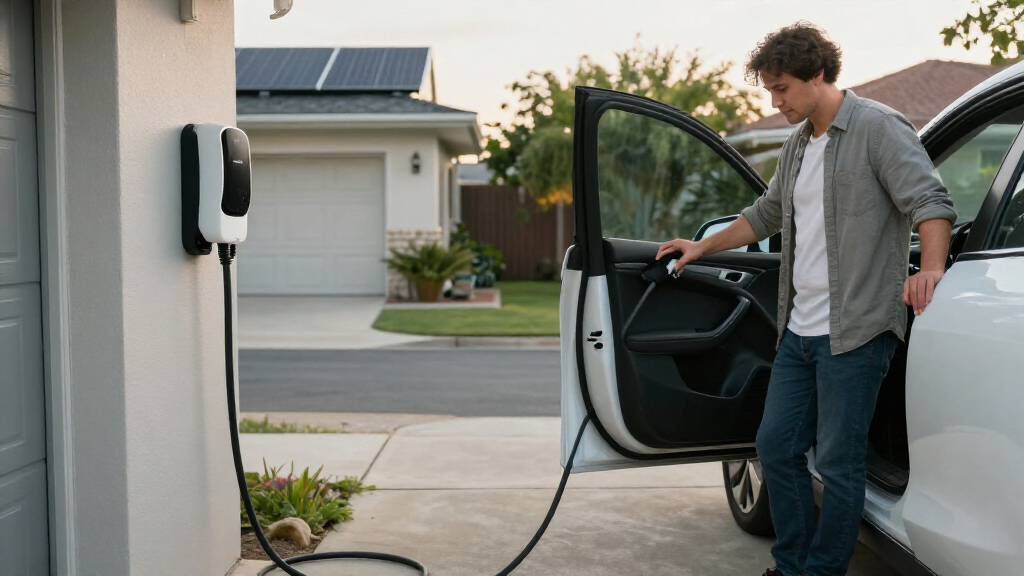

Among these home EV chargers, I rank the Emporia Pro with PowerSmart as my best overall pick for its 48-amp output and charging-management features. The ChargePoint HomeFlex stands out for buyers who want a familiar smart-charging option, while the Raylix portable charger suits drivers who need a lower-power option that can use different outlet types. The main tradeoffs are charging speed versus installation demands, hardwired versus plug-in convenience, and J1772 versus NACS compatibility. I also compare cable length and smart features, since those can matter more day to day than a charger’s peak amperage. Read on for the full breakdown and guidance on choosing a charger that fits your car, electrical setup, and parking space.

Get backup power and energy gear delivered free with Prime
- Fast, free delivery on millions of items
- Prime Video, Amazon Music and more included
- Member-only deals all year
Key Takeaways
- 48-amp hardwired models lead the higher-output group: Emporia Pro, EVIQO 48A, Lectron Nexus, and Autel offer strong choices for buyers with a suitable circuit and professional installation.
- Connector and installation style narrow the field quickly: The roundup includes J1772 and NACS models, as well as hardwired and NEMA 14-50 plug-in options; match both to your vehicle and garage before comparing app features.
- ChargePoint HomeFlex appears in three configurations: Buyers can choose NACS hardwired, J1772 hardwired, or J1772 with a NEMA 14-50 plug, making connector and wiring plans the main distinctions within that family.
- Emporia’s entries emphasize charging management: The Pro with PowerSmart adds a control-oriented angle, while the separate Emporia WiFi model gives buyers another hardwired 48-amp option.
- Portable chargers trade output for flexibility: Raylix and EVDANCE provide Level 1 and Level 2 options, but their lower amperage makes them better suited to modest daily driving or occasional use than faster overnight replenishment.




| home EV charger | Connector | Cable length | Warranty | Voltage |
|---|---|---|---|---|
| Raylix Portable Level 1 and Le | SAE J1772 | — | 2 years | — |
| BETUMODA Level 2 EV Charger | — | 25 ft | — | — |
| ChargePoint HomeFlex Level 2 H | NACS | — | 3 years | 240V |
| EVIQO Level 2 J1772 EV Charger | J1772 | 25 ft | 3 years | — |
| ChargePoint HomeFlex Level 2 H | J1772 | 23 ft | 3 years | — |
| EVIQO Level 2 J1772 EV Charger | J1772 | 25 ft | 3 years | 240 V |
| EVIQO EVIPOWER-2 Level 2 NACS | NACS | 25 ft | 3 years | 240 V |
| EVDANCE Level 1 and Level 2 Po | J1772 | 25 ft | 1 year | — |
| Lectron Nexus J1772 Level 2 EV | J1772 | 23 ft | 3 years | 240 V AC |
| Emporia Pro Level 2 EV Charger | SAE J1772 | 25 ft | — | 240 V AC |
| Autel MaxiCharger AC Home Leve | J1772 | 25 ft | — | 240 V |
| Emporia Pro Level 2 EV Charger | J1772 | 25 ft | — | — |
| ChargePoint HomeFlex Level 2 E | J1772 | 23 ft | 3-year parts warranty | 240 V |
| Emporia Level 2 WiFi EV Charge | SAE J1772 | 25 ft | — | — |
| IYILO 48A Level 2 EV Charger | SAE J1772 | 25 ft | — | 240 V |
More Details on Our Top Picks
Raylix Portable Level 1 and Level 2 J1772 EV Charger, 16A, NEMA 5-15 and 6-20 Plugs
I’d choose the Raylix when charging needs to work with outlets already available, rather than deliver the speed of a dedicated home installation. Its included NEMA 5-15 and 6-20 options allow Level 1 charging from a standard 120V outlet or up to 16A on a suitable 240V outlet, while four current settings and a delay timer add useful control. The display also makes charging status easier to check than on a basic portable unit. The tradeoff is limited output: its 3.68 kW maximum is far below the BETUMODA’s 9.6 kW, and Level 2 use depends on having a NEMA 6-20 outlet. I’d favor Raylix for portability and outlet flexibility, not for drivers seeking the fastest regular home charging.
Pros:- Supports Level 1 and Level 2 charging with NEMA 5-15 and 6-20 plugs.
- Four current settings let owners adapt charging to the outlet and vehicle.
- Color display shows voltage, current, power, and temperature.
- IP65-rated enclosure and overheat, overvoltage, and overcurrent protection.
Cons:- Maximum Level 2 output is 16A and 3.68 kW, well below the BETUMODA’s 40A output.
- Level 1 charging is limited to 12A and 1.44 kW.
- Level 2 charging requires a compatible NEMA 6-20 outlet.
Best for: J1772 EV or plug-in-hybrid owners who need a portable charger for both standard 120V outlets and an available NEMA 6-20 outlet.
Not ideal for: Drivers who want faster daily charging or do not have access to a NEMA 6-20 outlet for Level 2 use.
- Connector:SAE J1772
- Charging levels:Level 1 and Level 2
- Current settings:8A, 10A, 12A, 16A
- Level 1 input:NEMA 5-15, 120V, up to 12A, 1.44 kW
- Level 2 input:NEMA 6-20, 240V, 16A, 3.68 kW
- Delay timer:1–12 hours
- Warranty:2 years
Our verdict“Choose the Raylix if you need a portable J1772 charger that can use both standard household and NEMA 6-20 outlets, and skip it if charging speed is your priority.”
BETUMODA Level 2 EV Charger, 40A, 240V, 9.6 kW, 25-Foot Cable
The BETUMODA is the portable choice here for drivers who have a 240V NEMA 14-50 outlet and want substantially more output than the Raylix can provide. Its 40A, 9.6 kW maximum can make routine home charging quicker, while five current settings let owners reduce output to suit their electrical setup. The 25-foot cable offers more placement flexibility than the Raylix’s smaller portable format, and a delay timer supports scheduled charging. That capability comes with a firm outlet requirement: this unit plugs into NEMA 14-50, not a standard household receptacle. It is also described for dry-environment use, unlike hardwired outdoor options such as the EVIQO 48A. Tesla owners need a separate adapter, too. I’d pick it for portable 240V charging, not for an outdoor installation or a home without the right outlet.
Pros:- Up to 40A and 9.6 kW for faster charging than the Raylix’s 16A maximum.
- Five selectable current settings accommodate different charging needs.
- 25-foot cable gives more reach from the outlet to the vehicle.
- Delay timer and protection against overvoltage, overcurrent, overheating, and short circuits.
Cons:- Requires a NEMA 14-50 outlet and a properly grounded connection.
- Recommended for use in a dry environment, limiting placement flexibility compared with the outdoor-rated EVIQO.
- Tesla vehicles require a separately purchased adapter.
Best for: J1772 vehicle owners with a properly grounded NEMA 14-50 outlet who want a portable charger with higher output and a long cable.
Not ideal for: Drivers without a NEMA 14-50 outlet, Tesla owners who do not want to source an adapter, or anyone needing a charger intended for outdoor use.
- Charging level:Level 2
- Maximum current:40A
- Maximum power:9.6 kW
- Input voltage:240V AC
- Plug type:NEMA 14-50
- Vehicle connector:SAE J1772
- Adjustable current settings:8A, 16A, 24A, 32A, 40A
- Cable length:25 ft
- Delay timer:1–12 hours
Our verdict“Pick the BETUMODA for portable, higher-output charging from a NEMA 14-50 outlet, but choose a hardwired outdoor-rated model if the charger must live outside.”
ChargePoint HomeFlex Level 2 Hardwired EV Charger with NACS Connector
For a Tesla owner who wants a fixed home charging station, this ChargePoint HomeFlex with NACS avoids the adapter step required by the J1772 ChargePoint and EVIQO models in this lineup. It delivers up to 45 miles of range per hour, depending on the vehicle, and its app handles charger controls, reminders, and charging information. Indoor-or-outdoor placement adds flexibility, while UL certification and a three-year warranty provide useful reassurance for a permanent installation. The main cost in convenience is installation: this unit is hardwired and requires an electrician, so it is not a portable, plug-in alternative to the BETUMODA. Its stated vehicle compatibility is Tesla-focused, making it a poor fit for a household that needs a J1772 connector for other vehicles. I’d rank it for Tesla-specific convenience, not connector versatility.
Pros:- Native NACS connector suits compatible Tesla vehicles without a separate J1772-to-Tesla adapter.
- Up to 45 miles of range per hour, depending on the vehicle.
- App supports controls, reminders, charging information, and station finding.
- UL-certified and rated for indoor or outdoor installation.
Cons:- Hardwired installation requires an electrician, unlike the plug-in BETUMODA.
- Listed compatibility is focused on Tesla vehicles rather than J1772 vehicles.
- Actual charging speed depends on the vehicle.
Best for: Tesla owners who want a hardwired home charger with a native NACS connector, app controls, and indoor-or-outdoor installation options.
Not ideal for: Households centered on J1772 vehicles or drivers who need a portable charger that plugs into an existing outlet.
- Connector:NACS
- Compatible vehicles:Tesla vehicles
- Charging level:Level 2
- Voltage:240V
- Charging speed:Up to 45 miles of range per hour, vehicle-dependent
- Installation:Hardwired; electrician required
- Installation location:Indoor or outdoor
- Certification:UL-certified
- Warranty:3 years
Our verdict“Choose this ChargePoint if you own a compatible Tesla and want a permanent NACS installation; choose a J1772 model for broader connector compatibility.”
EVIQO Level 2 J1772 EV Charger, 48A, Hardwired 240V
The EVIQO EVIPOWER-2 stands out for a hardwired J1772 installation where weather protection and high output matter more than plug-in convenience. It supports up to 48A on a dedicated 60A circuit, giving it more rated current than the ChargePoint J1772 HomeFlex’s adjustable 50A maximum, though the car and circuit still shape real charging speed. Its 25-foot cable is longer than the ChargePoint’s 23-foot lead, and IP66/NEMA 4 protection makes the EVIQO the clearer fit for exposed outdoor placement. App controls require a 2.4 GHz Wi-Fi network, and professional installation is part of the package—not an optional shortcut. Tesla owners need an adapter, while drivers without a suitable circuit should look at a lower-current or plug-in model such as the BETUMODA instead.
Pros:- Up to 48A on a dedicated 60A circuit for high-output home charging.
- IP66 and NEMA 4 weather protection supports outdoor installation.
- 25-foot cable reaches farther than the ChargePoint J1772 HomeFlex’s 23-foot cable.
- UL, ETL, FCC, and Energy Star certifications are listed.
Cons:- Requires professional hardwired installation and a dedicated 60A circuit for 48A operation.
- App connectivity requires 2.4 GHz Wi-Fi.
- Tesla vehicles need a J1772 adapter.
Best for: J1772 EV and plug-in-hybrid owners planning a permanent outdoor installation with a dedicated 60A circuit and 2.4 GHz Wi-Fi.
Not ideal for: Renters, drivers who want a plug-in charger, homes without a suitable dedicated circuit, or Tesla owners unwilling to use an adapter.
- Connector:J1772
- Charging type:Level 2, hardwired
- Maximum current:48A; up to 50A with DIP switch settings
- Circuit requirement:Dedicated 60A, 240V circuit; 70A circuit for 50A operation
- Cable length:25 ft
- Wi-Fi:2.4 GHz
- Weather protection:IP66, NEMA 4
- Certifications:UL, ETL, FCC, Energy Star
- Warranty:3 years
Our verdict“Choose the EVIQO for a high-output, weather-protected J1772 installation when your home can support its circuit requirement.”
ChargePoint HomeFlex Level 2 Hardwired EV Charger, J1772, 50A
This ChargePoint HomeFlex J1772 is a strong fit for households with non-Tesla EVs that want a permanent, app-connected home charger. Its adjustable output reaches up to 50A, and its 23-foot cable gives useful reach without matching the EVIQO’s longer 25-foot lead. ChargePoint’s app adds charging controls, reminders, and charging information, though some features need Wi-Fi. Compared with the EVIQO EVIPOWER-2, this model has a lower stated maximum current but avoids the EVIQO’s specified 60A circuit requirement for 48A operation; the electrical setup still needs to match the installation and vehicle. It is UL-certified, ENERGY STAR certified, and suitable indoors or outdoors. The tradeoff is a hardwired install by an electrician, plus a separate adapter for Tesla vehicles.
Pros:- Adjustable output from 16A to 50A suits a range of home electrical setups.
- App offers charging controls, reminders, and charging information.
- UL-certified and ENERGY STAR certified for indoor or outdoor installation.
- 23-foot cable provides useful reach from the hardwired station.
Cons:- Hardwired installation requires an electrician and an appropriate circuit.
- Some app features and troubleshooting require Wi-Fi.
- Tesla vehicles require a separate adapter; the EVIQO also offers a longer 25-foot cable.
Best for: Owners of J1772 EVs who want adjustable home charging, app-based controls, and a permanent indoor or outdoor installation.
Not ideal for: Renters, drivers seeking a portable plug-in unit, or Tesla owners who want a native NACS connector and do not want an adapter.
- Connector:J1772
- Installation:Hardwired
- Adjustable amperage:16–50A
- Input voltage:240V
- Cable length:23 ft
- Connectivity:Wi-Fi and mobile app
- Installation location:Indoor or outdoor
- Certifications:UL-certified, ENERGY STAR
- Warranty:3 years
Our verdict“Pick the ChargePoint HomeFlex J1772 for adjustable, app-connected charging with broad J1772 fit, provided you are prepared for hardwired installation.”
EVIQO Level 2 J1772 EV Charger, 40A, NEMA 14-50, 240V, 25 ft Cable
The EVIQO EVIPOWER-2 is a strong fit for J1772 drivers who want a capable home charger without committing to hardwiring. Its 40A output and NEMA 14-50 plug suit a dedicated 50A circuit, while the 25-foot cable gives more parking-position flexibility than a short lead. App controls add scheduling and energy tracking, and its weather-rated enclosure supports indoor or outdoor placement. Compared with the EVIQO NACS version, this model is the simpler match for J1772 vehicles and plug-in hybrids; Tesla drivers need an adapter. It is less powerful than the hardwired Lectron Nexus 48A, but avoids that model’s professional-installation requirement. The tradeoffs are the need for a suitable outlet and a 2.4 GHz Wi-Fi network for connected features.
Pros:- 40A Level 2 output for faster home charging than a standard 120V portable unit.
- 25-foot cable offers useful reach across different garage layouts.
- App provides charging control, scheduling, and energy tracking.
- IP66/NEMA 4 weather resistance and a three-year warranty.
Cons:- Requires a dedicated 50A circuit and NEMA 14-50 outlet.
- Connected features require a 2.4 GHz Wi-Fi network.
- Tesla vehicles need a separate J1772 adapter.
Best for: J1772 EV and plug-in-hybrid owners with a dedicated NEMA 14-50 outlet who want app scheduling and a long cable.
Not ideal for: Drivers without a 50A circuit or NEMA 14-50 outlet, and Tesla owners who do not already have a J1772 adapter.
- Connector:J1772
- Maximum amperage:40 A
- Voltage:240 V
- Plug:NEMA 14-50
- Circuit requirement:Dedicated 50 A circuit
- Cable length:25 ft
- Weather resistance:IP66 / NEMA 4
- Warranty:3 years
Our verdict“Choose this EVIQO for a feature-rich 40A plug-in setup if your home already has the required outlet and your vehicle uses J1772.”
EVIQO EVIPOWER-2 Level 2 NACS EV Charger, 40A, NEMA 14-50 Plug, 25 ft Cable
For a home with a Tesla or another vehicle using a NACS inlet, this EVIQO pairs a direct NACS connector with a plug-in installation format. Its 40A output is a practical match for a dedicated NEMA 14-50 circuit, and the 25-foot cable can reach vehicles parked beyond the immediate wall area. Scheduling and energy tracking are available through the app, while the IP66/NEMA 4 rating supports indoor or outdoor mounting. Compared with the J1772 EVIQO EVIPOWER-2, this version removes the need for an adapter on NACS vehicles, but non-Tesla J1772 drivers will need to supply one. It also shares the J1772 model’s outlet and 2.4 GHz Wi-Fi requirements. Buyers seeking higher output should compare it with the hardwired Lectron Nexus 48A, which trades plug-in convenience for more amperage.
Pros:- NACS connector serves compatible vehicles without an adapter.
- 40A output and a 25-foot cable suit many home parking arrangements.
- App supports charging controls, schedules, and energy tracking.
- IP66/NEMA 4 weather rating and three-year warranty.
Cons:- Requires a dedicated 50A circuit with a NEMA 14-50 outlet.
- J1772 vehicles need a separately obtained adapter.
- App features require 2.4 GHz Wi-Fi.
Best for: Tesla and other NACS-port vehicle owners who have a NEMA 14-50 outlet and want a long-reach app-connected charger.
Not ideal for: J1772-only vehicle owners who do not want to buy an adapter, or households without a dedicated 50A circuit and NEMA 14-50 outlet.
- Connector:NACS
- Maximum amperage:40 A
- Voltage:240 V
- Plug:NEMA 14-50
- Circuit requirement:Dedicated 50 A circuit
- Cable length:25 ft
- Weather resistance:IP66 / NEMA 4
- Warranty:3 years
Our verdict“Pick this model when your vehicle has a NACS inlet and you want a weather-rated plug-in charger rather than a hardwired higher-output unit.”
EVDANCE Level 1 and Level 2 Portable EV Charger, J1772, 25 ft Cable, 12A 120V / 16A 240V
The EVDANCE is the most flexible choice here for drivers who need a charger that can travel between locations or use both 120V and 240V power. Its Level 1 and Level 2 support, included adapter, carrying bag, and LED status display make it more adaptable than either 40A EVIQO plug-in charger, though its 16A maximum at 240V means charging will be slower. The 25-foot cable helps when outlets are not close to the parking spot. It connects to J1772 vehicles; Tesla owners need a separate adapter, and outlet compatibility should be checked before purchase because the included plug setup does not cover every receptacle. Compared with the Lectron Nexus 48A, this portable unit needs less installation commitment but gives up substantial charging power. Its one-year warranty is also shorter than the three-year coverage offered by the EVIQO models.
Pros:- Supports 12A charging at 120V and 16A at 240V.
- Portable design includes a carrying bag and 25-foot cable.
- LED display shows charging status and error indicators.
- IP66 housing protection for varied charging locations.
Cons:- 16A at 240V is slower than the 40A and 48A chargers in this lineup.
- Some outlet types require additional adapters beyond the included setup.
- One-year warranty is shorter than the EVIQO and Lectron coverage.
Best for: J1772 drivers who need a portable charger for home, travel, or locations with both compatible 120V and 240V outlets.
Not ideal for: Owners who want the fastest home charging, need broad outlet compatibility without extra adapters, or expect Tesla compatibility out of the box.
- Connector:J1772
- Charging levels:Level 1 and Level 2
- Current:12 A at 120 V; 16 A at 240 V
- Power:3.84 kW
- Cable length:25 ft
- Plugs:NEMA 6-20 with NEMA 6-20 to 5-15 adapter
- Weight:7 lb
- Warranty:1 year
Our verdict“Choose the EVDANCE when portability and 120V/240V flexibility matter more than fast charging or a fixed high-output home setup.”
Lectron Nexus J1772 Level 2 EV Charger, 48A, 240V, Hardwired, 23 ft Cable
The Lectron Nexus is the power-focused option in this group: its 48A, 11.5 kW output is higher than the 40A EVIQO plug-in models and the portable EVDANCE. That extra capacity can support faster home charging when the vehicle and electrical supply can accept it. Hardwiring also avoids relying on a NEMA 14-50 receptacle, but it makes professional installation part of the project. Its 23-foot cable, holster, and IP66-rated enclosure suit a fixed indoor or outdoor parking space. Compared with the Emporia Pro, the Nexus offers a straightforward high-output hardwired setup, while Emporia adds load balancing and plug-in installation flexibility. Tesla owners can use a compatible NACS adapter, but it is not a direct NACS charger. The installation commitment and adapter needs make this less suitable for renters or households seeking an easy plug-in setup.
Pros:- 48A output delivers up to 11.5 kW at 240V.
- 23-foot cable and included holster support a tidy fixed installation.
- IP66-rated enclosure is suited to indoor and outdoor use.
- ETL listed with specified UL safety standards and built-in fault protections.
Cons:- Professional hardwired installation is required.
- Tesla vehicles need a compatible NACS adapter.
- Hardwired installation is less flexible to relocate than a plug-in charger.
Best for: Homeowners with a suitable electrical supply who want a fixed, hardwired J1772 charger with 48A output.
Not ideal for: Renters, households that need plug-in portability, or Tesla drivers who want a native NACS connector without an adapter.
- Connector:J1772
- Amperage:48 A
- Voltage:240 V AC
- Power:11.5 kW
- Installation:Hardwired; professional installation required
- Cable length:23 ft
- Weather resistance:IP66
- Warranty:3 years
Our verdict“Choose the Lectron Nexus if you want 48A hardwired J1772 charging and are prepared for professional installation.”
Emporia Pro Level 2 EV Charger with PowerSmart, 48A, J1772 Connector, 25 ft Cable
Emporia Pro stands apart from the other 48A choices by pairing high-output charging with PowerSmart load balancing and a Vue 3 energy monitor. That combination can help households manage charging alongside other electrical loads and may reduce the need for a panel upgrade, depending on the home’s setup. Installation is also more flexible than the hardwired-only Lectron Nexus: this Emporia can use a NEMA 14-50 plug or be hardwired. Its 25-foot J1772 cable and app-based schedules and energy tracking suit drivers who want to coordinate charging with household energy use. The tradeoffs are that Tesla owners need an adapter, and the charger’s installation still may call for an electrician. Unlike the EVDANCE portable unit, it is a stationary, high-output home system rather than a travel-friendly charger.
Pros:- PowerSmart load balancing can help manage charging against household electrical demand.
- Includes a Vue 3 energy monitor for whole-home energy visibility.
- Supports either NEMA 14-50 plug-in or hardwired installation.
- App offers charging schedules and energy tracking.
Cons:- Tesla vehicles require a separate adapter.
- Installation may require an electrician and a suitable circuit.
- Load balancing benefits depend on the home’s electrical setup.
Best for: Homeowners with a busy electrical panel who want 48A charging, load management, and whole-home energy monitoring.
Not ideal for: Drivers who need a portable charger, use a NACS vehicle without an adapter, or want to avoid installation planning altogether.
- Connector:SAE J1772
- Maximum current:48 A
- Voltage:240 V AC
- Cable length:25 ft
- Installation:NEMA 14-50 plug or hardwired
- Included monitor:Emporia Vue 3 Energy Monitor
- Certification:UL
- Indoor/outdoor use:Both
Our verdict“Choose the Emporia Pro if panel-load management and energy monitoring matter more than portability or a native NACS connector.”
Autel MaxiCharger AC Home Level 2 EV Charger, 50A, Hardwired J1772, Wi-Fi, 25-Foot Cable
The Autel MaxiCharger is the strongest fit here for buyers who want a high-output hardwired unit and a long reach from the mounting point. Its 50A capacity and up-to-12-kW output exceed the 48A rating of the Emporia Pro, though a vehicle’s own charging limit affects the real-world difference. The 25-foot cable helps when parking positions vary, while Wi-Fi, Bluetooth, and Ethernet give it more connection options than the Wi-Fi-only Emporia Level 2. Its CSA-certified, NEMA Type 4 enclosure suits indoor or outdoor placement. The tradeoff is a required hardwired electrician installation, with no plug-in flexibility. The supplied charging-speed figures also differ, so I would treat them as estimates rather than a firm promise.
Pros:- Up to 50A and 12 kW output, the highest stated capacity among these five picks.
- 25-foot cable offers useful reach for varied parking positions.
- CSA-certified NEMA Type 4 enclosure is rated for indoor or outdoor use.
- Wi-Fi, Bluetooth, Ethernet, app controls, scheduling, and firmware updates.
Cons:- Hardwired installation requires an electrician.
- The product information gives differing charging-speed estimates.
- J1772 connector may require an adapter for vehicles with a different charge port.
Best for: EV owners with a compatible J1772 vehicle, a suitable electrical panel, and a fixed parking spot who want up to 50A charging and flexible connectivity.
Not ideal for: Renters or buyers who need a plug-in charger, want to install without an electrician, or need a clearly stated charging-speed estimate.
- Charger type:Level 2, hardwired
- Connector:J1772
- Voltage:240 V
- Maximum current:50 A
- Power:Up to 12 kW
- Cable length:25 ft
- Connectivity:Wi-Fi, Bluetooth, and Ethernet
- Certification and warranty:CSA; 3 years
Our verdict“Choose the Autel if you want the highest stated output and a long cable in a hardwired home setup, and can verify your vehicle and panel support it.”
Emporia Pro Level 2 EV Charger with PowerSmart, 48 Amp, J1772 Connector and 25-Foot Cable
The Emporia Pro stands out for homes where panel capacity may constrain charger installation. Its included Vue Home Energy Monitor and PowerSmart load balancing can manage charging alongside household electrical demand, potentially avoiding a panel upgrade; that makes it a more panel-aware choice than the Autel MaxiCharger, which is rated for 50A but does not list this load-management system. The Emporia also offers plug-in or hardwired installation, giving owners with a suitable NEMA 14-50 outlet more flexibility. At 48A, it gives up a little stated capacity to the Autel, but the difference may matter less than the available circuit and vehicle limits. The added monitor is useful, though the system’s benefit depends on correct installation and compatibility with the home’s electrical setup.
Pros:- Included Vue monitor and PowerSmart can balance charger demand with household loads.
- 48A output with a 25-foot cable.
- Can be installed with a NEMA 14-50 plug or hardwired.
- Wi-Fi and Bluetooth support scheduled charging and real-time energy tracking.
Cons:- Hardwiring or electrical work may require an electrician.
- J1772 connector may require an adapter for some vehicles.
- Load balancing depends on suitable installation and the included monitoring system.
Best for: Homeowners with limited panel headroom who want a charger that can coordinate charging with household electrical use, plus a choice of plug-in or hardwired setup.
Not ideal for: Buyers seeking a simple charger without a separate home energy monitor, or drivers whose vehicle needs an adapter for its charge port.
- Model:EMC2V3-B
- Input voltage:240 V AC
- Current:48 A
- Connector:J1772
- Cable length:25 ft
- Installation:NEMA 14-50 plug or hardwired
- Connectivity:Wi-Fi and Bluetooth
- Certifications and warranty:Energy Star, NEMA, and UL; 3 years
Our verdict“Pick the Emporia Pro if managing panel capacity matters more to you than the Autel MaxiCharger’s slightly higher stated amperage.”
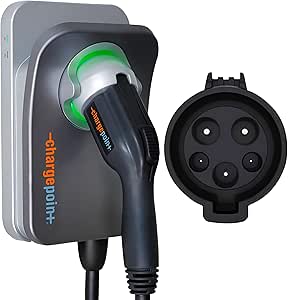
ChargePoint HomeFlex Level 2 EV Charger, J1772, NEMA 14-50 Plug
The ChargePoint HomeFlex suits buyers who already have—or plan to install—a 240V NEMA 14-50 outlet and prefer a plug-in unit over a hardwired charger. Compared with the Autel MaxiCharger and hardwired Emporia Level 2, this setup can be easier to remove or relocate, but it depends on a properly rated 40A or 50A circuit. Its 23-foot cold-resistant cable is slightly shorter than the 25-foot leads on those alternatives, yet remains useful for many garages and outdoor parking areas. ChargePoint’s app adds controls, reminders, and charging information, while UL certification supports indoor or outdoor installation. The main compromise is lower stated performance—up to 45 miles of range per hour, depending on the vehicle—and Tesla drivers need a separate adapter.
Pros:- NEMA 14-50 plug avoids committing to a hardwired charger installation.
- 23-foot cable is described as cold-resistant.
- UL-certified for indoor or outdoor installation.
- App supports charger controls, reminders, and charging information.
Cons:- Requires a 240V NEMA 14-50 outlet on a 40A or 50A circuit.
- Cable is shorter than the 25-foot options from Autel and Emporia.
- Tesla vehicles require a separate adapter.
Best for: Owners of J1772 vehicles who have a suitable NEMA 14-50 outlet and want a removable plug-in charger with app controls.
Not ideal for: Buyers without a 240V outlet and appropriate circuit, or those who need a longer cable or a native Tesla/NACS connector.
- Model:CPH50-NEMA14-50-L23
- Connector:J1772
- Plug:NEMA 14-50
- Voltage:240 V
- Required circuit:40A or 50A
- Cable length:23 ft
- Certification:UL
- Warranty:3-year parts warranty
Our verdict“Choose the ChargePoint HomeFlex if you have the right outlet and value a removable plug-in setup over the higher-output hardwired alternatives.”
Emporia Level 2 WiFi EV Charger, 48 Amp, 240V, J1772 Connector, 25-Foot Cable, Hardwired with Whip, White
This Emporia Level 2 is a focused hardwired option for drivers who want 48A charging, basic app-based energy information, and scheduling without the Pro model’s included Vue monitor and PowerSmart load balancing. That simpler setup can be a better fit when the panel already has capacity; if electrical load management is the priority, the Emporia Pro is the more capable alternative. Like the Autel, this charger includes a 25-foot cable and is intended for a fixed installation, but its listed connectivity is limited to 2.4 GHz Wi-Fi rather than the Autel’s Wi-Fi, Bluetooth, and Ethernet choices. UL listing and ENERGY STAR certification are reassuring purchase criteria, but the hardwired design means professional installation is part of the plan.
Pros:- 48A output with a 25-foot charging cable.
- Wi-Fi supports remote monitoring, energy data, and scheduled charging.
- UL listed and ENERGY STAR certified.
- Includes wall mount, handle holster, and mounting hardware.
Cons:- Hardwired installation requires professional electrical work.
- Connectivity is limited to 2.4 GHz Wi-Fi.
- Does not include the Vue monitor and PowerSmart load balancing offered with the Emporia Pro.
Best for: Homeowners with an adequate electrical panel who want a fixed 48A J1772 charger with Wi-Fi scheduling and energy data.
Not ideal for: Renters, owners who need plug-in installation, or households that need the Emporia Pro’s included energy monitor and load-balancing features.
- Model:EMEVSE1
- Charger level:Level 2
- Connector:SAE J1772
- Current and voltage:48 A; 240 V
- Cable length:25 ft
- Installation:Hardwired with whip
- Connectivity:2.4 GHz Wi-Fi
- Certifications and warranty:UL listed; ENERGY STAR certified; 3 years
Our verdict“Pick this Emporia when your panel can support a fixed 48A charger and you want a simpler setup than the load-balancing Emporia Pro.”
IYILO 48A Level 2 EV Charger, 11.5 kW, 240V, J1772, 25 ft Cable
The IYILO 48A sets itself apart with a cluster of controls not listed for the other chargers here: adjustable current, RFID access, and power sharing. That combination may appeal to households with multiple charging needs or owners who want to restrict who can start a session. Its 11.5-kW rating is close to the Emporia units’ 48A class, while the Autel MaxiCharger claims a higher 12 kW at 50A. IYILO also includes connector overheat protection and a NEMA 4 rating, but it is less flexible at installation: it requires hardwiring, a 60A breaker, and a licensed electrician. Wi-Fi is 2.4 GHz only, and Tesla compatibility requires a separately purchased adapter, unlike a native NACS charger.
Pros:- 48A and 11.5-kW output with adjustable current settings.
- RFID access and app scheduling provide control over charging sessions.
- Power sharing and connector overheat protection add useful controls.
- 25-foot cable and NEMA 4-rated enclosure.
Cons:- Requires hardwiring, a 60A breaker, and a licensed electrician.
- Wi-Fi support is limited to 2.4 GHz.
- Tesla NACS adapter is sold separately.
Best for: Owners with a fixed installation who want RFID access, adjustable current, or power sharing for multiple charging demands.
Not ideal for: Renters, buyers without a suitable 60A breaker and electrician, or Tesla drivers who expect an adapter to be included.
- Model:IYILO-RA48
- Charging level:Level 2
- Maximum current and power:48 A; 11.5 kW
- Voltage:240 V
- Connector:SAE J1772
- Cable length:25 ft
- Installation:Hardwired; 60A breaker and licensed electrician required
- Connectivity and warranty:2.4 GHz Wi-Fi; 3 years
- Certifications:ETL, Energy Star, CSA; UL 2594 test report
Our verdict“Choose IYILO if access control and power sharing matter more than plug-in flexibility or broader connectivity.”
How We Picked
I compared the 15 listings on factors that change how a charger works in a real home: maximum amperage and power, connector type, installation method, cable length, and smart or load-management features. I also separated portable Level 1/Level 2 units from dedicated Level 2 home stations, since they serve different routines and should not be judged by peak charging speed alone. A longer cable can make a charger easier to place around a garage, while a plug-in model may offer a simpler installation path if the correct outlet and circuit are already available.
The ranking favors models that pair useful capability with a clear fit for a common buyer, rather than treating the highest amperage as an automatic win. I give stronger placement to versatile options with meaningful charging controls and clear installation choices; models with a narrower role rank lower but remain useful for portability, a specific connector, or an existing outlet. Product names and listed specifications are the basis for this comparison, so buyers should confirm circuit requirements, connector compatibility, and current installation instructions before purchase.
Factors to Consider When Choosing Home EV Chargers
Before choosing among these home EV chargers, I would work from the car and electrical panel outward. That order helps prevent a common mistake: buying a high-output unit that the home cannot support, or choosing a connector that complicates charging. The following factors can help narrow the list beyond brand preference.
Match Charger Output to Your Daily Driving
A higher-amp charger can add more range during a given charging window, but the benefit depends on both the vehicle’s onboard charging limit and the home circuit. If your car cannot accept the charger’s full output, paying for extra capacity may not shorten charging time. Estimate how much driving you do between charging sessions and whether the car sits parked overnight; many households do not need the fastest available unit. Also check the vehicle manual for its AC charging limit, since advertised charger power does not override that ceiling. A charger sized around regular use can leave room for future needs without making installation unnecessarily demanding. Treat amperage as one part of the fit, not a shortcut for choosing.
Check the Electrical Panel Before Choosing Hardwired or Plug-In
A NEMA 14-50 model can suit a garage that already has a correctly installed outlet and compatible circuit, while a hardwired charger may be the cleaner choice for a dedicated permanent setup. Neither route is automatically cheaper or simpler: a new outlet, wiring run, panel upgrade, or permit can change the installation plan. Ask a licensed electrician to review available capacity and the route from panel to parking spot before ordering. Do not assume an existing outlet is suitable just because its shape matches the charger plug. A hardwired unit can support a more permanent installation, but it also makes removal or relocation less straightforward. Let the home’s wiring and local requirements guide this choice.
Choose J1772 or NACS Around Your Vehicle and Future Plans
Connector choice is a practical compatibility decision, not a general measure of charger quality. Check the inlet on every vehicle that will use the charger, and verify whether an approved adapter is needed for a different connector type. If more than one EV is in the household, think through which car will use the station most often and how often drivers are willing to swap adapters. An adapter can add flexibility, but it is another item to keep available and use according to the vehicle and charger guidance. Charging standards and vehicle lineups change, so a planned future car can influence the choice. Confirm compatibility directly rather than relying on a brand name or connector assumption.
Measure the Route From Charger to Charging Port
Cable length affects where the station can be mounted and whether it can reach a vehicle parked nose-in or backed in. Measure the actual path from a proposed mounting point to the charging inlet, including the distance around obstacles, rather than measuring only the straight-line gap. A longer cable can make parking less fussy, but it may need more space for tidy storage. A short cable can work well in a carefully planned bay and reduce excess cable on the wall. Consider where the connector will rest when not in use and whether the cable could cross a walking route. This small planning step can matter more every day than a modest difference in charging speed.
Decide Whether Smart Features Solve a Real Home Need
Wi-Fi apps, scheduled charging, energy monitoring, and load-management features can help coordinate charging with household routines or electricity plans. Their value depends on whether you will use those controls and whether your internet connection reaches the garage reliably. If charging schedules are already handled by the vehicle, a charger app may add little beyond remote status checks. Power-management features can be useful where household electrical capacity is limited, but buyers should confirm how the system works with their panel and any required accessories. Read the setup and connectivity requirements before treating a feature as a benefit. A simpler charger may be the better fit when dependable basic charging is the priority.
Treat Portable Chargers as a Different Kind of Solution
Portable Level 1 and Level 2 chargers offer flexibility for drivers who travel between locations or want a unit that can use more than one supported outlet type. Their convenience does not make them equivalent to a dedicated high-output wall station: the listed portable options here top out at 16 amps on Level 2. That may be enough for light daily driving, a second vehicle, or occasional charging, but can feel limiting after a long commute. Check the exact plug, outlet rating, and permitted use for each setup; adapters do not make an unsuitable circuit safe. A portable unit makes most sense when flexibility is a genuine need, not as a substitute for checking home wiring.
Frequently Asked Questions
Should I choose a 48-amp or 50-amp home EV charger?
I would compare the charger’s actual output with the vehicle’s AC charging limit and the circuit an electrician can support. The 48-amp options in this roundup include hardwired models, while the 50-amp ChargePoint listings are also hardwired; the number alone does not tell you which will charge your car faster. Vehicle limits, circuit sizing, and installation details affect the result. If your vehicle accepts less power, a higher-rated station may not provide a noticeable charging-time gain. Confirm the charger’s installation requirements and your panel capacity before choosing between close output ratings.
Is a plug-in charger a better choice than a hardwired model?
A plug-in unit can be convenient when a suitable, properly installed outlet and circuit already exist near the parking spot. Hardwired models can make sense for a permanent installation or where the electrician recommends that approach, but they are less simple to remove or relocate. The listings here include NEMA 14-50 plug-in choices and several hardwired models, so the right path depends on the home rather than a universal preference. Have an electrician verify the outlet, circuit, and local rules instead of assuming a familiar receptacle is ready for EV charging. Include installation work in the decision before buying.
Can I use a J1772 charger with a vehicle that has a NACS inlet?
Compatibility can depend on the vehicle, adapter, and charging setup, so I would check the automaker’s guidance for the specific car. This roundup includes both J1772 and NACS charger options, which lets buyers compare a direct connector match against a setup that may require an adapter. An adapter can add flexibility for a household with different vehicles, but it is another component to carry and use correctly. Confirm that the vehicle and charger support the intended AC charging connection, not just that the plugs appear to fit. If several EVs will share one station, make a connector plan before choosing.
Will a 16-amp portable charger be enough for everyday home charging?
It may be enough for a driver with modest daily mileage and a long parking window, especially when the portable charger’s Level 2 setting is available. It is less suited to quickly replacing a large amount of range after heavy daily driving than the 40-amp and 48-amp stations in this list. Level 1 operation is slower still, so the time available between trips matters. Compare your usual driving needs with the car’s charging behavior and the outlet you can safely use. If you regularly need a fast overnight refill, a dedicated Level 2 unit is a more fitting category.
Do I need smart charging or load management at home?
Smart controls are most useful when you want schedules, remote status, energy tracking, or coordination with household power limits. The Emporia Pro with PowerSmart is the standout in this roundup for buyers drawn to charging management, while several other listed units focus more on core Level 2 charging. If your vehicle already handles scheduled charging and your panel has ample capacity, extra controls may not change your routine. If household electrical demand is tight, ask an electrician whether load management can address the specific constraint and what equipment it requires. Choose features for a clear use, rather than assuming every connected option will improve charging.
Conclusion
My best overall recommendation is the Emporia Pro with PowerSmart for buyers who want 48-amp charging paired with management features. For best value and a simpler starting point, I would compare the EVIQO 40A NEMA 14-50 model with the ChargePoint HomeFlex plug-in version, choosing by connector fit and existing outlet. The best premium direction is the Autel MaxiCharger AC Home or a hardwired ChargePoint HomeFlex for shoppers prioritizing a more feature-focused permanent setup. Beginners with a suitable outlet should look first at plug-in Level 2 models, while drivers needing flexibility can consider the Raylix or EVDANCE portable units. For a NACS vehicle, focus on the ChargePoint NACS or EVIQO EVIPOWER-2; for higher-output hardwired J1772 charging, compare the EVIQO 48A, Lectron Nexus, and Emporia options. I would make the final choice only after confirming vehicle compatibility, panel capacity, and cable reach.
Halloween Picks

Halloween Inflatable Haunted House Maze – 20×20 ft with Removable Roof and Blower

JOYIN 5-Foot Halloween Animatronic Drinking Skeleton

Gemmy Bluey Family Halloween Inflatable Scene, 5.5 ft Lighted Yard Decoration
As an affiliate, we earn on qualifying purchases.