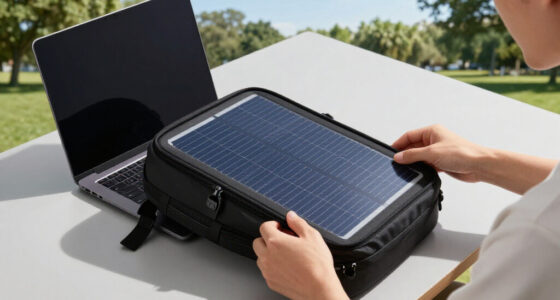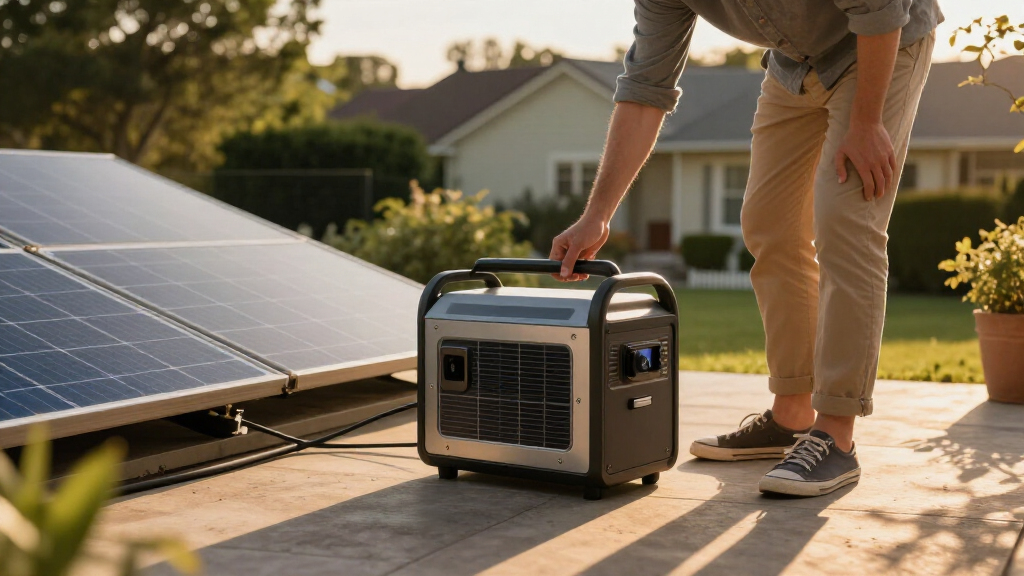
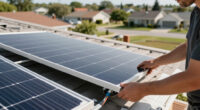
When selecting a solar-powered backup generator, the main considerations are capacity, portability, recharge options, and durability. The EF ECOFLOW Delta 3 Ultra stands out for its large capacity and fast recharging, making it ideal for longer outages. The Jackery Solar Generator 1000 v2 offers a balanced mix of power and portability, perfect for outdoor adventures. However, tradeoffs include higher costs for larger models and longer recharge times for smaller units. Continue reading to explore detailed comparisons that will help you find the best fit for your needs.

Get backup power and energy gear delivered free — and shop member deals
- Fast, free delivery on millions of items
- Access to Prime Big Deal Days deals on October 6–7
- Prime Video, Amazon Music and more included
Complete the kit


Key Takeaways
- Top models balance capacity and portability, with larger units suited for home backup and smaller ones for camping.
- Fast solar and AC recharging are key features that extend usability during extended outages or remote use.
- Build quality and battery longevity vary widely; LiFePO4 batteries generally last longer but come at a higher price.
- Price points reflect capacity and feature sets; investing in a higher-capacity unit often means better long-term value.
- Compatibility with solar panels and ease of setup are critical factors for maximizing solar recharging efficiency.
| EF ECOFLOW Portable Power Station DELTA 2 Max 2048Wh, 2400W LiFePO4 Battery |  | Best Overall | Battery Capacity: 2048Wh | Max Power Output: 2400W | Charging Time (80%): 43 minutes | VIEW LATEST PRICE | See Our Full Breakdown |
| EF ECOFLOW Delta 3 Ultra 3072Wh Power Station with XT60 Solar Cable |  | Best Premium Pick | Capacity: 3072Wh | Continuous Power: 3600W | Surge Power: 7200W | VIEW LATEST PRICE | See Our Full Breakdown |
| BROWEY 1600W Portable Power Station with Built-in Solar Panel |  | Best All-in-One Design | Power Output: 1600W (3200W peak) | Capacity: 1024Wh | Battery Type: LiFePO4 | VIEW LATEST PRICE | See Our Full Breakdown |
| Portable Solar Generator with 40W Solar Panel, 300W Power Station |  | Best Budget Starter Kit | Power Capacity: 300W | Battery Capacity: 220Wh (60000mAh) | Solar Panel Power: 40W | VIEW LATEST PRICE | See Our Full Breakdown |
| Jackery Solar Generator 1000 v2 with 200W Solar Panel, 1070Wh, 1500W AC |  | Best Balance of Portability and Power | Capacity: 1070Wh | AC Output: 1500W | Surge Peak: 3000W | VIEW LATEST PRICE | See Our Full Breakdown |
| MARBERO 237Wh Solar Generator with 60W Solar Panel |  | Best Budget Starter Kit | Battery Capacity: 237Wh | Battery Type: Lithium-ion | Output Power: 300W (375W peak) | VIEW LATEST PRICE | See Our Full Breakdown |
| Portable Solar Generator with Panel, 300W Power Station and 40W Foldable Solar Panel |  | Best for Light Home Backup | Running Wattage: 300W | Starting Wattage: 550W | Runtime: Approximately 7 hours | VIEW LATEST PRICE | See Our Full Breakdown |
| Jackery Solar Generator 300 with 40W Solar Panel |  | Best Ultralight Complete Kit | Capacity: 292Wh | Weight: 7.5 lbs | Rated Output: 300W (600W peak surge) | VIEW LATEST PRICE | See Our Full Breakdown |
| Jackery Explorer 300 Portable Power Station, 292Wh |  | Best Bare Station for Panel Flexibility | Capacity: 292Wh | Weight: 7.5 lbs | Dimensions: 9.1 x 5.2 x 7.8 inches | VIEW LATEST PRICE | See Our Full Breakdown |
| Jackery HomePower 3600 Plus with 2x200W Solar Panels |  | Best for Whole-Home Emergency Backup | Capacity: 3584Wh | AC Output: 3600W (7200W parallel) | Voltage: 120V & 240V | VIEW LATEST PRICE | See Our Full Breakdown |
| Portable Solar Generator 300W with 60W Solar Panel | 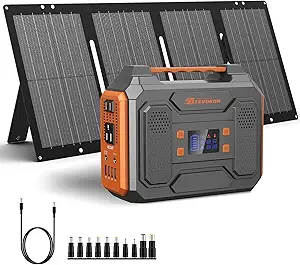 | Best Compact Choice for Emergency and Outdoor Use | Power Output: 300W | Solar Panel: 60W monocrystalline | Charging Ports: 2 AC outlets, 1 DC port, 3 USB ports, 1 quick charge USB port | VIEW LATEST PRICE | See Our Full Breakdown |
| Jackery HomePower 3600 Plus Portable Power Station with Extra Battery and 2x200W Panels |  | Best for Whole-Home Backup and Extended Outages | Output Wattage: 3600W | Capacity: 3584Wh | Expandable Capacity: Up to 21kWh | VIEW LATEST PRICE | See Our Full Breakdown |
| BROWEY 1600W Portable Power Station with Built-in Solar Panel |  | Best for Off-Grid Living and Long-Term Camping | Battery Capacity: 1024Wh | Output Wattage: 1600W | Peak Power: 3200W | VIEW LATEST PRICE | See Our Full Breakdown |
More Details on Our Top Picks
EF ECOFLOW Portable Power Station DELTA 2 Max 2048Wh, 2400W LiFePO4 Battery
The EcoFlow DELTA 2 Max earns the top spot because it hits the sweet spot between capacity, speed, and long-term value. A 2048Wh capacity with 2400W output covers refrigerators, CPAP machines, and most household essentials during an outage, while the 43-minute charge to 80% means downtime between uses is minimal. Compared with the Delta 3 Ultra, it sacrifices some raw capacity, but its expandability to 6kWh lets buyers start small and grow — something the smaller Jackery Solar Generator 1000 v2 simply can’t match. The 3000-cycle LiFePO4 battery translates to roughly a decade of regular use rather than a few seasons. The tradeoff is price and heft: this is a serious investment, and it’s closer to a rolling appliance than a grab-and-go camp companion.
Pros:- Fast charging reaches 80% in about 43 minutes
- Expandable from 2048Wh up to 6kWh with extra batteries
- 3000-cycle LiFePO4 battery rated for 10 years of service
- 15 outlets plus flexible charging via solar, AC, or car
Cons:- High upfront cost compared with mid-size competitors
- Heavy and bulky for genuinely portable use
- 2400W output ceiling limits some high-draw appliances without X-Boost
Best for: Homeowners building a whole-house backup system who want capacity they can expand over time
Not ideal for: Casual campers or ultralight travelers — the size and weight make it impractical to move frequently
- Battery Capacity:2048Wh
- Max Power Output:2400W
- Charging Time (80%):43 minutes
- Battery Chemistry:LiFePO4
- Expandable Capacity:Up to 6kWh with extra batteries
- Number of Outlets:15
- Noise Level:Starting from 30 dB
- Charge Cycles:3000 cycles to 80% capacity
Our verdict“The best pick for buyers who want a scalable home backup platform rather than a one-off purchase.”
EF ECOFLOW Delta 3 Ultra 3072Wh Power Station with XT60 Solar Cable
For buyers who refuse to compromise on output, the Delta 3 Ultra is the heavyweight contender here. With 3600W continuous output and a 7200W surge rating, it runs power-hungry appliances — well pumps, electric kettles, window AC units — that would trip the DELTA 2 Max or the BROWEY 1600W. The built-in UPS with sub-10ms switchover is the standout for solar backup buyers: plugged-in devices barely notice a grid failure, which matters for computers and medical equipment. At 25dB it’s quieter than the DELTA 2 Max, and the included XT60 solar cable means it’s solar-ready out of the box. The compromises are real, though: expect premium pricing and a weight that makes solo relocation genuinely awkward.
Pros:- 3600W continuous output with 7200W surge handles demanding appliances
- Built-in UPS switches in under 10ms during outages
- Very quiet 25dB operation
- Multiple charging paths including solar and the EcoFlow Smart Generator
Cons:- Premium price point well above smaller stations
- Heavy enough that portability realistically requires two people
Best for: Households with high-draw appliances or sensitive electronics needing seamless UPS-style backup
Not ideal for: Budget-conscious buyers or anyone who needs to move the unit often — the weight and price both climb quickly
- Capacity:3072Wh
- Continuous Power:3600W
- Surge Power:7200W
- Battery Type:LiFePO4
- Noise Level:25dB
- Charging Methods:Wall outlet, solar panels, car input, EcoFlow Smart Generator
- Built-in UPS:Yes, <10ms switch
Our verdict“The pick when maximum output and seamless outage switchover justify a premium spend.”
BROWEY 1600W Portable Power Station with Built-in Solar Panel
What sets the BROWEY apart from everything else in this lineup is its built-in solar panel with MPPT charging — no separate panels to carry, connect, or forget at home. That makes it the most self-contained option here: unfold, face the sun, and you’re recharging the 1024Wh LiFePO4 battery without extra gear. Compared with the Jackery Solar Generator 1000 v2, which ships its panel separately, the BROWEY is a simpler single-package solution with slightly higher output at 1600W. The catch is efficiency: an integrated panel is inherently smaller than a dedicated 200W folding panel, so solar recovery is slower than a setup like the Jackery’s. For occasional outages and camping trips where convenience beats raw charging speed, this tradeoff makes sense. It won’t match the DELTA 2 Max’s capacity or charging pace.
Pros:- Built-in solar panel means no separate panels to buy or carry
- 1600W pure sine wave output runs most appliances and tools
- LiFePO4 battery rated for over 10 years
- Charges via AC, car, or solar with MPPT efficiency
Cons:- Built-in panel captures less sun than dedicated folding panels
- Heavy and bulky for a mid-capacity unit
- Solar charging depends entirely on good sunlight conditions
Best for: Campers and emergency preppers who want one self-contained unit with zero separate accessories to manage
Not ideal for: Anyone needing fast solar recharging or large capacity — the integrated panel and 1024Wh battery cap both
- Power Output:1600W (3200W peak)
- Capacity:1024Wh
- Battery Type:LiFePO4
- Charging Time:3 hours to 80%
- Ports:8 (AC/DC/USB-C PD 100W)
Our verdict“The most convenient single-box solar solution for buyers who value simplicity over maximum capacity.”
Portable Solar Generator with 40W Solar Panel, 300W Power Station
This 300W generator with bundled 40W panel is the entry point of this roundup, and it’s honest about what it is: a device-charging and lighting solution, not an appliance backup. At 5 pounds with an included solar panel, it’s a fraction of the cost and weight of anything from EcoFlow or Jackery, making it a low-risk way to learn how solar charging actually fits your life. The 300-lumen floodlight with 30+ hours of runtime is genuinely useful during outages — more practical here than in bigger units, where lights feel like an afterthought. Compared with the Jackery Explorer 300-class competitors, you get the panel included rather than sold separately. The limits are obvious: 220Wh won’t run a fridge, and extended cloudy stretches will leave you rationing. Weather resistance is also unaddressed, so protect it from rain.
Pros:- Very affordable entry into solar power with panel included
- Featherweight at 5 lbs for genuine portability
- Charges up to 8 devices across AC, USB-C, USB-A, and DC ports
- Built-in floodlight runs 30+ hours for outage lighting
Cons:- 220Wh capacity limits multi-day use without steady sun
- 300W output cannot run kitchen appliances or power tools
- No stated waterproofing or weather resistance
Best for: First-time buyers, campers, and students who want an affordable solar setup for phones, laptops, and lights
Not ideal for: Households expecting refrigeration or medical device backup — 220Wh and 300W fall far short
- Power Capacity:300W
- Battery Capacity:220Wh (60000mAh)
- Solar Panel Power:40W
- Output Ports:2 AC, 2 USB-C, 3 USB-A, 1 DC carport
- Weight:5 lbs
- Dimensions:8.5×6.7×4.1 in
- LED Brightness:300 lumens
- LED Runtime:30+ hours
Our verdict“A cheap, low-commitment way to cover basics — lights and device charging — during short outages or camping trips.”
Jackery Solar Generator 1000 v2 with 200W Solar Panel, 1070Wh, 1500W AC
The Jackery Solar Generator 1000 v2 occupies the middle ground this roundup needed: enough capacity for real backup duty, at a weight you can actually carry to a campsite. At 23.8 lbs with a foldable handle, it’s dramatically more manageable than the DELTA 2 Max while offering similar capacity to the BROWEY with a much faster 1-hour AC recharge. The included 200W solar panel outpaces the integrated panel on the BROWEY and dwarfs the 40W panels bundled with budget kits, cutting solar recharge to about 6 hours. The 1500W output with 3000W surge handles microwaves and most kitchen appliances. Two annoyances: fast charging requires app activation, and the panel and station ship separately, so don’t expect one tidy delivery. With 4000+ cycles, the battery should outlast most of the budget field here.
Pros:- 1500W AC output with 3000W surge runs most household appliances
- 1-hour fast charging when connected to AC
- 23.8 lbs with foldable handle for easy transport
- LFP battery rated for 4000+ cycles and 10+ years
Cons:- Fast charging requires app activation before first use
- Panel and station arrive in separate shipments
- 6-hour solar recharge is slow for the capacity
Best for: RV owners and car campers who want appliance-grade power they can still move without help
Not ideal for: Whole-home backup seekers — 1070Wh covers essentials only, not sustained high-draw loads
- Capacity:1070Wh
- AC Output:1500W
- Surge Peak:3000W
- Battery Type:LFP
- Weight:23.8 lbs
- Charging Time:1 hour (fast), 3 hours (600W charger), 6 hours (200W solar)
- Ports:2 USB-C, 1 USB-A, 1 DC car port, 3 AC ports
- Lifespan:10+ years, 4000+ charge cycles
Our verdict“The strongest choice for buyers who split time between home backup and portable outdoor use.”
MARBERO 237Wh Solar Generator with 60W Solar Panel
Most entry-level solar generators make you buy the panel separately, which quietly doubles the real cost. The MARBERO bundles everything — a 237Wh power station plus a foldable 60W solar panel — at a price where Jackery’s bare Explorer 300 alone sits. That panel matters: with a 21.5–23.5% conversion rate, it recharges this smaller battery noticeably faster than the 40W panels paired with comparable kits. This option makes the most sense for someone dipping a toe into solar power without committing hundreds of dollars. The tradeoffs are real, though. Compared with the Jackery Solar Generator 300, the 237Wh capacity is smaller and the lithium-ion chemistry won’t survive nearly as many charge cycles, so this is a short-trip tool rather than a decade-long investment. Devices over 300W are off the table entirely.
Pros:- Complete kit with panel included at a budget-friendly price
- 60W panel recharges faster than the 40W panels in rival kits
- Four USB ports plus two pure sine wave AC outlets
- Built-in LED flashlight with emergency modes
Cons:- Smaller 237Wh capacity drains quickly on longer trips
- Lithium-ion chemistry offers far fewer charge cycles than LiFePO4 rivals
Best for: First-time buyers and casual campers who want a complete solar charging kit without a big upfront spend
Not ideal for: Anyone planning multi-day off-grid trips or expecting to run anything beyond phones, tablets, lights, and small fans
- Battery Capacity:237Wh
- Battery Type:Lithium-ion
- Output Power:300W (375W peak)
- Solar Panel Power:60W foldable
- AC Outlets:2 (pure sine wave)
- USB Ports:4 (including USB-C and QC3.0)
- Solar Conversion Rate:21.5–23.5%
- LED Flashlight:Yes, multiple modes
Our verdict“Buy this if you want the cheapest all-in-one way to start solar charging on weekend trips; skip it if you need long-term durability or serious capacity.”
Portable Solar Generator with Panel, 300W Power Station and 40W Foldable Solar Panel
This kit splits the difference between pure camping gear and emergency preparedness. With a 300W running output and 550W starting wattage, it handles brief surge-heavy loads — like a small fridge kicking on — that the MARBERO kit can’t touch, and the four total outlets let you keep a phone, a lamp, and a router alive at once during an outage. The 40W foldable panel keeps the battery topped up between uses. Where it falls short is transparency: unlike the Jackery units in this roundup, the seller doesn’t publish a battery capacity in watt-hours or a cycle-life rating, which makes long-term value hard to judge. The roughly 7-hour runtime at load is decent for the price but means it bridges an afternoon outage, not a multi-day blackout. Compared with the Jackery Explorer 300, you give up brand track record but gain an included panel.
Pros:- 550W starting wattage handles brief surges from small appliances
- Includes a foldable solar panel at a competitive price
- Built-in short circuit and over-voltage protection
- Four outlets for simultaneously powering essentials
Cons:- No published watt-hour capacity or cycle-life rating
- 7-hour runtime at load limits it to short outages
Best for: Budget-conscious households that want a modest emergency backup for essentials like routers, lights, and phones
Not ideal for: Buyers who need verified battery specs or enough capacity to ride out extended outages — look at the Jackery HomePower 3600 Plus instead
- Running Wattage:300W
- Starting Wattage:550W
- Runtime:Approximately 7 hours
- Total Power Outlets:4
- Frequency:60 Hz
- Fuel Type:Solar
- Included Panel:40W foldable solar panel
- Current Rating:2.73 A
Our verdict“A reasonable low-cost hedge for brief power outages and car camping, as long as you’re comfortable with vague battery specifications.”
Jackery Solar Generator 300 with 40W Solar Panel
This pairing solves the biggest complaint about the standalone Jackery Explorer 300 — no panel in the box — while keeping the whole package carry-anywhere light. At 7.5 lbs for the station itself, this setup is the one to grab when weight is the constraint: backpackers, kayak campers, and anyone hauling gear on foot. The LiFePO4 battery rated for 4,000+ cycles also outclasses the MARBERO’s lithium-ion cell by years of potential use. But the included 40W panel recharges slowly — about 7.5 hours in good sun — whereas a separately purchased 100W panel cuts that to roughly 2.8 hours. That’s the core tradeoff here: convenience and portability versus charging speed. If you camp near a vehicle and can carry a bigger panel, the bare Explorer 300 with a 100W panel is the smarter buy. If every ounce counts, this kit wins.
Pros:- Featherweight 7.5 lb station, lightest complete kit here
- LiFePO4 battery rated for over 4,000 charge cycles
- 100W USB-C PD port charges laptops at full speed
- Panel included, unlike the standalone Explorer 300
Cons:- 40W panel recharges slowly at about 7.5 hours
- 292Wh capacity limits multi-day device coverage
Best for: Weight-conscious campers and hikers who want a brand-name solar generator with the panel included and no extra purchases
Not ideal for: Anyone recharging frequently off-grid — the 40W panel’s 7.5-hour recharge time drags compared with faster setups
- Capacity:292Wh
- Weight:7.5 lbs
- Rated Output:300W (600W peak surge)
- Battery Chemistry:LiFePO4, 4,000+ cycles
- Included Panel:40W solar panel
- Recharge Time (40W Panel):About 7.5 hours
- Recharge Time (100W Panel):About 2.8 hours
- Ports:2 AC, 1 USB-C PD (100W), 2 USB-A, 1 car port
Our verdict“The right pick when portability is non-negotiable and you’d rather accept slow solar recharge than carry extra weight.”
Jackery Explorer 300 Portable Power Station, 292Wh
Sometimes the smartest buy is the one that skips the bundle. The standalone Explorer 300 is identical hardware to the Solar Generator 300 kit — same 292Wh capacity, same 4,000-cycle LiFePO4 chemistry, same 7.5 lb frame — but leaves the panel choice to you. Pair it with a 100W panel and you recharge in under three hours, nearly triple the speed of the bundled 40W option, often for less total money than buying the kit plus an upgrade later. This model is better suited to buyers who already own a compatible panel or plan to grow their setup. Compared with the generic 300W kit earlier in this roundup, you get published specs, a trusted warranty, and proven battery longevity. The catch: out of the box, there’s no solar input at all, and the 5-hour runtime under load means it’s a weekend companion, not a home backup solution.
Pros:- Freedom to pair with a 100W panel for sub-3-hour recharges
- LiFePO4 chemistry rated for 4,000+ charge cycles
- Six output options covering AC, USB-C, USB-A, and car port
- Compact 9.1 x 5.2 x 7.8 inch frame with integrated handle
Cons:- No solar panel included — extra cost and planning required
- 5-hour runtime under load restricts it to short excursions
Best for: Buyers who already own solar panels or want to choose a faster panel instead of settling for a bundled 40W unit
Not ideal for: Complete solar newcomers who want everything in one box on day one — the missing panel means an extra purchase and research
- Capacity:292Wh
- Weight:7.5 lbs
- Dimensions:9.1 x 5.2 x 7.8 inches
- Output Wattage:300W (600W peak surge)
- Battery Chemistry:LiFePO4, 4,000+ cycles
- Outlets:2 AC, 1 USB-C, 2 USB-A, 1 car port
- AC Charge Time:4 hours
- Runtime:5 hours
Our verdict“Pick this over the bundled kit only if you’ll invest in a larger panel; otherwise the all-in-one version saves you the hassle.”
Jackery HomePower 3600 Plus with 2x200W Solar Panels
Everything else in this batch is a camping tool that can moonlight during an outage. The HomePower 3600 Plus is the opposite: a 3584Wh, 3600W workhorse built to run refrigerators, medical devices, and microwaves through a blackout, with 7200W available when paralleled with a second unit. The included two 200W panels give it genuine off-grid staying power — 400W of input dwarfs the 40–60W panels elsewhere in this roundup. The 6,000-cycle LFP cells should outlast a decade of seasonal use, and the wheels plus telescopic handle make it movable despite the heft. Compared with the EcoFlow Delta 3 Ultra, it trades raw capacity figures for a more complete solar package and household-ready 240V support. Tradeoffs: it’s expensive, the panels ship separately and may not arrive together, and for true whole-home coverage of a large house you may still need a second unit or extra battery.
Pros:- 3584Wh capacity powers household appliances for extended periods
- 400W of included solar panels enables meaningful off-grid recharging
- 6,000-cycle LFP cells rated for roughly 10 years of use
- Wheels and telescopic handle keep it movable despite its size
Cons:- Panels ship separately and may arrive in different packages
- Large homes may require a second unit or extra battery for full coverage
Best for: Homeowners in outage-prone areas who need to keep major appliances running for days, not just charge phones
Not ideal for: Campers and casual users — it’s far more capacity, weight, and cost than a weekend trip justifies
- Capacity:3584Wh
- AC Output:3600W (7200W parallel)
- Voltage:120V & 240V
- Battery Type:LFP (Lithium Iron Phosphate)
- Lifespan:6,000 cycles, ~10 years
- Included Solar:2x 200W panels
- Charging Options:Solar, AC, gas generator
- Portability:Wheels and telescopic handle; 34% smaller and lighter than comparable models
Our verdict“If a blackout means spoiled food or a dead CPAP, this is the tier worth paying for — everyone else should stick to smaller, cheaper kits.”
Portable Solar Generator 300W with 60W Solar Panel
This portable solar generator excels in portability and ease of use, making it ideal for outdoor camping and emergency scenarios where space and weight matter. Its 300W power output and 60W solar panel strike a balance between size and functionality, outperforming larger units like the Jackery HomePower 3600 Plus in portability but falling short in high-power needs. The high conversion efficiency of 20.5% ensures effective solar charging, yet performance can decline if it’s not regularly topped up, a common issue with smaller units. Its multiple charging options—AC, USB, and carport—offer versatility, though the junction box isn’t waterproof, requiring careful storage outdoors. This pick is best for individuals who prioritize lightweight, portable power for low to moderate devices during outdoor activities or short-term emergencies.
Pros:- High conversion efficiency of 20.5% for solar charging
- Multiple charging options including AC, USB, and carport
- Built-in safety protections and cooling system for durability
- Lightweight and highly portable for outdoor use
Cons:- Performance may decline if not charged regularly
- Not suitable for devices over 300W or high-power appliances
- Junction box is not waterproof, requiring dry storage
Best for: Hikers, campers, and emergency prep enthusiasts needing reliable, portable power for small devices
Not ideal for: Homeowners seeking to run high-wattage appliances during outages, as the 300W limit is restrictive
- Power Output:300W
- Solar Panel:60W monocrystalline
- Charging Ports:2 AC outlets, 1 DC port, 3 USB ports, 1 quick charge USB port
- Battery Management System:Yes
- Conversion Efficiency:20.5%
- Included Accessories:AC power adapter, Cigarette Lighter Adapter, 12V Car Charging Cable, 60W Solar Panel Kit, User manual
Our verdict“This compact generator suits outdoor enthusiasts and emergency users who need portable power for small devices in off-grid settings.”
Jackery HomePower 3600 Plus Portable Power Station with Extra Battery and 2x200W Panels
The Jackery HomePower 3600 Plus stands out for its substantial 3600W output and expandable capacity, making it well-suited for running multiple household appliances during prolonged outages. Compared with the smaller Portable Solar Generator 300W, it offers significantly higher power and can support more demanding devices. Its ability to expand capacity up to over 21kWh allows for days of backup, but this comes at the cost of added weight—over 77 pounds—which can limit portability. The inclusion of fast charging options and multiple outlets makes it versatile for home use, though the separate shipment of solar panels introduces a delay in setup. This model is ideal for homeowners seeking a reliable, scalable backup power system but less practical for frequent outdoor use due to its size and weight.
Pros:- High power output suitable for various household appliances
- Expandable capacity up to over 21kWh for long-term backup
- Fast charging via multiple methods including AC and solar
- Lightweight and portable with wheels and telescopic handle for its size
Cons:- Heavy weight limits portability for frequent transport
- Panels are shipped separately, causing potential delays in setup
- Limited to specific voltage compatibility, less ideal for international use
Best for: Homeowners needing reliable, scalable backup power during extended outages
Not ideal for: Individuals seeking a lightweight, portable solution for camping or outdoor adventures
- Output Wattage:3600W
- Capacity:3584Wh
- Expandable Capacity:Up to 21kWh
- Charging Options:AC, solar, gas generator
- Weight:77.2 pounds
- Number of Outlets:3
Our verdict“This unit makes the most sense for homeowners prioritizing high capacity and scalability over portability for emergency backup needs.”
BROWEY 1600W Portable Power Station with Built-in Solar Panel
The BROWEY 1600W Power Station offers a strong combination of capacity and built-in solar charging, making it suitable for off-grid living and extended camping trips. Its 1024Wh battery paired with a 1600W inverter ensures it can power a variety of devices, from small appliances to power tools, more effectively than smaller units like the Portable Solar Generator 300W. The built-in 40W solar panel, enhanced by an MPPT controller, provides efficient solar charging, but its 40W input limits the speed—additional panels could accelerate this process, unlike the Jackery HomePower’s larger solar array options. Its LiFePO4 battery promises longevity, yet at about 26.5 pounds, it’s heavier than typical portable models, which can be a drawback for frequent movement. This is a strong pick for off-grid enthusiasts who need reliable, long-lasting power with solar independence.
Pros:- High-capacity 1024Wh battery with long lifespan
- Built-in solar panel with MPPT controller for efficient charging
- Multiple outlets supporting various device types
- LiFePO4 chemistry ensures long-term durability
Cons:- Relatively heavy at 26.5 pounds for a portable unit
- Limited 40W solar input, which may slow charging unless additional panels are added
- Maximum inverter power of 1600W may restrict high-wattage appliances
Best for: Off-grid dwellers, long-term campers, and emergency preparedness individuals who value battery longevity and integrated solar charging
Not ideal for: Urban users or frequent travelers needing ultra-lightweight solutions, due to its weight and limited solar input
- Battery Capacity:1024Wh
- Output Wattage:1600W
- Peak Power:3200W
- Number of Outlets:8
- Battery Type:LiFePO4
- Built-in Solar Panel:Yes, 40W
Our verdict“This unit is best suited for off-grid users who want a durable, solar-capable power station with long-lasting batteries for extended use.”
How We Picked
These products were evaluated based on their capacity, recharging speed, build quality, portability, and value. We prioritized units that offer reliable solar compatibility, durable batteries, and user-friendly features. Each generator was scored on real-world usability, including ease of setup, maintenance needs, and versatility for different scenarios. The ranking emphasizes models that provide a balanced mix of power and portability, ensuring options for both emergency home backup and outdoor adventures.Factors to Consider When Choosing Solar-powered Backup Generators
Choosing the right solar-powered backup generator involves understanding several key factors beyond just capacity. It’s important to consider how quickly the unit recharges via solar or AC power, as this affects readiness during power outages. Durability and battery lifespan impact long-term value, especially for frequent use. Portability is vital if you plan to take the generator on outdoor trips. Compatibility with existing solar panels can save costs and improve efficiency, while your budget will influence which features you can prioritize. Being aware of common pitfalls, such as overestimating capacity needs or ignoring recharge times, can help you make a smarter investment.Capacity and Power Output
Capacity, measured in watt-hours (Wh), determines how much power your generator can store and provide. For home backup, consider units with at least 1000Wh, while for camping or outdoor use, smaller capacities around 300-600Wh may suffice. Power output, especially surge and rated wattage, affects what appliances or devices you can run simultaneously. Overestimating your needs can lead to unnecessary costs, so carefully assess what essentials you’ll need to power during an outage or trip.Recharging Speed and Method
Fast recharging via solar panels or AC outlets ensures your generator is ready when needed. Look for models that support high solar input wattage, reducing recharge time during sunny days. Some units offer pass-through charging, allowing simultaneous use and recharge, which is convenient during extended outages. Keep in mind that solar recharging depends heavily on weather and panel size; larger panels and higher input ratings generally improve recharge times but may increase setup complexity and cost.Battery Type and Longevity
The type of battery used influences lifespan and safety. LiFePO4 batteries, common in higher-end models, offer longer cycle life and thermal stability, making them more durable over years of use. Cheaper lithium-ion options might degrade faster, leading to reduced capacity over time. Investing in a generator with a robust battery type can save money in the long run, but initial costs tend to be higher. Consider your expected usage frequency when evaluating battery longevity versus upfront investment.Portability and Size
Portability varies widely, from compact, lightweight units ideal for camping to larger, heavier models suited for home backup. Think about how you’ll use the generator: if you need to transport it frequently, prioritize weight and handle design. Larger capacity units often mean bulkier sizes, which can be less convenient for mobile use. Balance your portability needs with capacity requirements to find the best compromise for your lifestyle.Compatibility and Expandability
Ensure the generator supports compatible solar panels and has enough output ports for your devices. Some models allow for expansion with additional batteries or panels, increasing capacity over time. Check for standard connectors and solar input ratings to avoid compatibility issues. Expanding capacity is especially useful if your power needs grow or if you want to future-proof your setup, but it often adds to initial costs.Frequently Asked Questions
How long does a solar-powered backup generator typically take to fully recharge?
Recharge time varies based on the generator’s capacity, solar panel wattage, and sunlight conditions. Small units with 300Wh capacity can recharge in 4-6 hours under optimal sunlight with a high-wattage panel, while larger units with over 2000Wh may take 12-24 hours or more. Many models support pass-through charging, allowing ongoing use while recharging, which extends usability during longer outages. Always consider your typical sunlight availability when choosing a generator for quick recharge needs.Can I rely solely on solar power for my backup generator, or do I need a hybrid setup?
While many solar-powered backup generators can operate independently with sufficient sunlight, relying solely on solar might not always be practical, especially during cloudy days or winter months. A hybrid setup that includes AC charging options offers greater flexibility and faster recharging times when sunlight is limited. For critical needs, combining solar with traditional power sources ensures greater reliability and peace of mind, especially during prolonged outages.What is the typical lifespan of a lithium-ion or LiFePO4 battery in these generators?
Lithium-ion batteries generally last around 500-1000 charge cycles, translating to 3-5 years of regular use. LiFePO4 batteries tend to offer double this lifespan, with up to 2000 charge cycles, making them a more durable choice in the long run. The actual lifespan depends on proper maintenance, avoiding deep discharges, and operating within recommended temperature ranges. Investing in a unit with a LiFePO4 battery can significantly extend your generator’s usable life.Are there any safety concerns with solar-powered backup generators?
Safety concerns are minimal if the generator is used according to manufacturer instructions. Proper ventilation is important to prevent overheating, especially during prolonged use or charging. Using certified solar panels and avoiding makeshift connections reduces risk of electrical faults. Keep batteries away from moisture and extreme temperatures, and always use compatible chargers and panels. When maintained correctly, these generators are safe and reliable for both home and outdoor use.How do I choose the right capacity for my backup needs?
Start by listing essential devices you want to power during an outage, including their wattage and estimated run time. Add up their power requirements to determine your total capacity needs, then select a generator with slightly higher capacity to accommodate startup surges and future additions. For home backup, a minimum of 1000Wh is recommended, while for camping, 300-600Wh may suffice. Overestimating slightly can prevent running out of power when it’s most critical.Conclusion
For those seeking a dependable home backup, the EF ECOFLOW Delta 3 Ultra offers the largest capacity and fastest recharge, making it the best overall choice. Budget-conscious users can opt for the Jackery Explorer 300, which provides reliable power at a lower price point. Newcomers to solar generators will appreciate the simplicity of the BroWey 1600W with built-in solar panel, designed for straightforward outdoor use. For users looking to expand their system over time, models supporting additional batteries or panels will deliver greater flexibility. Ultimately, your choice should align with your power needs, portability requirements, and budget constraints.
As an affiliate, we earn on qualifying purchases.Fall Picks
fall essentials