
When selecting the 11 best solar backup power stations, the main challenge lies in balancing power capacity, portability, and price. The Jackery HomePower 3600 Plus stands out as the top overall choice thanks to its robust capacity and versatile solar compatibility. For those prioritizing portability, the Jackery Explorer 300 offers a compact solution, while the BLUETTI AC180 impresses with its high capacity and durability. Most options involve tradeoffs between size, output, and cost, making it essential to match a station’s features with your specific needs. Keep reading for a detailed breakdown to help you choose the best fit.

Get backup power and energy gear delivered free with Prime
- Fast, free delivery on millions of items
- Prime Video, Amazon Music and more included
- Member-only deals all year
Complete the kit


Key Takeaways
- The highest-capacity stations generally offer more runtime but tend to be bulkier and more expensive.
- Portability varies significantly; lightweight models are ideal for travel, while larger units suit home backup needs.
- Solar panel compatibility and input wattage heavily influence how quickly a station recharges outdoors.
- Build quality and battery chemistry, like LiFePO4, impact long-term reliability and safety.
- Price often reflects capacity and feature set; the best value balances cost with performance for most users.
| Jackery HomePower 3600 Plus Portable Power Station with 2x200W Solar Panels |  | Best Overall for Large-Scale Backup and Versatility | Capacity: 3584Wh | Max Output: 3600W | Voltage: 120V & 240V in parallel | VIEW ON AMAZON | See Our Full Breakdown |
| 1000W Portable Power Station 1024Wh LiFePO4 for Outdoor & Home |  | Best Value for Reliable, Long-Lasting Power | Power Output: 1000W | Capacity: 1024Wh | Battery Type: LiFePO4 | VIEW ON AMAZON | See Our Full Breakdown |
| Portable Power Station 500W, 519.48Wh Solar Generator Backup |  | Best for Compact, Everyday Use and Small Appliances | Wattage: 519.48Wh | Power Source: AC, Battery, Solar | Output Wattage: 500W | VIEW ON AMAZON | See Our Full Breakdown |
| Anker SOLIX C1000 Gen 2 Portable Power Station |  | Best for Rapid Recharging and Emergency UPS Support | Recharging Time: 49 minutes | Output Power: 2000W (3000W peak) | Capacity: 1024Wh | VIEW ON AMAZON | See Our Full Breakdown |
| UDPOWER S1200 1190Wh Solar Generator Kit with 120W Panel |  | Best Overall for Reliable Home and Outdoor Backup | Wattage: 1200 watts | Fuel Type: solar | Battery Capacity: 1190Wh | VIEW ON AMAZON | See Our Full Breakdown |
| Jackery Explorer 300 Portable Power Station, 292Wh |  | Best for Lightweight Portability and Outdoor Activities | Capacity: 292Wh | Weight: 7.5 lbs | Outlets: 2 AC, 1 USB-C PD, 2 USB-A, 1 car port | VIEW ON AMAZON | See Our Full Breakdown |
| ABOK Ark3600 Portable Power Station with 400W Solar Panel and 2000W Solar Input |  | Best for High-Capacity, Expandable Power for Heavy-Duty Use | Capacity: 3840Wh (expandable to 11520Wh) | Battery Type: LiFePO4 | Rated Output: 3600W | VIEW ON AMAZON | See Our Full Breakdown |
| Portable Solar Generator 300W with 60W Solar Panel | 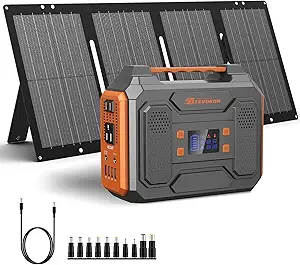 | Best for Compact, Emergency-Ready Power on the Go | Power Output: 300W | Solar Panel: 60W foldable | Battery Management System: Yes | VIEW ON AMAZON | See Our Full Breakdown |
| BLUETTI AC180 Portable Power Station 1152Wh 1800W LiFePO4 Solar Generator |  | Best for Rapid Charging and Emergency Backup | Battery Capacity: 1152Wh | Charge Time: 1 hour | Max Output: 1800W | VIEW ON AMAZON | See Our Full Breakdown |
| Anker SOLIX S2 Portable Power Station, 2010Wh, 1500W |  | Best Compact Power Station for Home Backup and Outdoor Use | Capacity: 2010Wh | Continuous Power: 1500W | Peak Power: 3000W | VIEW ON AMAZON | See Our Full Breakdown |
| solar backup power station | Capacity |
|---|---|
| Jackery HomePower 3600 Plus Po | 3584Wh |
| 1000W Portable Power Station 1 | 1024Wh |
| Portable Power Station 500W | — |
| Anker SOLIX C1000 Gen 2 Portab | 1024Wh |
| UDPOWER S1200 1190Wh Solar Gen | — |
| Jackery Explorer 300 Portable | 292Wh |
| ABOK Ark3600 Portable Power St | 3840Wh (expandable to 11520Wh) |
| Portable Solar Generator 300W | — |
| BLUETTI AC180 Portable Power S | — |
| Anker SOLIX S2 Portable Power | 2010Wh |
More Details on Our Top Picks
Jackery HomePower 3600 Plus Portable Power Station with 2x200W Solar Panels
The Jackery HomePower 3600 Plus stands out for its impressive 3584Wh capacity and 3600W maximum output, making it a top choice for those who need reliable backup power for home emergencies or even small events. Its multiple charging options, including solar, AC, and gas generator, provide flexible fueling strategies, unlike smaller units like the Portable Power Station 500W which is limited to smaller loads. The design, with wheels and a telescopic handle, enhances portability, but the high capacity comes with a tradeoff: it’s heavier and bulkier than compact options. The battery’s high-temp resistant ceramic membrane cells promise safety and longevity, with an expected lifespan of 10 years and 6,000 cycles. However, solar panels are shipped separately, which might complicate initial setup for some users. This model is perfect for large households or small businesses needing dependable, high-capacity backup power, but it may be overkill for casual campers or those with limited storage space.
Pros:- High-capacity 3584Wh battery with a 10-year lifespan
- Multiple charging options including solar, AC, and gas generator
- Portable design with wheels and telescopic handle
- Safe high-temp resistant battery cells
Cons:- Solar panels are shipped separately and may arrive in multiple packages
- Maximum output may be insufficient for very high power appliances
- No specific weight listed, which could impact portability expectations
Best for: Families or small business owners requiring a high-capacity, portable backup system for extended outages or events.
Not ideal for: Casual campers or users with limited storage who prioritize lightweight, compact units.
- Capacity:3584Wh
- Max Output:3600W
- Voltage:120V & 240V in parallel
- Cycle Life:6,000 cycles
- Lifespan:10 years
- Charging Time (AC+DC):2 hours
Our verdict“This power station makes the most sense for users who need reliable, large-scale backup power and are prepared for its size and weight.”
1000W Portable Power Station 1024Wh LiFePO4 for Outdoor & Home
The 1000W Portable Power Station with a 1024Wh LiFePO4 battery offers a compelling balance of capacity, durability, and affordability. Its support for over 3000 cycles extends its practical lifespan beyond many competing models like the Anker SOLIX C1000 Gen 2, which boasts faster recharging but fewer cycles. While its weight of approximately 27.7 lbs makes it less suitable for frequent carrying, this station excels in providing dependable backup for extended outages or outdoor adventures without breaking the bank. The solar compatibility supports off-grid use, but its 300W maximum input may slow down recharge times compared to higher-capacity solar-charging units. It’s a smart choice for budget-conscious users who want longevity and versatility, yet those seeking ultralight gear should consider lighter options despite their shorter battery life.
Pros:- Long-lasting with over 3000 cycles
- Supports multiple device charging with fast ports
- Solar compatible for off-grid applications
- Durable LiFePO4 battery technology
Cons:- Relatively heavy at 27.73 lbs
- Limited to 300W solar input, which can slow recharge times
- Not as lightweight or compact as smaller units
Best for: Outdoor enthusiasts or homeowners seeking a durable, long-lasting power source with good capacity at a reasonable price.
Not ideal for: Users needing ultralight gear for frequent carry or rapid recharge cycles, as it is relatively heavy and slow to solar-charge.
- Power Output:1000W
- Capacity:1024Wh
- Battery Type:LiFePO4
- Cycle Life:3000+ cycles
- Weight:27.73 lbs
- Solar Input:up to 300W
Our verdict“This model offers excellent value for those prioritizing battery longevity and reliable power over ultra-portability.”
Portable Power Station 500W, 519.48Wh Solar Generator Backup
The Portable Power Station 500W offers a modest but versatile 519.48Wh capacity, making it suitable for everyday devices and small appliances. Its multiple output options, including AC, USB, DC, and wireless charging, position it as a handy companion for outdoor trips or emergency power needs. Compared to larger units like the Jackery HomePower 3600 Plus, it’s lightweight at just over 14 pounds, but the limited runtime—about an hour at full load—means it’s best for short-term use. Its rechargeable options via solar, car, or wall outlet provide flexibility, but the need for a compatible solar panel (sold separately) can add to setup complexity. This pick makes sense for users who want a portable, easy-to-use backup for small devices, but not for powering larger appliances or extended outages.
Pros:- Lightweight at 14.1 pounds
- Multiple output options including wireless charging
- Rechargeable via solar, car, or wall outlet
- Suitable for small devices and short-term use
Cons:- Limited runtime of approximately 1 hour at full load
- Requires additional solar panel for solar charging
- Not suitable for high-wattage appliances
Best for: Campers, tailgaters, or homeowners who need a portable, lightweight backup for small electronics and short-term power needs.
Not ideal for: Users with high power demands or needing extended runtime, as it’s limited to devices under 500W and about 1 hour of runtime.
- Wattage:519.48Wh
- Power Source:AC, Battery, Solar
- Output Wattage:500W
- Total Outlets:10
- Item Weight:14.1 pounds
- Runtime:approximately 1 hour
Our verdict“This compact unit is perfect for quick, lightweight power needs during outdoor activities or short emergencies.”
Anker SOLIX C1000 Gen 2 Portable Power Station
The Anker SOLIX C1000 Gen 2 distinguishes itself with an ultra-fast 49-minute recharge via HyperFlash technology, making it ideal for users who need quick turnaround times. Its 1024Wh capacity and 2,000W continuous output support multiple devices and even small appliances. The unit’s compact size, being 14% smaller and 11% lighter than similar models, enhances portability for emergency kits or remote work. Supporting solar recharging in just 1.8 hours, it’s well-suited for off-grid use, but the 600W solar input limit may extend recharge times with larger panels. The higher price reflects its advanced features, and the need for an app for full management might be a hurdle for some. This power station works best for tech-savvy users wanting fast recharging combined with reliable backup power, especially during emergencies or remote work situations.
Pros:- Fast recharge in 49 minutes
- High capacity and 2000W continuous power
- Compact and lightweight design
- Supports solar recharging in 1.8 hours
Cons:- Higher price point
- Requires app for advanced features
- Limited to 600W solar input
Best for: Users who need rapid recharging, fast power turnaround, and reliable backup for critical devices.
Not ideal for: Budget-conscious buyers or those with limited technical experience who prefer plug-and-play solutions.
- Recharging Time:49 minutes
- Output Power:2000W (3000W peak)
- Capacity:1024Wh
- Number of Ports:10
- Battery Cycles:4000
- Solar Recharging Time:1.8 hours
Our verdict“This model is ideal for users who prioritize quick recharging and fast turnaround in emergency or remote scenarios.”
UDPOWER S1200 1190Wh Solar Generator Kit with 120W Panel
The UDPOWER S1200 stands out for its massive 1190Wh LiFePO4 battery, which promises over 15 years of lifespan—a significant advantage over many competing models like the Jackery Explorer 300, which offers less capacity and shorter cycle life. Its fast dual turbo charging system and weather-resistant 120W foldable panel make it a versatile choice for both emergency home backup and outdoor adventures. However, its weight of nearly 26 pounds and separate shipping of the solar panel introduce some logistical inconveniences, especially for those seeking quick setup or portability. Compared to lighter options, the UDPOWER’s bulk can be a drawback in mobile scenarios, but its high capacity and longevity make it ideal for users prioritizing reliability and long-term performance. This pick makes the most sense for those who need a dependable, high-capacity system that can handle extended outages or demanding outdoor use despite its higher price and weight.
Pros:- High-capacity 1190Wh LiFePO4 battery with 15+ years lifespan
- Fast charging with dual turbo system for quick power replenishment
- Multiple outlets support various devices simultaneously
- Weather-resistant IP65 solar panel for outdoor durability
Cons:- Separate shipping of solar panel may delay initial setup
- Relatively heavy at 25.8 pounds, limiting portability
Best for: Homeowners or outdoor enthusiasts requiring long-term, high-capacity backup power with durability
Not ideal for: Travelers or users needing ultra-lightweight gear for frequent carry or quick setup
- Wattage:1200 watts
- Fuel Type:solar
- Battery Capacity:1190Wh
- Battery Type:LiFePO4
- Output Wattage:1200 watts
- Item Weight:25.8 pounds
- Dimensions:13.7″L x 9.53″W x 9.72″H
Our verdict“Best suited for users who need a reliable, long-lasting power station for home backup or extended outdoor use despite its weight and higher cost.”
Jackery Explorer 300 Portable Power Station, 292Wh
The Jackery Explorer 300 offers a compact 292Wh capacity wrapped in a lightweight frame, weighing just 7.5 pounds, making it ideal for outdoor enthusiasts who value mobility over raw power. Its multiple outlets—including AC, USB-C, and car port—support a wide range of devices, but it falls short compared to the ABOK Ark3600 in capacity and expandability. While the LiFePO4 battery ensures over 4,000 cycles, its limited 292Wh capacity means it can’t power larger appliances or sustain prolonged outages. Its lack of included solar panel may be a downside for those seeking complete portability, and its modest capacity makes it better suited for charging small devices or emergency phones. This choice is perfect for users who prioritize weight and ease of carry during outdoor adventures or short-term power needs.
Pros:- Very lightweight at just 7.5 pounds for portability
- Multiple device charging options including USB-C and car port
- Long-lasting LiFePO4 battery with over 4,000 cycles
- Supports fast solar charging
Cons:- Limited capacity of 292Wh; unsuitable for larger appliances
- No included solar panel, requiring additional purchase
Best for: Campers, hikers, or outdoor users needing lightweight, portable power for small devices
Not ideal for: Users looking for high-capacity backup that can run larger appliances or handle extended outages
- Capacity:292Wh
- Weight:7.5 lbs
- Outlets:2 AC, 1 USB-C PD, 2 USB-A, 1 car port
- Peak Power:600W
- Cycle Life:Over 4,000
- Solar Charging Time:80% in 2.8 hours with 100W panel
Our verdict“Ideal for outdoor users needing a lightweight, reliable power source for small devices, but not suited for high-demand appliances or long-term backup.”
ABOK Ark3600 Portable Power Station with 400W Solar Panel and 2000W Solar Input
The ABOK Ark3600 stands out for its enormous 3840Wh capacity, expandable up to 11520Wh, making it suitable for demanding outdoor or emergency scenarios. Its lithium iron phosphate batteries promise over 4000 cycles and a lifespan of up to 10 years, outperforming many competitors like the BLUETTI AC180 in capacity and expandability. The unit supports multiple charging options, including solar, AC, and car, with multiple outlets and a rugged, wheeled design for mobility. However, its setup can be complex, given the array of input options, and its weight, even with wheels, can hinder quick portability. It’s a prime choice for users seeking a high-capacity, long-lasting backup system that can handle large appliances and extended outages, at a premium price point.
Pros:- Massive 3840Wh capacity, expandable to 11520Wh
- Supports multiple charging methods and high power devices
- Durable with wheels, extendable handle, Bluetooth app monitoring
- Long lifespan with LiFePO₄ batteries over 4000 cycles
Cons:- Setup complexity may be overwhelming for some users
- Heavy despite wheels, affecting portability for quick moves
Best for: Emergency responders, outdoor crews, or large households needing expandable, heavy-duty backup power
Not ideal for: Solo travelers or those with limited space seeking ultra-lightweight solutions
- Capacity:3840Wh (expandable to 11520Wh)
- Battery Type:LiFePO4
- Rated Output:3600W
- Peak Power:4500W
- Charging Methods:AC, PV, car
- Dimensions:not specified
- Design Features:Wheels, extendable handle, Bluetooth app
Our verdict“Best suited for high-demand, large-scale backup needs where capacity and expandability outweigh portability concerns.”
Portable Solar Generator 300W with 60W Solar Panel
The Portable Solar Generator 300W with a 60W foldable solar panel provides a simple, portable solution for quick power needs, especially during outdoor trips or emergencies. Its compact design and built-in flashlight make it easy to carry and use in various scenarios. While it’s limited to 300W and not suitable for high-demand appliances, it excels at powering small devices like phones, tablets, and small lights. Its performance can decline if not charged regularly, and the junction box’s lack of waterproofing demands careful handling. Compared to larger units like the BLUETTI AC180, this generator is less capable but much more portable, making it ideal for light, short-term use. It’s an excellent choice for users seeking a lightweight backup for small electronics rather than full-home or heavy-duty emergency power.
Pros:- Includes a foldable 60W solar panel for quick recharging
- Compact, lightweight design with flashlight and SOS mode
- Multiple charging options including AC, solar, and car
- Built-in safety features for reliable operation
Cons:- Limited to 300W output, unsuitable for larger devices
- Junction box not waterproof—requires dry handling
Best for: Outdoor enthusiasts or emergency prepper needing a lightweight, easy-to-carry solution for small devices
Not ideal for: Users requiring to power larger appliances or sustain long outages
- Power Output:300W
- Solar Panel:60W foldable
- Battery Management System:Yes
- AC Outlets:2 x 300W Max
- USB Ports:3 x 5V/3A, 1 quick charge
- Conversion Efficiency:20.5%
- Weight:not specified
Our verdict“Perfect for small device charging and emergency use in outdoor settings, but not for high-power or long-term needs.”
BLUETTI AC180 Portable Power Station 1152Wh 1800W LiFePO4 Solar Generator
The BLUETTI AC180 impresses with its rapid 1-hour full charge and 1152Wh capacity, making it a strong contender against the Jackery Explorer 300 in terms of speed and power output. Its 1800W rated output supports a variety of appliances, and it can be boosted to 2700W via app, providing flexibility during outages. This model is particularly appealing for users who want quick recharging and reliable emergency power, especially since it supports solar input up to 500W. However, its capacity is smaller compared to larger units like the ABOK Ark3600, limiting long-term use. The price point is not specified, but it’s likely higher than smaller portable models, so it suits those prioritizing rapid recharge times and emergency readiness over maximum capacity. Its combination of speed and power makes it suitable for short-term but heavy-duty backup scenarios.
Pros:- Fast 1-hour full charge for quick readiness
- Supports solar input up to 500W for renewable charging
- High power output with multiple outlets
- App control for monitoring and operation
Cons:- Limited capacity of 1152Wh for extended use
- Price unspecified, potentially higher for advanced features
Best for: Users needing quick recharge and reliable emergency power with support for multiple devices
Not ideal for: Heavy-duty, long-term backup or those requiring large energy reserves
- Battery Capacity:1152Wh
- Charge Time:1 hour
- Max Output:1800W
- Boosted Output:2700W
- Solar Input:500W
- Warranty:5 years
- Emergency Power:Yes
Our verdict“Well-suited for emergency situations requiring rapid charging and reliable power for essential devices, but not for long-term, high-capacity needs.”
Anker SOLIX S2 Portable Power Station, 2010Wh, 1500W
The Anker SOLIX S2 stands out for its impressive 2010Wh capacity packed into a surprisingly compact and lightweight design, making it ideal for both home backup and outdoor adventures. Compared to larger models like the Jackery Explorer 300, this unit offers significantly more power without the bulk, thanks to its efficient LFP (Lithium Iron Phosphate) battery rated for 10,000 cycles—a 15-year lifespan that ensures long-term reliability. Its support for multiple recharging methods, including solar and AC, enhances versatility. However, unlike some high-end options like the Anker SOLIX C1000, it lacks a 12V DC port, which could limit certain device connections. The limited rear outlets may also restrict simultaneous device use, and runtime depends heavily on appliance wattage. Overall, this pick is best suited for users who need reliable power in a portable form factor with a focus on longevity and multiple charging options, but it might fall short for those needing extensive outlet access or specific DC connections.
Pros:- Long-lasting 10,000-cycle LFP battery with a 15-year lifespan
- Compact, lightweight design for easy portability
- Supports multiple recharging options including solar and AC
Cons:- No 12V DC port available, limiting some device connections
- Limited outlets on the rear reduce simultaneous device use
- Runtime varies depending on appliance wattage and conditions
Best for: Individuals seeking a portable, long-lasting power station for outdoor activities or emergency home backup.
Not ideal for: Users who require multiple DC or specialized outlets, or need to run high-wattage appliances continuously for extended periods.
- Capacity:2010Wh
- Continuous Power:1500W
- Peak Power:3000W
- Battery Type:LFP (Lithium Iron Phosphate)
- Battery Cycles:10,000
- Dimensions:8.2 x 11.1 x 12.7 inches
- Weight:35.7 lbs
- Solar Input Support:up to 400W
Our verdict“This power station is ideal for those who prioritize portability, long-term durability, and versatile recharging, but it may not suit users needing extensive outlets or DC-specific connections.”

How We Picked
These products were selected based on a combination of performance, usability, build quality, and value. Priority was given to stations with sufficient capacity for emergency or off-grid use, reliable battery chemistry, and compatibility with solar panels. We also considered user-friendliness, portability, and features like multiple outputs and fast recharging. The ranking reflects how well each station balances these factors, with top picks excelling across multiple criteria while tradeoffs are noted for less versatile or more limited options.Factors to Consider When Choosing 11 Best Solar Backup Power Stations
Choosing the right solar backup power station involves evaluating several key factors. Beyond capacity, consider how portable it needs to be, how quickly it can recharge via solar, and whether its output options meet your power demands. It’s also important to look at build quality and battery chemistry for long-term reliability. Avoid common pitfalls like overestimating your power needs or ignoring solar input limitations, which can lead to disappointing performance during critical times.Capacity and Power Output
Capacity, measured in watt-hours (Wh), determines how long a station can run your devices. Higher capacity units can power larger appliances or multiple devices simultaneously, but they tend to be heavier and more expensive. Matching capacity to your actual needs prevents overpaying for excess power or ending up with insufficient runtime during emergencies. Consider your essential devices and their total wattage to select a station that provides enough power without unnecessary bulk.
Portability and Size
Portability is a key factor for outdoor use or travel. Smaller, lighter models are easier to carry and store, but often have lower capacity and fewer features. Larger units excel for home backup but may be cumbersome to move around. Decide if your priority is a compact design for outdoor adventures or a high-capacity station for long-term home backup. Balance weight, size, and convenience against your typical usage scenarios.
Solar Panel Compatibility and Input Wattage
Fast recharging depends on the station’s solar input wattage and compatibility with different panels. Higher input wattage means quicker replenishment of the battery, which is vital during extended outages or remote off-grid use. Not all stations support the same solar panel types or wattages, so check compatibility carefully. Investing in a station with adjustable input options can give more flexibility in choosing panels and optimizing recharge times.
Battery Chemistry and Durability
Battery chemistry, especially LiFePO4 versus lithium-ion, influences longevity, safety, and cycle life. LiFePO4 batteries tend to last longer and resist thermal issues, making them more suitable for frequent use or long-term storage. However, they often come at a higher initial cost. Be wary of cheap, lower-quality batteries that may degrade quickly, reducing your station’s reliability over time. A higher upfront investment can pay off in long-term durability and safety.
Additional Features and Outputs
Look for stations with a variety of output ports—AC outlets, USB-C, USB-A, and DC ports—to suit your device lineup. Features like fast charging, pass-through power, and multiple charging options add convenience. However, extra features can increase cost and complexity. Prioritize your essential needs and avoid paying extra for capabilities you won’t use regularly. Well-designed, user-friendly interfaces also make operation easier during stressful situations.
Frequently Asked Questions
How long does it take to recharge a solar backup station fully?
Recharge time depends on the station’s solar input wattage and the strength of your solar panels. Higher input wattage allows for faster recharging, often within 4-8 hours under ideal sunlight conditions. However, real-world factors like weather, panel angle, and shading can slow down the process. For extended off-grid use, selecting a station with high solar input capacity can significantly reduce downtime and ensure your power source is ready when needed.
Can I run all my appliances with these backup stations?
Not all appliances are compatible with solar backup stations, especially those with high wattage or starting surges like refrigerators or air conditioners. Check the continuous and surge wattage ratings of the station against your device’s requirements. Smaller stations are better suited for smaller devices like phones and lights, while larger units can handle more demanding appliances. Planning your essential device list helps prevent overloads and ensures reliable backup power.
Are lithium-ion batteries safe for long-term storage?
Yes, lithium-ion batteries are generally safe when used and stored properly, but they require attention to temperature and charging practices. LiFePO4 variants are especially stable and resistant to thermal runaway, making them ideal for long-term storage. Avoid exposing batteries to extreme heat or cold, and ensure they’re stored in a dry, cool place. Regularly checking and maintaining the battery can extend its lifespan and safety during extended storage periods.
Should I choose a larger capacity station for future-proofing?
Opting for a higher capacity station can provide more flexibility and longer runtime, but it often comes with increased cost, size, and weight. Consider your current needs and potential future demands carefully—overinvesting may lead to unnecessary expense and inconvenience. Conversely, choosing a slightly larger capacity than your immediate needs can be beneficial if you anticipate expanding your device lineup or experiencing longer outages, but avoid paying for excess capacity you won’t use regularly.
Is it worth investing in a station with fast charging capabilities?
Fast charging features can be very useful when you need to quickly replenish your station during limited sunlight hours or urgent situations. However, these features often add to the cost and complexity. If you rely heavily on your backup station and need rapid recharge times, investing in fast charging is worthwhile. For occasional or backup use, standard charging options may suffice and save you money while still providing reliable performance.
Conclusion
For most users, the Jackery HomePower 3600 Plus offers the best overall balance of capacity, portability, and solar compatibility. If budget is a concern, the Portable Power Station 500W provides reliable performance at a lower price point. Newcomers or casual users may prefer the compact Jackery Explorer 300 for ease of use, while those seeking maximum capacity should consider the Anker SOLIX S2 for long-term, high-demand backup. Understanding your specific needs—whether for outdoor adventures, home emergency backup, or long-term off-grid living—will help you select the right station for 2026.Fall Picks
fall essentials
As an affiliate, we earn on qualifying purchases.