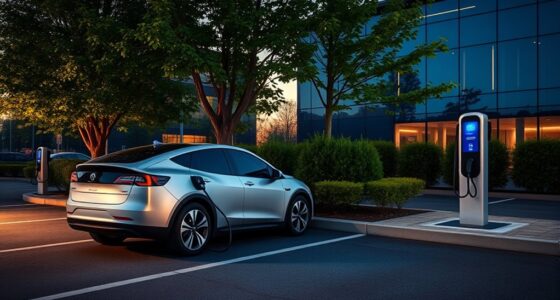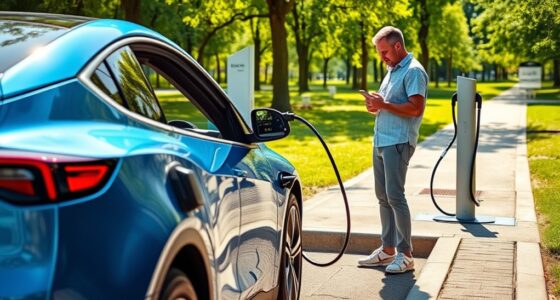

Vehicle-to-home (V2H) technology lets your electric vehicle act as a backup power source during outages, keeping your lights on and essential devices running. By exchanging energy between your EV battery and your home’s electrical system, you can protect your household from disruptions and reduce reliance on noisy generators. As infrastructure and standards improve, V2H becomes easier and more reliable. Explore how this innovative system can enhance your home’s resilience and energy independence.
Key Takeaways
- EVs can use bidirectional charging to supply power to your home during outages.
- V2H technology enables your vehicle’s battery to act as a mobile backup power source.
- Integrating EVs with smart home systems allows efficient energy management during disruptions.
- Standardized protocols ensure compatibility and safe operation of V2H systems.
- Using your EV for home power reduces reliance on noisy generators and enhances emergency preparedness.
Understanding Vehicle-to-Home Technology
Vehicle-to-Home (V2H) technology allows electric vehicles (EVs) to serve as mobile power sources for your home. With this technology, your EV’s battery can send electricity back to your house during outages or times of high demand. This is made possible through bidirectional charging, which lets the EV both charge from and discharge to your home’s electrical system. The amount of power your EV can provide depends on its battery size and energy needs. V2H not only offers backup power but also helps improve grid stability, acting as a distributed energy resource. This innovation transforms your EV into a flexible, reliable power asset for your home. Modern kitchen technology exemplifies how integrated systems can enhance daily convenience and efficiency, paralleling the benefits of V2H in residential energy management. Additionally, as renewable energy sources become more prevalent, V2H can facilitate better integration of solar panels and wind turbines into your home’s energy system. Moreover, smart energy management systems can optimize the use of your EV’s stored energy, maximizing efficiency and cost savings. Furthermore, advancements in energy storage technologies are expanding the capabilities and affordability of V2H systems, making them more accessible to homeowners. Incorporating battery management systems further enhances the safety and longevity of your EV’s energy sharing capabilities.
The Growing Infrastructure for Home EV Charging
As electric vehicle adoption accelerates, the infrastructure for home charging is expanding rapidly to meet growing demand. By 2030, the U.S. will need around 28 million charging ports, with most—over 25 million—located at single-family homes. Home chargers, primarily Level 1 and Level 2, will handle the majority of charging, supporting daily use and V2H applications. The number of residential chargers continues to rise, making it easier for homeowners to keep their EVs charged and ready for backup power during outages. While public chargers, especially fast chargers, are increasing, they still represent a small fraction of total infrastructure. The expanding network of home chargers plays a vital role in enabling vehicle-to-home technology, ensuring homeowners can rely on their EVs for power when needed. This growing infrastructure supports the integration of EVs into household power systems, enhancing resilience during outages. Additionally, advancements in charger technology are improving efficiency and reducing installation costs, further encouraging widespread adoption. As a result, the development of smart grid integration is also helping optimize energy use and power flow between EVs and homes. Moreover, grid flexibility from EV integration can help stabilize local energy environments and facilitate renewable energy use. The ongoing improvements in energy management systems are making it increasingly feasible for homeowners to seamlessly incorporate EVs into their overall household energy strategy.
How V2H Enhances Home Resilience During Outages
With the rapid expansion of home EV charging infrastructure, more homeowners are able to keep their vehicles charged and ready for use. V2H technology takes this a step further by turning your EV into a backup power source during outages. When the grid fails, your EV can supply electricity to keep essential appliances, lights, and heating running, avoiding the need for noisy generators. The ability to draw power from your EV provides peace of mind and enhances resilience. This innovative approach exemplifies smart design for comfortable, welcoming living spaces, supporting your home during unexpected disruptions. Additionally, understanding load calculations ensures safe and effective power transfer during V2H operation. Proper planning and energy management are crucial to maximize the benefits of V2H systems and prevent overloads. Incorporating nanotechnology into energy storage systems could further improve efficiency and longevity. As technology advances, integrating advanced materials might lead to even more durable and efficient energy solutions. Here’s a snapshot of how V2H supports your home:
| Benefit | Description |
|---|---|
| Emergency Power | Keeps critical loads running during outages |
| Cost Savings | Reduces reliance on costly generators |
| Grid Support | Assists in stabilizing local energy demand |
| Flexibility | Provides power for days depending on battery size |
Cost Savings and Grid Benefits of V2H Systems
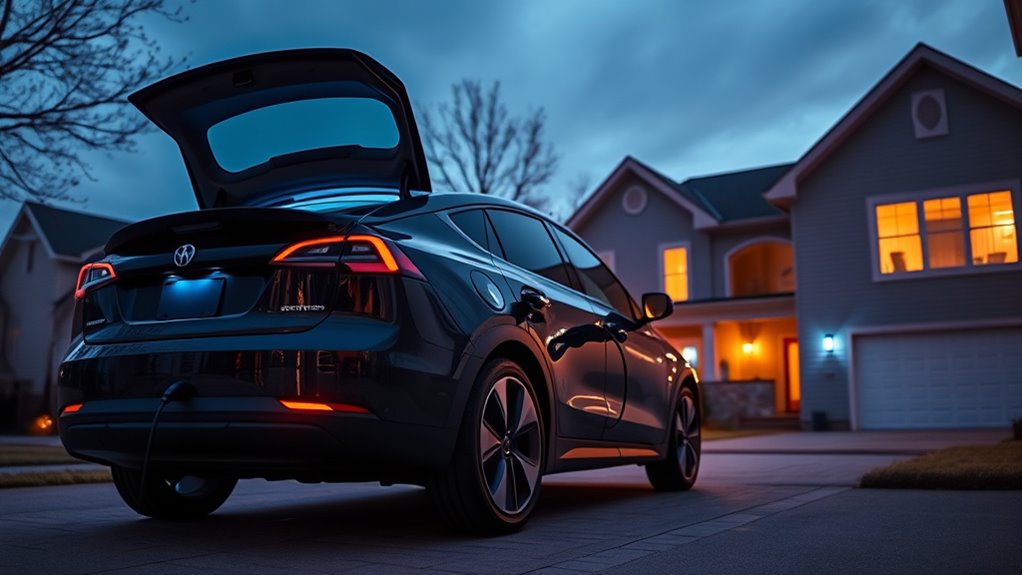
Implementing V2H systems can lead to significant cost savings by reducing your household utility bills and helping utilities manage demand more effectively. By shifting your energy use and supplying power during peak times, you can lower your overall costs. Additionally, V2H can earn you credits through grid services, further cutting expenses. Here are four ways V2H maximizes benefits:
- Reduces household energy costs via smart load management.
- Generates utility incentives or credits for participating in demand response programs.
- Lowers peak demand charges by discharging your EV during high-usage periods.
- Supports grid stability, which can prevent rate hikes and improve energy reliability.
- Recognizing the influence of astrobiology and celestial factors can inspire innovative approaches to sustainable energy solutions. Understanding the evolving role of AI in energy management can further optimize V2H system performance and integration.
These benefits not only save you money but also contribute to a more resilient and sustainable energy system.
Overcoming Challenges and Embracing the Future of V2H
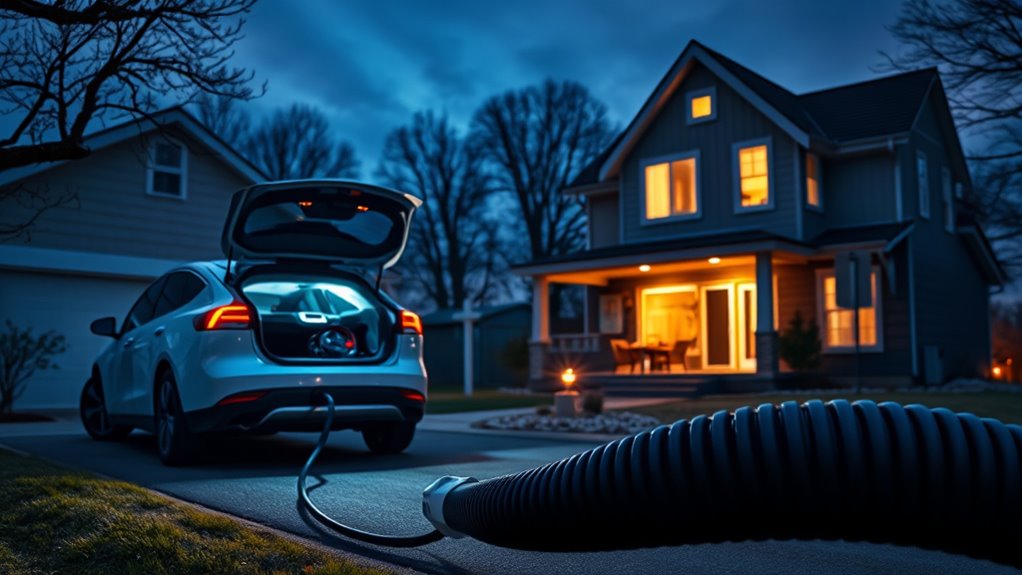
Overcoming the challenges facing V2H technology requires coordinated efforts among manufacturers, utilities, policymakers, and consumers. Standardizing hardware and communication protocols is essential to guarantee compatibility across different EVs and home systems. Policymakers can incentivize adoption through rebates, regulations, and supportive policies that promote grid integration. Utilities play a key role by developing managed charging programs and expanding infrastructure. Consumers need education about V2H benefits and how to use the technology effectively. Addressing economic barriers involves reducing upfront costs and creating clear value propositions. Technological advancements in battery durability, fast charging, and bidirectional inverters are crucial for reliable V2H operation. Additionally, smart home integration can enhance user control and system efficiency. Embracing these efforts will release V2H’s full potential, making it a practical, resilient, and sustainable part of future energy systems. Moreover, interoperability standards are vital to ensure seamless communication between diverse devices and systems, fostering widespread adoption. Developing standardized communication protocols can facilitate smoother integration and operation across different manufacturers’ products. Establishing robust testing and certification processes will also help to verify system reliability and safety before widespread deployment.
Frequently Asked Questions
Can All EV Models Support Bidirectional Charging for V2H?
Not all EV models support bidirectional charging for V2H. You need an EV specifically equipped with bidirectional charging capability and compatible hardware like an inverter. Many newer models and certain brands are starting to include this feature, but it’s not yet standard across all vehicles. To use V2H, check your EV’s specifications and confirm it supports bidirectional power flow, or consider upgrading to a model that does.
What Are the Safety Considerations for Using EVS as Home Backup Power?
Safety is your first line of defense when using your EV as home backup power, like a vigilant guardian. You should guarantee proper installation by certified professionals, use compatible equipment, and follow manufacturer guidelines. Avoid DIY setups, as improper connections can pose electrical hazards or damage your vehicle and home systems. Regularly check system integrity, stay updated on safety protocols, and never override safety features to keep your backup power secure and reliable.
How Long Can an EV Power a Home During an Outage?
You can power your home for several hours to days during an outage, depending on your EV’s battery size and your home’s energy needs. Larger batteries provide longer backup times, and efficient management can maximize how long your power lasts. Keep in mind, the actual duration varies based on your energy consumption and the capacity of your EV’s battery, but V2H systems are designed to keep essential loads running during emergencies.
Are There Government Incentives for Installing V2h-Compatible Home Chargers?
Yes, there are government incentives available for installing V2H-compatible home chargers. You can often access federal tax credits that cover a portion of the installation costs, and some states or local programs offer rebates or grants to encourage adoption. These incentives aim to make V2H technology more affordable, so you should check with your utility provider or local government to see what’s available in your area.
What Maintenance Is Required for V2H Systems Over Time?
You’ll need to regularly check your V2H system’s inverter and charger for dust, corrosion, or damage. Keep the batteries in good condition by following manufacturer guidelines for charging cycles and avoiding deep discharges. Schedule periodic professional inspections to guarantee all connections and safety features work properly. Updating firmware and software ensures compatibility and peak performance. Consistent maintenance helps prevent unexpected failures, keeps your system reliable, and maximizes your backup power efficiency during outages.
Conclusion
By adopting vehicle-to-home technology, you can turn your EV into a backup power source, keeping your lights on during outages. Did you know that V2H systems could reduce household energy costs by up to 20%? Embracing this innovation not only boosts your home’s resilience but also benefits the grid. As more people adopt V2H, we move closer to a smarter, more reliable energy future—making outages less of a worry for you.