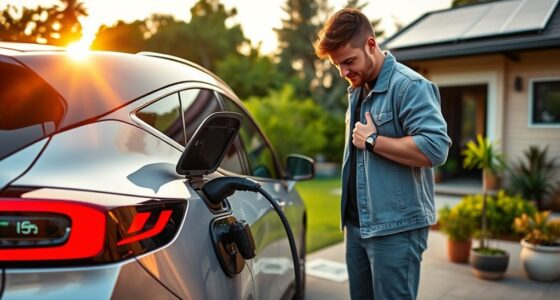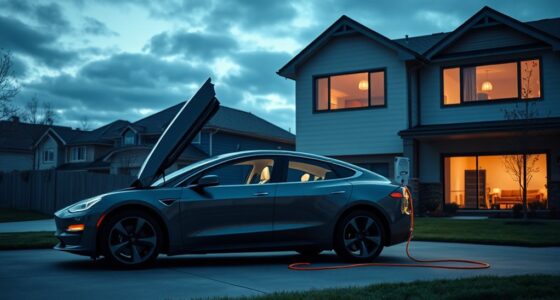
Living with an EV means adjusting your daily habits to stay charged and efficient. You’ll want to familiarize yourself with local charging stations and plan routes around available fast chargers, especially for longer trips. Managing your battery by avoiding deep discharges and charging during off-peak hours can prolong life and save money. Keep an eye on market trends and policy updates for helpful tips. For more practical tips, you’ll discover how to make EV ownership smoother every day.
Key Takeaways
- Plan daily routes around available charging stations and consider off-peak charging to save time and costs.
- Keep your battery between 20-80% to maximize longevity and avoid frequent fast charging.
- Use smart chargers and apps to schedule charging during low-demand periods for efficiency and cost savings.
- Regularly monitor and maintain your battery health through diagnostics and proper storage practices.
- Stay informed about charging infrastructure updates, regional expansion, and policy incentives to optimize EV ownership.
Understanding Your Charging Options and Infrastructure
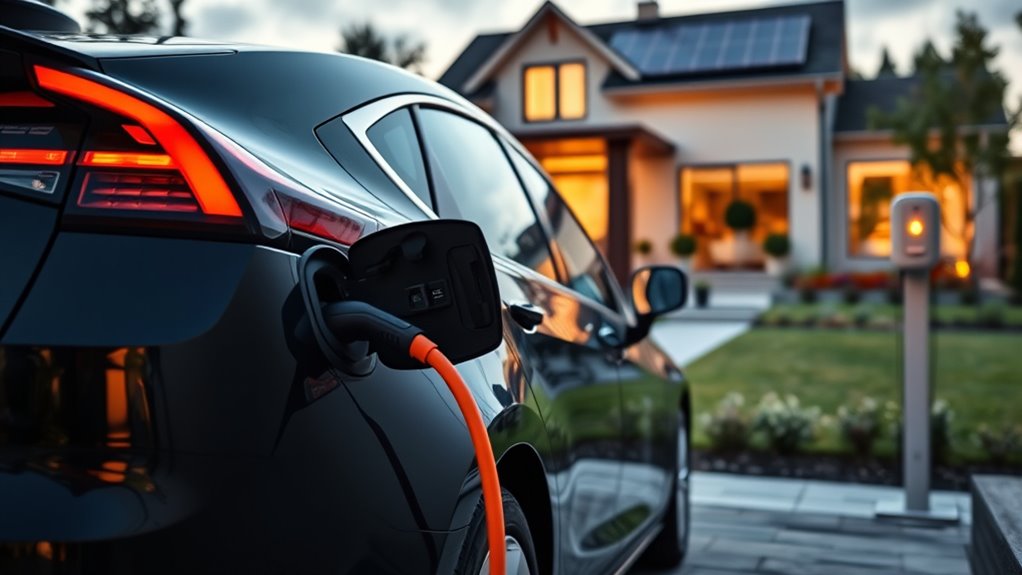
Understanding your charging options and infrastructure is essential for a smooth EV ownership experience. You need to know where and how to charge your vehicle efficiently. Public charging networks are still catching up, with roughly 30 EVs per public port as of early 2025, meaning charging stations can sometimes be busy. Fast chargers, like Tesla’s expanded Supercharger network, now serve over half of domestic ports, offering quicker charging on the go. Level 2 chargers are widely available at public locations and many workplaces or shopping centers, providing convenient options for daytime or overnight charging. Planning your charging spots around your daily routine helps avoid range anxiety and ensures you’re always ready to hit the road. Familiarizing yourself with local infrastructure is key to making charging seamless and stress-free.
Planning Your Routes Around Charging Stations
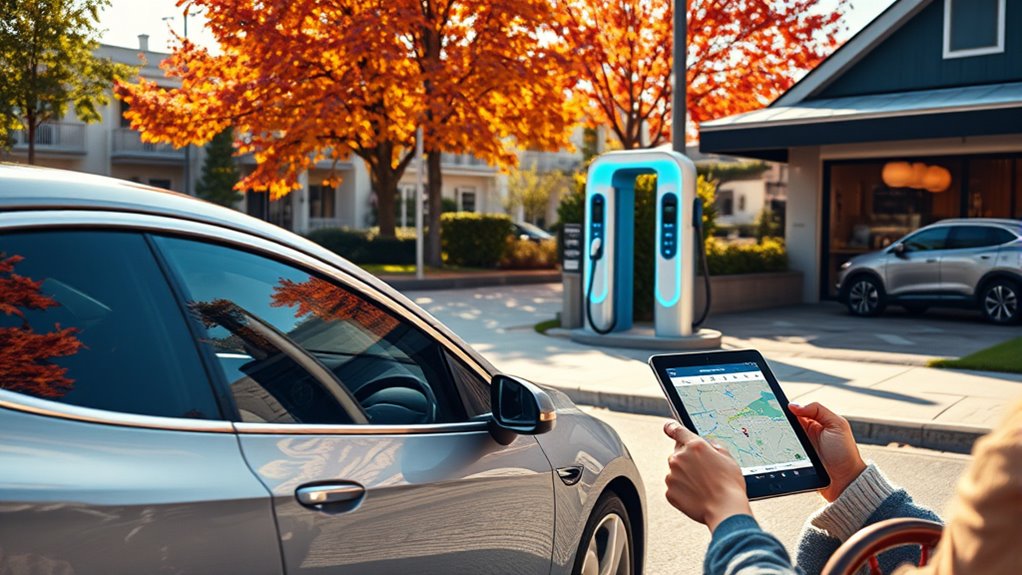
Planning your routes around charging stations makes certain you won’t be caught off guard by low battery levels. Before hitting the road, check your EV’s range and locate nearby chargers using apps or your vehicle’s navigation system. Since public charging networks still lag behind EV adoption, it’s smart to plan longer trips with available fast chargers along the way. Be aware that the number of charging stations varies by region, so researching your route helps avoid surprises. If you’re traveling through less-developed areas, consider taking longer routes to reach reliable charging points. Keep track of charging station status and hours of operation, especially at less busy locations. Additionally, understanding modern charging infrastructure can help you better anticipate charging needs during your journey. Being familiar with local charging station availability can also improve your planning and reduce stress. Familiarity with charging network coverage is essential to ensure seamless travel across different regions. Proper planning ensures your journey remains smooth and stress-free, letting you enjoy your EV without range anxiety. Moreover, staying informed about charging station reliability can prevent unexpected inconveniences during your trip and real-time updates can further enhance your experience.
Managing Your EV’s Range and Battery Life
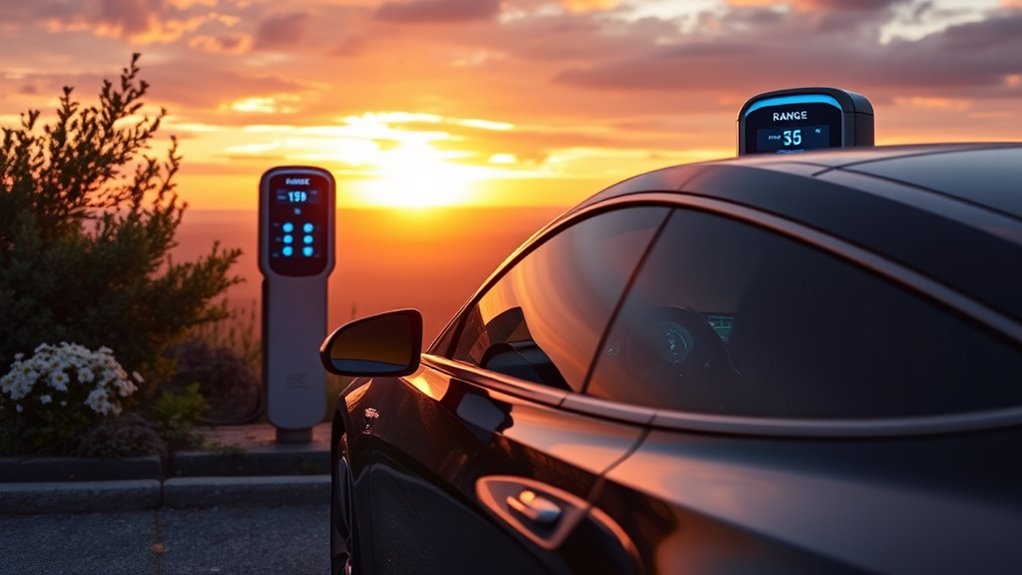
To get the most out of your EV, focus on maximizing charging efficiency and preserving battery health. Proper charging habits, like avoiding frequent fast charging and keeping the battery between 20% and 80%, make a big difference. These practices help extend your battery’s lifespan and keep your range reliable over time. Additionally, choosing energy-efficient European cloud solutions can support sustainable practices in your daily life. Regularly monitoring your battery’s condition and performing necessary maintenance can further optimize your vehicle’s performance and longevity. Staying informed about battery technology advancements can also help you implement new strategies for better battery management. Implementing Free Floating landscape designs that integrate with your outdoor space can also contribute to better energy efficiency by providing natural shading and cooling. Incorporating smart charging systems that adapt to your energy usage patterns can enhance charging convenience and efficiency.
Maximize Charging Efficiency
Maximizing your EV’s charging efficiency starts with smart charging habits that protect your battery and extend its lifespan. To do this, avoid frequent full charges or letting the battery sit at 0% for long periods. Instead, aim to keep your battery between 20% and 80%. Use Level 2 chargers when possible for faster, more efficient charging. Take advantage of fast chargers during long trips but don’t rely on them daily, as they can accelerate wear. Plan your charging sessions around your schedule to minimize unnecessary top-ups. Here are some tips to boost efficiency:
- Charge during off-peak hours to save energy
- Avoid frequent rapid charging
- Keep battery levels within 20-80%
- Use scheduled charging features when available
- Be aware of dark psychology tactics that some manipulators may use to influence your decisions and habits regarding your vehicle usage or charging routines. Understanding battery management principles can help you make more informed choices that benefit your vehicle in the long run.
Preserve Battery Health
Maintaining your EV’s battery health is essential for preserving its range and extending its lifespan. To do this, avoid letting the battery consistently drain to zero or stay fully charged at 100% for long periods. Instead, keep the charge between 20% and 80% when possible. Use moderate charging speeds—fast chargers are convenient but can generate heat that accelerates battery wear. When charging overnight, set a limit to prevent overcharging. Store your vehicle in a cool, shaded area to prevent heat buildup, which can degrade battery cells. Regularly update your vehicle’s software, as manufacturers often release optimizations that improve battery management. Understanding battery chemistry can also help you make informed decisions about charging and maintenance. Additionally, consider smart charging options that optimize charging times based on energy costs and grid demands. Being aware of thermal management systems in your EV can further help you maintain optimal battery temperature and health. Some EVs also feature battery monitoring tools that allow you to track the health and performance of your battery over time. By taking these steps, you’ll maximize your EV’s range and ensure your battery remains healthy over many years.
Mastering Fast Charging for Quick Top-Ups

Fast charging has become essential for convenient EV ownership, allowing you to top up your battery quickly and minimize downtime during trips. To master fast charging, you need to understand a few key tips.
Fast charging is key for quick, convenient EV trips—plan ahead and use DC chargers wisely.
- Use DC fast chargers when possible for rapid recharges, especially during long trips.
- Check charger compatibility with your vehicle beforehand to avoid delays.
- Plan your charging stops along your route to ensure availability and avoid congestion.
- Limit frequent fast charging to preserve battery health, as repeated quick top-ups can accelerate wear.
- Incorporating sound therapy techniques can help adapt to auditory stimuli and improve overall driving experience.
- Be aware of home wiring requirements to safely support fast chargers at your residence, ensuring a reliable and safe charging environment. Additionally, understanding the battery management system can help optimize your charging habits and prolong battery lifespan.
- Regularly reviewing charger network updates can help you access the latest charging options and avoid potential issues.
- Staying informed about charger technology advancements can enable you to take advantage of faster and more efficient charging solutions.
Optimizing Charging During Off-Peak Hours

You can save money and reduce strain on the grid by scheduling your EV to charge during off-peak hours. Using smart charging devices makes it easy to set your preferred times automatically. With a little planning, you’ll keep your battery topped up efficiently and economically. Additionally, understanding your home’s outlet and circuit capacity can help you avoid overloads and ensure safe charging practices. Being aware of necessary cookies can also help you optimize your browsing experience while managing your preferences effectively. Recognizing the costs associated with pilot training can help aspiring pilots plan their budgets more effectively and avoid unexpected expenses.
Schedule Charging Times
Scheduling your EV charging during off-peak hours can markedly reduce energy costs and help ease strain on the electrical grid. To make the most of this, set your charging times to align with lower demand periods, typically late at night or early morning. Many utility companies offer time-of-use rates that incentivize charging during these times. You can:
- Use your vehicle’s timer feature to automatically start charging when rates are lowest
- Check your utility’s off-peak hours and plan your charging schedule accordingly
- Adjust your charging settings via your EV’s app or onboard controls
- Take advantage of smart chargers that automatically optimize charging times based on grid conditions
- Consult your local trusted utility providers for specific off-peak hours and rate plans to maximize savings
Use Smart Charging Devices
Using smart charging devices can substantially enhance your EV charging routine by automatically optimizing charging times to coincide with off-peak electricity periods. These devices connect to your vehicle and energy provider’s grid, scheduling charges when electricity rates are lowest. This saves you money and reduces strain on the grid during busy hours. Many smart chargers allow you to set preferences through apps, giving you control over when your car charges. Some even adapt to real-time grid conditions, delaying charging during high-demand periods. By using these devices, you guarantee your EV is ready when needed while minimizing energy costs and environmental impact. Smart charging devices make managing your EV’s power needs more efficient and convenient, turning routine charging into a smarter, more economical process.
Keeping Track of Your Vehicle’s Efficiency and Performance

Monitoring your EV’s efficiency and performance is essential to getting the most out of your investment. By staying informed, you can identify issues early and optimize your driving habits. Keep an eye on:
- Your vehicle’s range per charge to ensure it meets your daily needs
- Fast charging speeds to maximize quick top-ups
- Battery health through regular diagnostics and alerts
- Energy consumption patterns during different driving conditions
Using your EV’s built-in display or a connected app helps track these metrics easily. Regularly reviewing this data allows you to adjust your driving style, such as avoiding rapid acceleration or excessive idling, which can improve efficiency. Staying proactive ensures you get the best performance and longevity from your EV.
Navigating Used EV Markets and Inventory Levels
You’ll notice that used EV inventory has dropped markedly, making it tougher to find the right model at the right price. With prices becoming more competitive and demand rising, your options are shifting quickly. Staying informed about inventory trends and market dynamics helps you make smarter purchasing decisions.
Inventory Availability Trends
As used EV inventories become more competitive, their availability is shaping the secondary market’s dynamics. You’ll notice that used EVs are staying on the market for only about 40 days, the lowest since June 2022, signaling high demand. Meanwhile, new EV inventory days’ supply has risen to 111 days, making new models more available than ever. This shift influences your options and pricing, with used EV prices growing slightly by 1.1% in May 2025. Keep in mind:
- Used EV sales surged 32.1% YoY in May 2025
- Inventory levels for used EVs are at their lowest point in nearly three years
- The used market is now more competitive, with more models available
- New EV inventories are increasing, offering more choices for buyers
This trend suggests a tight market for used EVs, but opportunities are expanding with new stock.
Price Dynamics and Choices
With used EV inventories at their lowest levels since June 2022, the market has become highly competitive, driving up prices and offering fewer options for buyers. As demand outpaces supply, you’ll notice prices gradually increasing, making it more challenging to find affordable used models. However, with used EV sales surging 32.1% in May 2025, the secondary market remains active. To navigate this, consider broadening your search criteria or exploring less popular brands and models. Since tax credits expired in September 2025, prices have become more competitive, but availability remains tight. Keep an eye on inventory levels and act quickly when you spot a good deal. Patience and flexibility are key to securing a quality used EV at a fair price amid the current market dynamics.
Budgeting for the Transition Beyond Incentives
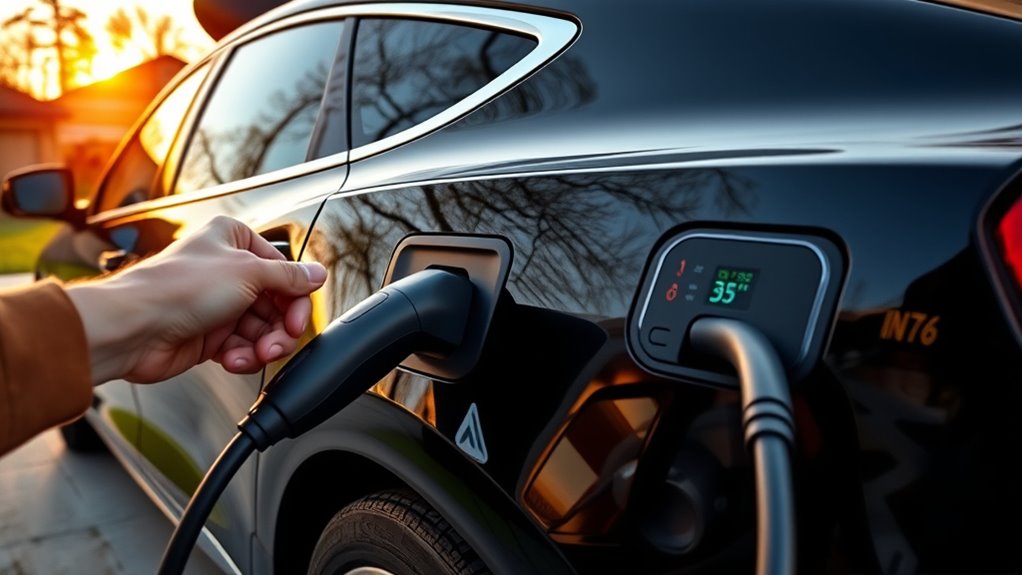
Planning your EV budget beyond incentives requires careful consideration of the rising costs associated with charging infrastructure, vehicle maintenance, and replacement batteries. As federal tax credits end, you’ll need to allocate funds for ongoing expenses. Keep in mind:
- Public charging fees, especially at fast chargers, which can add up quickly
- Regular maintenance costs, including tire rotations and brake system checks
- Battery replacements, which may be necessary after 8-10 years
- Upgrading or expanding home charging setups as your needs grow
While EVs generally cost less to maintain than traditional cars, these expenses can catch you off guard. Preparing financially guarantees you won’t be surprised by unexpected costs and helps you enjoy your EV without stress. Budget wisely to keep your transition smooth and sustainable.
Adjusting to New Maintenance and Care Routines
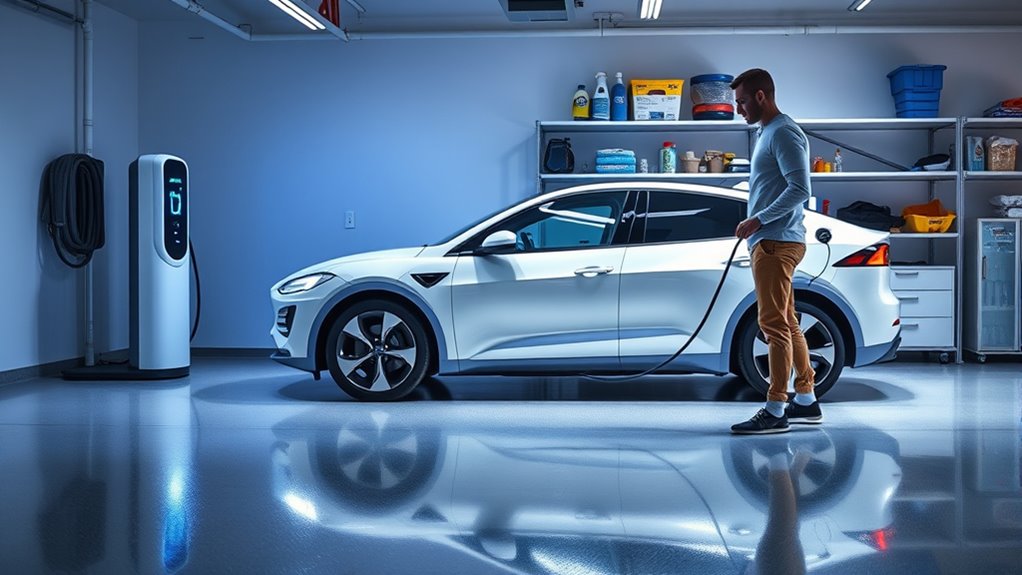
Adjusting to new maintenance routines is essential for keeping your EV running smoothly and efficiently. Unlike gas-powered cars, EVs require less frequent oil changes but need regular checks on battery health, tire pressure, and brake systems. You’ll also want to monitor software updates that improve performance or add features. To help you stay on top, here’s a quick overview:
| Maintenance Task | Frequency |
|---|---|
| Battery health check | Annually |
| Tire pressure inspection | Monthly |
| Brake system inspection | Every 12 months |
| Software updates | As released |
| Coolant levels | Every 2 years |
Staying proactive guarantees your EV remains reliable, safe, and optimized for everyday driving.
Staying Informed on Policy and Market Changes
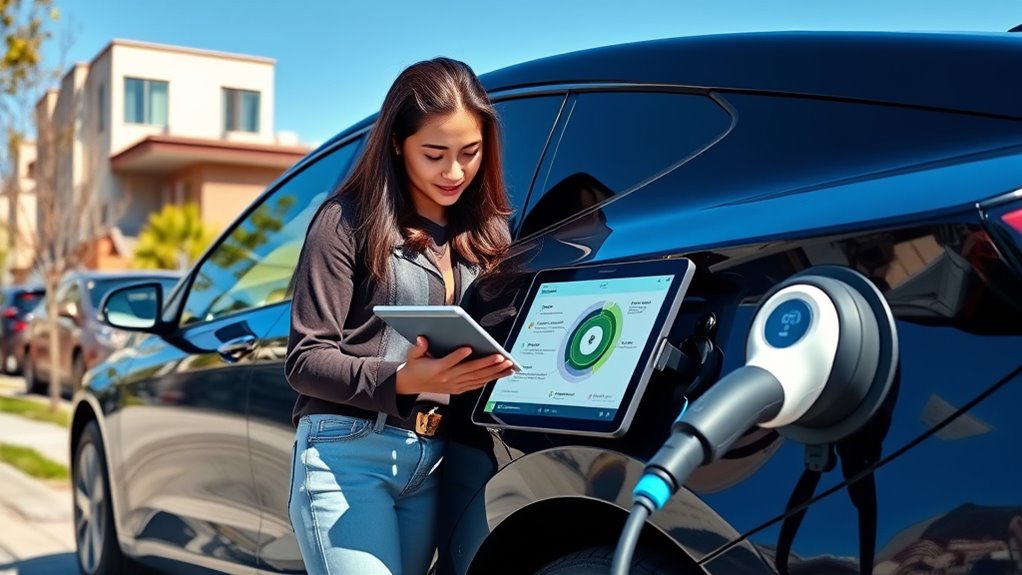
Staying informed on policy and market changes is essential for steering the evolving electric vehicle landscape. Keeping up-to-date helps you make smarter decisions about your EV ownership and future investments. Here’s what to watch:
- Charging Infrastructure: With over 1 million more public chargers needed by 2030, stay aware of new charging networks and expansion plans.
- Market Trends: Monitor shifts in EV model availability, inventory levels, and sales figures to understand market momentum.
- Policy Updates: Track changes in tax credits and incentives, especially after their expiration in September 2025, which impact costs and buying strategies.
- Electricity Consumption: Understand how rising EV adoption affects energy use and infrastructure planning in your region.
Frequently Asked Questions
How Does Increased EV Weight Affect Overall Driving Comfort?
You’ll likely notice that increased EV weight can make your ride feel firmer and less nimble, especially on bumpy roads. Heavier vehicles tend to have a smoother ride because of better stability, but they may also feel less responsive during quick turns or sudden stops. Overall, your comfort depends on how well the suspension system manages the added weight, but expect a slightly different driving experience compared to lighter cars.
What Are the Best Practices for Extending Battery Lifespan?
A stitch in time saves nine, so you should avoid frequent deep discharges and high-speed charging. Keep your battery charge between 20% and 80% whenever possible, and avoid exposing it to extreme temperatures. Use the vehicle’s scheduled charging features to prevent overcharging, and drive smoothly to reduce strain. Regularly updating your car’s software also helps optimize battery health, extending its lifespan and maintaining performance over time.
How Will Fluctuating Electricity Prices Impact Charging Costs?
Fluctuating electricity prices will affect your charging costs, making it more expensive when rates are high and cheaper during off-peak hours. To save, you should charge your EV overnight or when rates drop, using smart charging settings if available. Stay informed about local rate schedules and consider installing a home energy monitor. This way, you can optimize charging times, reducing costs despite price fluctuations.
Are There Specific Apps for Real-Time Charging Station Availability?
Imagine pulling into a busy charging station, and your phone buzzes with an alert. Yes, there are apps like PlugShare, ChargePoint, and Electrify America that show real-time charging station availability. They help you see which chargers are free, busy, or out of service, so you avoid the frustration of driving in circles. Download one of these apps before your next trip, and charge with confidence and ease.
How Do Regional Policies Influence Used EV Resale Values?
Regional policies substantially influence used EV resale values by shaping incentives, registration requirements, and charging infrastructure development. If your area offers strong incentives or mandates for EV adoption, demand for used models increases, boosting resale prices. Conversely, policies that limit incentives or delay infrastructure growth can reduce demand and resale values. Staying informed about local regulations helps you understand how your used EV’s value might fluctuate in your region.
Conclusion
Embracing your new EV means adapting to a world of charging, range calculations, and market shifts. Ironically, what once seemed like hurdles now become part of your eco-conscious routine. As you navigate this electric landscape, you’ll find that the very adjustments needed to go green subtly remind you that progress isn’t always as simple as plugging in. Ultimately, your journey is less about overcoming obstacles and more about redefining what driving truly means.