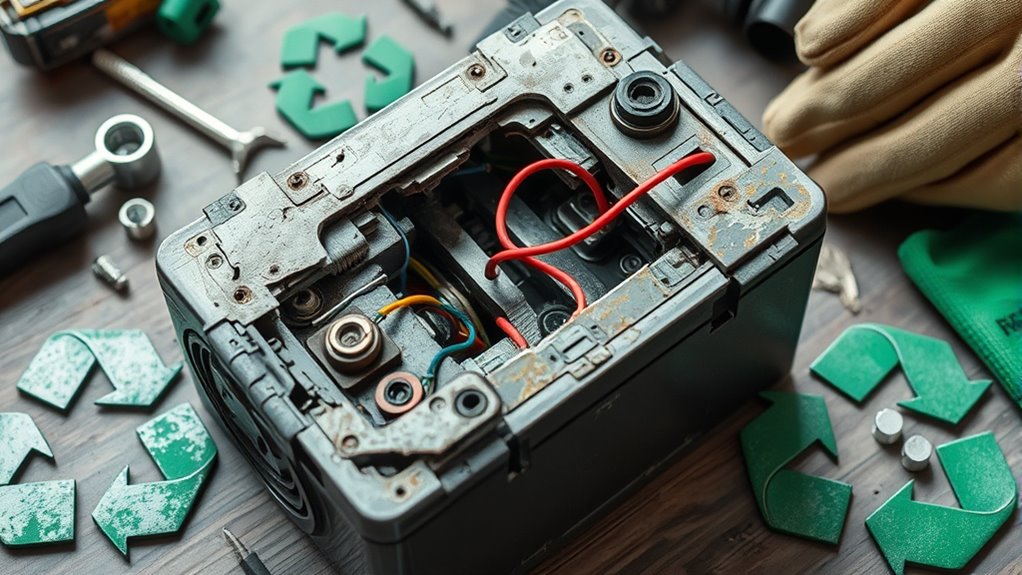

When your EV battery reaches the end of its life, it gets carefully recycled to recover valuable metals like lithium, cobalt, and nickel, reducing environmental impact and conserving resources. Alternatively, you might choose a replacement battery, such as remanufactured or refurbished options, which can be more affordable. Advances in recycling tech and sustainable practices continue to improve how used batteries are managed—discover how these innovations shape the future of EVs.
Key Takeaways
- When an EV battery reaches end-of-life, it is carefully dismantled for material recovery and recycling.
- Recycled materials like lithium, cobalt, and nickel are purified for reuse in new batteries.
- Options for replacement include new OEM batteries, remanufactured units, or third-party alternatives.
- Responsible recycling involves certified facilities that ensure environmental safety and proper disposal.
- Advanced management and second-life applications extend battery usability before recycling or replacement.
Understanding the Lifespan of EV Batteries
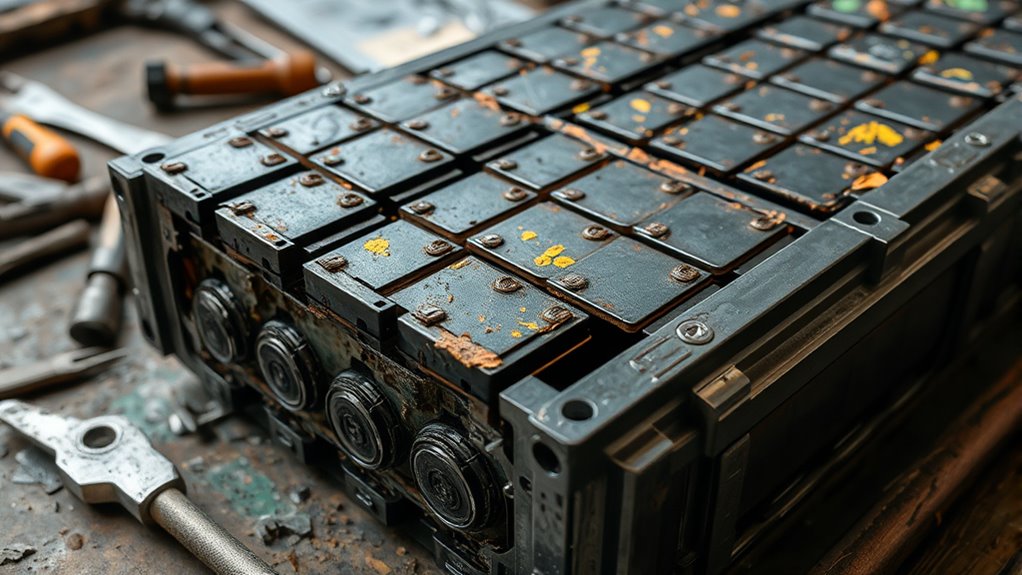
Understanding the lifespan of EV batteries is essential because it directly impacts the vehicle’s performance and long-term costs. Over time, battery degradation reduces capacity, leading to shorter driving ranges and decreased efficiency. Estimating this lifespan involves comprehending how factors like charging habits, temperature, and usage influence battery health. Manufacturers typically provide a lifespan estimation, often around 8 to 15 years or 100,000 to 200,000 miles, but actual longevity varies based on driving conditions. Recognizing the patterns of battery degradation helps you anticipate when replacement might be necessary. Additionally, battery maintenance practices can significantly extend the useful life of your EV battery. Proper charging practices and avoiding extreme temperatures can help preserve battery health longer. Understanding battery degradation mechanisms enables you to make informed decisions about your vehicle’s care. Knowing how battery chemistry affects longevity can help in selecting the right vehicle and maintaining it properly. Being aware of battery recycling options is also important for environmentally responsible disposal once the battery reaches the end of its usable life. By understanding these aspects, you can better plan for future costs and ensure your EV remains reliable for years to come. Accurate lifespan estimation is key to managing your vehicle’s performance over time.
Signs That an EV Battery Is Nearing the End of Its Life

As your EV battery ages, you may notice certain signs that indicate it’s nearing the end of its effective life. One key sign is a noticeable decline in battery performance, such as reduced driving range or longer charging times. You might also experience more frequent charging stops or find that your vehicle doesn’t hold a charge as well as before. Changes in your charging habits, like needing to plug in more often or experiencing slower charging speeds, can be clues that the battery is deteriorating. Additionally, if your vehicle’s regenerative braking becomes less effective, it’s another indicator that the battery’s health is declining. Paying attention to these signs helps you decide when it’s time to contemplate replacement or professional evaluation before complete failure.
How EV Batteries Are Recycled After Decommissioning

Ever wondered what happens to an electric vehicle battery once it’s no longer useful? When your battery reaches the end of its lifespan, it enters the recycling process. Recycling efficiency is key here, as it determines how much valuable material can be recovered. The process begins with carefully removing the battery and safely dismantling it to access the individual components. The goal is to extract metals like lithium, cobalt, and nickel, which can be reused in new batteries. Modern recycling methods aim to maximize material recovery while minimizing waste and environmental impact. This efficient process helps conserve natural resources and reduces the need for mining. Additionally, solar-powered solutions can be integrated into recycling facilities to improve energy efficiency and sustainability. Incorporating European cloud servers into recycling operations can also enhance data management and tracking, ensuring transparency and safety throughout the process. Implementing advanced sorting techniques further increases recovery rates and reduces contamination of recycled materials. Utilizing innovative recycling technologies enables facilities to recover a higher percentage of valuable metals, making the process more sustainable. Moreover, ongoing research into next-generation recycling methods promises to further improve recovery rates and reduce environmental footprint. By recycling EV batteries properly, you support sustainability and help extend the overall lifespan of battery materials.
The Recycling Process: From Used Batteries to Raw Materials
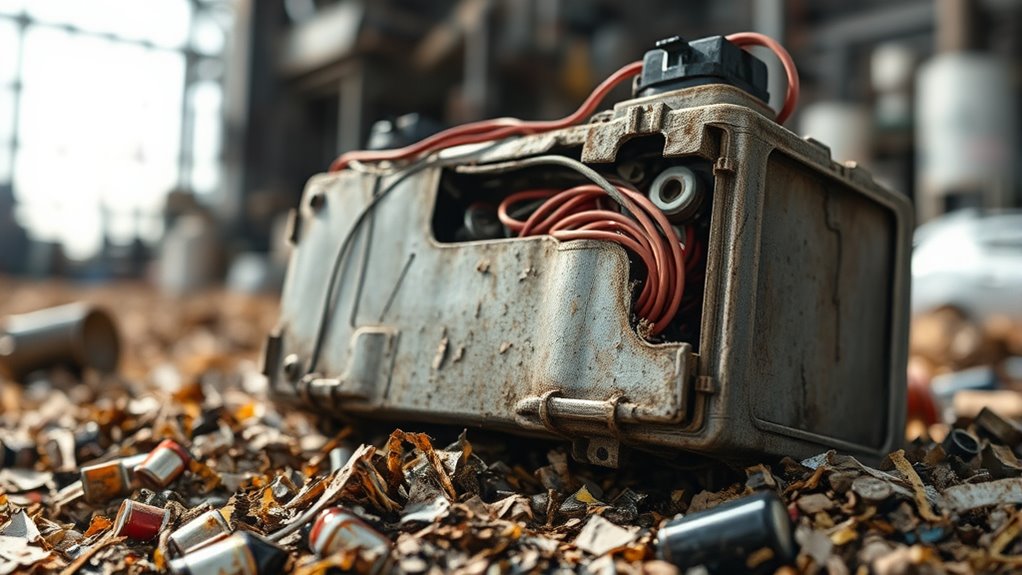
When recycling EV batteries, you start by carefully dismantling them to access the valuable components. Next, these parts undergo processes to extract raw materials like lithium, cobalt, and nickel. Understanding each step helps you see how used batteries are transformed back into essential resources. Additionally, advancements in recycling technology continue to improve efficiency and environmental sustainability in the process.
Battery Dismantling Steps
The dismantling process begins by carefully removing the battery casing and isolating the internal components. During battery dismantling, safety procedures are essential to protect yourself from hazardous materials and potential fires. First, you’ll wear protective gear like gloves and goggles, then disconnect the battery from the vehicle. Using specialized tools, you’ll carefully pry open the casing without damaging internal parts. Next, you’ll extract modules such as cells and electronics, ensuring minimal damage. Throughout this process, you must handle all components with care to prevent leaks or fires. Properly following safety procedures reduces risks associated with toxic chemicals and electrical hazards. Additionally, understanding the recycling process helps ensure the materials are recovered responsibly and efficiently. Proper handling of hazardous materials is crucial during dismantling to prevent environmental contamination. Once dismantled, the individual parts are ready for sorting, which leads into the next phase of recycling or material recovery.
Raw Material Extraction
After dismantling the battery and removing its internal components, the next step is to extract raw materials. This process involves separating valuable minerals like lithium, cobalt, nickel, and manganese from the battery’s internal structures. During mineral sourcing, specialized techniques such as crushing, grinding, and chemical treatments are used to recover these materials efficiently. These recovered raw materials are then purified and refined to meet industry standards, making them ready for reuse in new batteries. This recycling step considerably reduces the need for new mineral sourcing, conserving natural resources and decreasing environmental impact. Additionally, raw material extraction employs advanced techniques to maximize recovery rates and ensure the sustainability of the supply chain. For instance, innovative recycling technologies are continually being developed to improve efficiency and environmental safety. Moreover, implementing sustainable practices in extraction methods helps further minimize ecological footprints. As technology advances, the integration of circular economy principles is becoming increasingly important in closing the loop for EV battery materials. Furthermore, ongoing research aims to optimize recovery methods to achieve higher extraction efficiencies while reducing waste. Ultimately, raw material extraction transforms used batteries into essential inputs for manufacturing fresh EV batteries.
Environmental Benefits of Recycling EV Batteries

Recycling EV batteries offers significant environmental advantages by reducing the need for new raw materials and minimizing waste. By recycling, you help lower the environmental impact associated with mining and processing materials like lithium, cobalt, and nickel. Although recycling challenges exist, advances in technology are making it easier to recover valuable materials efficiently. Proper recycling prevents hazardous substances from leaking into ecosystems, protecting wildlife and water sources. It also reduces the energy consumption linked to producing new batteries, lowering greenhouse gas emissions. Additionally, local automation can streamline recycling processes, making them more accessible and efficient. Incorporating cybersecurity measures into recycling technology can protect sensitive data related to manufacturing and material tracking, ensuring secure operations. Overall, recycling EV batteries supports a sustainable approach, conserving natural resources and decreasing pollution. Recycling processes are continually improving to maximize material recovery and efficiency. Your participation in recycling efforts helps ensure that the lifecycle of batteries is more eco-friendly, making a tangible difference for the environment. Advances in battery chemistry are also contributing to more environmentally friendly disposal and recycling methods. Incorporating advanced recycling techniques can further enhance the recovery rates and environmental benefits.
Who Handles EV Battery Disposal and Recycling?
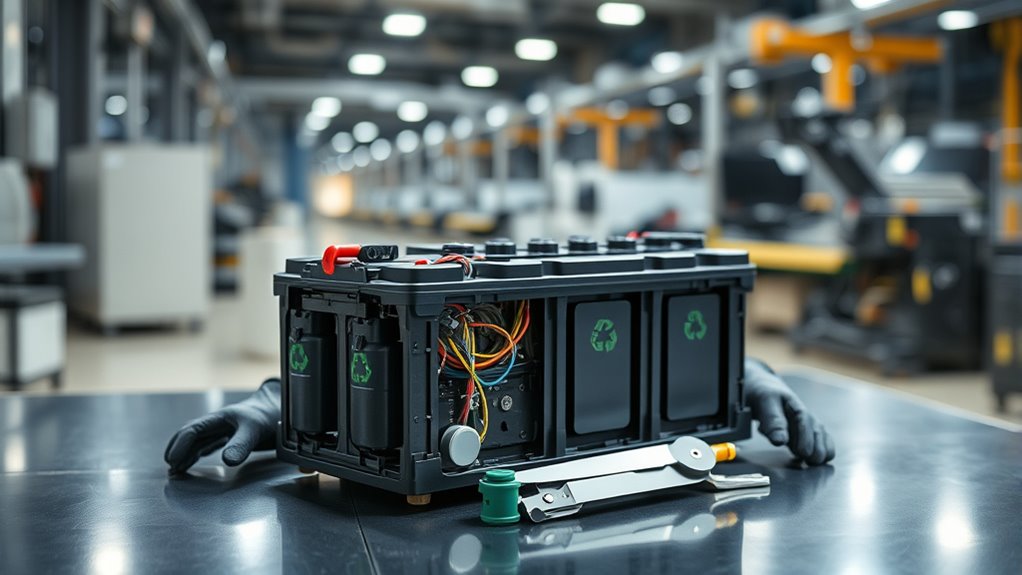
You might wonder who’s responsible for handling EV battery disposal and recycling. Industry recycling practices and responsible authorities guarantee these batteries are managed safely and sustainably. Understanding who manages this process helps you see how environmental standards are maintained throughout recycling.
Responsible Recycling Authorities
Responsible recycling of EV batteries involves specialized authorities that guarantee proper disposal and material recovery. These organizations ensure batteries meet strict standards through battery certification processes, which verify safety and environmental compliance. They also follow recycling legislation designed to protect ecosystems and public health. Certified recyclers are equipped with the expertise and facilities to handle hazardous materials safely, preventing harmful leakage or pollution. When a battery reaches the end of its life, these authorities coordinate collection, transportation, and processing, ensuring valuable materials like lithium, cobalt, and nickel are recovered efficiently. Their oversight helps maintain safety standards and promotes sustainable practices in the EV industry. By working within legal frameworks, these authorities play a vital role in responsible battery disposal and recycling.
Industry Recycling Practices
Various industry players are directly involved in handling EV battery disposal and recycling to guarantee environmental safety and resource recovery. Manufacturers, recycling companies, and specialists work together to process used batteries responsibly. They explore second life applications, repurposing batteries for stationary energy storage or less demanding uses, extending their lifespan and reducing waste. Additionally, some automakers incorporate battery leasing programs, allowing consumers to rent batteries instead of owning them outright. This approach simplifies recycling, as leasing companies track battery lifecycle and facilitate proper disposal or refurbishment. Industry standards and collaborations ensure safe collection, disassembly, and recycling practices. By focusing on second life applications and responsible handling, these industry practices help maximize resource recovery and minimize environmental impact.
Options for Replacing a Dead EV Battery

When an EV battery fails, replacing it becomes a key decision for maintaining vehicle performance. You have several options to contemplate, each with different implications for safety and legislation. You might choose to:
- Buy a new, original equipment manufacturer (OEM) battery, guaranteeing battery safety and reliability.
- Opt for a certified remanufactured or refurbished battery, which meets recycling legislation standards.
- Explore third-party replacement batteries, often more affordable but requiring careful safety checks.
- Consider leasing a battery, reducing upfront costs while ensuring proper recycling at end-of-life.
- Investigate warranty or recall options if your vehicle qualifies, offering potentially free replacement.
Always prioritize battery safety and adhere to recycling legislation to ensure responsible disposal and environmental protection.
Remanufactured and Refurbished Battery Alternatives
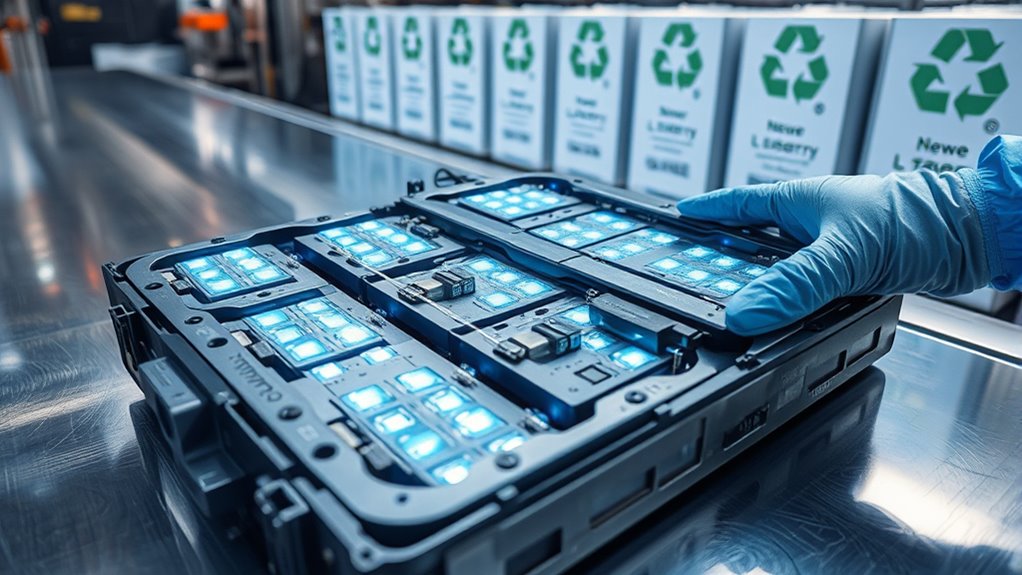
Remanufactured and refurbished batteries can be more affordable and easier to find than new ones, but their performance and lifespan vary. You’ll want to contemplate whether these options meet your driving needs and budget. Understanding the trade-offs helps you make an informed choice for your EV.
Cost and Availability
Remanufactured and refurbished EV batteries are increasingly becoming viable options for those seeking more affordable alternatives to new batteries. They often cost considerably less, making EV ownership more accessible, especially if you’re concerned about battery insurance costs or resale value. Availability varies depending on the manufacturer and region, but more companies are entering the market. You might find:
- Certified options with warranty coverage
- Shorter wait times compared to new batteries
- Lower upfront costs, easing budget constraints
- Wide range of suppliers, increasing options
- Potential impact on resale value, depending on battery history
While these alternatives can save you money, it’s essential to verify their quality and warranty coverage. Choosing a remanufactured or refurbished battery can help strike a balance between cost and reliability.
Performance and Longevity
Although remanufactured and refurbished EV batteries can offer cost savings, their performance and longevity may vary depending on their history and quality. The key factors influencing this are the battery chemistry and the number of charging cycles it has endured. Different chemistries, like lithium nickel manganese cobalt oxide (NMC) or lithium iron phosphate (LFP), impact how well the battery maintains capacity over time. Typically, these batteries are tested and reconditioned to ensure they can handle a certain number of charging cycles, but their capacity may decline faster than new ones. If you’re considering these alternatives, keep in mind that their longevity depends on proper maintenance and usage. While they can perform reliably, they might not last as long as brand-new batteries.
Innovations in Battery Recycling Technologies
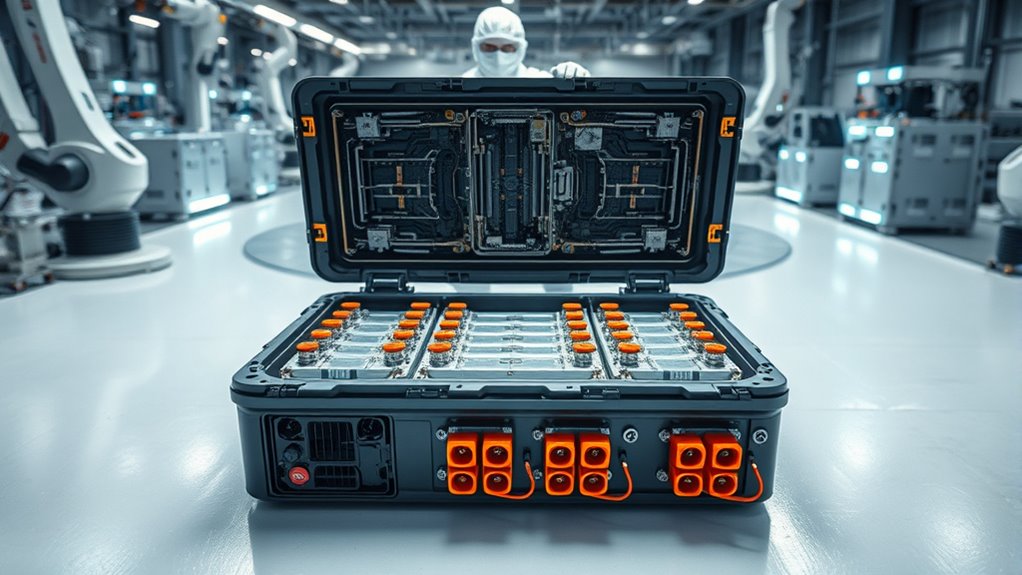
Innovations in battery recycling technologies are transforming how we recover valuable materials from used EV batteries. New methods focus on improving efficiency, reducing environmental impact, and handling diverse battery chemistries. Advanced processes like hydrometallurgy and direct recycling are gaining traction, enabling you to recover more materials with less waste. These innovations also strengthen recycling infrastructure, making it easier to process batteries at scale. As a result, the industry can better support a circular economy for EV batteries. You’ll see more automated systems, cleaner extraction techniques, and adaptable methods that cater to different battery chemistries. These developments ensure that the materials you recover are purer, more sustainable, and ready for reuse in new batteries, minimizing resource demand and environmental harm.
Future Trends in Sustainable EV Battery Management
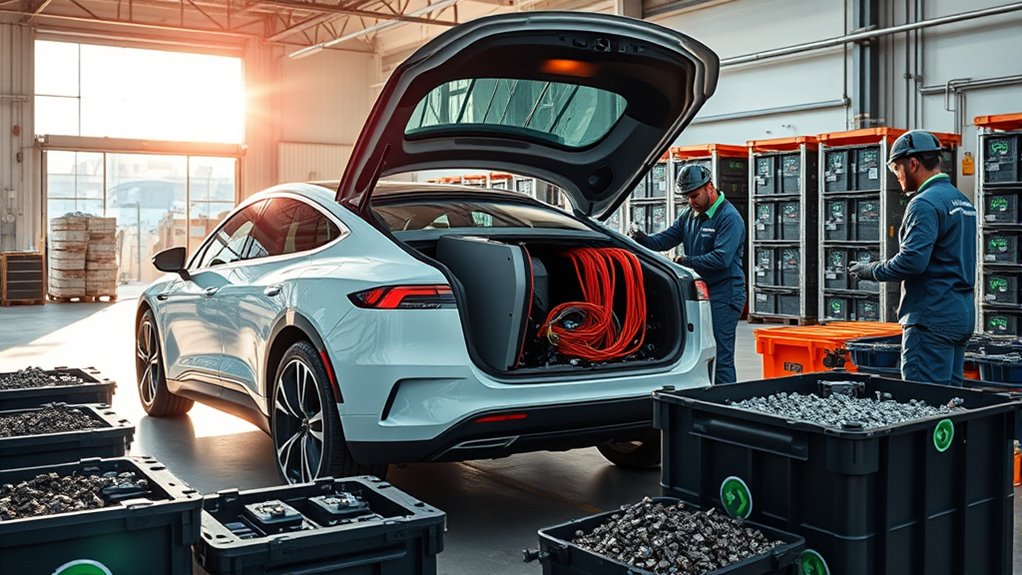
As the demand for electric vehicles continues to grow, sustainable management of EV batteries becomes increasingly essential for reducing environmental impact and conserving resources. Future trends focus on optimizing battery chemistry to enhance longevity and recyclability, reducing waste and resource extraction. Advances in smart charging protocols aim to extend battery life by preventing overcharging and managing thermal performance, which minimizes degradation. You’ll see more integrated systems that monitor battery health in real-time, allowing for early maintenance and better end-of-life decisions. Manufacturers are also exploring second-life applications, repurposing batteries for stationary energy storage. These innovations will help create a circular economy, where batteries are designed with sustainability in mind from the start, ensuring that EVs remain environmentally friendly throughout their lifecycle.
Frequently Asked Questions
How Long Does an EV Battery Typically Last Before It’s Unrecoverable?
Your EV battery typically lasts around 8 to 15 years, depending on usage and environmental factors. Battery lifespan relies heavily on degradation factors like frequent fast charging, high temperatures, and deep discharges, which can shorten its useful life. Proper maintenance and avoiding extreme conditions can extend the battery’s longevity. Once it reaches the end of its lifespan, the battery’s capacity drops markedly, making it unrecoverable for practical use.
Are There Safety Risks Associated With Recycling Old EV Batteries?
Yes, recycling old EV batteries involves safety risks, but strict safety protocols help mitigate hazards. You should handle batteries with care, using protective gear, and guarantee proper storage to prevent fires or chemical leaks. Hazard mitigation measures, like specialized equipment and trained personnel, are essential to safely manage potential toxic materials. When properly managed, recycling is safe and vital for environmental protection and resource recovery.
Can EV Batteries Be Repurposed for Other Uses Before Recycling?
Your EV battery can definitely have a second life before recycling. Think of it as giving a superhero a new mission—these batteries are perfect for second life applications. You can repurpose them using strategies like energy storage for solar systems or backup power. This not only extends their usefulness but also delays recycling, reducing waste. So, yes, repurposing is a smart and eco-friendly way to maximize your battery’s value.
What Are the Costs Involved in Replacing a Dead EV Battery?
Replacing a dead EV battery can cost between $5,000 and $15,000, depending on your vehicle model and battery size. You should compare costs across different brands and models for a better cost comparison. Check if your warranty covers battery replacement, which can substantially reduce expenses. Keep in mind that newer EVs often have longer warranties, potentially saving you money if your battery fails within that period.
How Do Regulations Influence EV Battery Recycling Practices Globally?
Regulations shape EV battery recycling practices globally more than you might imagine, setting the stage for a greener future. International standards and environmental policies enforce strict rules, ensuring batteries are recycled responsibly and safely. Countries with robust policies lead the charge, reducing pollution and conserving resources. Your awareness of these regulations helps you support sustainable practices, knowing that governments worldwide are actively shaping a cleaner, eco-friendly landscape through strict adherence to environmental standards.
Conclusion
When your EV battery finally reaches its end, the journey doesn’t have to stop there. Recycling transforms what’s left into new raw materials, fueling the future of sustainable driving. Imagine your old battery giving life to the next generation of electric vehicles, reducing waste and protecting our planet. As technology advances, the possibilities become even more exciting. The question is, are you ready to be part of this ongoing revolution in clean transportation?