TL;DR

Get backup power and energy gear delivered free with Prime
- Fast, free delivery on millions of items
- Prime Video, Amazon Music and more included
- Member-only deals all year
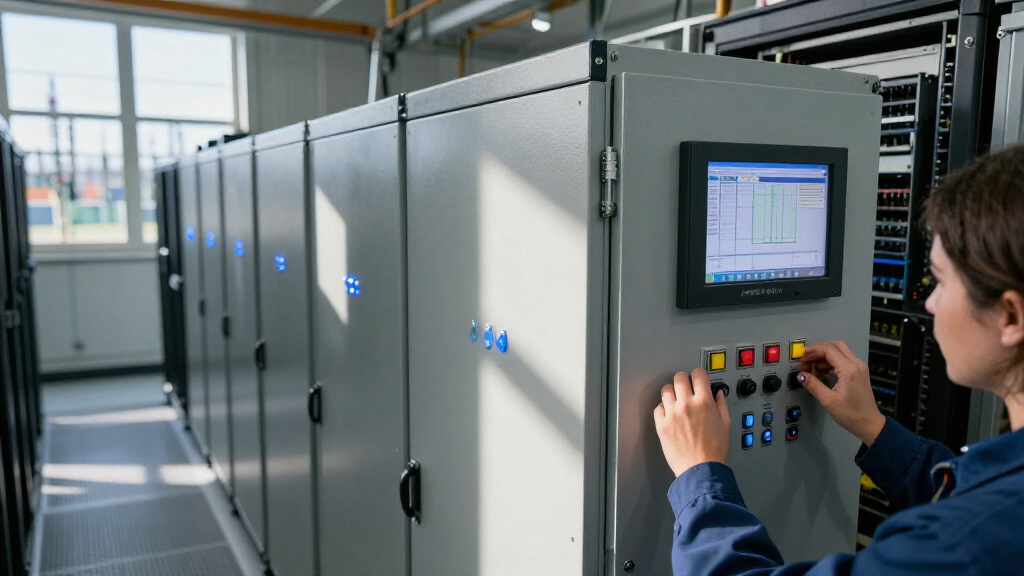
A report by researchers at Georgetown and Duke universities argues that batteries should be considered before new gas plants to meet data center electricity demand. The authors say storage can be cheaper for needs that require only several hours of power and can reduce the risk that utility customers pay for gas infrastructure if data center projects are canceled.
Researchers from Georgetown and Duke universities say batteries should be considered before new gas plants to meet data center electricity demand, arguing that storage can be cheaper for some needs and more adaptable if planned computing projects do not proceed. Their report also outlines state policies intended to encourage data centers and utilities to procure batteries and clean power.
The report addresses a fast-growing set of power proposals tied to data centers. According to the figures cited by Canary Media, U.S. utilities are planning more than 60 gigawatts of new gas plants to serve data center demand, while developers have proposed about 90 gigawatts of behind-the-meter gas generators nationwide. Those are planned or proposed amounts, not a measure of completed capacity.
The researchers do not argue that lithium-ion batteries can supply uninterrupted power indefinitely. Instead, they say storage can cover a substantial share of demand and can be a less costly option where hours of stored energy address near-term needs. Batteries can be added in modules and scaled up or back as demand changes; a gas plant is a larger, less flexible commitment.
The report recommends state action tailored to local electricity-market rules. In states that regulate utility investments, regulators could create “bring your own new clean energy” tariffs, requiring data centers to procure or pay for carbon-free generation and storage. In restructured markets, the report points to state storage targets and planning with regional grid operators. Canary Media reports that Google has signed onto similar tariffs in Nevada and Minnesota.
Reducing Gas Costs and Risk
The choice of power source can affect more than a data center’s electricity supply. If a utility builds gas infrastructure for a project that is later delayed, canceled or closed early, the investment may not be recovered through that customer’s bills. The report identifies this as stranded-asset risk: other utility customers could ultimately bear some of the cost of capacity built for demand that fails to materialize.
Battery projects can be developed in smaller increments, the researchers argue, giving planners more room to respond if forecasts change. Storage also avoids direct emissions from gas combustion while it discharges, though its overall climate impact depends on how it is charged and on the power system around it. The report’s case is not that batteries solve every reliability need, but that they can reduce reliance on long-lived gas commitments where shorter-duration storage is sufficient.
For readers, the policy debate could affect electricity bills, local emissions and how quickly new data center loads can be connected. The report frames state rules as a way to make developers account more directly for the new power and infrastructure their projects require.
Products Worth Considering

NOCO Boost GB150 3000A UltraSafe Jump Starter, 12V Lithium Battery Booster

DEWALT 20V MAX XR Hammer Drill and Impact Driver Combo Kit with Two 4Ah Batteries and Charger

NOCO Boost GB70 2000A 12V Lithium Jump Starter
As an affiliate, we earn on qualifying purchases.
A Growing Data Center Power Push
Gas has appealed to data center developers because it can provide power around the clock, either through large utility plants or generators located at a facility. Duke report co-author Ian Hitchcock told Canary Media that behind-the-meter plans face “inertia and status quo pressure” in favor of natural gas. The article reports that developers and utilities are pursuing gas even as battery deployment gains momentum.
The report also distinguishes batteries from options that may take longer to scale, including advanced geothermal, next-generation nuclear and newer long-duration storage technologies. Duke’s Jackson Ewing said batteries are already showing substantial deployment momentum. Canary Media cited a BloombergNEF forecast that U.S. energy storage deployment could exceed 11,000 gigawatt-hours by 2036, 30% above that firm’s forecast made six months earlier. That is a forecast, not a confirmed build-out, and the supplied material does not specify the assumptions behind the estimate.
State authority varies. Some states directly regulate utility investment, while others rely more heavily on independent power producers and wholesale markets. The report says this difference shapes which tools are available, but argues that states in either arrangement can take action.
Costs, Duration and Demand Forecasts
The supplied report summary does not provide a detailed, project-by-project comparison of battery and gas costs, nor does it establish how many hours of storage would be needed at individual data centers. Batteries’ ability to serve demand depends on system design, charging supply and the length and timing of power needs. The researchers’ argument is that storage can be cheaper where a limited number of hours is enough, not that it is always the least-cost option.
It is also unclear how much of the proposed gas capacity or forecast battery deployment will be built, and how actual data center demand will compare with current projections. The report raises the possibility that projects could fail to proceed or close early; it does not say that a particular project has done so. The precise effects of proposed state rules on power bills, emissions and construction timelines are not quantified in the source material.
State Rules and Project Decisions
The next steps depend on state regulators, lawmakers, utilities and data center companies. In regulated states, officials could consider tariffs requiring large new loads to secure clean generation and storage. In restructured markets, states may pursue storage mandates or coordinate planning with regional grid operators, approaches the report says are already being used in Illinois, Maryland and New Jersey.
Whether those measures change the balance between gas and batteries will depend on future project proposals, grid requirements, costs and state decisions. The report does not set a national deadline or guarantee that its recommendations will be adopted. The immediate question is whether power plans for new data centers will include more flexible storage and clean supply before utilities commit to additional gas capacity.
Key Questions
Does the report say batteries can power data centers around the clock?
No. Duke’s Jackson Ewing said lithium-ion batteries cannot provide round-the-clock power, but can meet large portions of data center electricity needs.
Why do the researchers favor batteries over gas in some cases?
They argue batteries can cost less when only several hours of stored energy are needed and can be scaled more flexibly if data center demand changes. The report does not claim batteries are the best option for every power need.
How much new gas capacity is planned or proposed for data centers?
The figures cited by Canary Media are more than 60 gigawatts of utility gas plants in planning and about 90 gigawatts of proposed behind-the-meter gas generators. These figures describe plans and proposals, not completed construction.
What can states do to encourage data center batteries?
States that regulate utility investments could use clean-energy tariffs requiring data centers to procure or pay for clean generation and storage. Other states could adopt storage targets or coordinate energy planning with regional grid operators.
What is stranded-asset risk?
It is the risk that a power plant or other infrastructure built for expected demand cannot recover its cost if that demand does not materialize. The report warns that utility customers could face costs if data center projects are canceled or close early.
Source: canarymedia.com