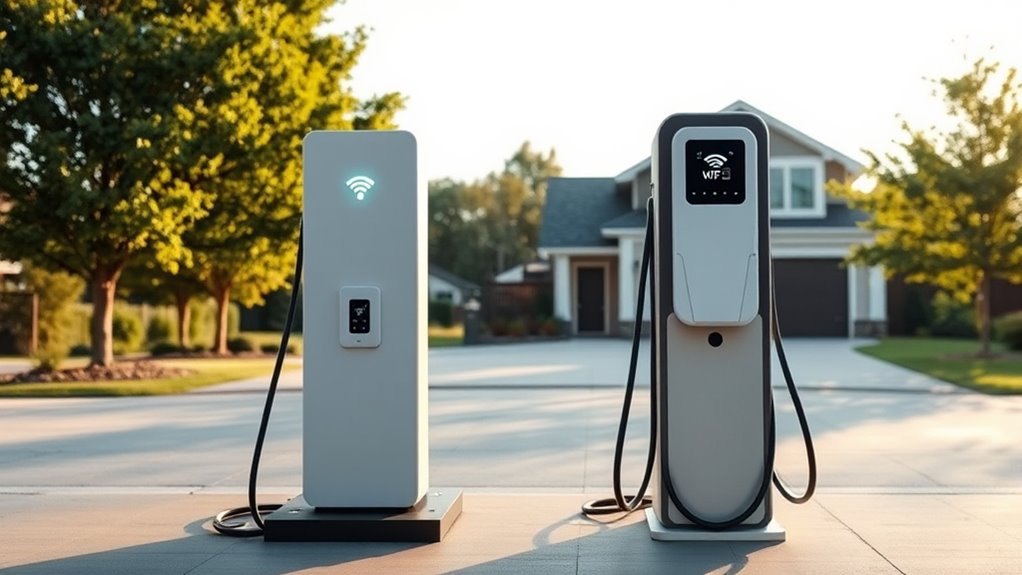

Whether you need Wi-Fi on your home EV charger depends on your lifestyle and priorities. Smart chargers offer remote monitoring, scheduling, and energy management, making your charging more convenient and efficient. Basic chargers are simpler, cheaper, and require no connectivity, but lack remote features. If you value control, long-term savings, and integration with smart home systems, a Wi-Fi-enabled charger could be worthwhile. To find out which option suits your needs best, keep exploring the details below.
Key Takeaways
- WiFi-enabled chargers offer remote monitoring and control, enhancing convenience and energy management.
- Basic chargers are simpler, cheaper, and suitable for users prioritizing straightforward, manual charging without connectivity features.
- WiFi connectivity improves long-term efficiency through features like scheduling, diagnostics, and integration with smart home systems.
- Security risks with WiFi chargers include potential hacking and data breaches, requiring proper security measures.
- Decide based on your need for advanced features, convenience, and long-term savings versus simplicity and lower upfront costs.
Key Features of Smart and Basic EV Chargers
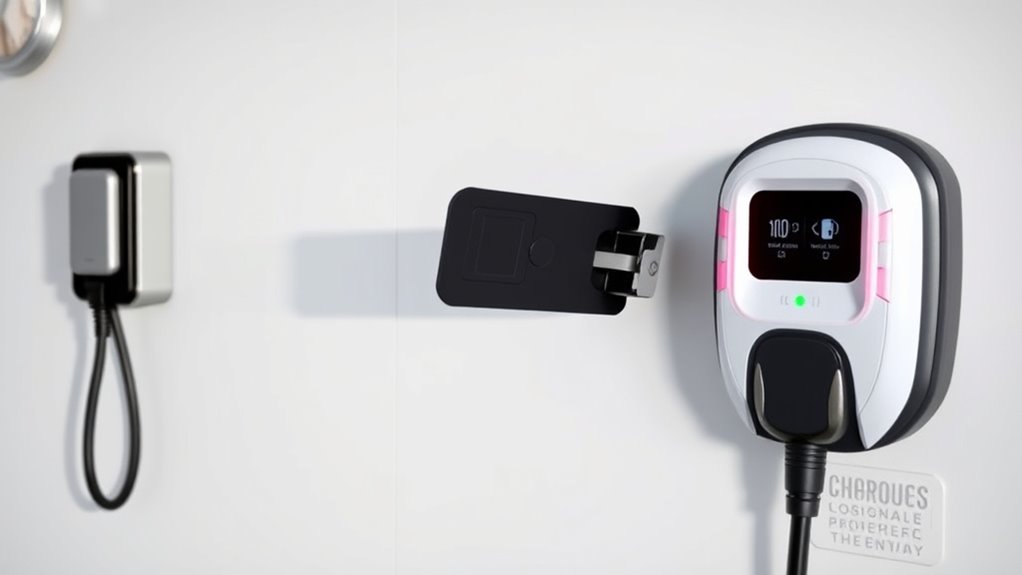
Smart EV chargers offer advanced features like Wi-Fi connectivity, remote monitoring, and automation, making it easy for you to control and optimize your charging experience. These chargers often serve as a high-tech upgrade to basic charging stations, providing real-time data on energy consumption and charging status. With smart capabilities, you can schedule charging sessions to fit your daily routine, ensuring efficient power management and avoiding peak rates. They also allow you to adjust settings remotely via smartphone apps, giving you convenience and flexibility. Basic chargers, on the other hand, lack these features, offering straightforward charging without remote access or detailed control. The key difference lies in how smart chargers enhance your overall power management and provide a seamless, connected charging experience. Additionally, understanding outdoor tech can help you make informed choices about integrating smart devices into your home and outdoor activities. Smart chargers are designed to seamlessly integrate with your existing smart home ecosystem, enhancing overall convenience and energy efficiency. Recognizing the benefits of connectivity can further improve your experience by enabling better energy use and integration with other smart devices. Incorporating energy management features can also help you optimize your electricity costs and reduce environmental impact.
Cost Differences and Value for Money
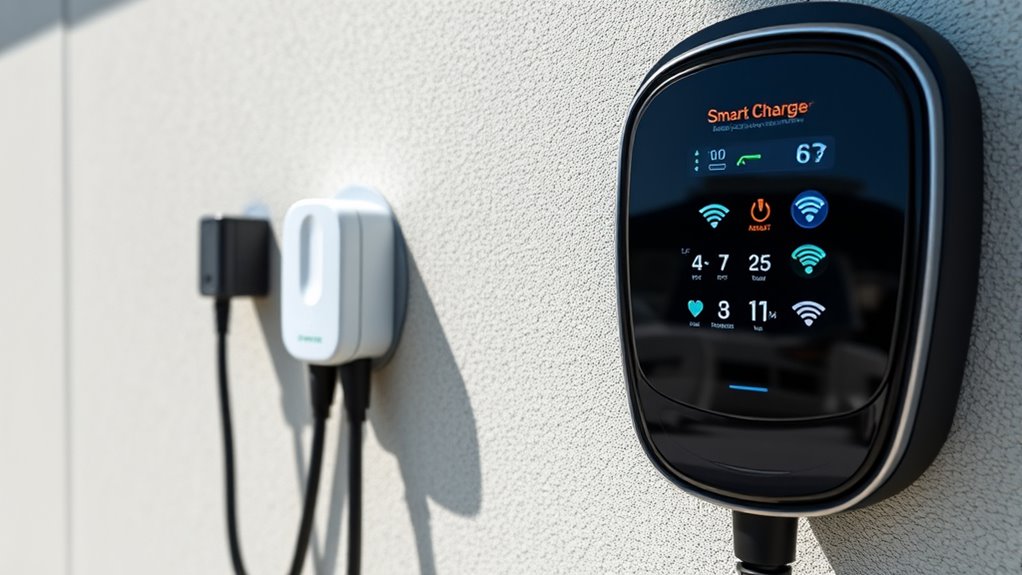
While smart EV chargers typically come with a higher upfront cost, they often deliver better long-term value through features that help you save energy and money over time. The initial investment may include higher installation costs due to complexity or added features, but many smart chargers qualify for rebates or incentives, offsetting expenses. Additionally, their advanced diagnostics and remote management can prevent costly repairs and improve efficiency. Warranty coverage on smart chargers is often more all-encompassing, offering peace of mind and protecting your investment. Energy efficiency features can significantly reduce your overall electricity consumption, making a smart charger more economical in the long run. Smart technology integration allows for better load management, optimizing energy use during peak times. Proper maintenance of your EV charger, whether smart or basic, can extend its lifespan and ensure consistent performance. Basic chargers, with lower upfront prices, might seem budget-friendly initially, but they lack the advanced features and flexibility that can lead to higher electricity bills and maintenance costs down the line. Consider long-term benefits when evaluating cost differences, especially since Glycolic Acid benefits can contribute to better skin health, just as choosing the right EV charger impacts your long-term savings and convenience.
Convenience and Control: Remote Monitoring and Management
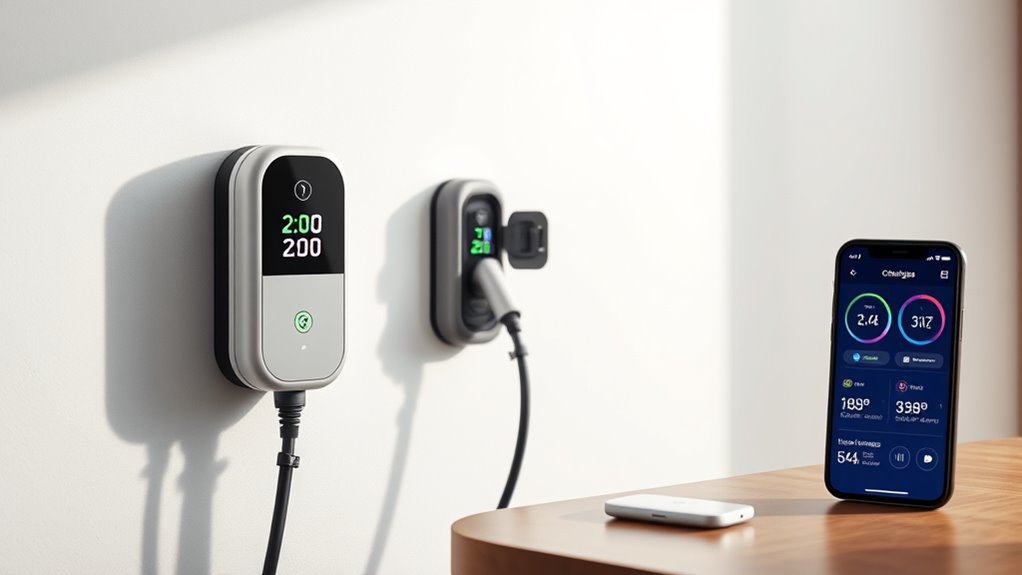
Remote monitoring and management capabilities give you greater control over your EV charging experience, making it easier to optimize usage and guarantee safety. With these features, you can track charging sessions in real time, ensuring your vehicle charges efficiently while avoiding overuse. This level of control helps you identify opportunities for energy savings, reducing your electricity bills and minimizing environmental impact. You can also schedule charging during off-peak hours, further enhancing energy efficiency and supporting grid stability. Plus, remote management lets you troubleshoot issues quickly, preventing potential safety hazards. Overall, having WiFi-enabled smart chargers empowers you to manage your charging process more effectively, aligning convenience with eco-friendly practices and maximizing your investment. Connectivity features enhance your ability to stay informed and in control of your charging habits. Additionally, these features often include secure data transmission, which safeguards your personal information during remote interactions. Incorporating smart home integration can further streamline your energy management by connecting your EV charger with other devices and systems in your home. Implementing natural filtration systems in your charging setup can also contribute to a more sustainable and eco-conscious home environment, especially when combined with energy-efficient hardware.
Setup and Installation Considerations
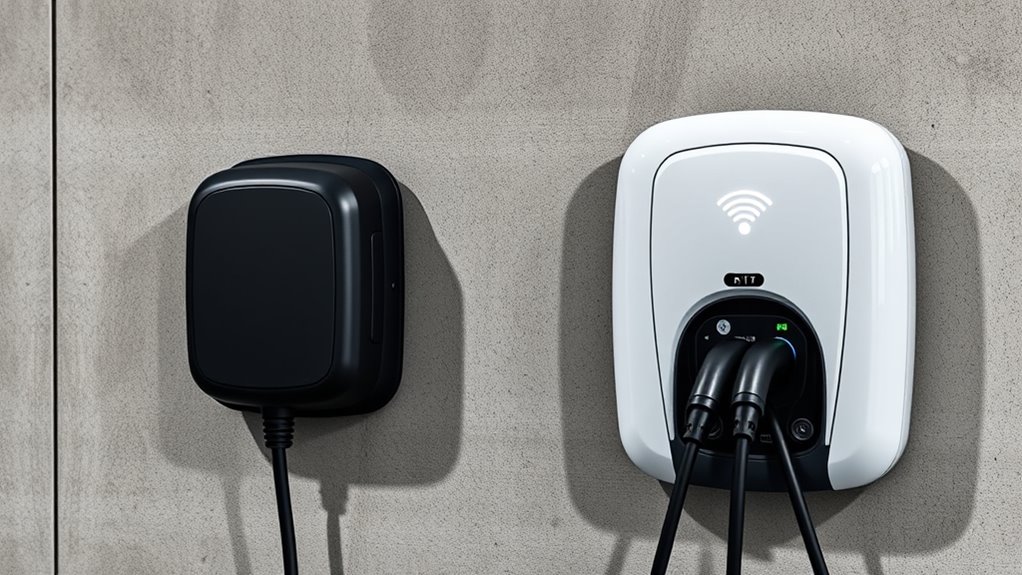
Setting up and installing your EV charger properly guarantees you get the most out of its features and performance. Good installation planning helps ensure compatibility with your electrical system and minimizes future issues. Follow safety protocols to prevent accidents or damage during setup. Consider these key steps:
- Evaluate your electrical capacity to support the charger’s power requirements.
- Choose a location that’s accessible, safe, and complies with local codes.
- Hire a certified electrician to handle installation, ensuring all safety protocols are followed.
- Confirm that your electrical system has adequate power capacity to support the charger’s needs and future expansion.
- Review installation planning resources to ensure the setup aligns with your home’s electrical infrastructure. It’s also important to verify that your system’s electrical wiring meets current safety standards to prevent potential hazards. Proper planning minimizes risks and guarantees your charger operates efficiently. Skipping steps or rushing installation can lead to safety hazards or reduced performance. Always prioritize safety and adhere to local regulations for a smooth setup process. Additionally, understanding your home electrical system can help in selecting the right charger and installation method. Ensuring your system includes proper grounding is crucial for safety and optimal operation.
Security and Privacy Concerns With Wifi-Enabled Chargers
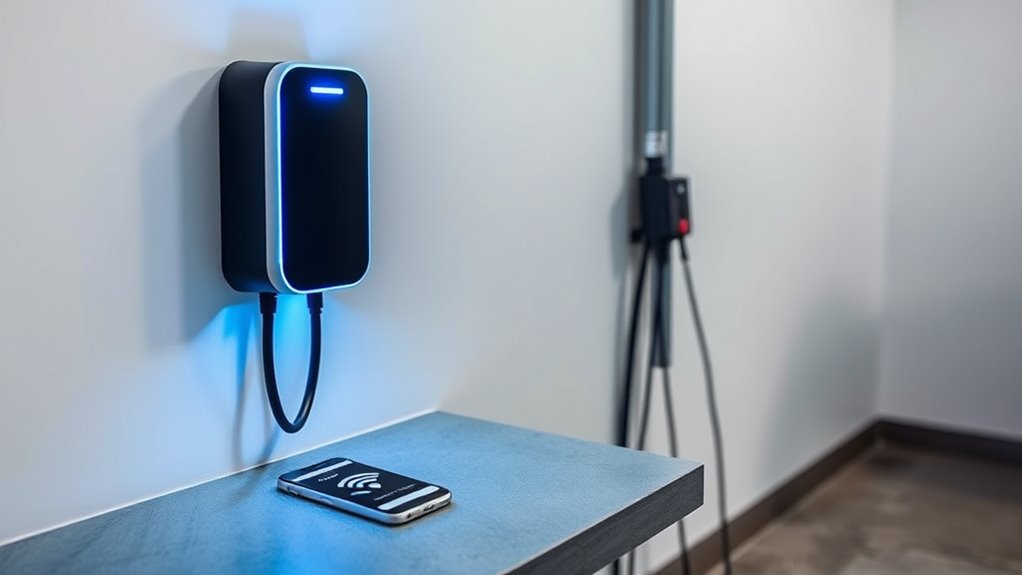
When you connect your EV charger to Wi-Fi, you might be exposing your data to risks. Hackers could exploit vulnerabilities to gain unauthorized access or cause a data breach. It’s important to understand these security concerns before choosing a smart charger. Additionally, privacy policies vary among brands and can affect how your data is collected and used. Furthermore, integrating Wi-Fi connectivity can sometimes introduce cybersecurity vulnerabilities that could compromise your home network.
Data Breach Risks
Wi-Fi-enabled EV chargers can improve user convenience and connectivity, but they also open the door to potential security and privacy risks. Data breaches are a significant concern because hackers could access your personal information or manipulate your charger settings. To stay protected, be aware of these risks:
- Compromised Data Security – weak passwords or outdated firmware make your charger vulnerable to attacks.
- Privacy Risks – hackers could track your charging habits or location, infringing on your privacy.
- Unauthorized Control – cybercriminals might hijack your charger to disrupt your charging schedule or cause damage.
Staying vigilant with regular updates and strong passwords helps reduce these risks. Remember, even connected devices need proper security measures to protect your data and privacy.
Unauthorized Access Concerns
Although Wi-Fi-enabled EV chargers offer increased convenience, they also pose significant risks of unauthorized access. Without proper access control, hackers could potentially manipulate your charging station or collect sensitive data. Weak or default password protection makes it easier for intruders to gain entry, risking theft of personal information or even control over your charger. To minimize these risks, verify you set strong, unique passwords and enable multi-factor authentication if available. Regularly update your charger’s firmware to patch security vulnerabilities. Avoid sharing access details unnecessarily and restrict network permissions. Proper security measures can help protect your privacy and prevent unauthorized use, giving you peace of mind while enjoying the benefits of smart charging. Additionally, understanding navigation and mapping features can help you better manage your device’s security settings and monitor its activity. Being aware of security protocols can further enhance your protection against potential cyber threats.
Compatibility With Home Automation Systems

Smart EV chargers let you monitor charging remotely, so you can keep track of your energy use from anywhere. They also integrate smoothly with your home automation system, making management effortless. Considering these features helps you decide if a smart charger fits your connected home setup.
Remote Monitoring Capabilities
Remote monitoring capabilities allow you to keep track of your EV charger’s performance and usage in real-time, often through integration with your home automation system. This feature enhances energy efficiency by letting you monitor charging patterns and optimize schedules. A user interface that’s easy to navigate makes it simple to access data and adjust settings.
Consider these benefits:
- View real-time energy consumption, helping you identify inefficiencies.
- Receive alerts for maintenance or potential issues, preventing downtime.
- Adjust charging times remotely for better energy management and cost savings.
Seamless System Integration
Seamless system integration guarantees that your EV charger functions smoothly with your existing home automation setup. Smart chargers often connect effortlessly with systems that control lighting, climate, and security, creating a unified experience. If you have wireless charging capabilities, integration ensures your EV charges automatically when you arrive home or during off-peak hours. Additionally, solar integration allows your charger to optimize energy use from your solar panels, reducing costs and environmental impact. Compatibility with home automation means you can schedule charging sessions, monitor energy consumption, and control the charger remotely. This level of integration simplifies managing your energy sources, making your home smarter and more efficient. Whether you choose a smart or basic charger, considering system compatibility enhances convenience and maximizes your energy investment.
Impact on Charging Speed and Efficiency
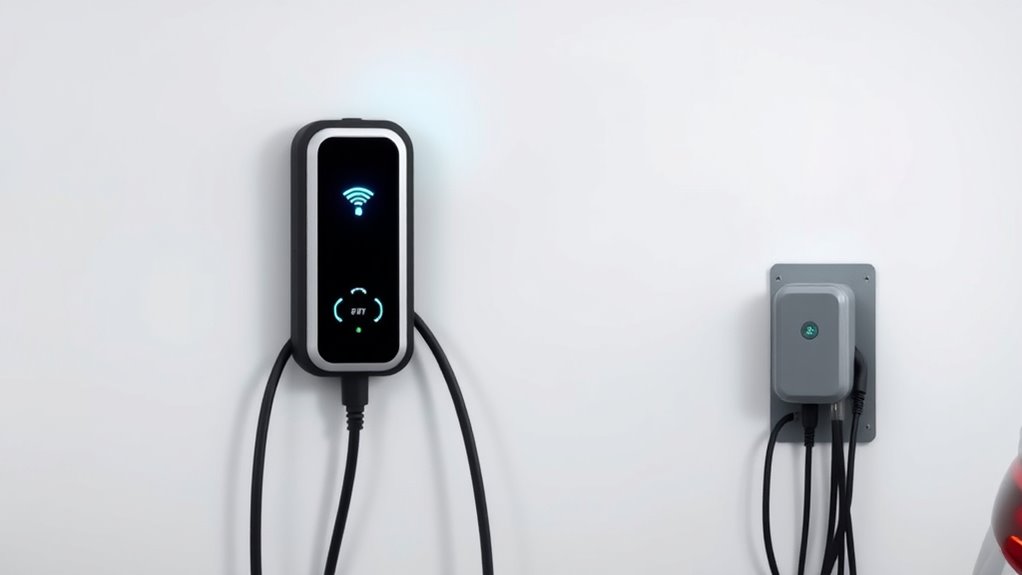
While basic chargers provide a steady current to charge your vehicle, smart chargers substantially enhance charging speed and efficiency through advanced technology. They optimize energy flow, reducing charging time and making better use of your energy source. With a smart charger, you can expect:
- Faster charging speeds, getting your vehicle ready quicker.
- Improved energy efficiency, saving you money on electricity.
- Adaptive charging that adjusts based on your vehicle’s needs and grid demand.
These features mean less time plugged in and more reliable, cost-effective charging. Smart chargers can even communicate with your utility to optimize energy use during off-peak hours. Overall, they considerably boost both charging speed and energy efficiency, making your EV experience more convenient and economical.
Long-Term Maintenance and Support
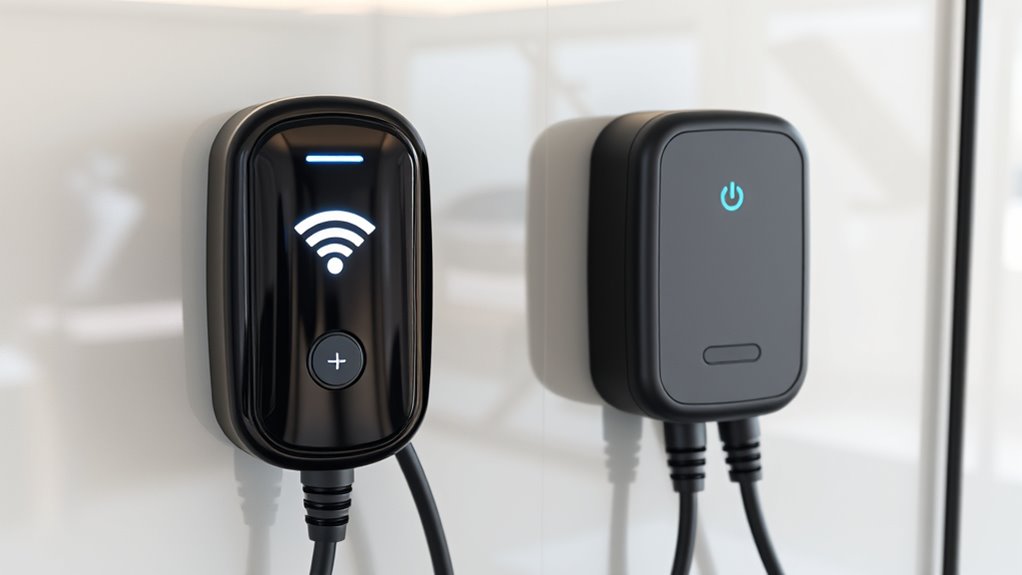
Long-term maintenance and support are essential considerations when choosing an EV charger, as they guarantee your investment remains dependable and functional over time. Good customer support ensures you get prompt assistance if issues arise, minimizing downtime. With proper maintenance, your charger’s components stay in excellent condition, helping preserve battery longevity by preventing electrical problems that could damage your vehicle’s battery. Smart chargers often come with regular software updates and remote diagnostics, making ongoing support more accessible. Basic chargers may lack these features, which could lead to costly repairs or replacements down the line. Investing in a charger backed by solid customer support and maintenance plans ensures your charging setup stays efficient, safe, and reliable throughout its lifespan.
Which Type Suits Different Lifestyles and Needs
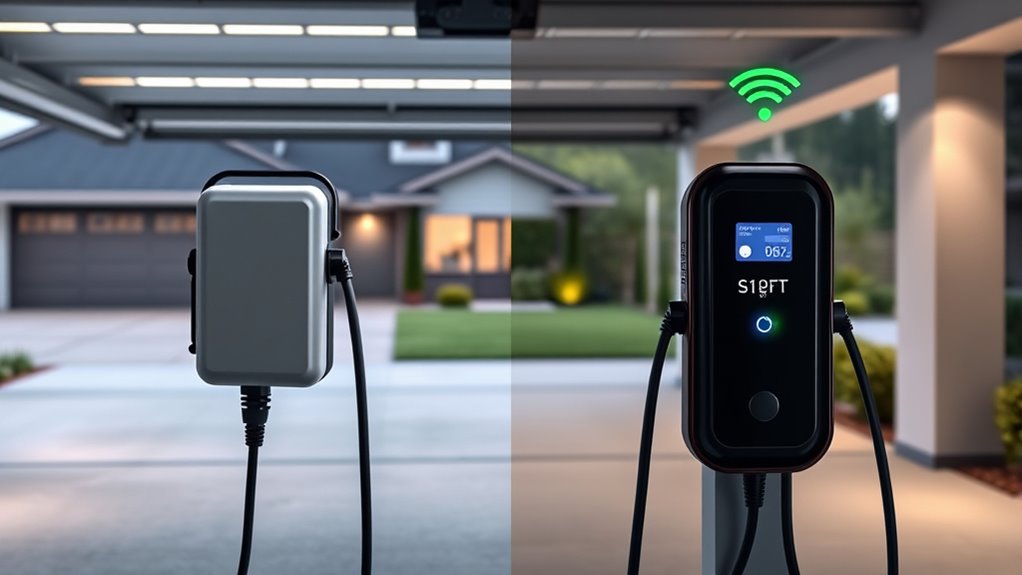
Choosing the right EV charger depends heavily on your daily routine and driving habits. If you have a predictable schedule and a simple setup, a basic charger might suffice, offering reliable charging without much fuss. On the other hand, if you prioritize convenience and flexibility, a smart charger with WiFi features could be a better fit. Consider these factors:
- Charging station durability: If you face harsh weather conditions or frequent use, opt for a sturdy, weather-resistant charger.
- Installation complexity: Basic chargers usually require straightforward installation, while smart chargers may need professional setup due to additional wiring or network integration.
- Lifestyle needs: If you value remote monitoring and scheduling, a smart charger adapts well to your lifestyle, whereas basic chargers meet minimal needs efficiently.
Making the Right Choice for Your Electric Vehicle
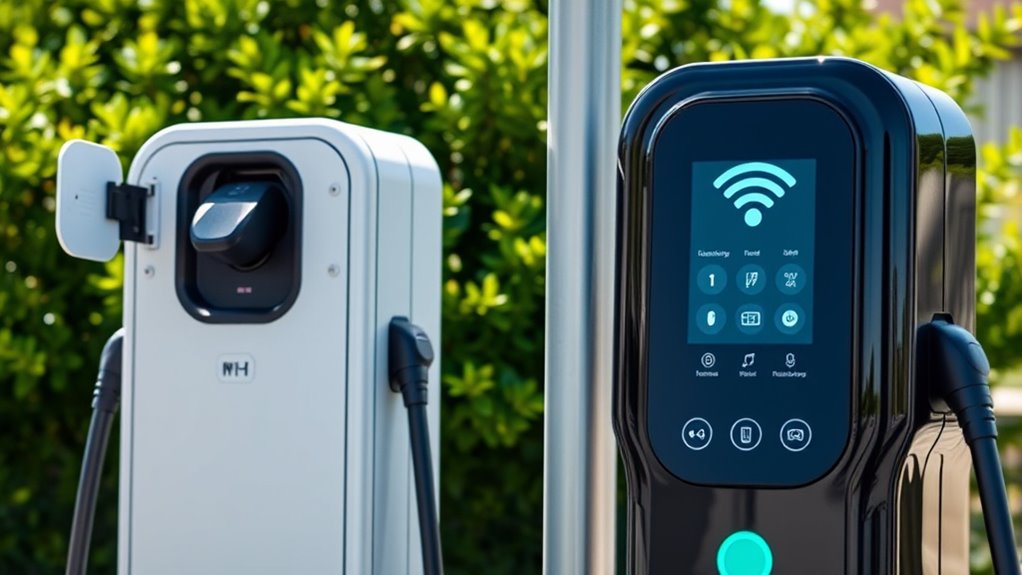
Choosing the right charger depends on what matters most to you, whether it’s connectivity features, cost, or convenience. Smart chargers offer remote control and energy insights, but they come with a higher price tag. Basic chargers are simpler and more affordable, making them a practical choice if you prioritize basic functionality.
Connectivity Benefits
Connectivity features can considerably enhance your EV charging experience by providing real-time updates, remote control, and seamless integration with your smart home system. With these benefits, you can easily monitor your battery health and guarantee ideal charging. Plus, knowing the charging station location helps you plan trips better and reduces range anxiety.
Here are some key perks:
- Get instant alerts if charging stops unexpectedly, protecting your battery health.
- Remotely start or stop charging, saving time and effort.
- Use smart home integrations to schedule charging during off-peak hours, maximizing convenience and efficiency.
These features make managing your EV simpler, ensuring your car is always ready while maintaining its longevity.
Cost and Convenience
When weighing your options between smart and basic EV chargers, cost and convenience play a significant role in making the right choice. Basic chargers are typically more affordable upfront and simpler to install, offering a straightforward user experience. However, smart chargers often come with energy savings features that can reduce your electricity bills over time, justifying their higher initial cost. Smart chargers also provide remote control and scheduling options, enhancing convenience and allowing you to optimize charging times. If you prefer a hassle-free setup with minimal fuss, a basic charger might suit you. But if you value advanced user experience and long-term savings, investing in a smart charger could be a smarter, more convenient choice for your electric vehicle needs.
Frequently Asked Questions
Are Wifi-Enabled Chargers More Prone to Hacking Than Basic Models?
Yes, WiFi-enabled chargers can be more vulnerable to hacking than basic models, raising security concerns and privacy implications. Since they connect to your home network, hackers could potentially access your personal information or control your charger remotely. To protect yourself, verify your WiFi network has strong passwords, keep firmware updated, and consider the security features offered by the manufacturer. Staying vigilant helps minimize risks associated with connected devices.
Can Smart Chargers Upgrade Their Software Automatically Over the Internet?
Just like the Starship Enterprise updates its software, smart chargers can automatically upgrade their firmware via the internet. You’ll benefit from remote monitoring and seamless software updates, ensuring peak performance and security. These automatic upgrades keep your charger current, fixing bugs and adding features without your intervention. So, with a smart charger, you’re always at the forefront of technology, enjoying peace of mind and convenience.
Do Smart Chargers Consume More Energy When Idle Compared to Basic Chargers?
Smart chargers typically consume slightly more energy during idle periods due to their advanced features and continuous connectivity, leading to higher idle power compared to basic chargers. This increased energy consumption is usually minimal, but if you’re concerned about energy efficiency, a basic charger may be more cost-effective. However, smart chargers offer benefits like remote control and software updates that can outweigh the small difference in idle power consumption.
How Do Warranty and Support Services Differ Between Smart and Basic Chargers?
You’ll find that smart chargers often offer more extensive warranty coverage, sometimes including extended support services that basic chargers lack. Support availability for smart chargers is usually 24/7, ensuring quick assistance when needed, while basic chargers may have limited support hours. An interesting stat: 78% of smart charger owners report satisfaction with their warranty and support, making them a reliable choice if peace of mind matters to you.
Are There Any Government Incentives for Installing Smart EV Chargers?
You might qualify for government rebates or installation subsidies when installing smart EV chargers. Many local and federal programs encourage smart charger use because they boost energy efficiency and grid management. Check your area’s incentives, as these financial incentives can substantially reduce your upfront costs. Taking advantage of rebates and subsidies makes upgrading to a smart charger more affordable and helps promote cleaner energy use at home.
Conclusion
Choosing between smart and basic EV chargers is like picking the right tool for a job—you need what fits your lifestyle. If you crave convenience and remote control, a smart charger is your trusty sidekick, but if simplicity and affordability matter most, a basic charger still gets the job done. Think about your needs and priorities; the right choice will make your EV journey smoother than a well-oiled engine.