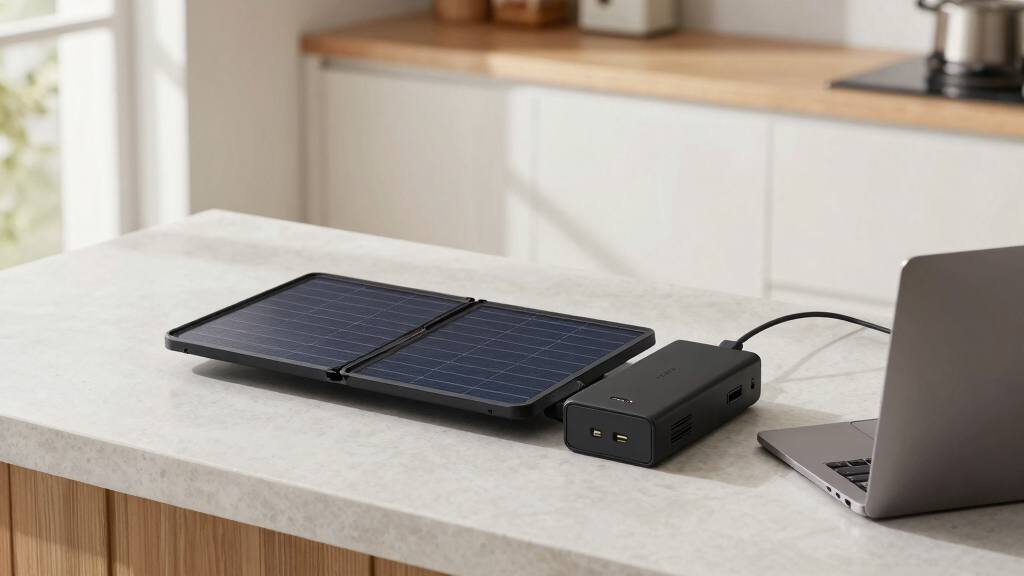

Choosing between portable foldable solar chargers and fixed solar panel systems for powering laptops involves balancing mobility, power capacity, and cost. Portable foldable options are designed for users on the go, offering convenience and compactness, but often at the expense of maximum power output. Fixed solar panels, typically installed in a stationary location, provide higher wattage, suitable for extended use but lack portability. This comparison helps users determine which type aligns with their specific needs—whether they prioritize travel convenience or raw power for home or office setups.
At a Glance
| Criteria | Portable Foldable Solar Chargers | High-Cower Fixed Solar Panels | Winner |
|---|---|---|---|
| Portability | High (foldable, lightweight, easy to carry) | Low (fixed installation, not portable) | A |
| Power Output | Moderate (up to 100W, suitable for charging laptops on the go) | High (up to 300W or more, ideal for stationary setups) | B |
| Cost | Lower (generally more affordable) | Higher (initial investment, but cost-effective long-term) | B |
| Setup Complexity | Minimal (plug-and-play) | Complex (requires installation, wiring) | A |
| Durability | Moderate (depends on build quality) | High (robust build for outdoor use) | B |
| Versatility | High (designed for multiple devices, multiple angles) | Moderate (primarily for laptops and small devices) | A |
| Size & Weight | Lightweight and compact | Large and heavy | A |
| Weather Resistance | Moderate to high (depends on quality) | Excellent (designed for outdoor, all-weather use) | B |

SOARAISE Solar Charger Power Bank – 48000mAh Wireless Portable Charger Built-in 4 Cables and 4 Solar Panels, PD QC 3.0 Fast Charging USB C Battery Pack with Flashlight for Camping Travel
Upgraded High-Efficiency 4 Solar Panels: Equipped with 4 premium solar panels, this solar panel charger charges up to…
As an affiliate, we earn on qualifying purchases.
As an affiliate, we earn on qualifying purchases.
Key Differences
The core difference between portable foldable solar chargers and fixed solar panels revolves around mobility and output capacity. Portable options excel when travel, outdoor activities, or emergency use is a priority, providing convenience and ease of use but usually with limited wattage. Fixed panels, on the other hand, deliver higher power levels suitable for sustained, stationary use—such as powering a home office or backup system—though they require installation and lack portability. In practice, users should consider whether mobility or higher power output has higher priority in their daily routines or projects.

FlexSolar 100W Portable Solar Panels Chargers with PD3.0 USB-C,QC3.0 USB-A and DC Outputs Foldable IP67 Waterproof Power Emergency Camping for Small Power Station Generator,Phones, Power Banks
⚡ Ultra-Lightweight & Ultra-Portable: 100W Foldable Solar Panel Weighing only 4.1lbs (1.85kg) with a sleek 0.59-inch profile, this…
As an affiliate, we earn on qualifying purchases.
As an affiliate, we earn on qualifying purchases.
Detailed Comparison
Portability (Portable Foldable Solar Chargers wins — major)
Foldable solar chargers are lightweight, compact, and designed for easy carrying, making them ideal for travelers, hikers, or emergency kits. Fixed panels are bulky and stationary, suitable only for permanent setups. The gap is major, with portability being the defining feature of option A.
Power Output (High-Cower Fixed Solar Panels wins — major)
Fixed solar panels typically produce up to 300W or more, enough to power laptops, small appliances, or charge batteries rapidly. Portable foldable chargers usually max out around 100W, sufficient for charging laptops but less effective for high-demand devices. The gap is moderate to major, affecting practical usability depending on power needs.
Cost (Portable Foldable Solar Chargers wins — moderate)
Portable foldables tend to be more affordable upfront, with entry-level models costing a few hundred dollars. Fixed panels, especially larger, high-capacity systems, are more expensive, often running into thousands. For budget-conscious users, option A offers better initial value, though long-term costs may vary.
Setup Complexity (Portable Foldable Solar Chargers wins — major)
Foldable solar chargers are plug-and-play, requiring no installation—just unfold and connect. Fixed panels involve installation, wiring, and sometimes professional setup, making them more complex. The difference is significant, favoring option A for ease of use.
Durability (High-Cower Fixed Solar Panels wins — moderate)
Fixed panels are built for outdoor, all-weather durability, often with weatherproof casings. Portable foldables are generally less rugged, more vulnerable to damage when transported or exposed to harsh conditions. The gap is moderate, with fixed panels offering better long-term outdoor resilience.
Versatility (moderate difference)
Option A can be used in diverse outdoor scenarios, adaptable to different angles and locations. Fixed panels are less versatile, fixed in one position, but often more efficient at capturing sunlight over long periods. The winner depends on scenario but generally favors A for mobility and B for sustained, high-capacity use.
Size & Weight (Portable Foldable Solar Chargers wins — major)
Foldable chargers are designed to be lightweight and compact, easily fitting into backpacks. Fixed panels tend to be large and heavy, requiring dedicated space and mounting. The difference is major, impacting transport and storage options.
Weather Resistance (High-Cower Fixed Solar Panels wins — moderate)
Fixed panels are built for outdoor durability, with weatherproofing suitable for prolonged exposure. Portable foldables may have some weather resistance but are generally not designed for heavy rain or extreme conditions. The gap is moderate, but fixed panels are safer for outdoor use without additional protection.

ECO WORTHY 10000W Output Complete Off-Grid Solar Panel Kit for Home| 10KW 120V/240V Output Split Phase Inverter| 48V 314Ah16.1kWh High Capacity Energy Storage| 2950W Solar Panel PV| Whole House System
System Components:Delivers up to 10kW power output with 120V/240V single-phase split-phase support, making it suitable for smoothly running…
As an affiliate, we earn on qualifying purchases.
As an affiliate, we earn on qualifying purchases.
Portable Foldable Solar Chargers: Pros and Cons
Pros:
- Highly portable and lightweight, easy to carry on trips
- Simple setup, no installation required
- Cost-effective for casual or emergency use
- Suitable for outdoor activities and travel
- Compact storage when not in use
Cons:
- Limited power output, slower charging for high-demand devices
- Less durable under harsh weather conditions
- Requires frequent exposure to sunlight for efficiency
- Lower overall wattage limits usage scenarios
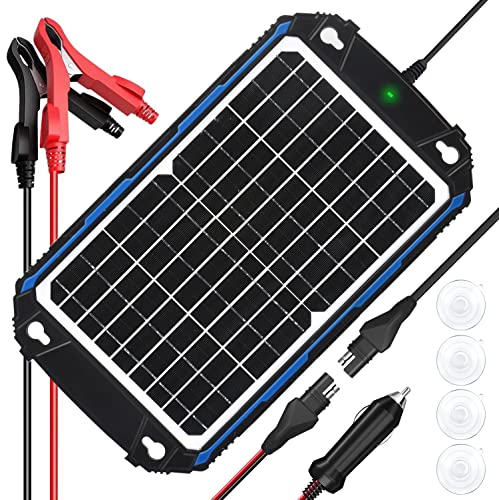
SUNER POWER Waterproof 12W 12V Solar Battery Charger & Maintainer Pro, Built-in UltraSmart MPPT Charge Controller, 12 Volt Solar Panel Trickle Charging Kits for Car Automotive Boat Marine RV Trailer
【Ultra-Smart MPPT Technology】This 12v solar panel battery charger is crafted with SUNER POWER's unique Ultra-Smart MPPT( Max Power…
As an affiliate, we earn on qualifying purchases.
As an affiliate, we earn on qualifying purchases.
High-Cower Fixed Solar Panels: Pros and Cons
Pros:
- Higher power capacity suitable for continuous or high-demand use
- More durable and weather-resistant for outdoor installation
- Stable, fixed setup with optimal sun exposure
- Better suited for backup power or stationary workstations
Cons:
- Bulky, heavy, and not portable
- Requires installation and maintenance
- Higher upfront investment
- Less flexible in terms of placement
Who Should Choose What
Choose Portable Foldable Solar Chargers if:
- You need a portable solution for outdoor activities, travel, or emergencies
- You prefer easy setup without installation
- Your power needs are moderate, primarily charging laptops or small devices
- Budget is a concern and you want an affordable, lightweight option
Choose High-Cower Fixed Solar Panels if:
- You require high power output for stationary or long-term use
- You have space for installation and can handle setup complexity
- Durability and weather resistance are priorities for outdoor use
- Long-term investment and higher capacity justify the cost
Value for Money
For users prioritizing mobility and ease, portable foldable chargers offer good value at a lower cost, especially for casual or emergency use. Fixed panels provide better long-term value for those needing consistent, high-capacity power in a stationary setting, justifying higher initial costs with superior durability and output.
Final Verdict
Choose option A if portability, affordability, and quick setup are your main concerns, making it ideal for outdoor enthusiasts, travelers, or emergency preparedness. Opt for option B if you need reliable, high-capacity power for fixed installations, backup systems, or outdoor setups where durability and weather resistance matter most. The key deciding factor is whether mobility or power output is more critical for your needs.
Frequently Asked Questions
Can portable solar chargers power high-demand devices?
They can charge laptops and small gadgets, but their limited wattage makes them unsuitable for high-demand appliances or prolonged use of power-intensive devices.
Are fixed solar panels suitable for travel?
Generally not, as fixed panels are large, heavy, and require installation. They are better suited for stationary or outdoor setups that don’t need frequent relocation.
How durable are foldable solar chargers in bad weather?
While some models offer weather-resistant features, they are typically less robust than fixed panels and should be sheltered or stored during heavy rain or storms.
Is the higher cost of fixed panels justified?
Yes, if you need high power capacity, durability, and a permanent setup. For occasional or travel use, the cost may not be justified.