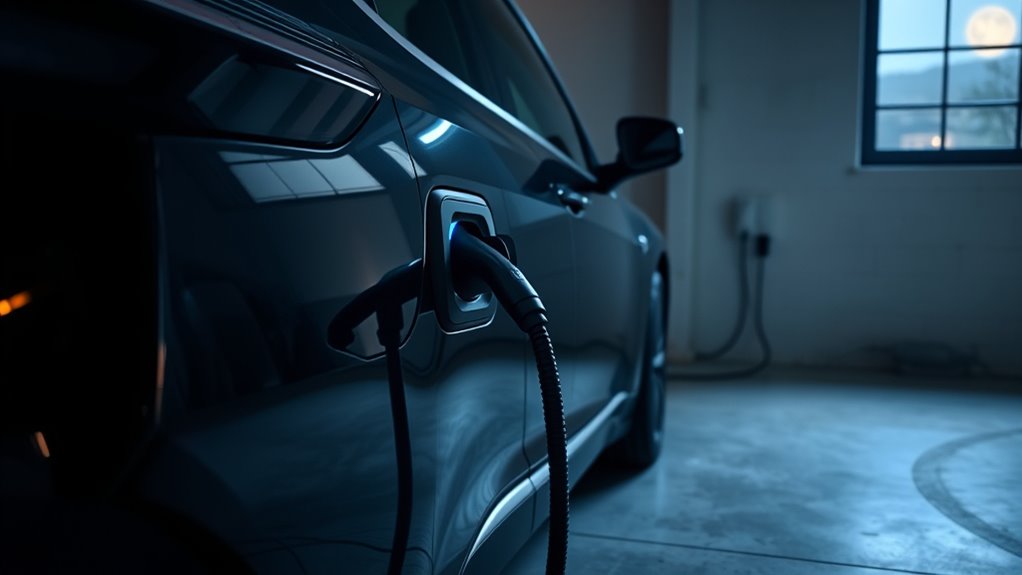

Leaving your EV plugged in overnight is safe when your vehicle’s smart charging features and battery management systems are working properly. Modern EVs automatically stop charging or switch to trickle mode once fully charged, reducing overcharge risks. It’s best to set a limit, like 80%, and unplug once reached. Paying attention to temperature and using proper chargers helps protect your battery long-term. To guarantee safe and ideal charging habits, more details await you.
Key Takeaways
- Modern EVs have smart systems that automatically stop charging once the battery is full, making overnight charging safe.
- Keeping the charge around 80-90% and unplugging after reaching the desired level helps preserve battery health.
- Charging at night with proper settings minimizes overcharging risks and ensures safety features are active.
- Using slow, controlled chargers overnight reduces heat buildup and battery wear compared to fast charging.
- Ensuring safety features are enabled and following manufacturer guidelines support safe overnight charging practices.
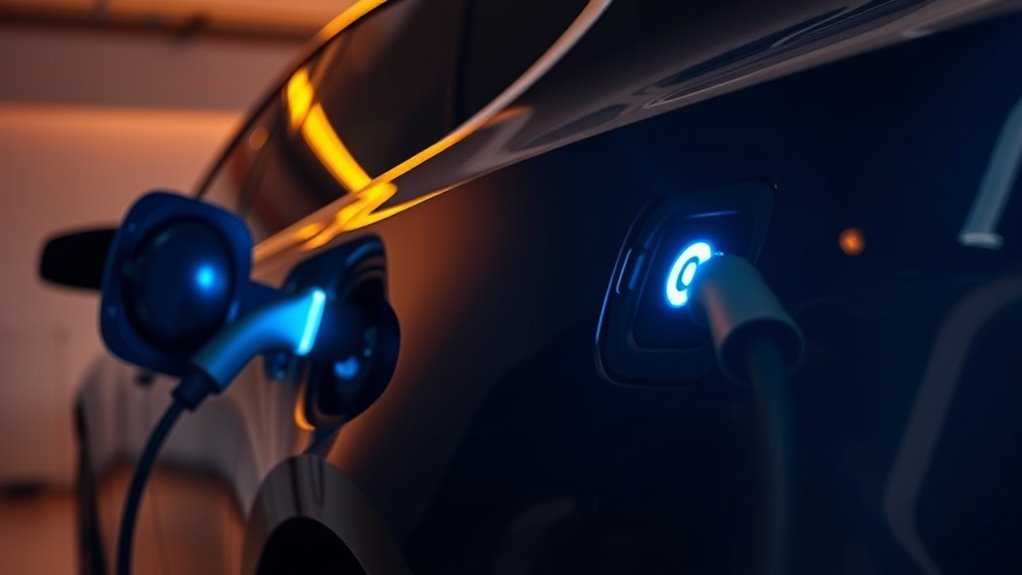
Charging overnight has become a common practice for many people, offering the convenience of waking up to a fully powered device. Whether it’s your smartphone or your electric vehicle (EV), plugging in overnight means you don’t have to worry about running out of juice during the day. But as simple as it seems, you might wonder if leaving your EV plugged in while you sleep is safe and how it impacts your battery’s longevity. Understanding proper charging etiquette can help you maximize your battery’s health and avoid potential issues.
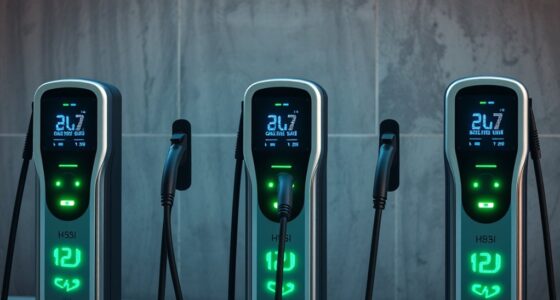
When you keep your EV charging overnight, you’re relying on the vehicle’s built-in systems to manage the process safely. Modern EVs are equipped with smart charging features that prevent overcharging. Once the battery reaches full capacity, these systems typically stop the flow of electricity or switch to trickle charging, reducing stress on the battery. This design is intended to protect your battery’s health and maintain its longevity over time. However, it’s still good practice to check your vehicle’s settings and ensure that these safety features are active. Proper charging etiquette involves not only using the right charger but also setting appropriate charging limits if your vehicle allows it. For example, some EVs let you set a maximum charge level—say 80%—which can help preserve battery health if you’re charging daily.
Modern EVs prevent overcharging by stopping or trickle charging at full capacity, helping protect battery health and extend longevity.
Leaving your EV plugged in overnight isn’t inherently harmful if you follow these guidelines. It’s best to avoid consistently charging to 100% unless you need that extra range for the day. Regularly topping up to around 80-90% can notably extend your battery’s lifespan by reducing the stress caused by high voltage levels. Additionally, try to park in shaded or cool areas if possible; high temperatures can accelerate battery degradation, especially during prolonged charging periods. Furthermore, understanding the importance of proper battery management systems can help you make informed decisions about your charging habits. Being mindful of charging etiquette means respecting the charging station’s capacity and not over-relying on fast chargers unless necessary. Fast charging generates more heat and can accelerate battery wear if used excessively. Instead, opt for regular, overnight charging at home or a dedicated station that supports slow, controlled charging. This approach helps maintain your EV’s battery longevity while also ensuring safety. Also, avoid leaving your vehicle plugged in unnecessarily after it’s fully charged, as this can lead to minor battery stress over time. Unplugging once your vehicle hits the desired charge level is a good practice.

AIMILER Level 2 Electric Vehicle (EV) Charger(WIFI APP/Plug-play), 32A, 25ft Cable ETL Certified, 220V-240V NEMA 14-50P Plug EVSE w/ J1772 Connector, Portable EV Car Charging Stations for Home Level 2
- Power Plug Compatibility: 240V Nema 14-50 plug with adapter options
- Universal J1772 Connector: Compatible with North American J1772 EVs/PHEVs
- Fast Charging Capability: Up to 7.68kWh with adjustable amperage
As an affiliate, we earn on qualifying purchases.
As an affiliate, we earn on qualifying purchases.
Frequently Asked Questions
Can Leaving My EV Plugged in Cause Battery Damage?
Leaving your EV plugged in can lead to minimal battery degradation over time, but modern vehicles are designed to handle overnight charging safely. Your charging habits matter—most EVs stop charging once full, preventing overcharging. If you’re concerned, set charging limits or use scheduled charging to protect your battery. Overall, keeping your EV plugged in overnight isn’t likely to damage your battery if your vehicle has smart charging features.
Does Overnight Charging Increase Fire Risk?
Leaving your EV plugged in overnight generally doesn’t increase fire risk if you follow proper fire prevention and charging protocols. Modern chargers have built-in safety features that automatically stop charging once the battery is full. To stay safe, use approved chargers, avoid damaged cords, and confirm your charging area is well-ventilated. Regularly check for recalls or issues with your charging equipment, and never leave your EV unattended if you notice problems.
Are There Specific Safety Features in EV Chargers?
Think of your EV charger as a vigilant guardian, equipped with safety features that act like a shield. Modern chargers follow strict EV charger standards and safety certifications, ensuring they can detect faults and prevent accidents. These features include automatic shut-offs and temperature controls, so you can rest easy. Trust in these certified safety measures to keep your overnight charging safe, turning your sleep into a peaceful, worry-free night.
How Does Ambient Temperature Affect Overnight Charging Safety?
Ambient temperature impacts overnight charging safety because extreme cold or heat can challenge your EV’s thermal management system. High temperatures may cause overheating, while cold weather can slow battery chemistry, affecting charging efficiency. Your EV’s thermal management works to keep the battery at ideal temperature, ensuring safe charging. To stay safe, avoid charging in very hot or cold environments and trust your vehicle’s safety features to manage temperature fluctuations.
Is It Better to Unplug After a Full Charge?
You should definitely unplug after a full charge; leaving it plugged in can turn a simple charging cycle into a never-ending saga for your battery. Over time, this can cause unnecessary wear, affecting battery calibration and overall lifespan. Think of it like a dance—your EV’s battery performs best with a precise rhythm. By unplugging, you protect your battery’s health, ensuring it stays reliable and efficient for years to come.

Battery Management Systems for Electric Vehicles: A Practical Guide to EV Battery Safety, Charging, Cell Balancing, and BMS Design (Modern Automotive Technology Diagnostics Mastery Series)
As an affiliate, we earn on qualifying purchases.
As an affiliate, we earn on qualifying purchases.
Conclusion
Charging overnight is like letting your car rest in a gentle cradle—generally safe if you follow proper guidelines. Modern EVs and chargers are designed to prevent overcharging, so you don’t have to worry about sparks flying while you sleep. Just make sure your equipment’s up to date and plugged into a grounded outlet. With these precautions, you can enjoy the peace of mind, knowing your EV is safely charging in the night’s quiet embrace.

2026 Upgraded Level 1&2 EV Charger for ALL J1772 EV, NEMA5-15/6-20Plug
- Intelligent Charging with Smart Scheduling: Adjustable current and 1-12 hour delay timer
- Universal Compatibility: Compatible with all SAE J1772 EVs and PHEVs
- Fast Charging Speeds: Up to 4× faster than standard chargers
As an affiliate, we earn on qualifying purchases.
As an affiliate, we earn on qualifying purchases.

Lectron J1772 Level 2 EV Charger, UL2594 Certified (ETL Listed), 48A 240V Nexus EV Charging Station, 23ft Cable & J1772 Charger Holder, Hardwired ONLY, Compatible with All J1772 Electric Vehicles
- Fast Level 2 Charging: Up to 46 miles per hour
- Universal J1772 Compatibility: Works with all J1772 EVs
- Hardwired 48A Power: Maximum charging speed at 240V
As an affiliate, we earn on qualifying purchases.
As an affiliate, we earn on qualifying purchases.