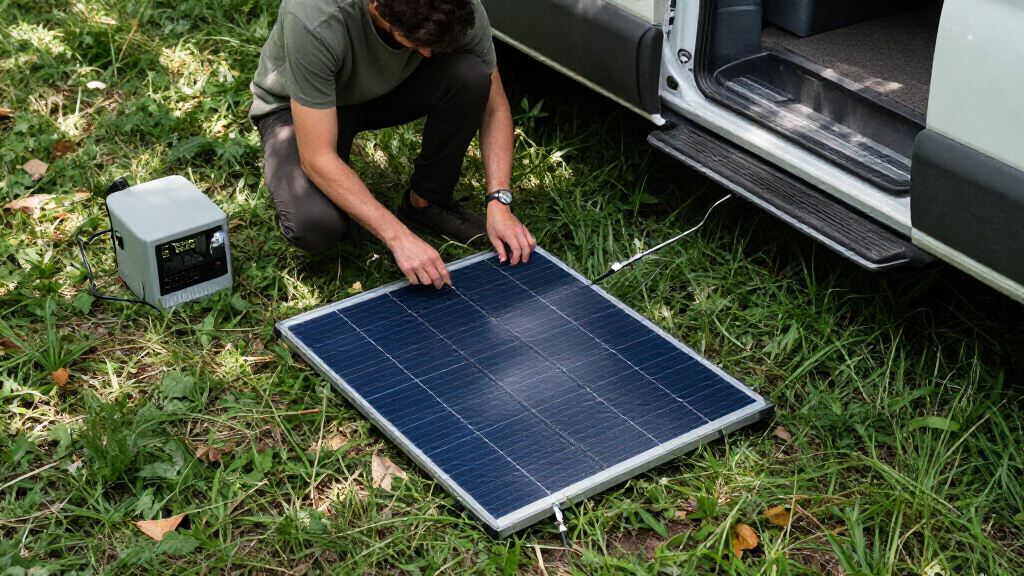
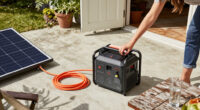
For most power-station owners, I’d start with the Renogy 300W Foldable Portable Solar Panel as the best overall balance of output and manageable size. The EBL 200W is a more approachable choice for lighter charging needs, while the ZOUPW 480W bifacial panel suits buyers who prioritize high output and can handle a larger setup. Across portable solar panels, the main tradeoff is power versus packed size, weight, and setup effort. Connector compatibility and real-world sunlight also affect how useful a panel will be on a trip. Read on for the full comparison and help matching a panel to your gear and routine.

Get backup power and energy gear delivered free with Prime
- Fast, free delivery on millions of items
- Prime Video, Amazon Music and more included
- Member-only deals all year
Key Takeaways
- Higher wattage brings a portability cost: The 400W and 450–480W options can serve larger power stations, but they make more sense when output matters more than a compact, quick setup.
- Renogy offers the broadest range of roles: Its 200W panel favors easier transport, the 300W model is the balanced pick, and the 400W blanket is aimed at buyers who value a flexible form over a rigid folding design.
- Connector choice can narrow the shortlist: Models with MC4, XT60, Anderson, or multiple connection types may fit some power stations more readily; check the station’s input requirements before choosing.
- Kickstands matter more than their small footprint suggests: Adjustable supports on the CTOLITY 400W and four-kickstand 200W panel can make aiming easier, but add setup parts compared with simpler designs.
- Small panels serve a different job: The 100W SOKIOVOLA and Topunive are better suited to modest charging or compact kits than to replenishing a large power station quickly.
- Bifacial cells and efficiency figures are not guarantees of faster charging: placement, sunlight, temperature, and the connected power station all affect usable output.
| Greenmagic 400W Foldable Portable Solar Panel with MC4 Connector |  | Best for Flexible Positioning | Maximum power: 400 watts | Maximum voltage: 40 volts | Output voltage: 39 volts | VIEW LATEST PRICE | See Our Full Breakdown |
| ZOUPW 480W Bifacial Portable Solar Panel, N-Type 16BB |  | Best High-Output Bifacial Pick | Maximum power: 480 watts | Cell type: N-type monocrystalline, 16BB | Conversion efficiency: 25%+ | VIEW LATEST PRICE | See Our Full Breakdown |
| EBL 200W Foldable Portable Solar Panel |  | Best for Broad Power-Station Compatibility | Power: 200 watts | Conversion efficiency: Up to 23.5% | Maximum voltage: 35 V DC | VIEW LATEST PRICE | See Our Full Breakdown |
| SOKIOVOLA 200W Foldable Portable Solar Panel |  | Best Lightweight 200W Pick | Maximum power: 200 watts | Conversion efficiency: 25.5% | Maximum voltage: 18 volts | VIEW LATEST PRICE | See Our Full Breakdown |
| Renogy 300W Foldable Portable Solar Panel |  | Best Mid-Range Capacity | Maximum power: 300 watts | Conversion efficiency: 25% | Cell technology: N-type monocrystalline, 16BB | VIEW LATEST PRICE | See Our Full Breakdown |
| CTOLITY 400W Portable Solar Panel – Foldable Charger with Adjustable Kickstand, IP65 Waterproof, MC4/XT60/Anderson Connectors |  | Best High-Output Pick | Maximum power: 400 W | Output voltage: 40 V DC | Efficiency: 23.4% | VIEW LATEST PRICE | See Our Full Breakdown |
| SOKIOVOLA 100W Foldable Portable Solar Panel, 18V, IP68 Waterproof |  | Best Compact Panel | Maximum power: 100 W | Output voltage: 18 V DC | Amperage capacity: 5.56 A | VIEW LATEST PRICE | See Our Full Breakdown |
| Renogy 200W Portable Solar Panel with 25% Efficiency |  | Best for Direct Device Charging | Maximum power: 200 W | Efficiency: 25% | Cell type: 16BB N-Type monocrystalline silicon | VIEW LATEST PRICE | See Our Full Breakdown |
| Ecosonique 400W Foldable Portable Solar Panel with MC4 Connectors |  | Best 400W Kit for Multiple Connections | Maximum power: 400 W | Output voltage: 40 V | Amperage capacity: 10 A | VIEW LATEST PRICE | See Our Full Breakdown |
| DOKIO 300W 18V Foldable Portable Solar Panel Kit |  | Best for Battery Charging with a Controller | Maximum power: 300 W | Output voltage: 18 V | Maximum voltage: 22.5 V | VIEW LATEST PRICE | See Our Full Breakdown |
| 200W Portable Foldable Solar Panel with Four Adjustable Kickstands |  | Best for Flexible Positioning | Maximum power: 200 W | Conversion efficiency: Up to 23.5% | Cell material: Monocrystalline silicon | VIEW LATEST PRICE | See Our Full Breakdown |
| ZOUPW 450W Portable N-Type 16BB Solar Panel for Power Stations |  | Best for High-Input Power Stations | Maximum power: 450 W | Cell type: N-type monocrystalline, 16BB | Conversion efficiency: 25% | VIEW LATEST PRICE | See Our Full Breakdown |
| Topunive 100W Foldable Solar Panel with Dual USB Charging |  | Best Compact Option | Maximum power: 100 W | Solar cell type: PERC 9BB monocrystalline | Conversion rate: Up to 23% | VIEW LATEST PRICE | See Our Full Breakdown |
| Renogy 400W Portable Solar Panel Blanket, 25% Efficiency |  | Best Lightweight High-Output Blanket | Maximum power: 400 W | Cell type: 16BB N-type monocrystalline silicon | Efficiency: 25% | VIEW LATEST PRICE | See Our Full Breakdown |
| portable solar panel | Maximum power | Weight | Folded dimensions | Amperage capacity |
|---|---|---|---|---|
| Greenmagic 400W Foldable Porta | 400 watts | 21.5 pounds | 32.09 × 31.30 × 1.97 inches | — |
| ZOUPW 480W Bifacial Portable S | 480 watts | 22.5 pounds | — | 11.3 A |
| EBL 200W Foldable Portable Sol | — | 17.95 pounds | 25.31 × 20.87 × 2.17 inches | — |
| SOKIOVOLA 200W Foldable Portab | 200 watts | 11.6 pounds | 21 × 23.14 × 1.77 inches | — |
| Renogy 300W Foldable Portable | 300 watts | 18.7 pounds | 23.2 × 29.3 × 3.2 inches | 12.6 A |
| CTOLITY 400W Portable Solar Pa | 400 W | — | — | — |
| SOKIOVOLA 100W Foldable Portab | 100 W | 4.6 lb | 14.69 × 8.67 × 1.78 in | 5.56 A |
| Renogy 200W Portable Solar Pan | 200 W | 13.9 lb | 23.72 × 22.99 × 1.97 in | 11.3 A |
| Ecosonique 400W Foldable Porta | 400 W | 22.9 lb | 26.18 × 22.44 × 2.95 in | 10 A |
| DOKIO 300W 18V Foldable Portab | 300 W | 27.9 lb | — | 16.92 A |
| 200W Portable Foldable Solar P | 200 W | 16.5 lb in product information; 17.94 lb in description | 25.82 × 21.1 × 2.95 in | 10.5 A |
| ZOUPW 450W Portable N-Type 16B | 450 W | 29.5 lb | — | 12.4 A |
| Topunive 100W Foldable Solar P | 100 W | 5.5 lb panel; 8.4 lb with accessories | 11.4 × 7.8 × 2.2 in | — |
| Renogy 400W Portable Solar Pan | 400 W | 16.1 lb | 16.54 × 15.83 × 4.13 in | 13.1 A |
More Details on Our Top Picks
Greenmagic 400W Foldable Portable Solar Panel with MC4 Connector
The Greenmagic 400W suits buyers who want substantial panel capacity and more ways to aim it than a basic fold-out design offers. Its four adjustable kickstands and hanging loops give you options for setting it on the ground or suspending it, while the MC4 connector works with many compatible power stations. Compared with the EBL 200W, it offers twice the rated power, but it is heavier and takes up more space when folded. The IP65-rated panel surface and 840D Oxford cloth are intended for outdoor use, though the junction box is not waterproof. I would keep it out of rain and avoid soaking it; buyers who need a higher stated water-resistance rating should look at the IP68-rated ZOUPW 480W instead.
Pros:- 400W maximum power rating offers more capacity than the 200W EBL and SOKIOVOLA panels.
- Four adjustable kickstands and hanging loops allow flexible placement.
- MC4 connector supports connection to many compatible power stations.
- Foldable build, rubber handle, and 840D Oxford cloth support carrying and outdoor use.
Cons:- At 21.5 pounds, it is burdensome for longer carries.
- The junction box is not waterproof, and the panel should not be used in rain or soaked.
- Its folded dimensions are over 32 inches on two sides, so storage still needs room.
Best for: Power-station owners who want a high-capacity foldable panel and need adjustable placement for campsites or off-grid stops.
Not ideal for: Hikers and buyers expecting to leave a panel outside in wet weather; at 21.5 pounds it is heavy to carry, and its junction box is not waterproof.
- Maximum power:400 watts
- Maximum voltage:40 volts
- Output voltage:39 volts
- Connector:MC4
- Conversion efficiency:21.5–23.5%
- Weight:21.5 pounds
- Folded dimensions:32.09 × 31.30 × 1.97 inches
- Water resistance:IP65 panel surface; junction box is not waterproof
Our verdict“Choose the Greenmagic if adjustable placement and a 400W rating matter more than light carry weight or wet-weather protection.”
ZOUPW 480W Bifacial Portable Solar Panel, N-Type 16BB
The ZOUPW 480W has the highest stated capacity in this group and adds a bifacial design intended to capture light from both sides. That makes it a stronger fit for open campsites where the rear of the panel can receive reflected light than the single-sided Greenmagic 400W. Its N-type 16BB cells, stated efficiency above 25%, and included ground stakes and cables make the package geared toward off-grid setup rather than minimal packing. The tradeoff is a 22.5-pound carry weight and a large unfolded footprint. Its IP68-rated coating offers more rain protection than the Greenmagic’s panel surface, but careful handling still matters: shading or debris can reduce output and contribute to heat buildup, and the cells can be damaged by heavy pressure.
Pros:- 480W maximum power rating is the highest among these five panels.
- Bifacial cells are designed to capture light from both sides, with stated gain up to 30%.
- N-type 16BB cells have a stated conversion efficiency above 25%.
- Includes a storage bag, connector cables, extension cable, and four ground stakes.
Cons:- At 22.5 pounds, it is not a light option for frequent carrying.
- Its large unfolded dimensions require ample clear ground space.
- Shading, debris, or heavy pressure can reduce output or damage the panel, and it is not recommended for long-term fixed, series, or parallel connections.
Best for: Campers and off-grid power-station owners with room to deploy a large panel in an open, bright area where both sides can receive light.
Not ideal for: Solo travelers with limited storage or anyone wanting a panel for fixed, series, or parallel connections; it is large, heavy, and not recommended for those connection setups.
- Maximum power:480 watts
- Cell type:N-type monocrystalline, 16BB
- Conversion efficiency:25%+
- Bifacial gain:Up to 30%
- Output voltage:42.5 volts
- Amperage capacity:11.3 A
- Weight:22.5 pounds
- Water resistance:IP68-rated composite coating
- Included accessories:Storage bag, connector cables, and four ground stakes
Our verdict“Pick the ZOUPW if you can accommodate its size and want the roundup’s highest stated capacity with bifacial light capture.”
EBL 200W Foldable Portable Solar Panel
The EBL 200W is a practical choice when connector compatibility matters more than carrying the lightest panel. Its included MC4-to-four-way cable provides XT60, Anderson, DC 7.9 × 0.9 mm, and aviation connections, giving owners of different power stations more options than the MC4-only Greenmagic 400W. The stated efficiency reaches 23.5%, and the PET laminate with 840D Oxford cloth is intended to resist wear and water exposure. However, its 17.95-pound weight is substantial for a 200W panel, and its unfolded length exceeds 94 inches, so campsite placement takes planning. The SOKIOVOLA 200W is much lighter and has a higher stated efficiency, but the EBL’s four connector options may be the more useful advantage for buyers whose equipment needs a specific input.
Pros:- Included MC4 cable provides four connector options for compatible power stations.
- Up to 23.5% conversion efficiency is stated for its monocrystalline cells.
- Foldable design and carry-friendly folded dimensions aid storage.
- PET laminate and 840D Oxford cloth are designed for water and wear resistance.
Cons:- At 17.95 pounds, it is heavy relative to its 200W rating.
- The unfolded length of 94.17 inches requires a long, clear setup area.
- The 1-year warranty is shorter than the 3-year coverage stated for the Renogy 300W.
Best for: Power-station owners with different input types who want a 200W foldable panel and value the included four-way connector cable.
Not ideal for: Backpackers or campers with tight setup space; its nearly 18-pound weight and more-than-94-inch unfolded length make it awkward to carry and place.
- Power:200 watts
- Conversion efficiency:Up to 23.5%
- Maximum voltage:35 V DC
- Cell material:Monocrystalline silicon
- Weight:17.95 pounds
- Folded dimensions:25.31 × 20.87 × 2.17 inches
- Unfolded dimensions:94.17 × 20.83 × 0.25 inches
- Connector:MC4 to XT60, Anderson, DC 7.9 × 0.9 mm, and aviation connectors
- Warranty:1 year
Our verdict“Choose the EBL when its four-way connector cable solves a compatibility need, and skip it if low carry weight or a compact setup is the priority.”
SOKIOVOLA 200W Foldable Portable Solar Panel
At 11.6 pounds, the SOKIOVOLA is the easiest panel in this group to carry, making its 200W rating more approachable for campers who move between sites. It also pairs a stated 25.5% efficiency with an ETFE-coated surface, adjustable kickstands, and an angle guide to help users aim it toward the sun. Compared with the similarly rated EBL 200W, it is over six pounds lighter and offers a higher stated efficiency, while the EBL has more connector choices. The SOKIOVOLA includes an MC4 cable with adapters, but the supplied product information conflicts on its water-resistance rating: the title says IP68 and the description says IP67. I would not choose it based on a particular waterproof rating without verifying that detail first.
Pros:- At 11.6 pounds, it is much lighter than the EBL 200W and the other higher-capacity panels here.
- Stated 25.5% conversion efficiency is the highest among the listed 200W models.
- Adjustable kickstands and an angle guide help with sun-facing placement.
- MC4 cable includes adapters for several power-station input types.
Cons:- Product information conflicts on whether the waterproof rating is IP67 or IP68.
- Its 200W rating is lower than the 300W Renogy and the 400W Greenmagic.
- The 12-month warranty is limited compared with the Renogy 300W’s stated 3-year coverage.
Best for: Car campers and road-trippers who want a 200W panel that is easier to lift and position than the heavier EBL.
Not ideal for: Buyers who need clearly documented water-resistance specifications or the connector variety of the EBL; the waterproof rating is inconsistent in the supplied information.
- Maximum power:200 watts
- Conversion efficiency:25.5%
- Maximum voltage:18 volts
- Solar cells:16 A+ monocrystalline cells
- Weight:11.6 pounds
- Folded dimensions:21 × 23.14 × 1.77 inches
- Unfolded dimensions:79.13 × 23.14 × 0.19 inches
- Surface material:ETFE coating
- Warranty:12 months
Our verdict“Pick the SOKIOVOLA for a lighter 200W carry, but choose another model if a verified waterproof rating is a deciding factor.”
Renogy 300W Foldable Portable Solar Panel
The Renogy 300W fills the useful middle ground between the lighter 200W panels and the larger Greenmagic and ZOUPW options. Its N-type monocrystalline cells and 16BB technology have a stated 25% conversion efficiency, while the 300W rating gives power-station owners more rated capacity than the EBL or SOKIOVOLA without moving up to a 400W-plus panel. Renogy also lists parallel wiring as a way to limit the effect of partial shading, a practical point for campsites where full sun can be hard to find. At 18.7 pounds, it is heavier than the SOKIOVOLA by a wide margin, but lighter than both high-output models here. Its IP67-rated construction and rust-resistant, tool-free kickstands support outdoor setup; it still needs a compatible power station or battery.
Pros:- 300W rating sits between the 200W options and the 400W-plus panels in this roundup.
- N-type 16BB cells have a stated 25% conversion efficiency.
- IP67-rated construction and rust-resistant kickstands support outdoor deployment.
- Parallel wiring is designed to reduce the effect of partial shading.
Cons:- At 18.7 pounds, it is substantially heavier than the SOKIOVOLA 200W.
- Requires a compatible power station or battery, adding equipment to the setup.
- Actual daily energy depends on sunlight conditions.
Best for: Campers with a compatible power station who want more rated capacity than a 200W panel without carrying a 400W-class option.
Not ideal for: Buyers who need a very light panel, direct battery charging without compatible equipment, or guaranteed output regardless of sunlight and shading.
- Maximum power:300 watts
- Conversion efficiency:25%
- Cell technology:N-type monocrystalline, 16BB
- Amperage capacity:12.6 A
- Maximum voltage:30.03 volts
- Weight:18.7 pounds
- Folded dimensions:23.2 × 29.3 × 3.2 inches
- Water resistance:IP67
- Warranty:3-year output, material, and workmanship coverage
Our verdict“Choose the Renogy if 300W capacity and outdoor-ready setup matter more than the lighter carry of a 200W panel.”
CTOLITY 400W Portable Solar Panel – Foldable Charger with Adjustable Kickstand, IP65 Waterproof, MC4/XT60/Anderson Connectors
CTOLITY’s 400W output makes this a better match for power-station owners who want substantial solar input than the SOKIOVOLA 100W, which favors lighter loads and easier carrying. Its 23.4% efficient monocrystalline cells and adjustable kickstand help make useful charging power from a large foldable panel, while the IP65-rated ETFE surface adds protection against dust and water exposure outdoors. MC4 output suits many compatible power stations, and the listed connector options broaden its potential uses. The tradeoff is physical: this panel can be bulky when unfolded, so it is less suited to hiking or cramped campsites. The kit includes MC4 connectors, but other connection types may require separate adapters. I’d choose it for portable high-capacity charging, not for the smallest travel setup.
Pros:- 400W maximum output suits higher-capacity portable power stations.
- 23.4% conversion efficiency from monocrystalline cells.
- Adjustable kickstand helps angle the panel toward available sun.
- ETFE laminated surface carries an IP65 protection rating.
Cons:- Bulky when unfolded and less convenient for foot travel.
- Only MC4 connectors are included; other connection types may need adapters.
Best for: Campers and RV owners with a compatible high-input power station who want a foldable panel rated for up to 400W.
Not ideal for: Hikers and buyers with very limited storage space, since its large unfolded footprint makes it cumbersome for compact trips.
- Maximum power:400 W
- Output voltage:40 V DC
- Efficiency:23.4%
- Cell type:Monocrystalline
- Connectors:MC4; XT60 and Anderson compatibility listed
- Weather protection:IP65; ETFE laminated surface
- Positioning:Foldable design with adjustable kickstand
Our verdict“Choose the CTOLITY if you want a high-output foldable panel for camp or RV power and can accommodate its size.”
SOKIOVOLA 100W Foldable Portable Solar Panel, 18V, IP68 Waterproof
At 4.6 pounds and 100W, this SOKIOVOLA is the lineup’s carry-friendly choice for smaller power stations and lighter charging needs. It is far easier to pack for a short hike than the CTOLITY 400W or Ecosonique 400W, though those larger panels are better suited to replenishing high-capacity stations. The included 4-in-1 cable supports several common connections, reducing the adapter guesswork that can come with MC4-only setups. Its IP68 rating and ETFE surface are useful for dusty or wet outdoor conditions, but the rating does not change the need to check the power station’s input limits. A 100W panel will also provide less charging capacity than larger options, and unfolding it is still part of setup. I’d pick it for portability over fast, high-volume charging.
Pros:- Light 4.6 lb design is more practical to carry than the 400W panels in this lineup.
- IP68 dustproof and waterproof rating.
- Included 4-in-1 cable supports MC4, XT60, DC5521, DC7909, and Anderson connections.
- ETFE surface and UV-resistant EVA are designed for outdoor use.
Cons:- 100W maximum output limits charging speed and capacity.
- Must be unfolded and positioned for use despite its compact folded form.
Best for: Hikers, solo campers, and small-power-station owners who value low carry weight and broad cable compatibility.
Not ideal for: RV users or buyers who need to recharge a large power station quickly, since its maximum output is 100W.
- Maximum power:100 W
- Output voltage:18 V DC
- Amperage capacity:5.56 A
- Weight:4.6 lb
- Folded dimensions:14.69 × 8.67 × 1.78 in
- Ingress protection:IP68 dustproof and waterproof
- Cable and connections:7.2 ft 4-in-1 cable; MC4, XT60, DC5521, DC7909 (8 mm), and Anderson
- Materials:ETFE, UV-resistant EVA, and solar cells
Our verdict“Pick this SOKIOVOLA for a light, connection-friendly panel when portability matters more than charging speed.”
Renogy 200W Portable Solar Panel with 25% Efficiency
The Renogy’s strongest distinction is that it can charge devices directly as well as feed a power station. Its 45W USB-C PD and dual USB-A ports make it more self-contained for phones and small electronics than the CTOLITY 400W, which is oriented around power-station connections. At 200W and 13.9 pounds, it sits between the compact SOKIOVOLA 100W and the heavier high-output panels, balancing useful panel capacity with a manageable folded format. The 25% N-Type cell efficiency and four kickstand angles give buyers flexibility in placing it, though sunlight and positioning still affect actual output. Its main limitation is the MC4 connection: a 4-in-1 adapter is sold separately, so check your power station before buying. This is the clearest fit for mixed device-and-station charging.
Pros:- 25% efficiency N-Type cells in a 200W foldable panel.
- 45W USB-C PD and two USB-A ports allow direct device charging.
- Four kickstands offer 40°, 50°, and 60° positioning options.
- 13.9 lb weight is lighter than the 300W and 400W options here.
Cons:- The 4-in-1 adapter is sold separately.
- MC4 output requires a compatible power station connection.
Best for: Campers and road-trippers who want to charge USB-C and USB-A devices directly while retaining MC4 output for a compatible power station.
Not ideal for: Buyers who need a ready-to-connect adapter for a non-MC4 power station or want the highest listed panel output.
- Maximum power:200 W
- Efficiency:25%
- Cell type:16BB N-Type monocrystalline silicon
- Maximum voltage:21.6 V
- Amperage capacity:11.3 A
- Weight:13.9 lb
- Folded dimensions:23.72 × 22.99 × 1.97 in
- Outputs:45W USB-C PD, dual USB-A, and MC4
- Kickstand angles:40°, 50°, and 60°
Our verdict“Choose the Renogy if direct USB device charging and flexible positioning matter more than maximum panel output.”
Ecosonique 400W Foldable Portable Solar Panel with MC4 Connectors
The Ecosonique pairs 400W output with a useful cable bundle, making it a practical alternative to the CTOLITY 400W for buyers whose power station needs an XT60, Anderson, or DC8020 connection. Its included 3 m MC4 cable and adapter cable reduce the chance of having to source a connection separately. The six-fold layout and adjustable kickstands help with transport and sun positioning, while the 23.5% conversion rate and IP65 rating suit outdoor charging. The cost of that output is weight: at 22.9 pounds, it is less appealing for carrying far from a vehicle than the 4.6-pound SOKIOVOLA 100W. Its folded dimensions also call for dedicated storage space. I’d favor it over the CTOLITY when the included adapter options matter, but not for lightweight travel.
Pros:- 400W maximum output with 23.5% conversion efficiency.
- Includes a 3 m MC4 cable and MC4-to-XT60/Anderson/DC8020 cable.
- Adjustable kickstands support positioning toward the sun.
- IP65 rating and listed operating temperature range suit outdoor use.
Cons:- At 22.9 lb, it is heavy for portable use away from a vehicle.
- Folded dimensions require more storage room than compact panels.
- 12-month warranty is shorter than the Renogy 200W panel’s listed two-year warranty.
Best for: RV travelers and car campers who need a 400W panel with included cables for several common power-station connections.
Not ideal for: Backpackers or anyone who must carry a panel any distance, given its 22.9 lb weight and sizable folded dimensions.
- Maximum power:400 W
- Output voltage:40 V
- Amperage capacity:10 A
- Conversion efficiency:23.5%
- Weight:22.9 lb
- Folded dimensions:26.18 × 22.44 × 2.95 in
- Connectors and included cables:MC4; 3 m MC4 cable and 0.5 m MC4-to-XT60/Anderson/DC8020 cable
- Weather and temperature:IP65; -4°F to 158°F
Our verdict“Choose the Ecosonique for high-output vehicle-based charging when its included connection cables outweigh its carrying burden.”
DOKIO 300W 18V Foldable Portable Solar Panel Kit
The DOKIO is the most kit-oriented option here: its detachable PWM charge controller, five DC adapter plugs, and 5V USB output suit buyers charging batteries or small electronics without assembling a separate parts list. That makes it different from the Renogy 200W, which offers stronger direct USB outputs but no listed charge controller, and from the 400W panels that prioritize station input. The 300W rating and 18V output offer a middle ground for vehicle-based setups, while the 9.8 ft cable gives some flexibility when placing the panel. At 27.9 pounds, however, it is the heaviest choice in this batch, and its 78.4-inch unfolded length needs room. The adjustable bracket also calls for careful handling. I’d choose it for a battery-charging kit, not for frequent carrying on foot.
Pros:- Detachable PWM controller includes listed electrical protection features.
- Five DC adapter plugs and a 5V USB output broaden charging options.
- 9.8 ft cable and adjustable bracket provide flexibility in panel placement.
- 300W output is higher than the Renogy 200W and SOKIOVOLA 100W panels.
Cons:- At 27.9 lb, it is heavy to carry on foot.
- 78.4-inch unfolded length requires ample setup space.
- The adjustable bracket can break if handled roughly, according to the product information.
Best for: RV owners and campers charging compatible batteries who want a bundled PWM controller, adapters, and USB output.
Not ideal for: Hikers or frequent solo movers, since the 27.9 lb panel and long unfolded footprint make transport and setup cumbersome.
- Maximum power:300 W
- Output voltage:18 V
- Maximum voltage:22.5 V
- Amperage capacity:16.92 A
- Weight:27.9 lb
- Unfolded dimensions:78.4 × 31.1 × 0.8 in
- Controller and outputs:Detachable PWM charge controller; 5V, 2A USB output
- Cable and bracket:9.8 ft (3 m) cable; 30° bracket adjustment
- Operating range and load resistance:-40°F to 185°F; 5400 Pa snow load and 2400 Pa wind load
Our verdict“Choose the DOKIO for a bundled, controller-based battery-charging setup when weight and large setup dimensions are acceptable.”
200W Portable Foldable Solar Panel with Four Adjustable Kickstands
This 200W panel makes a practical middle ground between the compact Topunive 100W panel and larger options such as the Renogy 400W Solar Panel Blanket. Its four adjustable kickstands give you more control over sun-facing placement, while grommets add another way to secure it at camp. The monocrystalline cells are rated up to 23.5% conversion efficiency, and the ETFE surface and Oxford cloth backing are designed for outdoor use. At around 18 lb, it is portable for its output, but not especially light to carry far from a vehicle. The folded shape also takes up more storage space than the Topunive. Its IP65 rating means splashes are covered, not leaving the panel out in rain; direct 12V battery charging also requires a separate controller and alligator clip.
Pros:- Four adjustable kickstands make it easier to angle the panel toward the sun.
- Grommets provide extra options for securing or mounting the panel.
- ETFE surface and 840D Oxford cloth backing suit outdoor use.
- Includes a 4-in-1 cable for connecting to many compatible power stations.
Cons:- At roughly 17–18 lb, it is bulky for carrying any distance.
- IP65 protection covers splashes, not prolonged rain or submersion.
- A charging controller and alligator clip are needed for direct 12V battery charging and are not included.
Best for: Car campers with compatible power stations who want a 200W panel that can be angled or secured in several ways.
Not ideal for: Backpackers seeking a light, compact charger or campers who need a panel that can stay exposed to rain.
- Maximum power:200 W
- Conversion efficiency:Up to 23.5%
- Cell material:Monocrystalline silicon
- Maximum voltage:19 V
- Amperage capacity:10.5 A
- Water resistance:IP65; protects against splashing
- Folded dimensions:25.82 × 21.1 × 2.95 in
- Weight:16.5 lb in product information; 17.94 lb in description
- Kickstands:4 adjustable
Our verdict“Choose this 200W panel if adjustable placement matters more than a particularly small folded footprint or all-weather exposure.”
ZOUPW 450W Portable N-Type 16BB Solar Panel for Power Stations
For a compatible power station that accepts higher-voltage solar input, this ZOUPW offers more stated output than the Renogy 400W Solar Panel Blanket and the 200W foldable panel in this group. Its 450W rating and 40–60V input range make system compatibility the deciding factor: it is not suitable for low-voltage units below 30V. The 16BB N-type cells are rated at 25% efficiency, and bypass diodes are intended to help when part of the panel is shaded. At 29.5 lb, it is a substantial portable setup rather than an easy carry for long walks. The included extension cable, adapters, stakes, and storage bag make campsite setup more complete than the Renogy blanket, which needs a separately purchased 4-in-1 adapter. IP68-rated protection is useful, but the connectors should not be soaked.
Pros:- 450W maximum output suits compatible high-input power stations.
- 16BB N-type cells have a stated conversion efficiency of 25%.
- Bypass diodes are designed to help limit the effect of partial shade.
- Includes an extension cable, multiple adapters, ground stakes, and a storage bag.
Cons:- Not compatible with power stations whose solar input is below 30V.
- At 29.5 lb, it is heavy for carrying any distance.
- Connectors should not be soaked, and the panel is not recommended for long-term fixed or series/parallel connections.
Best for: Van and RV owners with power stations that accept 40–60V solar input and want high panel output at camp.
Not ideal for: Owners of low-voltage power stations, or anyone who needs a lightweight panel for frequent carrying away from a vehicle.
- Maximum power:450 W
- Cell type:N-type monocrystalline, 16BB
- Conversion efficiency:25%
- Open-circuit voltage:45.9 V
- Output voltage:38.3 V
- Amperage capacity:12.4 A
- Compatible input range:40–60 V
- Weight:29.5 lb
- Folded size:30.43 × 34.56 × 3.54 in
Our verdict“Pick the ZOUPW 450W only if your power station supports its voltage range and you can accommodate its weight and size.”
Topunive 100W Foldable Solar Panel with Dual USB Charging
The Topunive is the most compact choice here for buyers who want direct device charging without carrying a separate power station. Its USB-C PD 65W and USB-A QC 3.0 ports can serve compatible phones and electronics, while the XT-60 output and included connector options allow connections to many portable power stations. Compared with the 200W panel in this roundup, its 100W maximum means less solar capacity for replenishing larger batteries; compared with the Renogy 400W blanket, it is far easier to pack. The folded pouch measures just 11.4 × 7.8 × 2.2 inches, though the panel itself weighs 5.5 lb and the full kit weighs 8.4 lb. IP67 protection adds weather resistance, but the brackets shown in product images are not included, and useful output still depends on sunlight.
Pros:- Compact folded dimensions and a handled carry pouch make storage straightforward.
- USB-C PD 65W and USB-A QC 3.0 allow direct charging of compatible devices.
- Multiple connector types support a range of compatible power stations.
- ETFE-laminated construction carries an IP67 rating.
Cons:- 100W maximum output is limited for charging larger power stations.
- Brackets shown in product images are not included.
- The full kit weighs 8.4 lb, more than the panel-only weight suggests.
Best for: Day hikers, road trippers, and solo campers who need a packable panel for phones, tablets, and small power stations.
Not ideal for: People replenishing large power-station batteries or seeking a high-output panel for group or extended off-grid use.
- Maximum power:100 W
- Solar cell type:PERC 9BB monocrystalline
- Conversion rate:Up to 23%
- USB-C output:PD 65 W
- USB-A output:QC 3.0
- XT-60 output:21 V / 4.8 A
- Folded dimensions:11.4 × 7.8 × 2.2 in
- Weight:5.5 lb panel; 8.4 lb with accessories
Our verdict“Choose the Topunive for compact storage and direct device charging, not for fast replenishment of large batteries.”
Renogy 400W Portable Solar Panel Blanket, 25% Efficiency
The Renogy blanket stands out for combining a stated 400W output with a 16.1 lb weight, notably less than the 29.5 lb ZOUPW 450W panel. Its foldable blanket format also gives it more placement options: lay it on the ground, drape it over a windshield, or hang it from a suitable tree or rack. That flexibility can help at campsites where a rigid, kickstand-supported panel is awkward, though a soft blanket needs care in wind and may need stakes, weights, or tie-downs. The 16BB N-type cells have a stated 25% efficiency, but actual output depends on sunlight and system limits. It uses an MC4 output, so buyers with compatible power stations may need the separately sold 4-in-1 adapter. Unlike the Topunive 100W, this is built for larger charging needs, not direct USB device charging.
Pros:- 400W maximum output in a 16.1 lb portable blanket.
- 16BB N-type cells have a stated efficiency of 25%.
- Can be laid on the ground, placed across a windshield, or hung from a suitable support.
- Folds into a compact package and includes shoulder straps.
Cons:- The 4-in-1 adapter for some power stations is sold separately.
- Windy conditions may require additional stakes, weights, or tie-downs.
- Actual output varies with sunlight, shade, temperature, cable length, and power-station limits.
Best for: Campers and van travelers who want substantial solar capacity in a lighter, flexible panel that can be laid out or hung.
Not ideal for: Buyers who need a self-supporting kickstand setup, built-in USB charging, or an included adapter for their power station.
- Maximum power:400 W
- Cell type:16BB N-type monocrystalline silicon
- Efficiency:25%
- Amperage capacity:13.1 A
- Maximum voltage:39.2 V
- Connector:IP68 solar connector; MC4 output
- Folded dimensions:16.54 × 15.83 × 4.13 in
- Weight:16.1 lb
- Warranty:2-year material and workmanship
Our verdict“Choose the Renogy blanket if flexible placement and lower carry weight matter more than built-in supports or an included power-station adapter.”

How We Picked
I ranked these panels around the decisions that matter when carrying and setting up solar away from home: stated wattage, packed-form practicality, support for positioning, connector options, weather-related claims, and how clearly each panel fits a likely use. A larger output rating can be useful for a power station, but it does not automatically make a panel a better portable choice if it is awkward to transport or difficult to position. I also separated small, moderate, and high-output panels rather than treating their wattages as directly interchangeable.
The order gives more weight to a useful balance of output and flexibility than to the largest number on the label. Models with distinct advantages—such as multiple connection options, adjustable supports, a compact 100W format, or a blanket design—earn a place for specific buyers, but those traits do not erase tradeoffs. Product specifications provided for this roundup do not establish identical test conditions, included accessories, or real-world output, so I avoid treating claimed efficiency or waterproof ratings as direct performance comparisons.
Factors to Consider When Choosing Portable Solar Panels
Before choosing a panel, match it to the device you actually plan to charge and the way you will carry and deploy it. A paper wattage comparison misses practical constraints such as input limits, cable reach, available sun, and whether you can keep the panel angled toward the light. These checks can save you from buying more capacity than you can use—or a panel that does not connect to your setup.
Match Panel Output to the Power Station
Start with your power station’s solar input limits, not the panel’s headline wattage. The station may cap incoming watts or require a particular voltage range, so a higher-rated panel can deliver less than its label suggests or may not be compatible without the right configuration. Check the station manual for maximum input, connector type, and whether it accepts a single panel or a series/parallel arrangement. If you are charging small devices directly, their needs differ from those of a large battery that must support appliances. Leave room for the fact that panel output changes with sunlight and positioning. The best match is the panel your equipment can accept and your routine can use, rather than simply the highest wattage available.
Judge Portability by the Whole Setup
Folded dimensions are only one part of portability: weight, carrying method, cable storage, and the time needed to set up also shape the experience. A high-output panel can be worthwhile at a campsite where it stays deployed, but less convenient if you move locations often or carry gear on foot. Blankets and folding panels can pack differently, and neither format is automatically easier for every vehicle or storage space. Adjustable legs can help with aiming but add components that must be unfolded and kept stable. Think through where the panel will ride and how often you will reposition it. A panel that is easy to deploy repeatedly can be more useful than one with a larger rating that stays packed away.
Account for Sun, Shade, and Panel Placement
Rated output assumes conditions that may not match a shaded campsite, winter sun, or a panel laid flat on the ground. Nearby trees, changing cloud cover, dirt, and a poor angle can all reduce generation, so plan for a clear patch of sun and the ability to reposition the panel. A kickstand can make angle adjustments easier, while a flexible blanket may suit surfaces where a rigid panel is inconvenient; both still need appropriate placement. Bifacial designs may benefit from light reaching the rear side, but the surface below and surrounding conditions influence any gain. Avoid sizing your setup around a best-case rating if reliable charging is needed. For trips with limited sunny hours, consider reducing power demand or adding charging time rather than assuming a bigger panel will fix every shortfall.
Check Connectors, Cables, and Input Limits
Connector labels such as MC4, XT60, and Anderson describe different connection options, not universal compatibility. Confirm the exact port on your power station and whether an adapter is required; also check whether any needed cable is included. Cable length affects where you can place the panel relative to the battery, especially when the battery must stay sheltered. Avoid improvising combinations without confirming voltage and current limits, since the station’s permitted input still applies. Multiple connector types can make a panel more adaptable, but they do not guarantee it will work with every device. Treat compatibility as a purchase requirement to verify before comparing convenience features.
Interpret Efficiency and Weather Claims Carefully
Efficiency figures describe how well a panel converts incoming light under stated conditions; they do not tell you how much energy you will collect during a particular trip. Likewise, an IP rating is a defined ingress-protection claim, not permission to leave a panel exposed to every storm or to submerge it. Check the maker’s handling and care instructions, especially for connectors, seams, and folding sections. Dust and grime can reduce light reaching the cells, so a panel that is easy to wipe and store dry may be more practical over time. Do not compare advertised numbers as if every brand used the same test setup. Treat these claims as useful screening details, then weigh them alongside fit, care, and compatible equipment.
Decide When More Wattage Is Worth the Bulk
Paying for a higher-output panel can make sense when you have a large power station, a short charging window, and enough space to deploy it in good sun. It is less compelling if your devices draw little power or the panel will spend much of the day shaded or packed away. A smaller panel may better suit phone charging, compact travel, or a lightweight emergency kit, even if it takes longer to replenish a battery. Before sizing up, estimate the energy you use in a day and check what your station can accept. Also account for the time available to recharge between uses. The right wattage is the one that fits your energy needs without making transport and setup a burden.
Frequently Asked Questions
Can I connect any of these panels to my existing power station?
Not automatically. Match the panel’s connector and electrical output to the power station’s solar input requirements, including its maximum voltage and current. MC4, XT60, and Anderson connectors may require different cables or adapters, and an adapter alone does not make an electrically incompatible setup safe. Read the manuals for both devices before connecting them. If the available specifications do not clearly confirm compatibility, ask the manufacturer rather than guessing.
Is a 400W panel a better choice than a 200W panel?
Only if your power station can accept the added input and your use benefits from the extra potential output. A 400W panel may be a better fit for larger batteries or limited charging windows, but its size and setup demands can be harder to manage. A 200W model may be easier to carry and sufficient for smaller power needs. Actual output also varies with sunlight, angle, and shade, so neither rating guarantees a particular charging speed. Compare your daily energy use and equipment limits before choosing.
Do bifacial or high-efficiency panels guarantee faster charging?
No. Bifacial construction and stated efficiency can be useful design information, but the energy collected still depends on light, positioning, temperature, and how much rear-side light reaches a bifacial panel. The power station may also limit how much energy it can accept. A poorly placed high-spec panel can perform worse for your setup than a lower-rated panel positioned in clear sun. Treat those features as potential advantages, not a promise of a specific charging result. Compare them alongside portability and compatibility.
Can I leave a portable solar panel outside in rain?
Do not assume that a waterproof or IP-rated claim makes every part of a panel safe in all weather. Protection may apply under defined conditions and may not cover connectors, cable joints, wear, or prolonged exposure. Follow the maker’s care instructions and disconnect or store the panel when conditions exceed them. Keeping connectors dry and allowing the panel to dry before storage can also help limit damage. If exposure to rain is likely, verify the exact rating and its stated limits for the model you choose.
Should I buy a panel with kickstands or a simpler folding design?
Kickstands are useful when you expect to adjust the panel angle through the day or set it up on open ground. They can make positioning less improvised, but also add parts to unfold, stabilize, and store. A simpler folding panel may be preferable when compact packing and fewer setup steps matter more than frequent angle changes. Consider the surfaces where you camp and whether you can safely prop up a panel without dedicated supports. The best format is the one you can position securely and will actually use.
Conclusion
For an all-around choice, I’d pick the Renogy 300W Foldable Portable Solar Panel for its middle-ground output among this lineup; check its connector and your station’s input limits before buying. The EBL 200W is my value-minded option for buyers who do not need high-output charging, while the ZOUPW 480W bifacial panel is the premium-style pick for buyers prioritizing capacity and willing to handle a larger setup. For beginners with modest charging needs, the Topunive 100W stands out for its dual USB charging, though it is not the right tool for quickly replenishing a large power station. For positioning flexibility, look at the CTOLITY 400W with adjustable kickstand and multiple connector types; for a compact, low-output role, compare the SOKIOVOLA 100W. My final check would be compatibility, packed size, and where you can place the panel in sun—those details determine which rating is useful for your setup.